Reptile & Amphibian Forums

Welcome to kingsnake.com's message board system. Here you may share and discuss information with others about your favorite reptile and amphibian related topics such as care and feeding, caging requirements, permits and licenses, and more. Launched in 1997, the kingsnake.com message board system is one of the oldest and largest systems on the internet.

Click for 65% off Shipping with Reptiles 2 You
Southwestern Center for Herpetological Research
Click for 65% off Shipping with Reptiles 2 You

Burmese Survival Research in FL

steelersdiehard Jan 29, 2010 08:08 AM

I recently wrote University of Florida wildlife biologist Dr. Frank Mazzotti after reading an article about research they were doing during the freeze in Florida earlier this month, Here is the link to the original article...

http://www.cnn.com/2010/US/weather/01/10/us.cold.weather/index.html

This is his response I received yesterday

"We evaluated the effects of the recent extended period of cold temperature on Burmese pythons by following the fate of pythons with radio transmitters and by conducting searches for pythons both during and especially immediately after the cold spell. We are preparing the results for rapid publication in a peer reviewed outlet and we will issue a press release with with the detailed results coincident with their publication. At the moment we can tell you that pythons both survived and died during the cold period. The cause of death was not always apparent and that is one of the areas we are still gathering information on. We believe that rapid peer reviewed publication of these results is in everyones best interest.

We are getting requests for the results from everywhere from individuals to CNN. I really want to avoid the controversy surrounding other efforts that were not exposed to external peer review. We are fortunate enough to have been in a position to know exactly what happened. I don't think anyone will be disappointed with the results.

Frank"
Replies (13)

TOM_CRUTCHFIELD Jan 29, 2010 09:20 AM

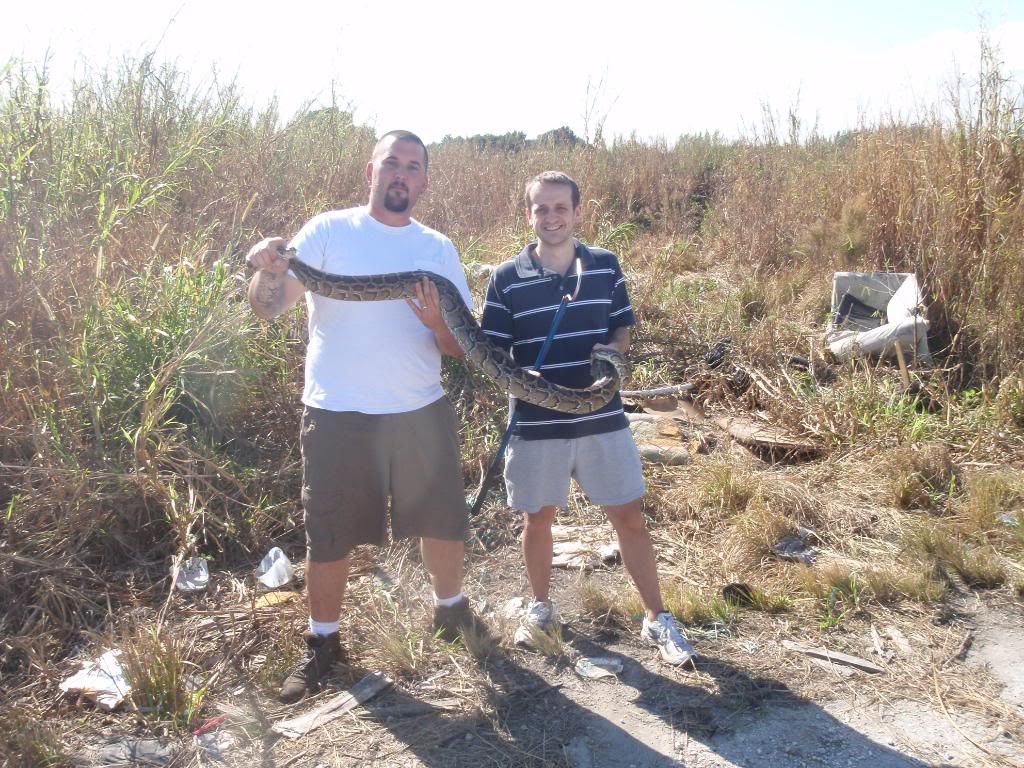
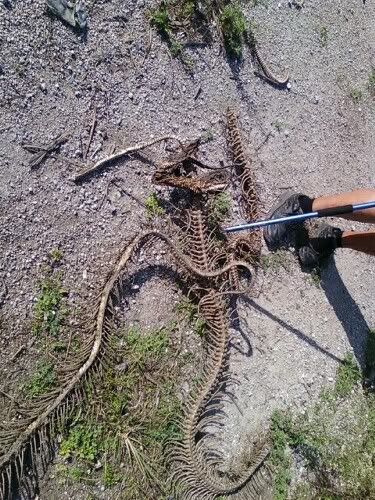
Looks like their results are similar to the simple 2 day search we made as we found both live ones and dead ones..We were extremely lucky to have found the lg. dead one as most dead ones I would think are or were hidden from view and without transmitters almost impossible to find...


-----
Tom Crutchfield
www.tomcrutchfield.com

Jonathan_Brady Jan 29, 2010 09:32 AM

But I can say that if they had to die, I'm glad this was the situation!!!!

I hope that these results from the "real world" are taken into consideration by the usfws.
-----
What's written above is purely my opinion. In fact, MOST of what you read on the internet is someone's opinion. Don't take it too seriously

Jonathan Brady
DeviantConstrictors.com
Deviant Constrictors picturetrail

snakes718 Jan 29, 2010 11:06 AM

well I hope the study will include lengthy follow ups on the "survivor" snakes so as to see that if the cold streak didn't imediately kill some animals, possibly there are alot of Burms with varrying degrees of RI, of which many may not survive. I would think that 2-3 months down the road there would be many sick snakes dying off.Food for thought.

Pithons Jan 29, 2010 02:07 PM

Alot of times, snakes come down with internal bacteria inside the body that is not RI, but is mostly deadly when left untreated and will kill the snake in 1-3 months.

fliptop Jan 31, 2010 03:00 PM

Would the RIs and bacterial infections be able to harm native wildlife?

WSTREPS Jan 29, 2010 09:11 PM

(rapid peer reviewed publication)

That's interesting, I didn't know that credible unbiased scientific journals offered an express service. I would like to know how a scientific document gets slated for rapid peer review in an unbiased publication. I would also like to know what is meant by rapid? The process usually takes a while three or four months ? (rapid) to sometimes years – (depending on the field). The peer review process is part of the secret world of scientist. They submit their work for critique by a panel of faceless, nameless experts (referees) or better, double-blind reviewing (in theory, the referee does not know who the author is). After the work is evaluated its ether given a thumbs up or a thumbs down for "publication." The publications editor also plays a key role in the process. That's the general outline.

In the scientific community the peer review process is regarded by some as the ultimate stamp of approval as to the sound scientific quality of the authors work. Apparently Mazzotti feels he needs to add this gold seal of academic approval to validate his work and silence possible critics. The truth is, the peer review system does not ensure that only quality work based on sound unbiased and correctly executed scientific protocol gets published. As many scientist will attest to, The peer review system is highly flawed and unreliable in terms of filtering out the many pieces of scientific rubbish that are submitted. While not totally useless the system is far from a fail safe in terms of providing a gold seal of validation. Being subjected to the peer review system will nether validate or disqualify the credibility of Mazzotti's work, ........................if his work is good... fine, if its more of the usual crap it will still pass the peer review process so........................

Ernie Eison
WESTWOOD ACRES REPTILE FARM INC.

LarM Jan 30, 2010 01:26 AM

I’m a complete non academic nobody without a college degree. I can barely spell
words without the use of spell check. I how ever was under the impression that in
most cases, possibly always in the scientific realm of published papers or more
appropriately scholarly publications. A peer reviewed paper is looked upon with far
more credibility and credence than a non peer reviewed paper ?
Yet I do realize that the peer review process does not reach conclusions about the
validity of findings in any scholarly publications.

So however I do understand your point.

I’ve been trying to reach my own conclusions about the importance and
effectiveness of peer reviewed scholarly publications. While I understand the
process is not a know all end all to reaching correct conclusions and publishing
those conclusions in scientific journals. I do believe the scientific work submitted
for review is forced to meet a higher level of quality then papers not submitted.
This in return protects the standards of the publishing journals.

The most important part of any scientific or scholarly work is to in fact reach a set
of conclusions that are undeniably factual and have a predictable reproducible
outcome.

So the benefit of the peer review process allows for higher quality scholarly
publications. In return these published results provide for any other scientist to
duplicate or refute these results. There by continuing the scientific process to reach
predictable, reproducible results.

Thanks for reading my point of view

. . . Lar M
-----
Boas By Klevitz

I Support USark.org

Jonathan_Brady Jan 30, 2010 05:51 AM

It's easy to be critical of peer review as it is not perfect. There is NO perfect solution to the problem or we would already have it implemented.

Peer review is seen as the gold standard for publication of a scientific work, although peer review does not guarantee that the results of the paper are worthwhile (as we saw with both USGS reports) or even true.

Ultimately, the editor of the journal has the final say about whether something is published. In fact, the people who peer review an article can slam a study and criticize it all day long, and it doesn't guarantee that anything will change (it usually does though).

Here's a quote by the editor of "the Lancet", a well known, highly respected medical journal:
"The mistake, of course, is to have thought that peer review was any more than a crude means of discovering the acceptability — not the validity — of a new finding. Editors and scientists alike insist on the pivotal importance of peer review. We portray peer review to the public as a quasi-sacred process that helps to make science our most objective truth teller. But we know that the system of peer review is biased, unjust, unaccountable, incomplete, easily fixed, often insulting, usually ignorant, occasionally foolish, and frequently wrong."

So like I said, it's not a perfect system. But, there's nothing better so far....

jb
-----
What's written above is purely my opinion. In fact, MOST of what you read on the internet is someone's opinion. Don't take it too seriously

Jonathan Brady
DeviantConstrictors.com
Deviant Constrictors picturetrail

TOM_CRUTCHFIELD Jan 30, 2010 07:05 AM

One of the problems with the "peer reviewed" testimony in congress was that it was what was called a "grey paper". In other words it was "peer reviewed" ONLY from within the the author's own agency and NOT sent to other outside experts to be perused and approved. This is the worst type of so called "peer reviewed" papers because they often are slanted and biased according to the author's agenda which as we know was the case wih the "Python testimony"...
-----
Tom Crutchfield
www.tomcrutchfield.com

SgtStinky Jan 30, 2010 05:39 AM

Peer review is an important step to general acceptance to ones scientific findings and conclusions, the ultimate review will occur when the general public can see what methodologies were used to collect the data and the process that the author used to arrive at their findings and conclusion. I'm not as interested in the conclusion as I am interested in the data, as long as the data collection methods are sound and data is not cherry picked, then we can expect to advance the existing body of knowledge on the invasive nature of the Burm in southern Florida.

With that said, my BS detector is out, my faith with regards to the process has been irreversibly broken thanks to the USGS.

Upscale Jan 30, 2010 09:17 AM

My radar is also out. I am totally biased, as most of us here are, that I would like the findings to show that the majority of Burmese pythons did not survive the winter here. My suspicion is that the “rapid” conclusions are being written before the pythons affected by the cold have all died. They could easily show that some survived the very coldest night and submit their immediate findings. One month later, every one of those pythons could very well be, and most likely will be, dead. I would like to know who has access to the tracking frequencies on those pythons and who are witnesses to the field work. There is tremendous bias and political heat being brought down on these results with millions and millions of dollars at stake. There is more than the usual incentive to fudge the results to suit the cause.

boaphile Jan 30, 2010 10:14 AM

My take reading between the lines

First and foremost think about this. If the Burms in the Everglades that have radio transmitters did fine during the recent cold snap, that is NOT a story. Not in any way whatsoever. You see it only dipped to 36 degrees in Miami. It was a bit warmer than that in the Everglades. So a 100% survival rate is not news in any way. Consider the fact that the “scientist” Gordon Rodda, whose writings more closely parallel pulp fiction than science, says that Burmese Pythons will invade half of the United States. He argued that places that see temperatures far below those levels every year are prime habitat for feral Burmese Pythons. So a dip to 36 degrees is nothing compared to what they will endure even in North Florida let alone through Georgia and the Carolinians.

I have no idea how many Burmese are fitted with radio transmitters. But just for discussion, let’s say there are 10 animals in the study. Now we already know, thanks to the information graciously shared by Dr. Mazzotti that “pythons both survived and died during the cold period.” During the cold period. This is key. Why or how did they die precisely during the cold period? We don’t know yet. Dr Mazzotti is exercising restraint not speculating publicly on the cause of death and is waiting for the test results. Moreover, the precise cause of death is irrelevant for our purposes. The FACT is that DURING THE COLD SNAP Pythons died. If they equipped ten Burmese Pythons with transmitters a year ago and none of them died until this cold snap, THAT is HUGE! From that we can logically assume that the temperature has to be related to whatever they died of. Even colder temperatures would be even more detrimental to the Burms. This everyone knows already but the facts have in no way had any impact upon what Gordon Rodda et al have written about the Burmese Pythons that would have them transform to warm blooded animals, and perhaps grow fur, to survive north of even Central Florida during this cold snap.

It dipped to 14 degrees in Tallahassee in Northern Florida earlier this month! I wonder when those northward invading Burms will realize the need for either a nice fur coat in the winter time, or perhaps they will choose a Winnebago to give them relief from the temperature extremes that will otherwise kill them. Bring in the pall bearers. The fraud being sold to legislators and being misrepresented as “science” is exposed and the “papers” are dead, just like the invaders who didn’t see the cool, not cold, weather that crept quietly into Florida in early 2010.
-----
Jeff Ronne Sr
The Boaphile
Director USARK

Originator of Boaphile Plastics
The Boaphile Boa Site

AndrewPotts Jan 31, 2010 10:23 AM

Something I haven't seen mentioned here is the effect extended periods of cold weather and low humidity have on the respiratory systems of the tropically dwelling boids. I bet the vast majority - if not all - develop severe lung infections. That being said I'm sure a large percentage succumb to the illness and that fact more than anything will keep the population of large boids to a small number. Andrew

Site Tools