went to the canefields, found a coral, a brahminy blind snake, a ringneck, some skinks and anoles and this racer--southern black or everglades?
i'll post a few more pix this evening. the coral did a very interesting thing...

Welcome to kingsnake.com's message board system. Here you may share and discuss information with others about your favorite reptile and amphibian related topics such as care and feeding, caging requirements, permits and licenses, and more. Launched in 1997, the kingsnake.com message board system is one of the oldest and largest systems on the internet.



went to the canefields, found a coral, a brahminy blind snake, a ringneck, some skinks and anoles and this racer--southern black or everglades?
i'll post a few more pix this evening. the coral did a very interesting thing...
What did he do terry, hood? I have seen one big 40" flaten out to 1-1/4 inches, they are western hemisphere cobras!
>>What did he do terry, hood? I have seen one big 40" flaten out to 1-1/4 inches, they are western hemisphere cobras!
well, sorta, but at the other end. doug mong's gonna give me a photobucket lesson tonight, and i'll see if i can get a couple photos up.
Here's the coral snake, maybe 30-36 inches, I'd guess. Notice the second picture: the snake would flatten the last six to twelve inches of its body and coil and then raise its tail similar to the way ringnecks do. When the snake was momentarily restrained near the head, it pushed the raised tail coil away from the body, and it looked a great deal like a snake moving in that (backward) direction. All in all, pretty good feinting.
The third pic's a brahminy blind snake. A few interesting facts for those not familiar with them: they're native to SE asia, introduced into the US with landscape plants (especially florida--i've found them in saint petersburg in pinellas county--and there's even a report of one turning up near cleveland, ohio, though I'd be surprised if they were reproducing there); adults are 2.5 to 6.5 inches; they're all females, reproduce asexually, producing up to eight female clones of the mom. Or so I've read.
These and the racer that started this thread were all in south central florida, near the northern edge of the cane fields. The coral and ringneck (not shown) were found in rotting wood; the racer was on the move; the brahminy blind snake under trash.
thanks to doug mong, btw, for successfully showing me how to use photobucket to easily include multiple images in kingsnake forum posts. You CAN teach an old dog...
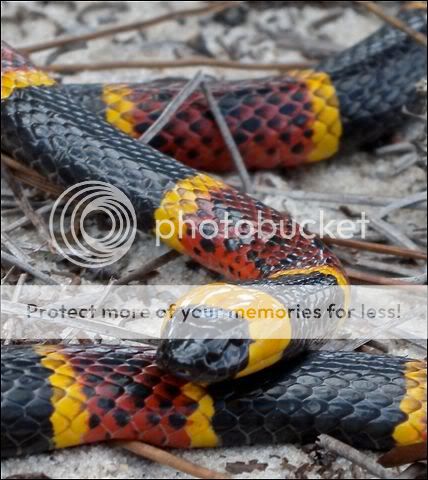
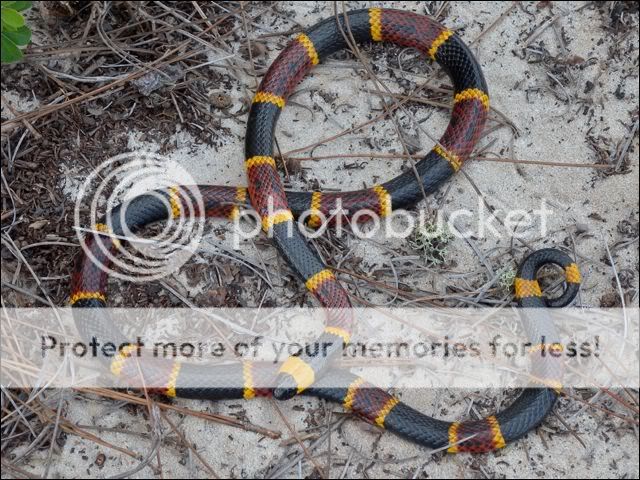
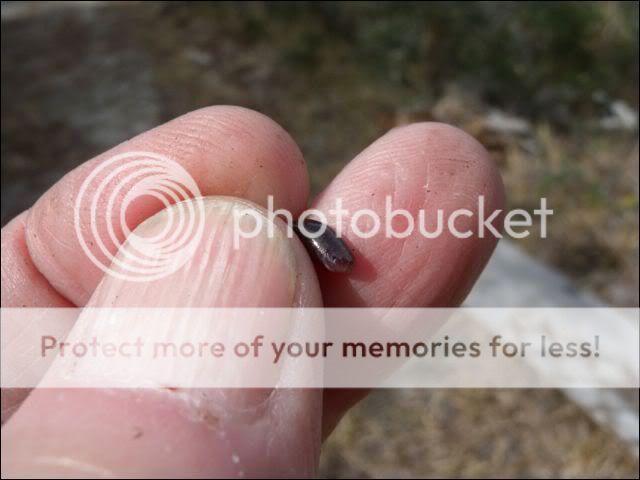
Awesome photos Terry!,....and you are very welcome my friend, it was my pleasure talking to you about other funny stuff in the process too.. 
Ain't that some cool Coral behavior!?? with the flattening out and cruising backwards to confuse a predator (or even us humans)..LOL!........very nice closeups too BTW!
I captured my first Brahminy Blind snake in Ft. Lauderdale in Plantation in the early 90's(should have gotten pics too dangit!). It was in the soil by the roots of a tree I was transplanting. I thought it was a black worm at first, but under closer observation, saw that it had tiny dark dots for eyes that looked like two specks of fine pepper, and an EXTREMELY tiny tongue was flickering in and out too,....man!, was that tiny little dude a cool experience to behold..LOL!
I have to get over here much more often too!
~Doug
-----
"a snake in the grass is a GOOD thing" 
my website -serpentinespecialties.webs.com
I have been a collector here in Sarasota for 22 years and have found plenty of blind snakes, those suckers can find the smallest hole in your bag and escape which can be quite embarrassing when you tell someone "look what I found" and its gone, but the strangest place I ever found a blindsnake is in my roof gutter 10' off the ground while cleaning out leaves and some mud, but it was blue and 5" long, very cool, I felt it would be worth keeping if I had ample amounts of termites to feed to it but anyway just I released it to the ground. JB
The blind snake was blue because it was about to shed it's skin,Joe. I've seen it many times and kept them until they shed. For a teeny snake, they still have powerful musk,huh?
:Mark
-----
Surrender Dorothy!
Very nice Terry!,.......
From what I understand, the Everglades(paludicola)has a natural range in the extreme southern area of Florida and the upper Keys, and also around the Merrit Island area, and similar Mangrove habitat near Cape Canaveral. Their irises tend to be a lighter yellowish color as opposed to the brighter red/orange of C.c.priapus as well.
As far as an exact intergrade area, I really haven't a clue, but the one you have there does have very red irises and isn't from these same areas mentioned, so I would go with Southern Black on that one.
~Doug
-----
"a snake in the grass is a GOOD thing"
my website -serpentinespecialties.webs.com
I saw racers like that in the Tampa Bay/st Petersburg area of Florida when I lived there. Look like intergrades, though I've caught plenty of Whitechins ( aka Southerns) there as well.
Matthew
Help, tips & resources quick links
Manage your user and advertising accounts
Advertising and services purchase quick links
