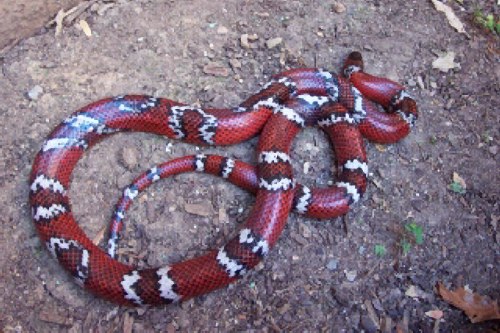
Has the importing of hondurans ceased? just wondering because I haven't really seen any new morphs appear for a while.
Reptile & Amphibian Forums
Welcome to kingsnake.com's message board system. Here you may share and discuss information with others about your favorite reptile and amphibian related topics such as care and feeding, caging requirements, permits and licenses, and more. Launched in 1997, the kingsnake.com message board system is one of the oldest and largest systems on the internet.



importing of hondurans..
hondorock
Feb 28, 2010 02:09 PM
Replies (25)
avalanche
Mar 01, 2010 07:06 AM
I'm not sure what importation has to do with new morphs being created but I think its mostly because the Honduran market is saturated. The Hondurans enjoyed a long run as the "it" snake, their time in the spotlight is over.
There is no reason to import any Hondurans as there is so much CB stock available.
tspuckler
Mar 01, 2010 09:52 AM
Most of the morphs of Hondurans weren't imports - they were the result of captive breeding.
Tim

Third Eye
a153fish
Mar 01, 2010 02:42 PM
I bet that would make for a good albino!
-----
King Snakes! Who can make a better mouse trap?
Jorge Sierra
rtdunham
Mar 01, 2010 06:27 PM
>>Most of the morphs of Hondurans weren't imports - they were the result of captive breeding.
I know what you're saying, Tim. But don't forget the first hypoerythristic (anerythristic) was an import, and the Loves' hypo line came from a an imported het/hypo. That's two out of the "big three". I just don't know enough history of the amel to know how closely related the Hortenbeck's het/amels were to imported stock.
All the morphs probably arrive on our shores in imports, as hidden genes: it's when we inbreed that those genes align, or find their match, if you will, and producing phenotypes. It IS true an import tomorrow could bring in a new and meaningful gene tomorrow, but statistically it's unlikely.
I thought Honduras had shut down exports. That could explain, too, why we see fewer hondos imported! But i think your basic premise is right on: the need for imports has been displaced by the hobby's robust production of captive-bred animals that are prettier and healthier.
None of which opposes the argument that we'd be well served by occasional imports to introduce new blood to our own lines of hondos: outcrosses to different lines often introduces renewed vigor.
DMong
Mar 01, 2010 07:55 PM
Sort of reminds me of a few of the things we corresponded about earlier too..LOL!
~Doug
-----
"a snake in the grass is a GOOD thing" 
my website -serpentinespecialties.webs.com
mfoux
Mar 02, 2010 07:16 AM
Just curious...what about Costa Rica and Nicaragua? Have they also shut down the export of reptiles?
-----
---
http://www.mikefoux.com
http://snakerack.blogspot.com
1.2.0 Hondurans Het Amel
1.1.0 Hondurans Anery, Het Hypo
0.1.0 Honduran Hypo
0.1.0 Honduran Hypo, Het Anery
0.2.0 Pueblans
1.0.0 Pueblan Hypo
0.1.0 Corn Bloodred
0.0.1 GBK Blair's Phase
1.0.0 California King
0.1.0 California King Blue-eyed Blond
0.0.1 Speckled King WC
1.1.0 Brooksi Hypo
0.0.1 Jungle Carpet
0.1.0 Ball, Normal
0.0.1 Sulcata
1.2.1 Leopard Geckos, various morphs
0.1.0 Wife, Caucasius Mexicana
tspuckler
Mar 02, 2010 11:03 AM
You make some good points - at least some of the "building blocks" were indeed imports.
I was responding to the idea of what the first person posted - that they haven't seen any new morphs in awhile and thought it was due to the lack of imports. I'm pretty sure that all the new morphs in the last 10 years (or more) have been the result of captive breeding.
Do you know what ever happened to the "calico" Honduran that was in the "REPTILES" magazine article? Was that one an import?
Tim
mfoux
Mar 02, 2010 05:35 PM
Tim, I was wondering about that myself. I ran across it on the internet, but in about two years of checking the site, it was never updated. Now I can't seem to find it at all.
-----
---
http://www.mikefoux.com
http://snakerack.blogspot.com
1.2.0 Hondurans Het Amel
1.1.0 Hondurans Anery, Het Hypo
0.1.0 Honduran Hypo
0.1.0 Honduran Hypo, Het Anery
0.2.0 Pueblans
1.0.0 Pueblan Hypo
0.1.0 Corn Bloodred
0.0.1 GBK Blair's Phase
1.0.0 California King
0.1.0 California King Blue-eyed Blond
0.0.1 Speckled King WC
1.1.0 Brooksi Hypo
0.0.1 Jungle Carpet
0.1.0 Ball, Normal
0.0.1 Sulcata
1.2.1 Leopard Geckos, various morphs
0.1.0 Wife, Caucasius Mexicana
rtdunham
Mar 02, 2010 10:04 PM
...I was responding to the idea of what the first person posted - that they haven't seen any new morphs in awhile...
it seems like new things continue to appear, with the first "opal" or pearl, mega hypos and reverse amels in the past few years. but you're right, there hasn't been a new recessive trait since the 90s, and nothing causing a fundamentally different color change the way the first three morphs did. look at the reverse amel in the middle of the 11th row at don shore's website:
http://www.shoresenuffsnakes.com/breeders.aspx
Genetic makeup not yet determined, I'm told.
Maybe we'll see white-side show up in a honduran some day. Or the calico will reappear. A sharp, recessive striped morph like the one red rat snakes exhibit. Or something entirely unexpected. Any ideas, based on how colors are distributed and what's happened in related subspecies or species?
Do you know what ever happened to the "calico" Honduran that was in the "REPTILES" magazine article?
the calico and several offspring, possibly hets, died during a power outage, without breedings that could have tested or preserved the morph. Maybe it'll show up again some day, the way a second hypoerythristic was found and imported after ernie wagner's died.
I've posted a pic of the calico. As near as i can see, it differed in two ways: it was unusually red--hypererythristic, perhaps? (check the narrow mid-triad rings, that are usually white, cream, yellow, orange, or at best orange-red). And part of each black ring was white, perhaps split by white, creating triads that were black/white/black/red/black/white/black instead of black/white/black. Very dramatic. It would have created some fantastic phenotypes when bred into hypos and hypoerythristics.
Was that one an import?
I don't know if we'll ever know. I tried harder than anyone, i think, to track down information on it. It wasn't like hitting a brick wall, it was more like being told a dozen times information would be available "tomorrow" or "next week", and deciding if i kept believing that i'd be Baker Acted. I don't know whether it was obfuscation (HA! finally got to use that word!) or just a case of a breeder who didn't know, didn't know why it mattered, and didn't care.
"calico" honduran
hondorock
Mar 02, 2010 10:18 PM
Thanks for everyones replies! Dang I wish that calico was still around! Let's just keep our fingers crossed for another one.P
Jeff Schofield
Mar 02, 2010 08:50 PM
Do any locality guys keep Hondos? Does it bother you that there is no locality data? If there are future imports can you do anything about getting locality data? Wouldnt it be hypocritical to be as anal for locality for one ssp. and not making the attempt at the other? Just sayin...
KevinM
Mar 03, 2010 09:51 AM
Good post Jeff. I think certain species and subspecies are moving or have moved into the realm of "XYX-like", or "XYZ-morph" due to the points you presented. The "Okeetee-phase" cornsnake is one example I can think of where the actual source of capture has moved to the wayside for perfection in physical expression. Plus, I think the business of exporting from a majority of countries has ALWAYs been affected by changes in political regimes, restrictions, closures, and other factors impacting the ability to do that specific business and not so much with ability to capture local fauna. Kind of hard to snake hunt the hills of "insert country" if guerilla warfare or landmines are present, and you are likely to be shot by resistance fighters. So, with certain species or subspecies you are going to just have to be happy with having a "Honduran Morph" milksnake that for all practical purposes keys out to be L. t. hondurensis, and leave it at that. Thats probably why having a true locality based collection is a labor of love and angst when dealing with animals you cannot capture yourself LOL!! It may also explain why some subspecies of milk never made it commercially like the Ecuadorian milksnake. When the magic of "locality" could not be verified, maybe folks decided they or the hobby didnt need another large, and not very attractive milk in the hobby. I certainly am not going to lose sleep selling (hopefully!!!) baby hypo hondurans in another year or two when my pair matures because I cannot verify locality or have a fear of even calling them hondurans. But I can also personally oogle a pair of St. Marys coastal milks and appreciate their beauty AND their locality implications. Do I think locality snobs that keep certain subspecies or morphs are being hypocritical if they ride the locality bandwagon and berate others? Yes I do!!
nategodin
Mar 03, 2010 03:30 PM
It's really too bad that so many of the big-time milkheads chose to purge micropholis from their collections after questions about their purity arose. I've been in touch with Bill Lamar, who collected the male of the founding pair in Popayan, Colombia. The locality of the female is less clear (I still have a little more sleuthing to do) but it was definitely from Colombia as well, most likely from a little further north (and a little further uphill) in the same inter-Andean valley. This is a known intergrade zone, so the snakes' RBR counts that are at or just above the 18-20 limit that defines "pure" micropholis. Those low band count animals have a different look, and seem to be found closer to the Pacific coast, on the other side of the Andes mountains.

KevinM
Mar 03, 2010 08:16 PM
You know Nate, sometimes I think it just gets to a point of whether or not YOU enjoy that species/complex of milks. They are cool, big, rugged looked triangulum with their black tipping and natural beauty. I know it would be nice to say in absolute certainty they were micropholis, but what you have may be the best ANYONE can get in the hobby and work with it from that standpoint. I would think it would be a shame if such animals were no longer available because of the locality thing.
nategodin
Mar 04, 2010 11:17 AM
There are a few people still working with them... Bill Lamoreaux definitely is, and I know Dr. Orlando Diaz of Legacy Reptiles recently picked up a breeding group from him. I think Scott Ballard has some as well. I'm primarily a gaigeae guy, so I'm used to tipping, and appreciate having another rare triangulum that adds a little color to my collection.
Nate
Sunherp
Mar 03, 2010 06:43 PM
"Locality snobs"... "hypocrits"?
Please elaborate.
-Cole
KevinM
Mar 03, 2010 07:25 PM
To elaborate, if you berate certain non-locality species or subspecies of snakes for whatever reason, dismiss them as junk, yet still morphs or non-locality snakes of other species or subspecies, then you would be hypocritical in your actions IMO. I couldn't keep something like locality alterna, cal kings, etc. and dismiss non-locality alternas, cal kings, etc. as junk or garbage not worthy of keeping due to lack of locality data, and happily keep a breeding colony of kenyan sand boas, common boas, or even other king or ratsnake species and without any locality data and not treat those the same way. I do not think locality afficiandos are snobs LOL!! As stated, keeping a purely locality based collection is a passion not all are patient or worthy enough to pursue. All I am saying is I dont appreciate someone ragging my non-locality XYZ milk as being less than worthy, then happily brag about your awesome "double het for bowlegged and doublejointed pink" morph cal king.
DMong
Mar 03, 2010 11:49 PM
Well put!. Yeah,....I agree with that too Kevin. I'm thinking Cole probably does as well.
~Doug
-----
"a snake in the grass is a GOOD thing"
my website -serpentinespecialties.webs.com
Jeff Schofield
Mar 04, 2010 12:04 AM
Why not have a sexed pr of locality snakes....and breed the same male to a non-locality female as well? Nothing wrong with having it both ways!
terryd
Mar 04, 2010 12:51 AM
Both ways?
To kinky sounding for me. But what ever turns your crank.
Sunherp
Mar 03, 2010 06:54 PM
Well... In the middle of nowhere, but I have a signal for now.
How many times do I have to say that I don't have issues with generic stuff and keep some of that as well?! How is desiring locality data on ANYTHING hypocritical? It would be sweet if all of my snakes had it, but I'm not bothered that some don't.
There are locality Hondurans in the country, now. I will ask to be on the waiting lost when they are available. There are locality breeders of every Latin American subspecies that is available.
-Cole
Jeff Schofield
Mar 03, 2010 08:12 PM
Cole, its the prodominance of locality nuts that makes it difficult to keep "generics", and that shouldnt be. I totally understand those that hunt, wc animals should be the pride and joy of our collections! But raising cb animals with the same "status" has gotten us to the point that its affecting not only collections and reputations but our social dynamics as well. The fewer truely "locality" animals the better/more even we all are with our collections. It leads to freer mixing and matching of animals, broader and healthier genetics, and easier comparing apples to apples. Locality DOES have its place, I just hope someone such as you can see the benefits of having fewer "locality status" animals in the hobby.
BRhaco
Mar 05, 2010 03:11 PM
Well, I'm an absolute fanatic about my locality animals-annulata, splendida,H. kennerlyi, B. subocularis-but I have never nor would I ever dismiss anyone's animals because they were "non-locality". I breed tons of non-locality snakes myself. Honestly, I don't see a lot of people trashing other folk's snakes for being "non-locality junk"....
Okay, maybe a time or two with some of the alterna people 
-----
Brad Chambers
WWW.HCU-TX.ORG
Breeder of:
Green Tree Pythons
Jungle Carpet Pythons
Pastel, Pinstripe, FIRE, Piebald, Clown, Lavender Albino, Leucistic, and Spider Ball Pythons
Striped Colombian Boa Constrictors
Kenyan, Rufescens, and Conicus Sand Boas
Red Phase Western Hognose Snakes
Spider Western Hognose Snakes
Albino Western Hognose Snakes
Locality Trans-Pecos Mexican Hognose Snakes
Southern Hognose Snakes
Eastern Hognose Snakes
Tricolor Hognose Snakes
Hypo Checkered Garter Snakes
Eastern Blackneck Garter Snakes
Stillwater Hypo Bullsnakes
Patternless Bullsnakes
S. GA Eastern Kingsnakes
Locality Desert Kingsnakes
Albino Desert Kingsnakes
Hypo Desert Kingsnakes
Mexican Black Kingsnakes
Desert Phase, Striped Desert, Newport, and Coastal California Kingsnakes
Locality Mexican Milksnakes
Spotted Mexican Milksnakes
Tangerine Mexican Milksnakes
Locality Alterna
Abbott Okeetee Cornsnakes
Mexican Baird's Ratsnakes
Cape Housesnakes
Tangerine Albino African Fat -Tailed Geckos
Locality Spotted Turtles
DMong
Mar 05, 2010 04:45 PM
"Okay, maybe a time or two with some of the alterna people"
LOL!, yeah, some of those alterna clan are far too obsessed about exactly which rock something was captured under, and if the exact rock isn't known, the snake is worthless in their eyes. I have checked out some of their bickering in the past, and just couldn't stand reading any more of it any longer and went elsewhere in a hurry. 
Okay!,....let the thrashing upon me begin!..LOL!!
~Doug

-----
"a snake in the grass is a GOOD thing"
my website -serpentinespecialties.webs.com
DISCERN
Mar 06, 2010 07:10 PM
I am right there with ya Brad!! I love locality, but also, the non locale animals as well. They are all special.
-----
Genesis 1:1