heres another pic to help. let me clarify my statement, First im no expert dont claim to be, thats why i asked for help in identification. Secondly, i have never heard of a greenish rat snake and when i asked the vendor we was in the same boat as me, he was like "I think theres some gray,black, and yellow in the blood but im not sure" Third what i should of said was im amazed how little the vendors seem to care about rat snakes if you ask about a king,milk, or a ball they seem to know everything and more,but rats are like second rate citizens. maybe thats not the case everywhere but it is around here. Sorry if I offended anyone, I post on here because I dont have all the answers, and i have gotten some good advise.

Reptile & Amphibian Forums
Welcome to kingsnake.com's message board system. Here you may share and discuss information with others about your favorite reptile and amphibian related topics such as care and feeding, caging requirements, permits and licenses, and more. Launched in 1997, the kingsnake.com message board system is one of the oldest and largest systems on the internet.


some clarification
seanmm1971
Mar 22, 2010 02:14 PM
Replies (40)
KevinM
Mar 22, 2010 03:15 PM
This post definitely provides more info on your situation than the previous LOL! No offense, but your initial post was a bit confusing. It sounded like the vendor knew what it was and labled it accordingly, but you were perplexed as what a greenish rat was. I understand your post now, and your observation on vendors is correct and valid. MANY do not know the animals they are selling at shows. They are not breeders, but simply brokers. They buy off captive bred clutches and groups of wild caught animals at wholesale prices and really cant tell you anything about the animals they are selling above and beyond what the original supplier told them. If the supplier told this dealer they were Crabby Patty ratsnakes, he would have probably labled them as such LOL!! Its a bit easier on the more common kings and corns, but when you start getting into the more oddball stuff like natural integrades, etc., or even more locality stuff like everglades rats, it can get fuzzy on the part of the vendor. You just have to take a gut check and go for it, or pass. Check further down on the posts. Someone recently posted pics of their adult greenish rats they are breeding this year. One appears hypo, but will give you an idea of what yours should mature into pattern wise. Enjoy the little critter!!!
Elaphefan
Mar 22, 2010 05:25 PM
The problem with intergrades is that if they were a cross between two intergrades, then you would have no idea what the offspring would look like. Greenish Rats are founf in the intergrade zone of Yellow and Black Rat Snakes.
If you hang out here long enough you will quickly learn that not all the folks out there understand what they are doing, but the majority do, and produce wonderful animals.
That pup in the picture seems to have a lot of yellow in him. I bet both his parrents were "greenish rat snakes".
Care for him well, and next year at this time you will have a better idea of what he will look like as an adult.
From the way he is acting in the picture, I think he will turn out to be a great pet.
Below is a Gulf hammock Rat Snake

DMong
Mar 22, 2010 05:33 PM
And I totally agree.
~Doug
-----
"a snake in the grass is a GOOD thing" 
my website -serpentinespecialties.webs.com
DMong
Mar 22, 2010 05:25 PM
Now I uderstand what you meant a bit better, and was basically the way I figured it earlier too. Kevin is certainly "spot-on" about all he mentioned about how the hobby tends to work.
It does also look to be a genuine "greenish" rat juvenile as well. One also has to keep in mind that these intergrades can also have different percentages of either snake involved with them too, and will often look a bit different from individual to individual, and area to area.
have fun with it bro!
regards, ~Doug
-----
"a snake in the grass is a GOOD thing"
my website -serpentinespecialties.webs.com
BillMcgElaphe
Mar 22, 2010 10:18 PM
Just a couple thoughts, folks….. Take them for what they are worth coming over the internet. I don’t get them very often!! 
.
First, when buying any NA Rat Snake, you rarely know exactly what it will look like till it’s grown. Don’t be afraid to ask the vendor to show pics of the parents.
.
If you want a specific natural animal (species, subspecies, or variant), buy from a trusted breeder.
(Or collect it yourself where legal…. If you want to discuss this in more detail, let’s start a separate post. There are strong opinions on this one.)
.
As already mentioned, “Greenish Rat Snake” is an integrade between the Carolinas costal Yellow Rat:
.

.

.
and the Carolinas Piedmont Black rat.
.

.
.
Your animal could very well be a “Greenish” or a mutt.
A better pic and time will tell.
.
Either way, it looks like a fine snake. Take good care of it.
There was an effort in the late 60’s to make “Greenish RS”, a subspecies of its own. This didn’t hold water.
-----
Regards, Bill McGighan
BillMcgElaphe
Mar 22, 2010 10:28 PM
On Gulf Hammocks……
As far as I’m concerned there are 3 types of “Gulf Hammock” variant of Rat Snake.
.
Type 1 – found only in deli cups – Comes from an animal that has been crossed with several types and comes out with blotches and stripes and is grayish.
.
Type 2 - “Gulf Hammocks” that come from stock collected in the GH range (See a 1958 version of Conant’s Field Guide), but are showing more traits towards a Gray Rat or a Yellow Rat…
.
Type 3 – This is for us weird “purists”…. The animal that was described as a subspecies by Archie Carr in the mid 1940’s.
I was privileged to meet this icon of Turtle conservation only once in the early ‘70s, but he said that he described the type animal from a specific location.
Later I found the location from Ross Allen.
.
Carr's “pure” (and there is no such thing really) GH had clear, finely defined stripes and blotches, with a gray base color.
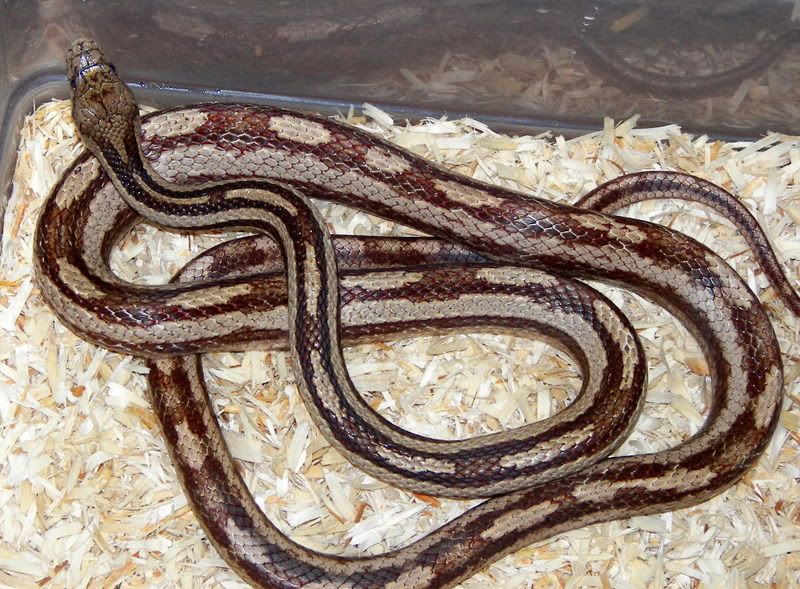

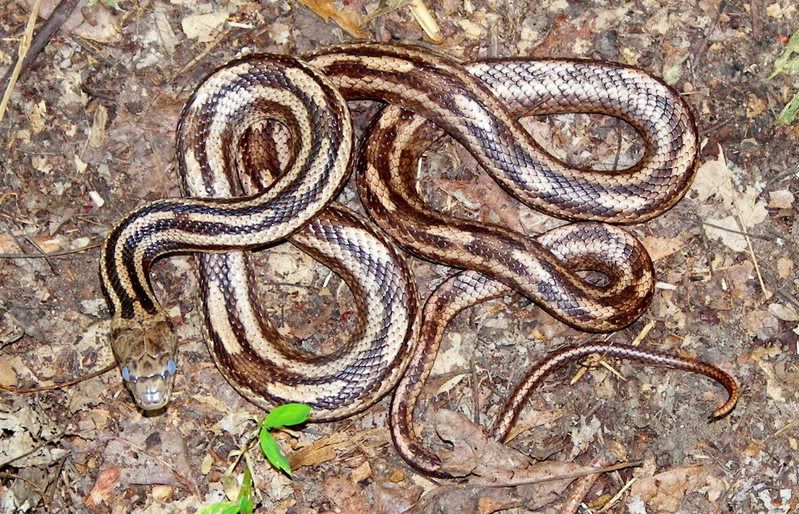


.
.
.
By the end of the ‘60s the subspecies was considered invalid as the GH was considered an integrade between FL Pan Handle Gray Rats:
.
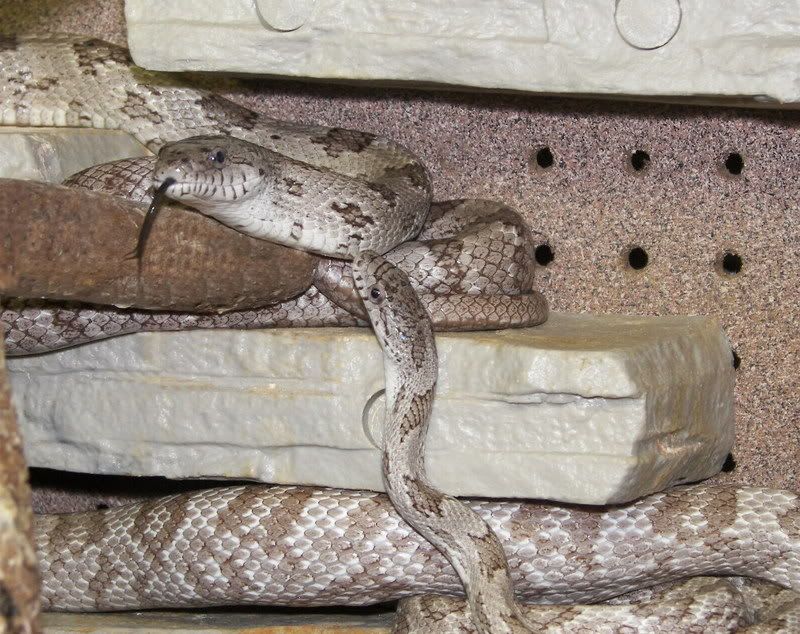
.
And Central FL Yellows:
.

-----
Regards, Bill McGighan
DMong
Mar 22, 2010 10:41 PM
Interesting post, and snakes too Bill!, Quite a unique look to those.
I was also fortunate to have met Ross Allen as a kid in the early 70's. Also have met Bill Haast several times as well. It will be a sad day when Bill Haast passes away too, being late 99, almost 100 years old now.
regards, ~Doug
-----
"a snake in the grass is a GOOD thing"
my website -serpentinespecialties.webs.com
BillMcgElaphe
Mar 22, 2010 10:46 PM
Yes Haast is a living legend, but now seems frail.
.
As far as Ross, in the mid 70s I regularly bought Bantam chickens from him for a Bumese Python, so chatted with him regularly. He was mostly retired on his "Indian Lake Prairie" farm.
Great showman and easy to talk with!!!
-----
Regards, Bill McGighan
DMong
Mar 22, 2010 10:52 PM
yes, he was an easy-going guy. I had a few friends that would sell Ross and Bill several types of venomous now and then. I also had an autographed copy of "Cobras in His Garden", but sadly lost it in the course of some moves many years ago. What a bummer..LOL!
But I do have some photos of Bill and I that I will always cherish, so that is a good thing. 
~Doug
-----
"a snake in the grass is a GOOD thing"
my website -serpentinespecialties.webs.com
BillMcgElaphe
Mar 22, 2010 10:59 PM
You should scan them in and show us, Doug!!!!
That would be cool.....
-----
Regards, Bill McGighan
DMong
Mar 22, 2010 11:34 PM
Just a few that I found of the most recent visit over in Punta Gorda, Florida (circa 1997 or so)
Guess who with the milk/king shirt..LOL!
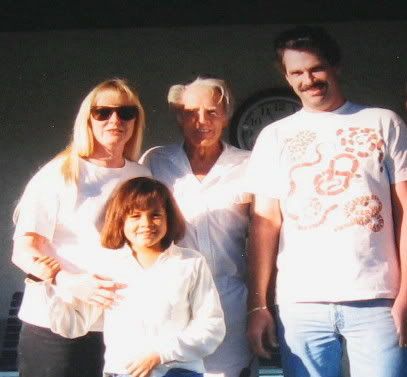
Milking one of the Easterns

out in the Diamondback enclosure

-----
"a snake in the grass is a GOOD thing"
my website -serpentinespecialties.webs.com
BillMcgElaphe
Mar 23, 2010 07:42 AM
Very cool!!!!!
Wow, Haast looks great there and he's about 87 Years!!!
-----
Regards, Bill McGighan
DMong
Mar 23, 2010 08:11 AM
Yes, I agree, he does look good for being 87 in these pics!. Here are a few more I found from the same visit.
enjoy!, ~Doug


-----
"a snake in the grass is a GOOD thing"
my website -serpentinespecialties.webs.com
monklet
Mar 23, 2010 11:13 AM
WOW, you lucky man! Would love to meet the gent! Great pics too and that EDB "enclosure"!!! Holy moly. Sure suprised we don't here more about our seemingly immortal hero on the forums. What a guy!
-----
Have a nice day
Website: SerpenTrack
DMong
Mar 23, 2010 03:20 PM
Thanks Brad!,.....glad you can appreciate all this true "icon" of a man has done for herpetology. I am surprised about that too, but if you google his name, there is a ton of interesting stuff to check out. Many old classic photos too!
I'll never forget the visits in the very early to mid 70's of the Serpentarium on US-1. I also remember seeing that HUUUUGE crocodile that killed the small boy when he fell into the croc's pit from a small retaining wall surrounding it. Haast later shot the croc himself because he knew what the public would want to do with it anyway afterwards.
I can only imagine what that ordeal must have been like for all concerned.
regards, ~Doug
-----
"a snake in the grass is a GOOD thing"
my website -serpentinespecialties.webs.com
pinelandsghost
Mar 24, 2010 10:39 PM
****I'll never forget the visits in the very early to mid 70's of the Serpentarium on US-1. I also remember seeing that HUUUUGE crocodile that killed the small boy when he fell into the croc's pit from a small retaining wall surrounding it. Haast later shot the croc himself because he knew what the public would want to do with it anyway afterwards. *****
-----------------------------------------------------------------
I remember that very well as I had met Bill Haast the very day before that horrible thing happened.
We were in shock upon hearing it.
He signed his book for me and spent a little time talking about snakes and the like. A very nice man.
The croc was a nile croc with a stumpy tail. It would sometimes prop itself up against its stump making it possible to climb out of its enclosure. The day that the child fell in his father had sat him on the wall to see the croc better and the boy slipped off. Thats all it took. Tragic beyond words.
I have recently corrisponded with his grandson who reached out to find someone who could get his boa to california for him. He said his granddad is doing very well and attributes his heath to the cobra venom shots he used to give himself to help him tolerate an accidental bite. Yes Haast is quite a man.
Mike.
DMong
Mar 24, 2010 11:08 PM
That is very interesting you were also around the Serpentarium in that era. I believe the name of the croc was actually "Stumpy" as well, and he actually bit some of his own tail off, and possibly some more had to be amputated possibly. And even THEN I think he was like an immense 14 feet long with only the huge tail base intact. His 11 and 14 foot King Cobra's were certainly spectacular when he let them slither out of their enclosure's into the courtyard, weren't they?
Fond memories indeed, and I will always enjoy them. Glad you could experience all those things too man,....glad you chimed in!
regards, ~Doug
-----
"a snake in the grass is a GOOD thing"
my website -serpentinespecialties.webs.com
pinelandsghost
Mar 25, 2010 01:04 AM
***His 11 and 14 foot King Cobra's were certainly spectacular when he let them slither out of their enclosure's into the courtyard, weren't they? ***
-----------------------------------------------------------------
Do remember his wife doing the comentary off to the side while he worked with that huge cobra? Haast,Haast,Haast! She'd say.
I think he used to scare her to no end.
Yes I consider myself lucky to have met him at a young age to make an impression on me. Oh and my autographed copy of cobras in his garden is up on my bookshelf
Mike.
DMong
Mar 25, 2010 01:05 PM
LOL!!,.....yeah, I remember all that too, and the crowd gasping as the cobra's would lunge towards him.
I wish to heck I didn't LOSE my copy many years ago!. Inside the cover it said something like......"to Doug, Happy 14th Birthday!, wish you all the best!.......Bill Haast"
I could kick myself right square in the "arse" for losing that book!........and some other very old one's too as a matter of fact by Ross Allen, etc...
I DO still have some extremely old slides from Ross Allen's Reptile Institute however!
~Doug
-----
"a snake in the grass is a GOOD thing"
my website -serpentinespecialties.webs.com
monklet
Mar 25, 2010 03:52 PM
...and higly enviable. This really deserves a thread of its own! Was "Cobras in My Garden" his only book. I read one of them a million times when I was about 10 but can't remember the title now. It had a picture of the original serpentarium and all that stuff. I like to have that now...gotta look on Amazon.
Brad
-----
Have a nice day
Website: SerpenTrack
DMong
Mar 25, 2010 07:27 PM
Glad you like all this stuff too Brad!. He wrote some other things too, but "Cobras in His Garden" was by FAR his best and most thoroughly detailed works, as it depicted his entire life span with serpents up to that point.
Yes, that huge white plaster cobra out front was a real landmark man(the original one(even much more life-like)was blown over in a bad storm after only a few years there), and WAS going to be sent to his other place in Punta Gorda as well, but it got smashed when the idiot construction workers went to move it with a crane..LOL!. I remember seeing this on the news countless years ago.
If you do a google search on him or the Miami Serpentarium, there are just TONS of interesting articles and photos to check out!. Lots of VERY old black and white stuff too.
~Doug

-----
"a snake in the grass is a GOOD thing"
my website -serpentinespecialties.webs.com
monklet
Mar 25, 2010 11:25 PM
Thanks for the image Doug. My vote for herper photo of the universe!
Funny thing though, if you posted a pic of some yahoo doing that on FHF, they'd all (including me probably) be griping about what an idiot this guy is and how he's screwing it up for everyone...but the FACT that it's Bill makes it something entirely different and awesome!
-----
Have a nice day
Website: SerpenTrack
DMong
Mar 26, 2010 12:48 AM
LOL!!,...that is funny as heck man!,,LMAO!. I know!, times are very different now aren't they?. I see jerks on TV all the time trying to show-off with how much they can get away with regarding foolish and careless handling techniques with "hot stuff" all the time. Like the dork that got bitten in the stomach by the monacled cobra, and on and on. I see that idiot kissing King cobra's, tapping them on the snout, and countless other very foolish stunts. Just a silly-ass thrill seeker is all that gets his adrenaline going duing foolish stunts. Of course until he and these other guys eventually receive something they didn't really wish to seek..LOL!
~Doug
-----
"a snake in the grass is a GOOD thing"
my website -serpentinespecialties.webs.com
a153fish
Apr 17, 2010 04:23 PM
yeah I saw that show! He's still doing it too I believe. This has been a very cool thread, glad I found it. Thanks for the pics Doug. I wish I could have seen him in person. I drove out to his last location in Central Florida about oh 10 years ago but they were closed for renovations. I never went back. Wish I had.
-----
King Snakes! Who can make a better mouse trap?
J Sierra
pinelandsghost
Mar 26, 2010 07:43 PM
I pulled down my copy of cobras in his garden and here's what is penned in..."Thank you Mike for your visit to the Surpentarium. 8/26/77 Bill Hasst"
I was 17 when he signed this, funny I thought I was younger.
I looked through it to see if there were any other books from Haast but saw no other reference.It is written by Harry Kursh.
I did find a title from Kauffeld I wasn't aware of, "snakes and thier ways" co-written with Curran CH in 1937. I'm going to have to did that one up.
I have "snakes and snake hunting" and "snakes:the keeper and the kept" These were writen decades ago but are a major value still today!
Mike.
DMong
Mar 26, 2010 08:39 PM
I was also born in 1960(May), and was 17 then too!..LOL!, so I apparently got my copy signed just three years prior to yours on my 14th birthday. That is unreal man! Glad you still have yours
yeah, "the Keeper and the Kept" by C. Kauffeld is an absolute classic!
~Doug
-----
"a snake in the grass is a GOOD thing"
my website -serpentinespecialties.webs.com
pinelandsghost
Mar 24, 2010 10:56 PM
***.
As far as Ross, in the mid 70s I regularly bought Bantam chickens from him for a Bumese Python, so chatted with him regularly. He was mostly retired on his "Indian Lake Prairie" farm.
Great showman and easy to talk with!!! ***
-----------------------------------------------------------------
Bill Hi, I used to go to his summer wilderness camps at the farm. He was a great influence on my interest in the natural world and of course snakes. Used to corrispond with him when I got back home to New Jersey. We even had a trip planned for South America with Paul Bilings running it but it fell through.
Do You remember Red Adair? Used to wear that outback looking hat. Went for a ride into town in once with him down that dirt road from the farm in that little Datson pickup he had, I think I'm still shaking a little from that ride. LOL
He was a Piece of work for sure.
I still have every autographed book, every letter that Ross sent me. I even still have a diamondback skin that he gave me. Red said at the time that it would dry up and blow to dust in a couple of years, well I hit it with mink oil and its what, 36 years ago and it is in perfect condition. Its a cherished possession.
Mike.
pinelandsghost
Mar 24, 2010 11:00 PM
Bill oh ya, I'll be in Florida again next week and my target for this trip???
You guessed it gulf hammocks. I have a breeder friend who works the railroad down there that knows the hots spots for them.
I'll be hooking up.
Mike.
BillMcgElaphe
Mar 25, 2010 09:42 AM
Best of luck on your trip...
Email me on how you do..
-----
Regards, Bill McGighan
BillMcgElaphe
Mar 25, 2010 09:05 AM
Hey Mike.
That’s great.. We may have crossed paths!!!
.
…………….“Do You remember Red Adair?”
I met the guy twice, but never knew his name!!! I kind of laughed when I saw him because he played the “Jungle Jim” part to the hilt; the clothes and big Bowie knife…
.
Several times, when I stopped by, there were groups there from the Wilderness Camps…
.
One memorable time, Ross was talking with a group of kids and I was getting a chicken from this little, wiry lady who handled the poultry. The group left for the pond some 50 feet away.
The “poultry” lady said something like, “Ross is going to call the gators. You need to go watch.”
I followed the group with expectations of getting to witness this living legend give his perfect rendition of the call of a gator. I could only imagine that he learned this from an old Seminole shaman.
.
Ross paused to eye the pond where only one or two gators were visible, as if to choose whether he should do a distressed hatchling call, or the booming male territorial challenge. The group was silent with anticipation and I’m sure not one was as attentive as I was. I was expecting to witness a rare event with this living legend….
.
He let loose…
.
He started calling. “Here Gator…. Here Gator….”
They came in mass….
I was crushed.. Took my chicken and went home….
-----
Regards, Bill McGighan
pinelandsghost
Mar 26, 2010 07:53 PM
Bill thats great!LOL
I have photos from back then of Ross,Ross and me and Red.
my scanner is buggered up but if your patient I'll get to them when I get home and send you copies. Oh and yes I'll give you an email to let you know how I make out. I should be so lucky to find a gulf Hammock as pretty as the one you posted picks of. Wow!
Take care, Mike.
DannyBoy9
Mar 27, 2010 06:57 PM
I thought I went way back but you guys must be REALLY old, just kidding. In the early 60's I used to send Haast LOTS of Natrix for a few bucks. Wasn't until later that I realized what he was using them for. Reckon some of those cobras either ate snakes or had to be tube fed. Looking back, I'd think water snakes would provide parasitic loads.
Ross offered to hire me at Jungle Gardens in Bradenton, Fla as the "snake man". Minimum wage & no insurance to conduct the "rattlesnake show." I wanted the spot light but just couldn't accept the risk. A month or so after, a large Pigmy bit my right thumb. It was Ross who walked me thru it after the hospital (s!!) showed incompetence & I signed an AMA before stomping out. That's the last I remember of him.
Haast, Kauffield, Allen, man, what folks they were (are).
BillMcgElaphe
Mar 28, 2010 07:06 PM
"Ross offered to hire me at Jungle Gardens in Bradenton, Fla as the "snake man". Minimum wage & no insurance to conduct the "rattlesnake show"
.
Same here Dan.... I was lined up for a job at Silver Springs till I found out that it was $2.00 an hour, 6 days a week even through holidays, no insurance, etc.
-----
Regards, Bill McGighan
DannyBoy9
Mar 30, 2010 07:33 PM
Hey Bill!
So where was the problem???
flavirufa
Mar 23, 2010 10:40 AM
Bill,hey I saw the pic of your n fla grays and wondered if the larger one in the pic might have come from my bloodline?I've been working with hollow blotched,very light and faded white oaks for a over 25 years.I will post up some photos of a few,soon as I can. Alan
BillMcgElaphe
Mar 24, 2010 09:11 AM
Hey, Alan.
Mine is a WC hatchling, but I think it would be great if you showed a bunch of pics when you can.
-----
Regards, Bill McGighan
monklet
Mar 23, 2010 11:06 AM
Boy, those are some nice rats right there Bill. Thanks for the informative post
-----
Have a nice day
Website: SerpenTrack
BillMcgElaphe
Mar 24, 2010 09:12 AM
.
-----
Regards, Bill McGighan
Elaphefan
Mar 27, 2010 10:21 PM
Bill, nice pictures.
Second, I am not so sure about giving all the credit to Mr. Carr
Elaphe williamsi Barbour & Carr
1940, Occ. Papers Boston Soc. Nat. Hist., 8, p. 340.
45705. Type. Nr. Lebanon, Levy Co., Florida. Harold Williams.
T. Barbour. 1940.
45706-7. 2 Paratypes. Nr. Lebanon, Levy Co., Florida. Harold
Williams. T. Barbour. 1940.
The common person on the papers is Barbour, and the snake is named for Mr. Williams.
Third point, the snake I showed was from Levi Co. GH parrents. I have seen many photos of Grays from that area, and just like Grays from other areas, they can be many shades of coloring. As you know, the same pigment that produces black can produce brown.

BillMcgElaphe
Mar 28, 2010 06:48 PM
Hey Rich,
First, thanks on the pics.
.
.
You said “Second, I am not so sure about giving all the credit to Mr. Carr”
Well, you’re right that Thomas Barbour and Harold Williams were co-authors, but I only chatted with A. Carr, so I mentioned him anecdotally.
.
(As an aside, the most interesting part of our conversation back then was really about his Stilosoma specimens that he kept on his desk.)
It was a different time before internet and email communications.
You only met a fellow herper rarely back then, so there was a camaraderie between all walks of herpers (academics, zoo folks, museum folks, hobbyists, and commercial folks.)
Information was traded freely amongst anyone who could spell reptile or amphibian. Carr was quick to share the info that to consistently keep Short Tails healthy, you needed a steady supply of Tantilla .
.
.
On your third point, your animal falls within my second category (a GH), which, I’ll be the first to say, is only my humble opinion and my own personal criteria, not to be taken as any taxonomic declaration. Its features are consistent with those animals found on the eastern or southern edge of the range map in Conant’s ’58 field guide, approaching Yellows. No hay problema.
.
.
Another thought… Just because an animal is from Levy County, does not mean it’s a Gulf Hammock… It’s a big county.
Although we often use counties for voucher locations, the inconsiderate snakes often show no regard for political maps and their ranges often follow habitat (often indicated by plant associations).
Much of the “Hammock region”, from west to east, starts at the Gulf of Mexico with Salt marshes, continues east to river or Gum swamp forests that meander through some xeric and mesic oak and Longleaf Pine areas.
The eastern edge of the Goethe State forest is a “demark” because it suddenly changes to a strip of highlands with an altitude increase of only a couple feet, but nevertheless dominated by Blackjack oak, Prickly pear, Pocket gophers, Fox Squirrels, Southern Pines, Coachwhips, Indigos, EDBs, etc.
“obsolete variant” Rat Snakes are not common here, but there are Live Oak islands as you go east (still in Levy Co,) and approach Marion County. These "island" Rats were considered intergrades between Yellows and GHs, when we thought GH was a subspecies.
.
That said if you examine a RS from the immediately southeast of Williston, FL, still in Levy County, they are unmistakably Yellow Rats.
.
.
This is a hobbyist forum where all posts are to be taken as opinion. Here’s where I’m speaking from.
I first traveled to the GH range to find GHs in 1971, hunting a few times with Frank Retes who worked for the Ross Allen Institute. From ’71 to ’77 I made hundreds of trips to all points of their Conant range map and beyond, examining hundreds of animals, alive and DOR.
Made many trips from ’82 and ’83 and again from ’96 to 2002, and hit the area about once or twice a year since 2003.
This would be a good GH habitat and location
.

.
if it wasn’t for…....the snake eaters that live here!!!!
.

.
.

-----
Regards, Bill McGighan
