Reptile & Amphibian Forums

Welcome to kingsnake.com's message board system. Here you may share and discuss information with others about your favorite reptile and amphibian related topics such as care and feeding, caging requirements, permits and licenses, and more. Launched in 1997, the kingsnake.com message board system is one of the oldest and largest systems on the internet.

Click here to visit Classifieds

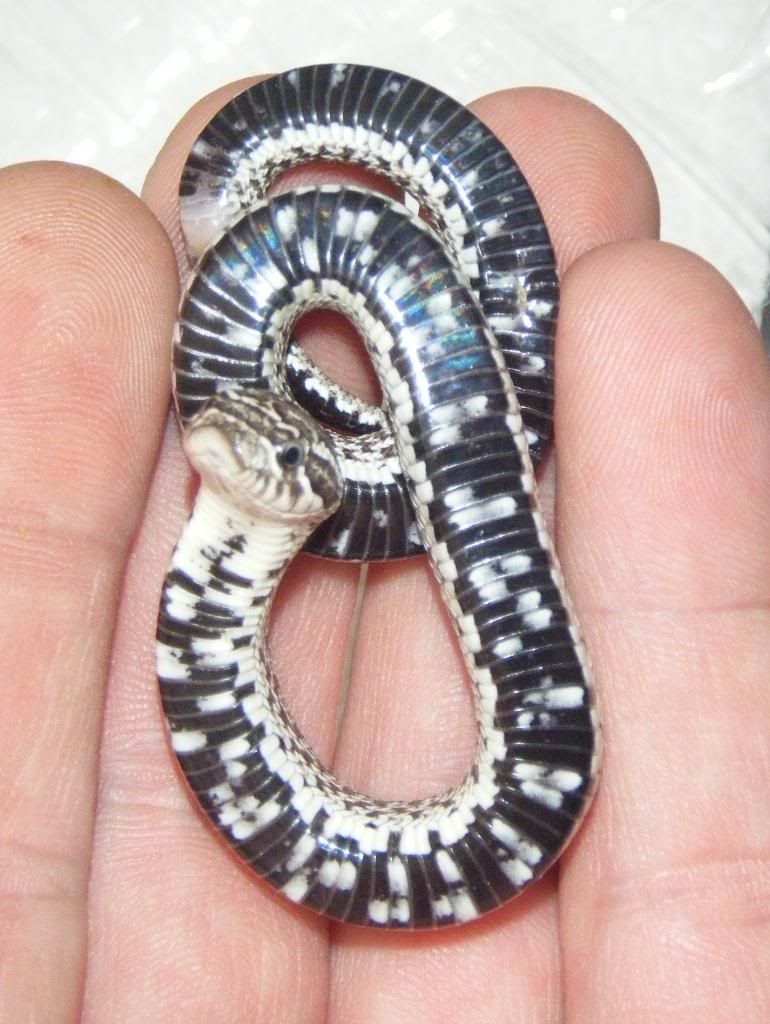
Question about Black and White Western H

SandBoaMorphs May 07, 2010 04:58 PM

I'm a kenyan sand boa guy and there is no doubt when I see an anery/axantic that it is a black and white....

I see classifieds and posted pictures of 'Axantics' for sale for thousands of dollars and regularly, I can't tell they are black and white. Even when pictured next to a normal hognose.

I have also seen some pictures where there is no doubt.

What's the deal?

-----
Mark Huntley
Sand Boa Morphs

Kenyan Sand Boa's
2.1 Rufescens
1.6 Albinos
1.5 Dodoma
1.0 Nuclear Meltdown
1.1 Flame
2.5.8 Normal (orange)
2.7.10 Anery
0.2 Snow
2.2 Yellow Snow
0.1 Splash Albino
1.0 Splash Anery
1.0 Orange Stripe Het Anery
6.7 High Orange Stripe
1.0 Yellow Stripe
1.3 High Orange Tiger
1.3 High Orange
1.1 Snow Paradoxes
0.1 Albino Paradoxes

Western Hognose
2.0 Western Hog
2.0 Western Hog Het Albino
1.0 Green Phase
1.0 Red Phase

2.1 Boston Terriers
0.2 Sooners
1.3 Rhode Island Reds
0.3 Barred Rocks
0.2 Range Hens
0.1 Favorite Wives
1.1 On the fence in-laws
2.1 Rug Rats

CHECK OUT MY NEW KENYAN SAND BOA BLOG
http://sandboamorphs.blogspot.com/

WWW.SANDBOAMORPHS.COM

Replies (8)

RedDevil May 07, 2010 07:20 PM

Axanthic doesn't actually mean it is black and white (just look at the Ball Pythons). I do agree that many of them are not that good looking, though.

Mine looked almost normal when I first got it, too, but she's a nice silver/gray color now. Hopefully she'll keep those colors and not brown out.

Rextiles May 07, 2010 07:33 PM

Without a point of reference, it's hard to define what exactly it is you are seeing.

There are some young (hatchling, yearling) Axanthics that do tend to have some degrees of brown coloration, but it has been my experience with the pair that I have raised over the years that this was merely a gradual color change upon which their brown coloration faded completely.

Perhaps there are some adult individuals that do in fact maintain a high level of brown that are true Axanthics but I have not personally seen any such animal.

From what I've been told and from my own observations, you should be able to define an Axanthic from it's ventral scales if they have a checkered pattern. A normal phenotypic Western will typically have a black and yellow checkered ventral pattern, although some specimens have an all black ventral. Supposedy, a true Axanthic, if it has a checkered ventral, will only have black and white ventral patterning.

This of course brings me to the whole point of what term should even be applied.

There are quite a few people that refer to these animals as Anerythristic instead of using the term Axanthic. Interestingly, the two originators of both Axanthic lines, Brian Barczyk and Vin Russo of which everybody's animals have come from, have only ever called these animals Axanthic. So, when and why did some people choose to change the terminology? While the two traits have some similiar phenotypes, they are quite different from each other and should not be used interchangeably to describe a genotype. From everything that I could find and read about, the term Axanthic seems to be the correct term that was originally defined although there could be some significant reasons to use the other term.

So, how about it? What is everybody else's take on this? What term do you choose to use and why?

I think it's very important that we all can come to some sort of conclusion so that there is less confusion in the marketplace as well as in discussions/forums. Considering that this species is really starting to gain some significant momentum in the reptile world, I find it in our best interest, as breeders, if we can try and clarify this.
-----
Troy Rexroth
Rextiles

SandBoaMorphs May 07, 2010 08:44 PM

Don't they both mean lacking a specific color, like orange, yellow or red?

I've seen these guys this week advertised on KS and I can't tell the difference between an Axantic or a regular hog in some of the pictures.

Is this one of the situations where it takes a year or so for the full color to come out?
-----
Mark Huntley
Sand Boa Morphs

Kenyan Sand Boa's
2.1 Rufescens
1.6 Albinos
1.5 Dodoma
1.0 Nuclear Meltdown
1.1 Flame
2.5.8 Normal (orange)
2.7.10 Anery
0.2 Snow
2.2 Yellow Snow
0.1 Splash Albino
1.0 Splash Anery
1.0 Orange Stripe Het Anery
6.7 High Orange Stripe
1.0 Yellow Stripe
1.3 High Orange Tiger
1.3 High Orange
1.1 Snow Paradoxes
0.1 Albino Paradoxes

Western Hognose
2.0 Western Hog
2.0 Western Hog Het Albino
1.0 Green Phase
1.0 Red Phase

2.1 Boston Terriers
0.2 Sooners
1.3 Rhode Island Reds
0.3 Barred Rocks
0.2 Range Hens
0.1 Favorite Wives
1.1 On the fence in-laws
2.1 Rug Rats

CHECK OUT MY NEW KENYAN SAND BOA BLOG
http://sandboamorphs.blogspot.com/

WWW.SANDBOAMORPHS.COM

Rextiles May 07, 2010 10:06 PM

Don't they both mean lacking a specific color, like orange, yellow or red?

To state in the most basic of definitions...

Anerythrism is the lack of red pigmentation. Yellow pigmentation, if generally found in the species, can either remain intact or develop over a period of time. This is why when you see, for example, Anerythristic Corn snakes, they will usually have a certain amount of yellowing on their cheeks and necks. The same amount of yellowing can also be said for Snow Corn snakes which is basically the crossing of an Anerythristic to an Amelanistic animal.

Axanthism is generally about the lack of yellow pigmentation but it can also include the lack of red pigmentation as well in some species of animals. Although some Axanthic animals can display a brownish color, it has been suggested to me by Charles Pritzel, author of the Genetics For Herpers book, that the brown is possibly a separate color pigmentation and not the result of yellow pigmentation being mixed with the black pigmentation. This of course makes sense to me after studying and trying to determine all the different colors and pigmentations that can go into making a brown color. I would also believe that if yellow pigmentation did indeed exist, then there would be strong evidence of that found on the ventral scales as well where solid yellow coloration is often found, which, from examination of my animals, it is not.

I've seen these guys this week advertised on KS and I can't tell the difference between an Axantic or a regular hog in some of the pictures.

I will assume you are referring to the ad(s) placed by Jeff Nemanius/Gateway City Reptiles about his Axanthic for sale. If so, I do agree that pictures of one particular animal do not look Axanthic to me either. This of course isn't to say that the animal isn't Axanthic, but it definitely lacks the typical coloration of similiar animals in it's age group. I would hesitate to speculate any further and leave it up to Jeff to come here and explain.

Is this one of the situations where it takes a year or so for the full color to come out?

Again, this all depends on the individual animal. I bought my female Axanthic from BHB which was black and silver at only several months old. She eventually lightened up to almost ghost like colors before darkening up again. She has never exhibited any brown or yellow pigmentation. On the other hand, our male Axanthic that we purchased from Jeff Nemanius actually had quite a bit of brown in him, especially on his head. After several months, he eventually shed off the brown pigmentation and is now a very dark black and silver Axanthic. Quite different in contrast to our BHB female.
-----
Troy Rexroth
Rextiles


SandBoaMorphs May 07, 2010 11:00 PM

I don't know which ad it was. I've seen multiple 'axanthics' advertised over the last week or two and I have not seen a snake with black pigment, or at least, the pictures do not show the snake as black.

I'd love to see the pictures of your axanthics.
-----
Mark Huntley
Sand Boa Morphs

Kenyan Sand Boa's
2.1 Rufescens
1.6 Albinos
1.5 Dodoma
1.0 Nuclear Meltdown
1.1 Flame
2.5.8 Normal (orange)
2.7.10 Anery
0.2 Snow
2.2 Yellow Snow
0.1 Splash Albino
1.0 Splash Anery
1.0 Orange Stripe Het Anery
6.7 High Orange Stripe
1.0 Yellow Stripe
1.3 High Orange Tiger
1.3 High Orange
1.1 Snow Paradoxes
0.1 Albino Paradoxes

Western Hognose
2.0 Western Hog
2.0 Western Hog Het Albino
1.0 Green Phase
1.0 Red Phase

2.1 Boston Terriers
0.2 Sooners
1.3 Rhode Island Reds
0.3 Barred Rocks
0.2 Range Hens
0.1 Favorite Wives
1.1 On the fence in-laws
2.1 Rug Rats

CHECK OUT MY NEW KENYAN SAND BOA BLOG
http://sandboamorphs.blogspot.com/

WWW.SANDBOAMORPHS.COM

josephschmidt May 07, 2010 11:19 PM

It's difficult to capture the true color of these things what ever they technically are.

ny line

bhb

superkruemelchen May 16, 2010 10:48 PM

How "true" is a picture???? For example:

First it´s the photo i got when i reserved him ....and second a photo i took by myself when the axanthic arrived here in germany...

-----
www.hognoses-germany.com

superkruemelchen May 16, 2010 10:51 PM

oh i am sorry.....i twisted the pictures....first photo is what i took, second is what i got before i bought it...
-----
www.hognoses-germany.com

Site Tools