The second female to double clutch laid a nice clutch of 10 good eggs last night so all is not lost. Incidently, she laid in a deep shoe box filled with moist long fiber sphagnum which had a good sized piece of ceramic tile on top to facilitate nest making. She made a hollow under the tile piece and was found wrapped around her clutch. A nice thing to see!
-----
“Nothing is at last sacred but the integrity of your own mind.” Emmerson
Reptile & Amphibian Forums
Welcome to kingsnake.com's message board system. Here you may share and discuss information with others about your favorite reptile and amphibian related topics such as care and feeding, caging requirements, permits and licenses, and more. Launched in 1997, the kingsnake.com message board system is one of the oldest and largest systems on the internet.



another "Choices" update
Tony D
May 25, 2010 11:49 AM
Replies (14)
FR
May 25, 2010 04:02 PM
Congrats Tony.
I have a small problem with your title, "Choices". The stating infertiles. Receiving infertiles is a product of a lack of choice or wrong choice.
There is a learning process with supporting reptiles to be able to make their own choices.
In your case, your males were not "ready" at the same time as your females. If you see more success on your second clutches, that will support that.
What happens is, males either atrophy their testes(the dang things shrink) Or just stop producing sperm. It takes time to "fill the tank" So males need to have the ability to heat up earlier then females.
Females cycle quickly after becoming active.
With wild snakes, males are often seen first and basking the most. In my experience, males seek more heat and stay longer. Often females only seek to bask in the sun, for very short periods and not very often. They are usually found hiding in the shady cool areas.
Anyway, maybe some "other" choices will help you next year. Its very interesting watching your project. Cheers
bluerosy
May 25, 2010 05:45 PM
It sounds like what Tony is saying is by giving choices of hot and cold the will male sit the warm side and fry their sperm.
Basically that the male, not knowing any better, gets stupid while living in a box. It will do damage to itself as long as it is in captivity and needs our help to force it to do what it needs.
Just like a gravid female that refuses to lay in the lay box and distrubutes (dumps) her eggs all around the dry shavings. A male sits on the heat and cooks it own sperm.
So Tony, based on your previous thread. Am i reading you correct?
-----
www.Bluerosy.com
FR
May 25, 2010 06:27 PM
I am only tossing out ideas as I do not know what Tony did. When the first clutches of the year are infertile, it "normally" means the male did not have the time to develop viable sperm. This occurs when they are warmed up to fast, or the room warms up to fast, from outside.
There is a combination of conditions that can cause such a thing. When adding neat to a cage, you must make sure its not tooooo much heat. Only a little area is needed.
For instance only a few square inches is needed. I could post pics of regional heating with wild snakes. This is where they are in a cool area, with only a small part of their body getting heat.
I think I explained what happened to me many years ago. I had similar results, but as it warmed up, I cooled down the room and this provided a suitable choice. I would have good second clutches. Early in spring, I had no need to cool the room, or so I thought.
In my case, it wasn't about choices, it was about me offering the wrong choices on a timely basis. When I finally learned to keep the room on a thermostat and stay cool year a round, I had very very good fertility with all the clutches. Remember, I live is a friggin hot place. Cheers
varanid
May 25, 2010 09:56 PM
>>
>> For instance only a few square inches is needed. I could post pics of regional heating with wild snakes. This is where they are in a cool area, with only a small part of their body getting heat.
I see that rather often with Nerodia ssp. around here; they'll be mostly hidden under, say, cattails or other emergent vegetation, but a small part of their body will be exposed to sunlight. I almost never see the head exposed in this manner. Typically, they're partially coiled to totally uncoiled when doing this. If I can make it to the pond this weekend I'll try to get some photos of this (if they'll let me, these buggers are fast to flee).
-----
We wouldn't have 6 and a half billion people if you had to be beautiful to get laid.
6.6 African House snakes
3.2 reticulated pythons
.1 corn snake
4.2 Florida Kings
1.2 speckled kings
1.2 ball pythons
0.0.1 Argentine boa
KINGBOA
May 25, 2010 07:45 PM
Rainer, I took your advice and kept my male cool (70) and my female warmer and had great success so far. Thank you. Steve
Tony D
May 26, 2010 07:41 PM
We've had a cool spring. I think if the males laid on the heat and fried their swimmers for the first clutch they'd have done it for the second as well. I think they were just out of sync.
-----
“Nothing is at last sacred but the integrity of your own mind.” Emmerson
Tony D
May 26, 2010 08:23 AM
LOL I'm glad your problem is a small one Frank but the fact is I'm giving them more choices than I used to. The only condition that wasn't there before was the length of brumation. In my case climatic conditions dictate who long a period they may have and I think I ate too much of that time up seeing how long I could keep them feeding. It was gratifying to see coastals eat in December! The times between coming out of brumations and deposition of eggs were very similar to prior years so I don't think post brumation cycling was the issue. Personally I think the failure can simply be summed up as a response to a change in regiment. In hindsight, it should have been expected.
On balance I see both pros and cons to this method. On the pro side the animals feed and gain weight better; of that there is no doubt. On the con side events are much less predictable and if I can draw an inference from a single good clutch it would be that heavy snakes throw more but smaller eggs than more slender animals. We've disagreed on this topic before but "resource allocation" is not my theory. Even though I do not understand the mechanism of the theory, my observations over 30 some years do support it.
Moving forward I have to say this is what I'm learning. I think the "choice" method is preferred for raising neonates to adulthood. For the keeping of pets it may also be preferred but for the keeping of breeders my preference would be the tried and true "cookbook" method. I understand that this is about my needs to be able to predict events but I think we've more than enough info out there to promote optimal conditions for feeding and breeding within a narrow range of cage available choices. It should also be said that technology (controllers and such) has also progressed to the point where adjustments can easily be made when observations support the need.
In any case, I'm primarily a pet keeper now so I'm moving away from predictability and production to observing behavior. In time I hope to move away from my remaining two racks (16 cages) to fewer but larger units that allow greater observation of even fewer animals. Sometimes less is more.
-----
“Nothing is at last sacred but the integrity of your own mind.” Emmerson
Bluerosy
May 26, 2010 09:12 AM
Moving forward I have to say this is what I'm learning. I think the "choice" method is preferred for raising neonates to adulthood. For the keeping of pets it may also be preferred but for the keeping of breeders my preference would be the tried and true "cookbook" method. I understand that this is about my needs to be able to predict events but I think we've more than enough info out there to promote optimal conditions for feeding and breeding within a narrow range of cage available choices. It should also be said that technology (controllers and such) has also progressed to the point where adjustments can easily be made when observations support the need.
Tony give it one more year. One more year!
-----
www.Bluerosy.com
FR
May 26, 2010 09:42 AM
A couple of things. Once you learn the animals, brumation is not needed at all. Not by the animals. You have heard me say this many times. Remember, I said, not required. This does not mean, anyone has to not brumate their animals. They can and will feed all winter and still lay successful clutches. Only the clutches will be larger and often more clutches.
What we see in nature is, the animals that are going to reproduce the nest season, seek the most heat in the winter, Not the highest heat, the longest available heat. They attempt to keep temp choices for the most amount of days per winter or per year. They seek, heat sinks, which are hill sides facing the sun, areas where heat is reflected to a certain area, amphitheater, areas with the most amount of winter sun, no shade, etc.
Of course, the farther you go north, the larger and more obvious these congregations become(dens).
As mentioned above, I do not believe your infertility was from feeding to long into winter. But I guess those are things you will see for yourself.
I have no doubts about your experience and intelligence. But I do warn you about prejudicing what you see. The labels and causes you are applying or making are based on your experience with "other" methods. And example of extreme prejudice is, recently, Dobry and Bluerosey posted a thread on kings living in pairs, where Dobrys kings worked together to tear apart a mouse, which he said was commonplace with varanids(it is) and was new to him with snakes. Both said that they kept their snakes together during feeding for very long periods of time. Yet, many here said, yea great, but you better take them apart, they are going to do this and that, harm eachother or consume eachother. Bluerosy said, he kept them that way for over 15 years, yet they retorted with, yea, but you better take them apart. You better feed them in separate containers, etc etc. Sir, that is prejudice from the use of "other" methods where the snakes NEVER learn to live with other snakes. The same goes for varanids, if they are raised in a solitary way, they often kill anything they come in contact with. But if they are raised together from neonates, they not only get along in a pair situation, but in groups as well. Including many males together. Which is not going to happen if raised separately. The point is, we as keepers, base our thoughts, theories, on past experiences and in many cases with new methods, it does not apply. That lesson was/is very hard on me personally.
Allowing them choices is totally based on the animals, its what is good for them. Its what they "do" or know how to do. And one more, its what they will also LEARN how to do. Remember, in nature, each individual snake HAS to learn to use its environment or perish. So you must give these animals time to Adjust, learn, something new.
You seem to be taking them as robots and totally mechanical. They are both, mechanical and they do learn. To learn with them is simple, if it works, repeat it, if it fails, do not repeat it. They also do not rationalize, that is, it must be a choice they need to make and need to make it at the time. This was explained to me by a good friend about dogs. You cannot reprimand a dog over something it did in the past, it does not think that way. You must reprimand them in the present. They are not people, they do not react or think or learn like we do.
Once you figure out the basic choices, you can then observe and learn from your animals. Then you can add more choices and learn more, you can change situations and learn more. This is all about learning what the animals can do.
The recipe method, of exact temp, hibernate/brumate, bring up, is all about US and not so much about the animals. You can force them into doing what we want and when. But its really about us.
Yes the recipe method is more predictable, but its predictable because we make them do what we want and when. Its like every year in nature is EXACTLY the same. Its not, they do what they do, in a range of weather conditions. They are designed to succeed over the range of tens of thousands of years. They make behavioral adaptions quickly, followed by physical adaptions slowly. Its the range of behavior that we are dealing with here.
Anyway, I wander again.
I do agree with you, commercial breeders is what the sweaterbox recipe mentality is for. Private keepers and breeders do not need to follow that, they could have fun and learn from their animals and support the animals in a much broader way. Its not about what people "have" to do, its a CHOICE, keepers can make. Giving them choices can be BETTER for both the keepers and the kept. Cheers
BobS
May 26, 2010 10:18 AM
Thanks Guys. This is why I check in here! 
I think you are on to something there with the less is more thing Tony. I wish I could keep it all but I can't and it's a lot of work and can still get boring and then you just find yourself a slave to cleaning cages with a limited time to enjoy the important things in life. I'm finding keeping the few animals is nice. Kind of enjoy keeping them vicariously by enjoying folks post of their animals with no cage cleaning and smells! LOL
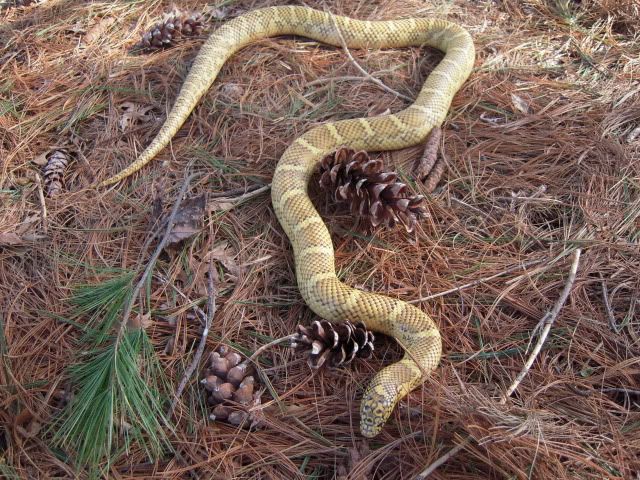
I guess what's also kind of cool about working with those beautiful coastals is smaller waste/less smell and an "Adequate" size container for a common King size animal makes for a very large cage for a smaller type animal with more room to make "choices" areas and an elaborate set up.
Thanks again guys.
Bob.
Tony D
May 26, 2010 03:52 PM
"Once you learn the animals, brumation is not needed at all. Not by the animals. You have heard me say this many times. Remember, I said, not required."
Not required does not equal not natural.
-----
“Nothing is at last sacred but the integrity of your own mind.” Emmerson
Tony D
May 26, 2010 07:37 PM
Frank my last reply was flip out of lack of time not because the conversation isn't good. I hear what you are saying about not needing to brumate your animals but the fact is many wild snakes do and this sequencing is a large part of the reason wild snakes are seasonal breeders. It’s not a natural condition for herps to eat f/t prey offered in a pile. When they are and if they are also thermally supported I think that like any opportunistic organism they’ll adapt. The outcome might even be more neonates but I’m not sure that’s a fair measurement of success. I think the fairest measure is efficiency, what are the inputs and what the outputs are.
For instance lets say you and I both keep 2.3 coastals. For $90 food and energy for climate control you produce 30 neonates in the first batch of clutches. For $50 I get 18. In this example the per neonate cost is $3 and $2.75 respectively. Even though another 12 neonates for and additional $40 is pretty good the overall efficiency is lower.
From there we move to desired outcome. To me fewer and larger neonates is important. Like you, I have 24 hours a day and 7 days a week and how I use them is important. With fewer and smaller neonates I may get them past their second shed and onto small pinks in by tease feeding in a mere 4 weeks. If on the other hand, I have 30 smaller animals it could easily take 8 – 12 weeks before they are established enough to sell. That investment in time is HUGE and unless this is your bread and butter I think most people could find better uses of their time. I certainly can!
-----
“Nothing is at last sacred but the integrity of your own mind.” Emmerson
a153fish
May 28, 2010 09:03 AM
So snakes that lay their eggs and leave, and will never know, and don't care if those eggs ever hatch, will learn to make better more viable eggs? I think we are giving the snakes too much credit. I think there are seasons that may diminish entire populations because of extreme weather, but then the lack of new snakes will create an overload of rodents. Which will in turm create an abundance of food for the following season. Which will help support an explosion of snakes double and triple clutching and the balance will try to restore it'self. I see this as more reasonable than snakes saying well that didn't work last year let me try something different.
-----
King Snakes! Who can make a better mouse trap?
J Sierra
CrimsonKing
May 25, 2010 07:46 PM
You know it's harder and harder to find wild places without alot of man's footprints. Yet snakes are using some of what's available to them from man as well. The snake hunter will often target carefully placed a.c. to find his quarry. The snakes are choosing to be there at one time or another when clearly there are other places to hide.
We often find clutches of snake eggs in a.c too when again, clearly, there are other places to lay nearby.
Why?
They are choosing, adapting, and of course sometimes failing as well.
The variables in nature are numerous and snakes are "flexible" to a point that one or two of these variables may make a difference in their success from year to year and just as possible may not make a difference if not changed too much.
In the hobby we think we know some of these variables and try to keep them within our control ..to "hedge our bets" so to speak.
So for some of us ..it is indeed all about US and having success with our charges.
Your experiments will only help us all along. Thanks for the trials and notes, no matter the outcome.
:Mark
-----
Surrender Dorothy!
