Ive seen pics of them bright orange.Ive seen some with saddles like a cornsnake and pics of some that looked like yellow ratsnakes with those long brown stripes.Im actually not sure what a wild type would look like..
.I of course love those bright orange ones and would love to have one.How would I know what to look for in a juvi? Is the only way to tell by looking at the parents?
Reptile & Amphibian Forums
Welcome to kingsnake.com's message board system. Here you may share and discuss information with others about your favorite reptile and amphibian related topics such as care and feeding, caging requirements, permits and licenses, and more. Launched in 1997, the kingsnake.com message board system is one of the oldest and largest systems on the internet.


About everglades ratsnakes...?????
joann42
Jun 28, 2010 05:41 PM
Replies (9)
DMong
Jun 28, 2010 07:22 PM
If you cannot see the parent stock of a hatchling you are interested in, make sure it doesn't have a solid gray background with bolder dark gray blotches, and/or displays more actual yellow, which is far more indicative of it being a hatchling Yellow Ratsnake instead.
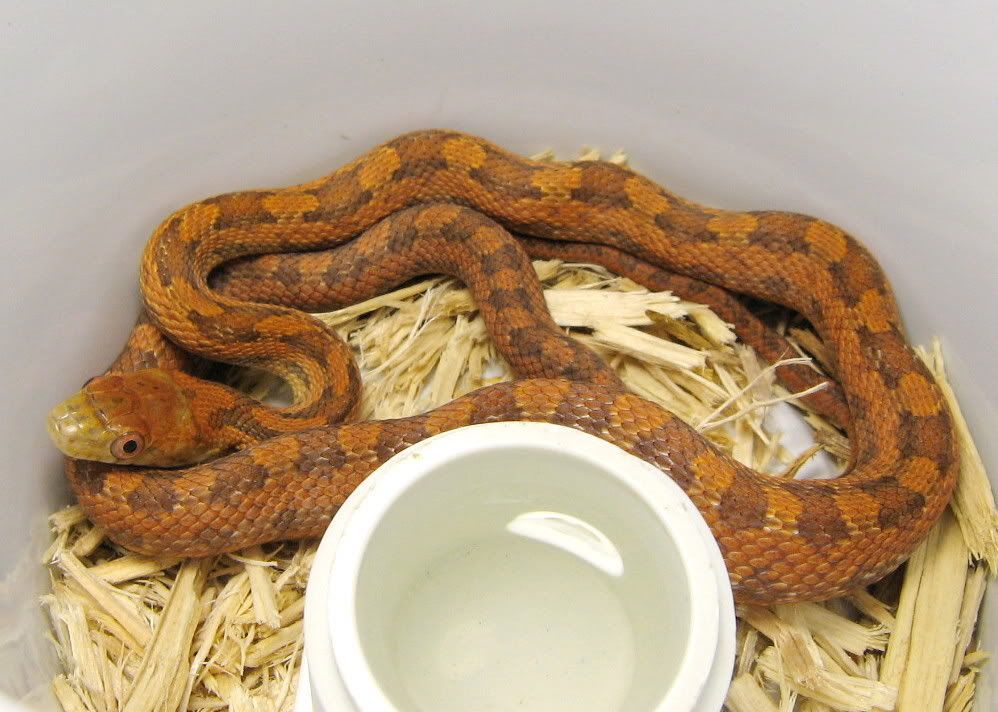
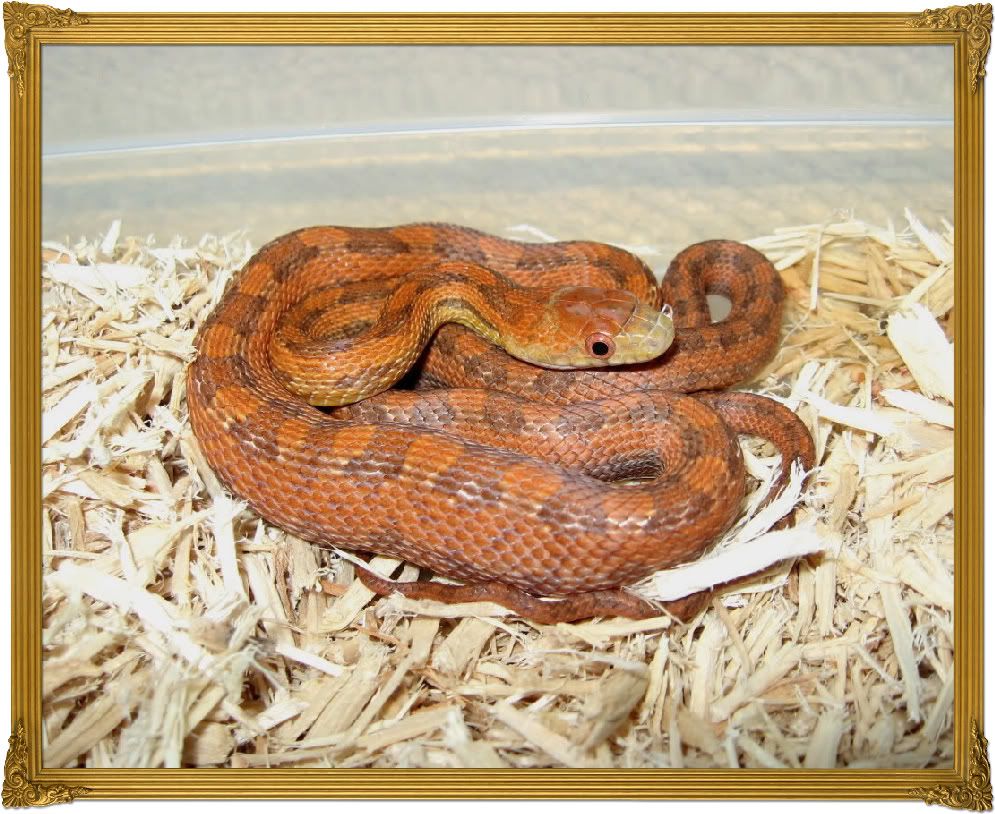
Hatchling Everglades can often tend to be more pale in comparison overall, and some like this individual can show a strong rusty/orange coloration right from the start too. They will display a more rusty orange coloration in comparison to the Yellow Rat juvenile regardless though. Also, pick one that has the most red/orange, has bold orange/red irises, and another key feature you want to look for in a juvenile when some of these features aren't very developed yet is a solid RED tongue, not a black one(which again, is indicative of a Yellow Rat).
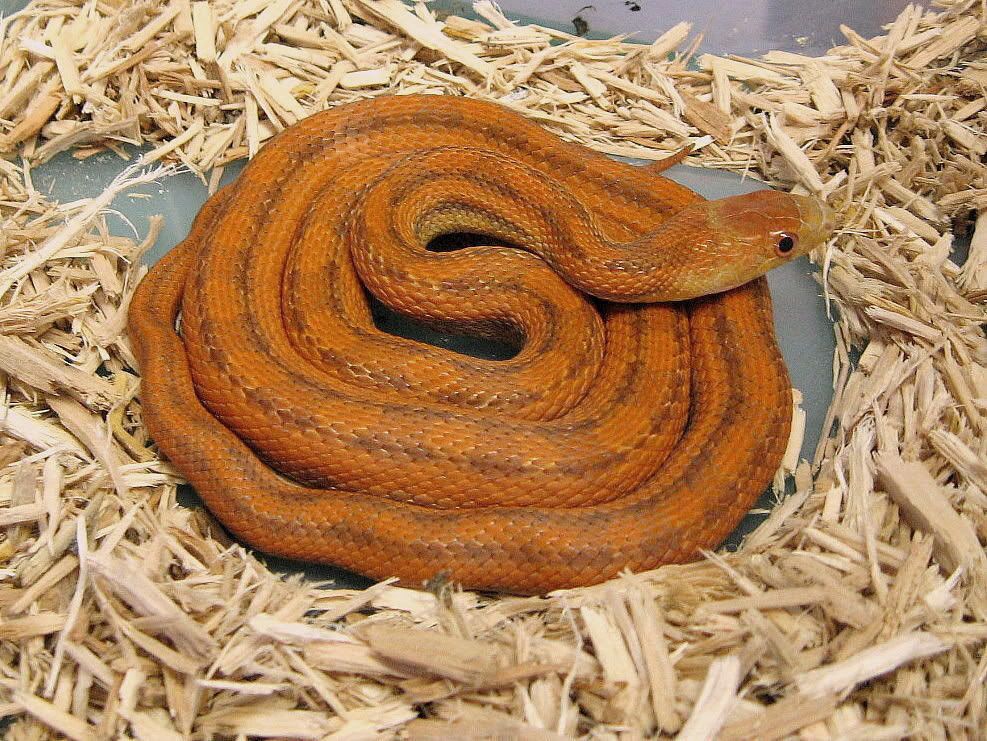
They both have the exact same juvenile pattern of blotches as hatchlings, and as they mature, you will see the blotch pattern gradually give way into their adult pattern of four longitudinal stripes. Although BOTH can sometimes show varying degrees of their juvenile blotch pattern as well as striping into adulthood.
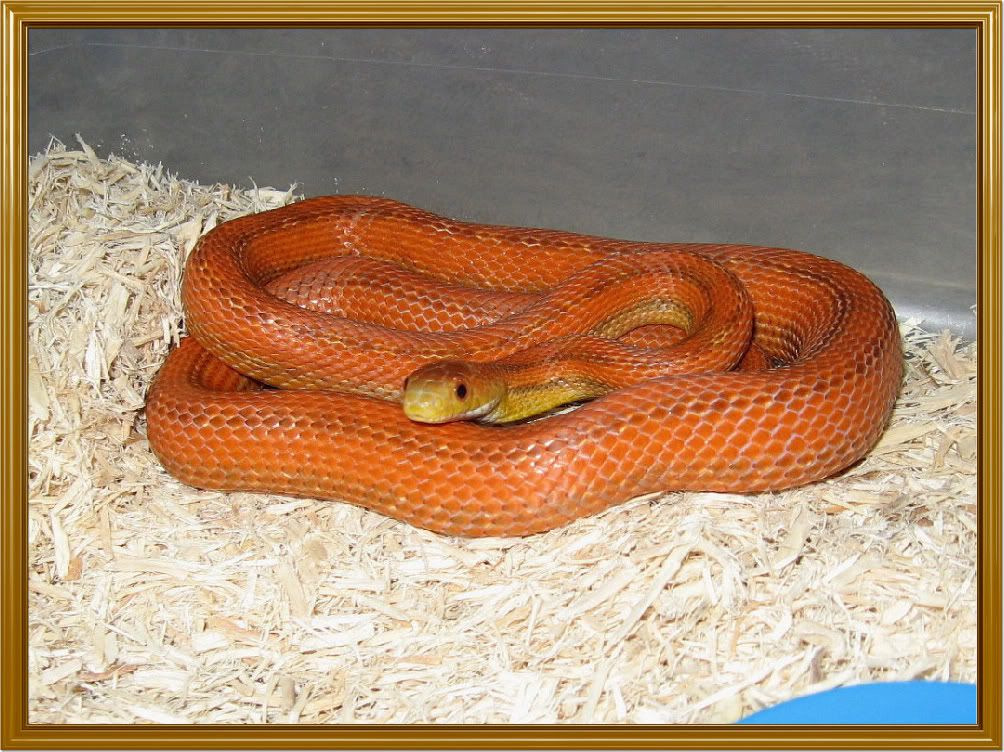
You really want to see as much orange/red as possible, as opposed to the yellow, although some good Everglades examples can still have some yellow on their face and neck region.
Also, look at the belly, you want to see a solid rusty orange/red belly too. Although some Everglades can also have some yellow on the face and throat area as well, but the remaining 2/3rds should be rusty orange, and not yellow.
~Doug
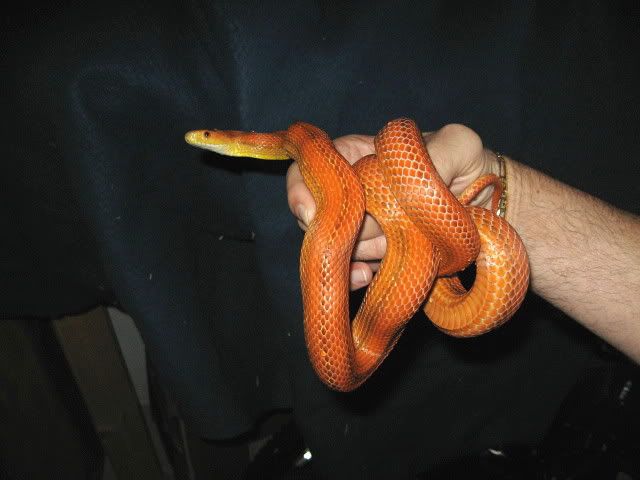
-----
"a snake in the grass is a GOOD thing" 
my website -serpentinespecialties.webs.com
monklet
Jun 29, 2010 11:21 AM
n/p
-----
 See all my snakes at SerpenTrack.com
DMong
Jun 29, 2010 06:07 PM
I appreciate it man!
~Doug
-----
"a snake in the grass is a GOOD thing"
my website -serpentinespecialties.webs.com
cochran
Jun 29, 2010 05:29 PM
very well said Doug! Nice pics also. Here's one of my '09 female.
Jeff

DMong
Jun 29, 2010 06:06 PM
Thanks Jeff,......and GEEEZ!, as I said before, yours there is simply a STUNNING example of the real deal man!......just superb!
~Doug
-----
"a snake in the grass is a GOOD thing"
my website -serpentinespecialties.webs.com
camby
Jul 03, 2010 02:30 PM
Wonderful snakes, thank you for sharing the pics and info
dc
DMong
Jul 03, 2010 04:12 PM
.......my pleasure!
~Doug
-----
"a snake in the grass is a GOOD thing"
my website -serpentinespecialties.webs.com
joann42
Jun 29, 2010 02:11 PM
Thats some great info.I do like those yellow ratsnakes as well.My very first snake was a yellow rat I bought at a petstore way back in 85 I remember I was told it was a cornsnake.
KevinM
Jun 29, 2010 02:52 PM
Doug gave some great pointers on what to look for in everglades ratsnakes. As he mentioned, solid red tongue, and the babies are VERY pale and pinkish colored (IMO) compared to yellow rats. Still, there are some populations of yellow rats from deep south Florida that can come close to everglades rats in appearance when adult. Probably due to gene flow between the yellow and everglades where their ranges meet and overlap??? In general, the yellow rats may be more prone to take pinky mice as babies than the everglades. Everglades rat babies used to be notorious lizard feeders back in the day. I had a couple of everglades babies that only took anoles or geckos on their own. I have not had that problem with CB and WC juvies or baby yellow rats and all took f/t mice with no problems.
