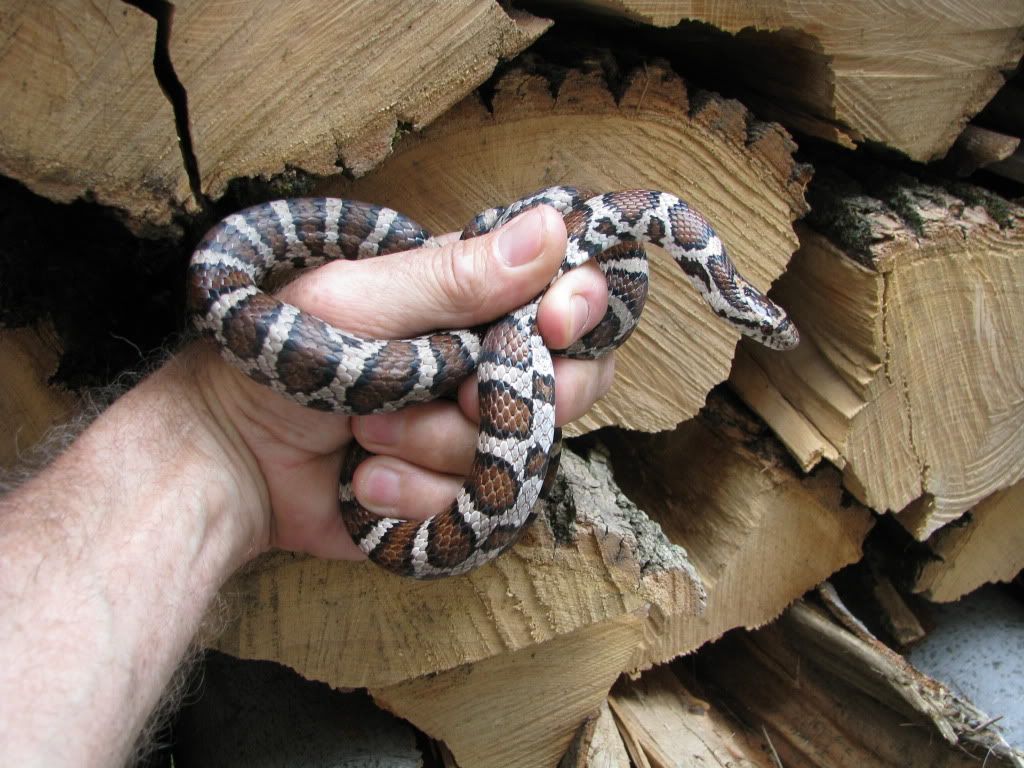
I haven't had the chance to read through all of the replies under the other "Milk vs. Corn" thread, though I can imagine all of the fun stuff in there... So, if some of this stuff has already appeared down below, feel free to ignore this post!
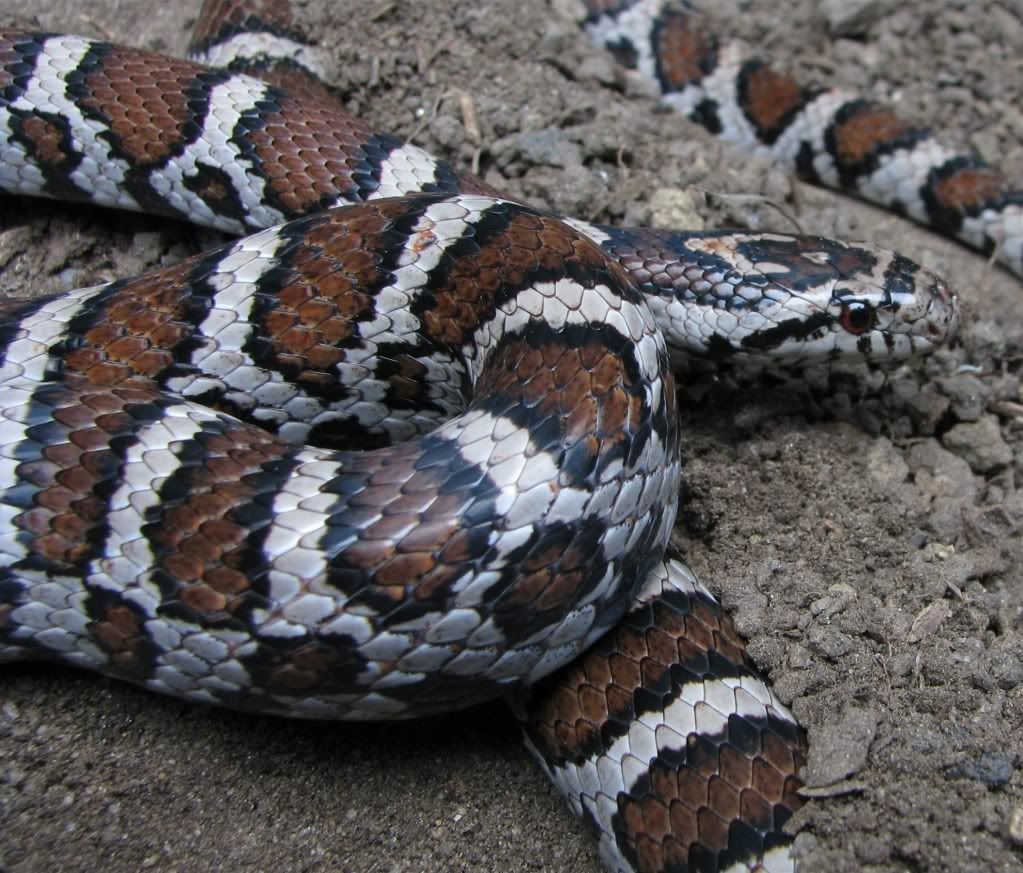
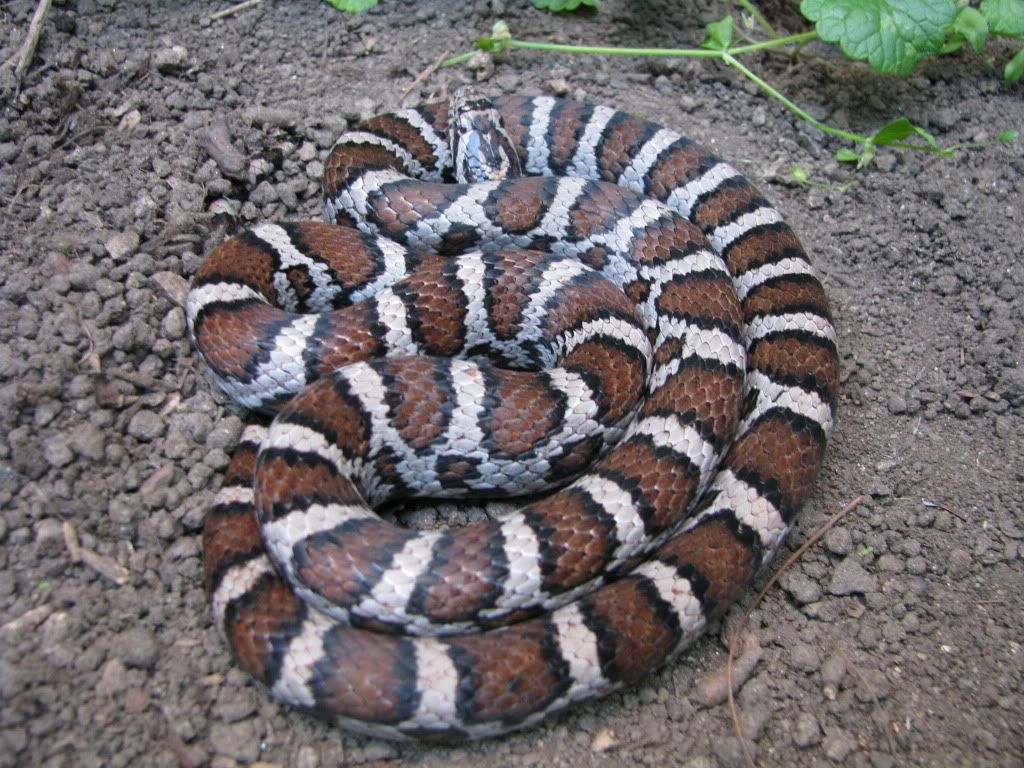
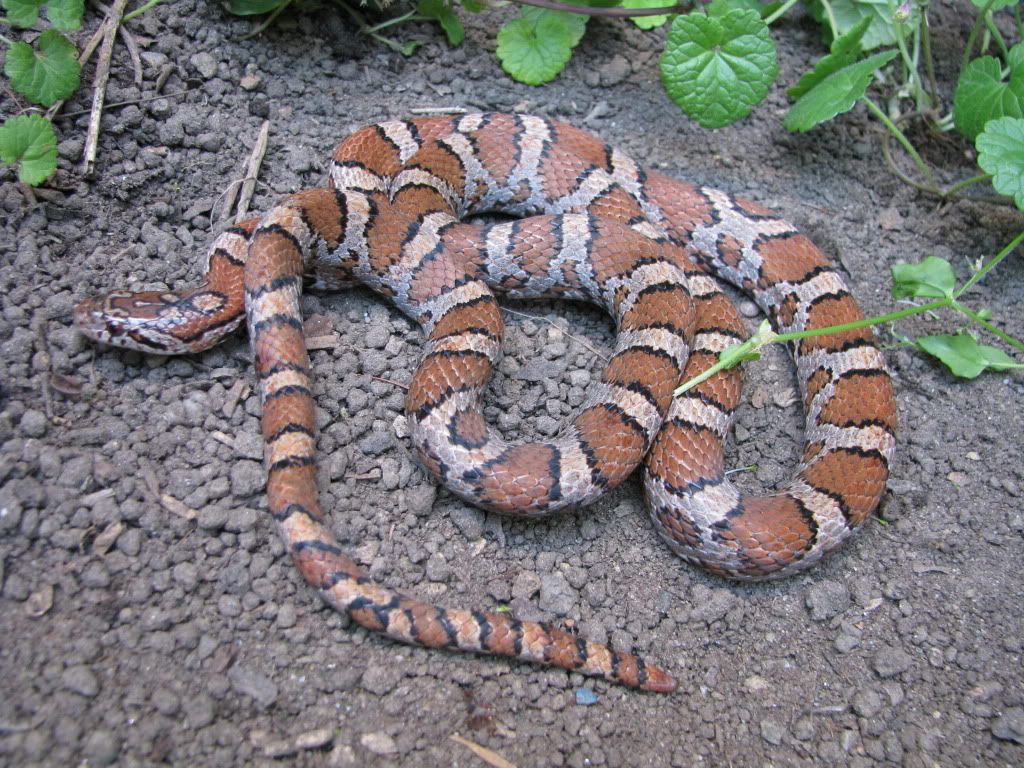
Mitch is correct in pointing out the number of supralabials on the "mystery" snake. The head scutelation in that animal (3rd and 4th supralabials entering the ocular orbit) clearly suggests that the critter is a member of the species Lampropeltis triangulum, and not a member of Pantherophis guttatus (in which supralabials 4 and 5 enter the ocular orbit). As for some of the gross morphological charicters I mentioned being more identifiable and definitive in adult animals, I would concur, to a degree. However, cross-sectional body shape is consistant in both forms and remains true through the various life stages. As for head shape, when viewed from above, corns (even young ones) have considerably longer, more squared-off snouts than Lampropeltis triangulum.
Scale row counts differ between the taxa, too. Milks have 21-23 scale rows at mid-body (or 19, if you include elapsoides as part of triangulum). Corns, on the other hand, have 27-29 scale rows at mid-body. Scale shape and structure differ, too. Pantherophis guttatus has weakly keeled scales, even in young specimens (though it's harder to discern).
I would also like to point out that many (not all) captive corn morphs have genetic influence from other Lampropeltine Colubrids (=are hybrids), making them useless in comparative morphology for identification purposes since they really aren't Panterophis guttatus.
-Cole
L. t. triangulum