Well, if you'll be using a DSLR, it will be more about the lenses than the camera. I have been using a Canon 20D for 8 years, I'm very satisfied with it.
Lenses I use.
For a general purpose I use a 60mm F2.8 Macro lens. This is a prime lens with very good quality, but obviously you can not zoom with it(you must move closer or further to frame).
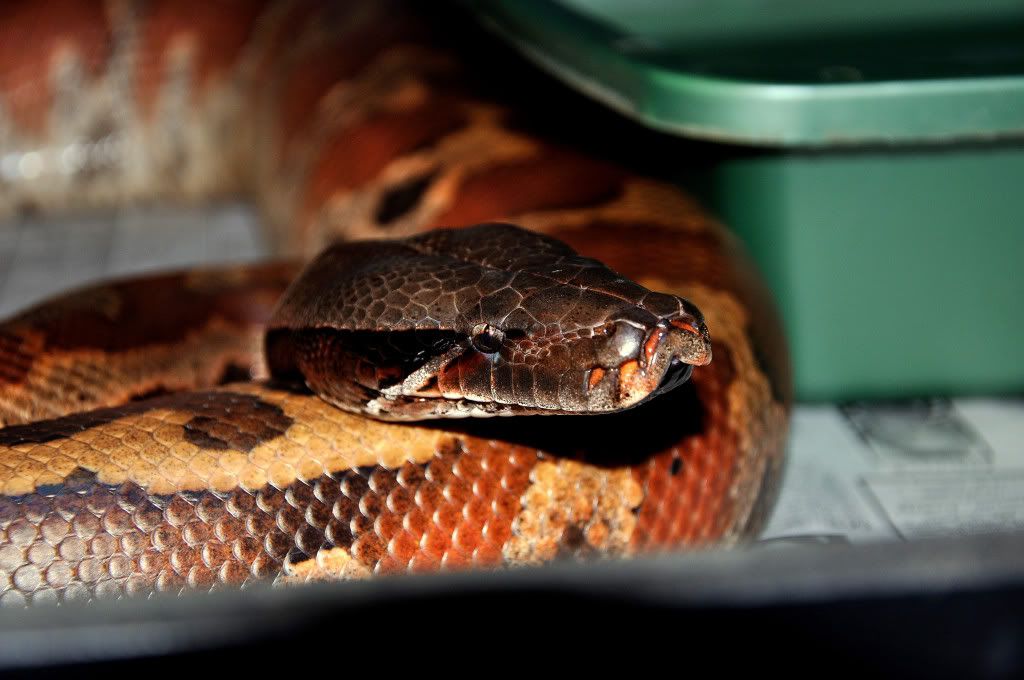
That prime can give you a very nice background blur when using appropriately, but you can also use it for "documentation shot", when great depth of field is prefered.


I also suggest you to use a wide angle zoom lens. Wide angle zoom is very convenient when you are close to the subject and cant move further from it. I use it when I want to show "more", like a mother and her babies, or boas and their cages. These zooms don't have the quality of primes in general, but again sometimes, in some circumstances these will be the only lenses you can use.

Now the photography part.
If you set "large files", you will get bigger images and therefore you will have more possiblity in later editing, etc. Also be sure, that your camera is set "highest resolution".
On most DSRL there is no macro mode, and portrait is not really useful once you can aperture priority mode confidently. I use aperture priory 99% when shooting snakes.
Lighting will be one of the most important things. I like natural light very much, but you can also take great shot under atrificial light (especially when using a good flash). If you shoot in JPEG, you have to set the proper white balance prior shooting. If you shoot in RAW format, you can set white balance during the editing.
The background is important, because we want to show as many colors of the snake as we can. Therefore, you have to avoid using a background that the snake can melt into. Natural green colors are always good, but this really depends on coloration of the subject. In your case, I wouldn't photograph a piebald on a white surface, because the white areas on the python don't get enough attention. I'm sure a light green background would have been more effective.
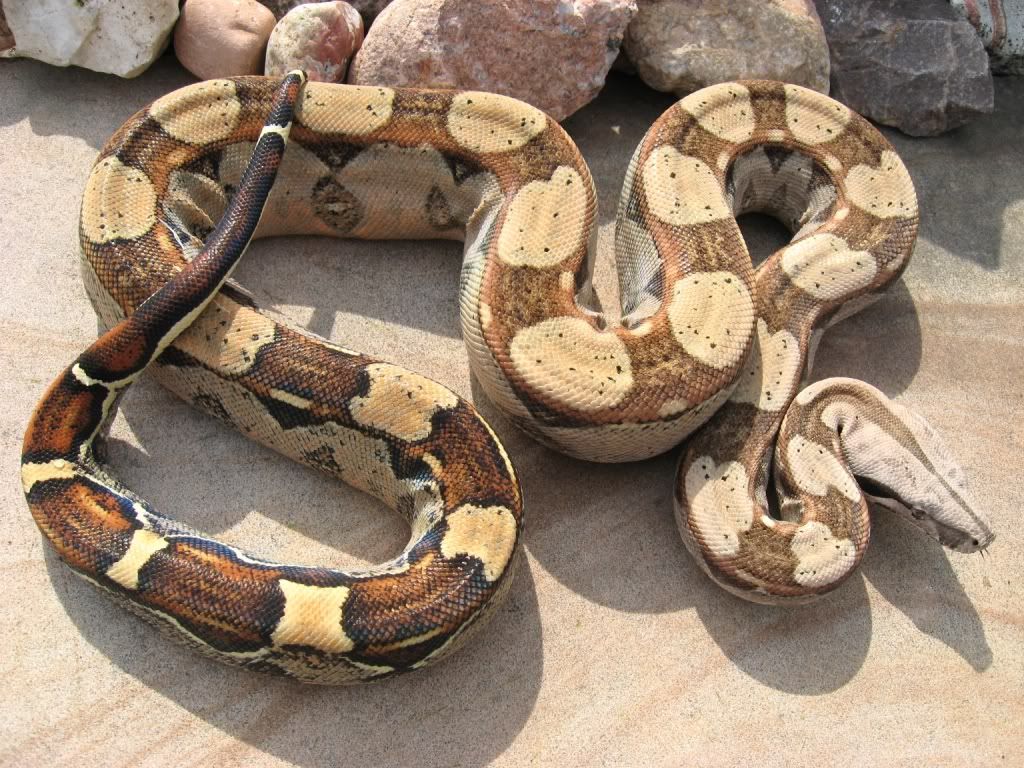
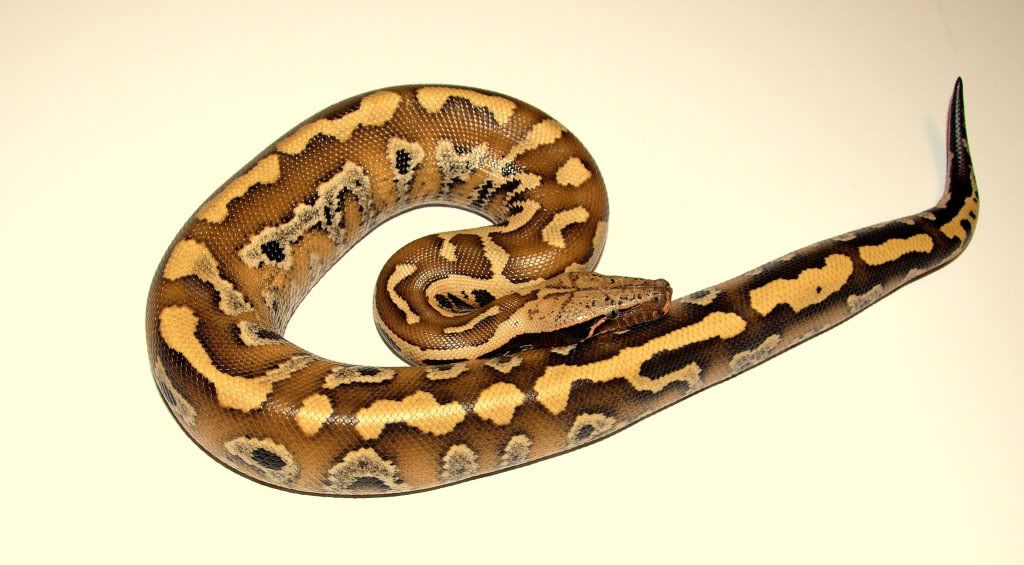
The subject. If you want to take "documentation shots" the snake is prefered to be coiled up. I found that pics of coiled snakes are more effective than stretched out ones. I try to keep them still in coiled position by gently flicking their nose when the are about to go. Of course, sometimes it doesn't work and it takes a lot of time to take proper pics of a single speciment. You must be patient.
I hope I could help you a bit.
All the best,
Adam