Reptile & Amphibian Forums

Welcome to kingsnake.com's message board system. Here you may share and discuss information with others about your favorite reptile and amphibian related topics such as care and feeding, caging requirements, permits and licenses, and more. Launched in 1997, the kingsnake.com message board system is one of the oldest and largest systems on the internet.

Click here for Dragon Serpents
Southwestern Center for Herpetological Research
Click for 65% off Shipping with Reptiles 2 You

what are true hypos?

Adam_S Aug 24, 2010 10:04 PM

It’s been interesting following the hypo discussion. There seems to be agreement that true hypos are not t(plus) albinos and that it’s been inconvenient that the original t(plus) albinos have been labeled “hypos”.

So what are the characteristics of a truer hypo?

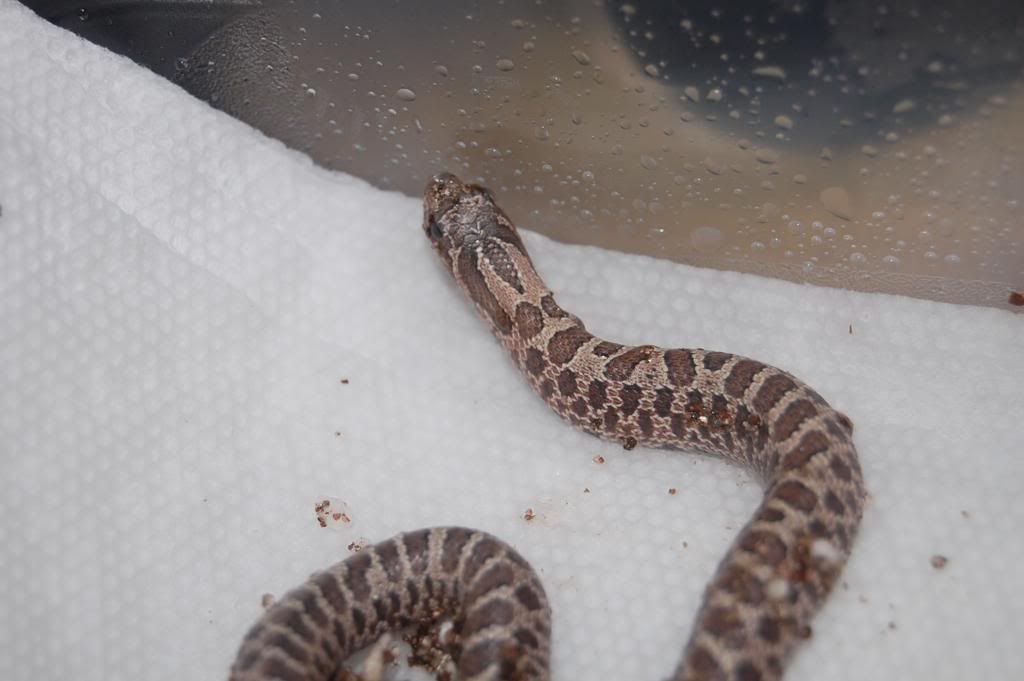
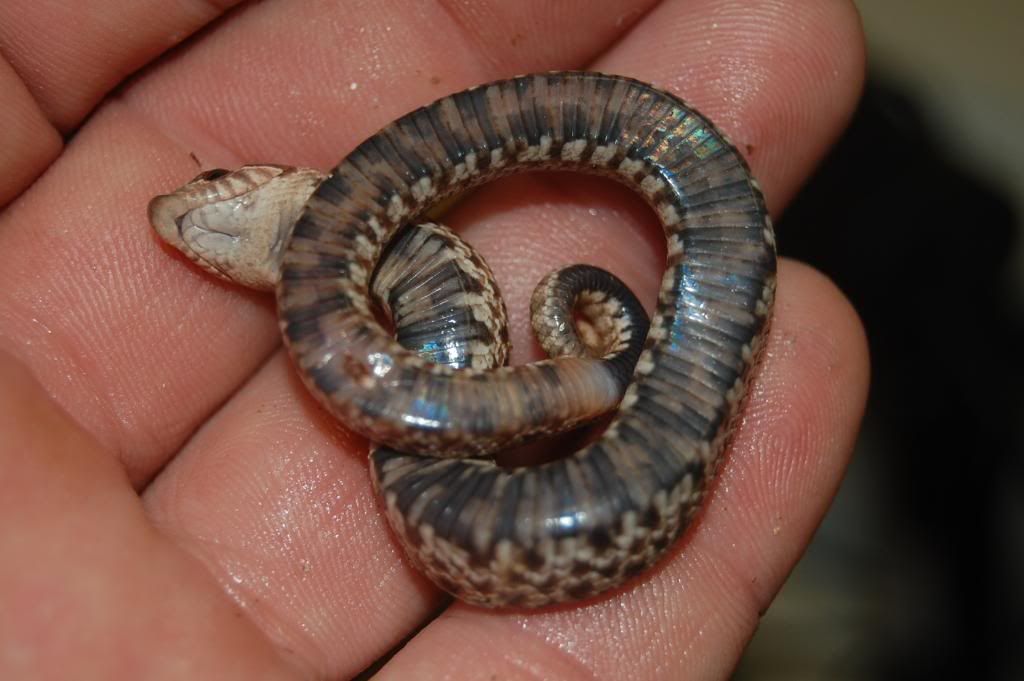
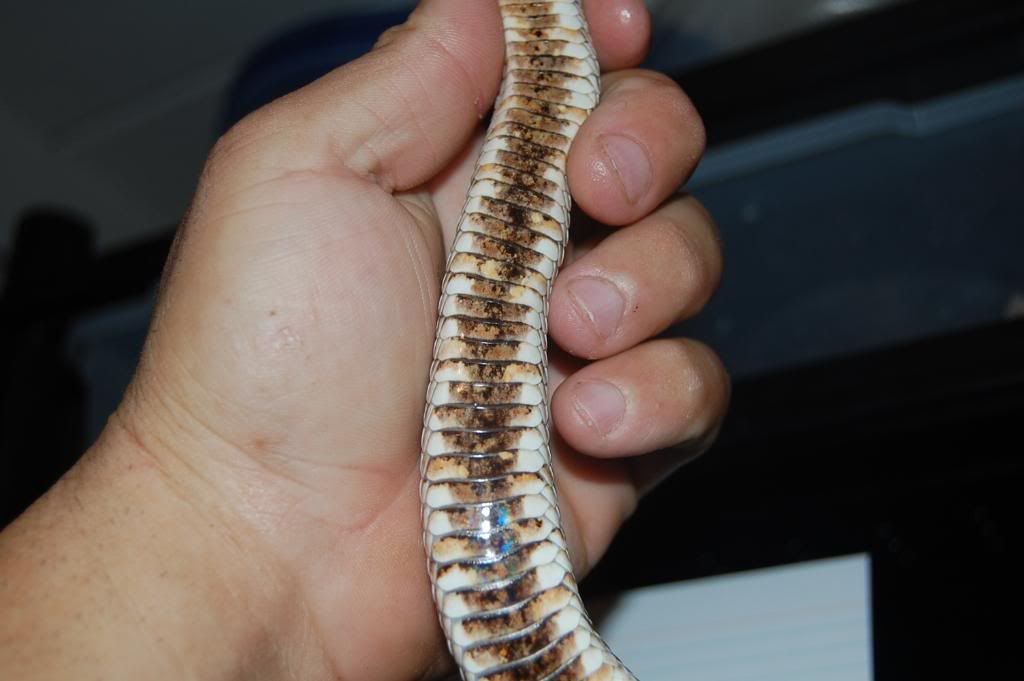
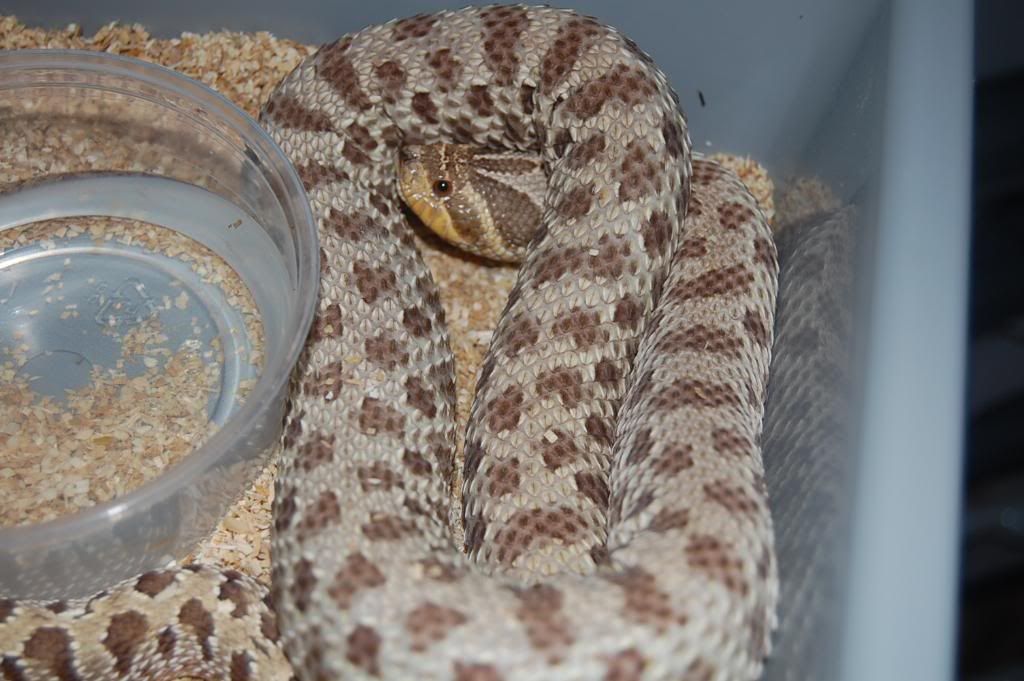
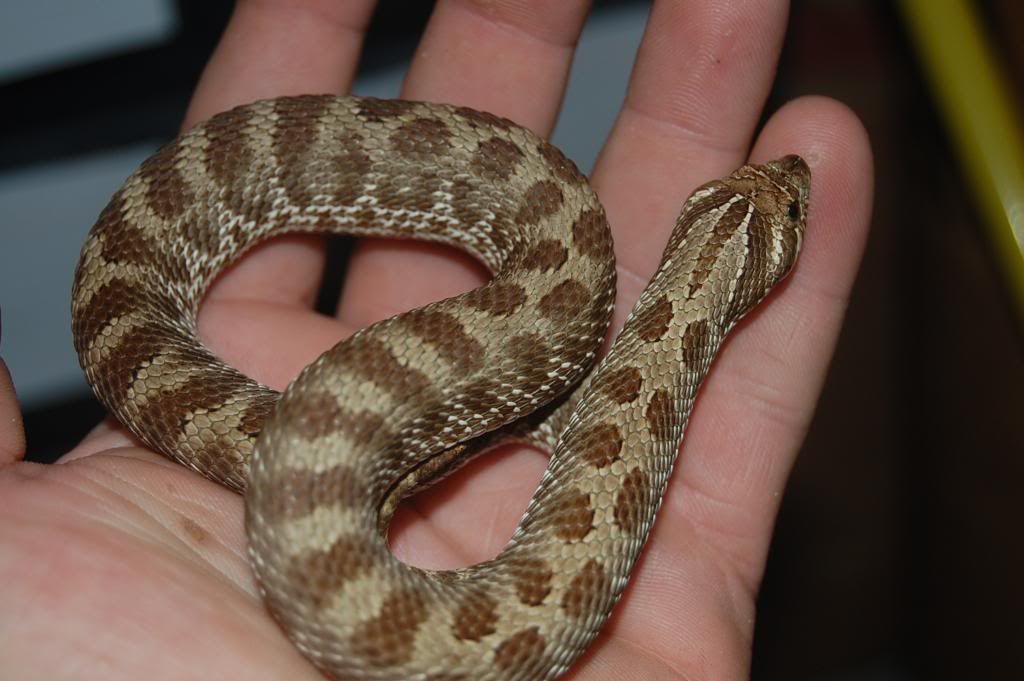
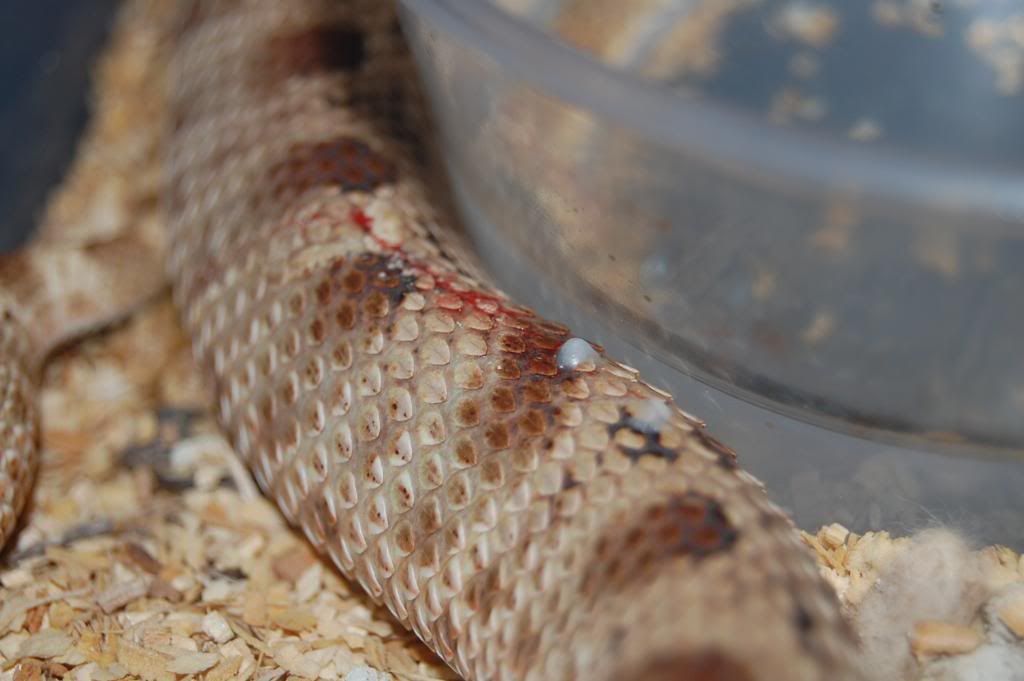
Hognose snakes in general seem to be highly variable in the way they represent black pigment. I bought this snake as a normal adult female last year. I got duds from her this year, but am curious if her look gets expressed as a line trait.

Thanks for all of your posts, pics, and replies!
Adam

-----
Adam Schroeder
formerly "hogsandpythons"

Replies (8)

Rextiles Aug 24, 2010 11:23 PM

Unfortunately there is a lot of confusion about this type of terminology and what it means between different people. I like to look at the dictionary for definitive examples of what these words mean when I can find them (which isn't always possible with some of these genetic and taxonomic words). Fortunately, we can define what hypo, short for hypomelanistic, should mean just from a simple look-up in a Websters Dictionary.

Melanism:
n.
1. abnormal development of dark pigmentation in the skin, hair, feathers, etc.
2. darkness of skin, hair, eyes, etc., resulting from a high degree of pigmentation
melanistic adj.

So, what we have determined here is that melanism is an association of dark pigmentation, no news here, everybody will agree to the definitions presented here.

Hypo-:
prefix
1. under, beneath, below
2. less than, subordinated to
3. Chem. having a lower state of oxidation

I would say that definition #2 for hypo-, "less than", is the most useful in regards to what we are dealing with. I think the foremost thing to keep in mind here is that "less than" basically means "less than" normal. It does not mean a complete absence of.

So, if melanism means dark pigmentation and hypo- means less than
and we put the two together, we are basically defining hypomelanism to mean "less dark pigmentation than normal". In other words, dark pigmentation is still present, just less than it would be in it's normal/wild caught state.

I think this is where the real problem is with certain animals that don't always have a lot of black pigmentation to begin with, it's hard to define what really is less than normal when normal is pretty much "less than" to begin with. With typical WC Western Hognose, there is a definite variation in, not always so much in dorsals, but in ventrals where it can range from solid black to about a half black and half yellow/gold checkered pattern. I would say that animals, such as yours, that show a predominately yellow ventral with very little and yet diffused black are quite a bit more uncommon if not rare. If we were basing hognose just on these facts alone about ventral scalation coloring, I would think that an animal such as yours would fall under the term hypomelanistic.

Now where does that leave us with the Evan's/Lazik Hypos? Are they actually hypo animals at all? Can that dark purplish belly be considered a form of melanin which would then deem them as being hypo-ish? Of the 4 "Hypos" I have, none of them exhibit any black or dark coloration on their dorsals and they all have the typical purplish colored checkered ventrals.

This is why I raised a point a year or so ago about the Toffeebellys and their definition to hypomelanism versus the term paradoxing regarding the black speckling that is associated with them. Stefan and Raimo claim that every Toffee, to some matter of degree, all have this black speckling. This causes us to now review what the word paradox means...

Paradox:
n.
1. a statement contrary to common belief
2. a statement that seems contradictory, unbelievable, or absurd but that may be true in fact (Ex.: Water, water, everywhere, nor any drop to drink)
3. a statement that is self contradictory and, hence, false
4. a person, situation, act, etc. that seems to have contradictory or inconsistent qualities.

It would seem apparent to me that definition #4 best suits our definition of paradox.

So, back to the Toffees and their paradox label. If the meaning of paradox is meant to be contradictory or inconsistent to the true nature of the appearance of an animal, then that would mean that there would be "normal" animals of the same genetic background or lineage that these Toffees can be compared against. For example, I made a challenge in one of my last posts about breeding an American "Hypo" to a German "Toffee" to see if the phenotypes were in any way comparable or if they would in turn merely produce normal WC het animals. If they were compatible, then I would be lead to believe that perhaps the black speckling might be a form of paradoxing due to the fact that it exists alongside the Toffee genes even though the Toffee genes and the "Hypo" genes are basically the same. However, if the 2 lines prove to be incompatible, and all Toffees always exhibit black speckling, then how is that consistent with the definition of what paradox means, contradictory and inconsistent? If anything, if half of a clutch of Toffees were born that had black speckling while the others did not, that might be a form of paradoxing. But if all Toffees are born with it, then it seems pretty consistent with me and it doesn't necessarily contradict any coloration convention that these are currently named as. Now, I've seen some pictures of Albino hognose that have black speckling, that is contradictory to the coloration of a typical Albino and probably very inconsistent to reproduce. That is what paradox truly is and how the word should be used. So in my way of thinking, using the word paradoxing to describe the consistent and common black speckling of a Toffeebelly is not correct but more used for the effect of marketability at this point. I will be more than happy to concede this if someone can show that the black speckling is an entirely different heritable gene or at least prove that is a single gene simply locked with the Toffee gene which is why the 2 traits are seen together.

Going back to the "Hypo" vs. "Tpos Albino" clash though, I'm in the "Tpos" camp as it seems to be more defining of what these animals are, a different type of albino. If there were remnants of black scalation or if someone could prove tha the purplish bellies were really remnants of melanism showing itself, then I might concede that then they probably are in fact a "Hypo". Unfortunately, these aren't being proven out as such and I think we're stuck with trying to come to terms with how we want define out animals. Heck, look at the 2 divisive camps in regards to Axanthics vs. Anerythristic. I thought I made some good points about the stark differences between those 2 terms and nobody seemed to want to get involved in those discussions and yet there's a big division even amongst big time breeders and the carefree use of these terms. It's either one or the other, they are not the same and not interchangable.

I hope some other people share their well thought out view points on these topics.
-----
Troy Rexroth
Rextiles

FastDad Aug 25, 2010 01:16 PM

Hi Troy

great post as usual and thanks for taking the time to explain your thoughts this well.

Your thoughts about the term "Hypo" do fit to my opinion very well.
It will depend on the community of breeders of a species what they want to accept as being the right genetic background of a Hypo.
In leopard geckos - Linebreeding with less amount of black as possible
In Boas - dominant genetics with black speckling and normal colored eyes and no purple hue
In Ball pythons - recessive with a frozen gray look where the pure black should be displayed

So what will we accept???...I will go for every genetic trait that is dominant or recessive,
that reduces the amount of black but does not affect the pattern at all (because you could call a spider ballpython a hypo also )
or the syntheses of melanin

...and so we came to the Toffee Bellies

I prefer the 2nd of the statements.
My general understanding of paradox is not that the unusual animal is contradictory to all others of the same morph.
But that it has some parts that do not fit the morph or kind that this animal should be.
The purple belly- and eye color make them look like a kind of T plus albino (and rule out the Hypo term), but they also have these pure black spots.
To me those black spots are paradox to the T plus albino.
It´s nearly the same as with the Bananas and coral glows in ball pythons.
-----
Greetings from Berlin
Stefan & Raimo

Reptiles-Breeding-Enterprise.com

JTColubrids Aug 26, 2010 11:16 PM

~Troy I could not agree more but I 100% agree with your second statement about the Toffees: that the Paradoxing is not out of the ordinary for toffees but since they are T positives and t positives don't normally have "normal" blotches on them, that makes toffees "paradox" t positive albinos because for a t positive they are out of the norm.
~I wish people would call the evans line of T positives "T Positives" or everyone agree on another name so that TRUE hypos could just be called hypos and not "true" ones but that is not my decision to make
~I think it makes sense that the evans line of "hypos" are not actually hypos and in fact they are t positive albinos because the double homo t positive/t negative (classic albinos) is REALLY hard if not impossible to tell apart from a regular t negative (classic) and it is the EXACT same in Florida Kings. Cross a T neg and a T pos and get the double homo after breeding the double hets and the resulting albino looks REALLY similar to all the other albinos in the clutch and is almost impossible to tell apart.
~NOW we have seen Louie's Smolder (smoke true hypo x classic T negative albino), and I have seen in my own collection of Tom Agosta's TRUE Hypos and True Hybino, that a TRUE Hybino is actually distinguishable from a normal albino. The smoke true hybino is CLEARLY not just an albino and is CLEARLY a double homo and Tom Agosta's line ( which is VERY similar if not the same as the smoke hypos) produces a Hybino that is not as obvious as Louie's but as my female has grown it HAS become obvious that she is not an albino. She is extremely vibrant beyond the likes of any albino that I have ever seen and she has the GREEN face and tail that Tom's line of hypos do which his Albinos DO NOT HAVE! Plus She threw two hypo animals in a clutch of three so that proves that she is in fact a TRUE hybino and not just an albino.
~Hogs RULE, can't wait for 2011
~IMO pic looks similar to a honey hypo???

Jeremy Thompson
JTColubrids, Inc.

daneby Aug 25, 2010 01:38 AM

Now THAT is what I call a hypo. Really Nice!

Dan

giantkeeper Aug 25, 2010 11:28 AM

Great topic, we ALL know where I stand :O)
-----
Chris & Alliey
Giantkeeper Reptiles Website
Giantkeeper Reptiles Blog
E-mail Us

charleshanklin Aug 25, 2010 08:24 PM

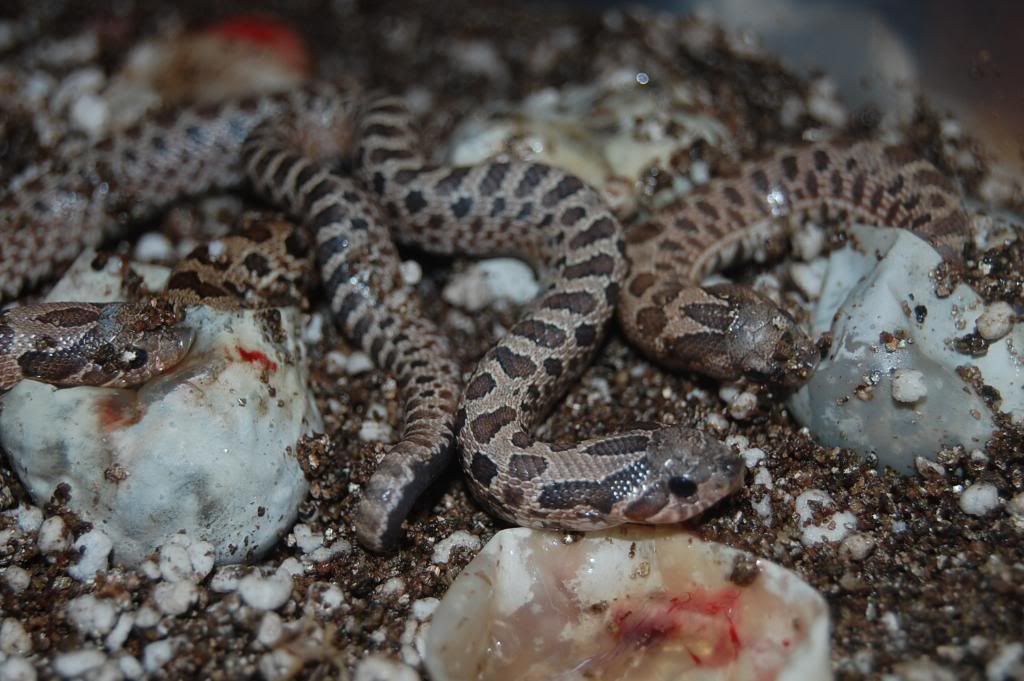
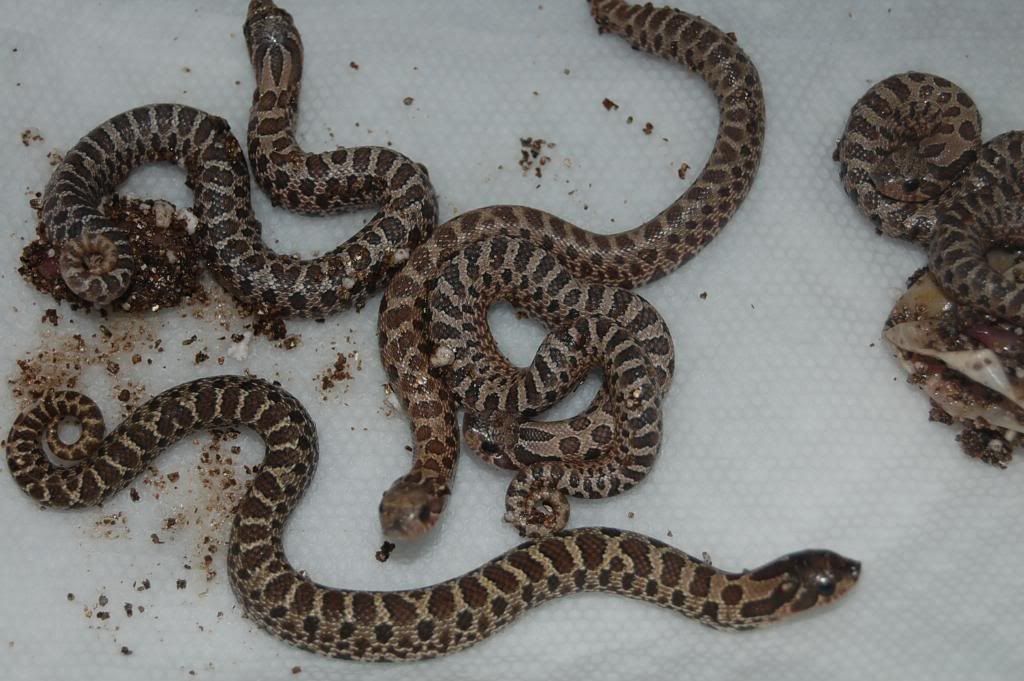
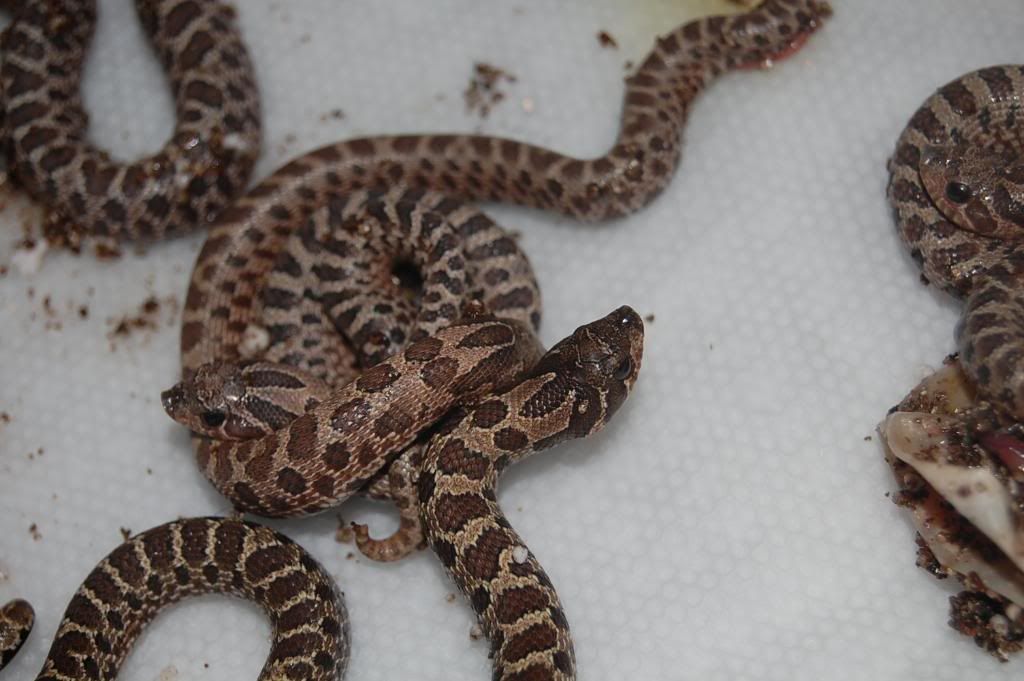
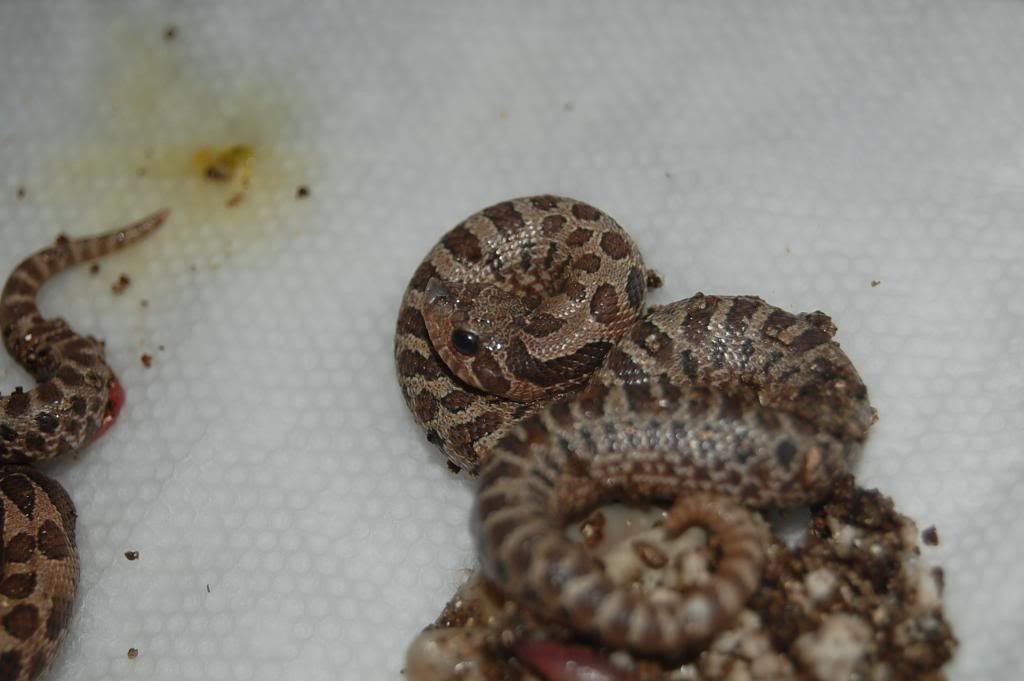
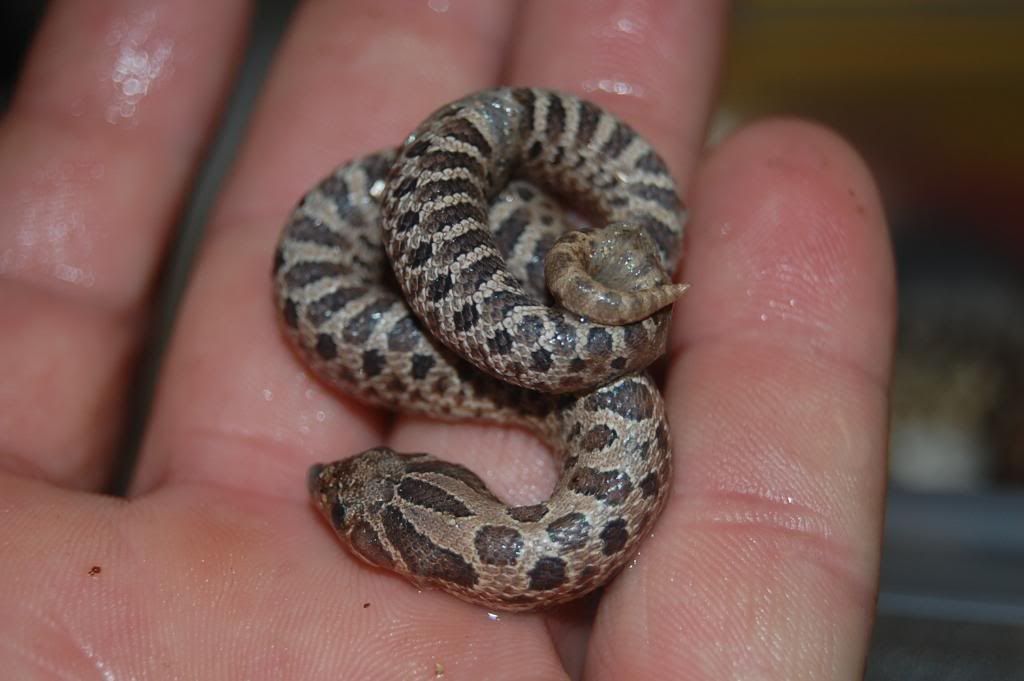
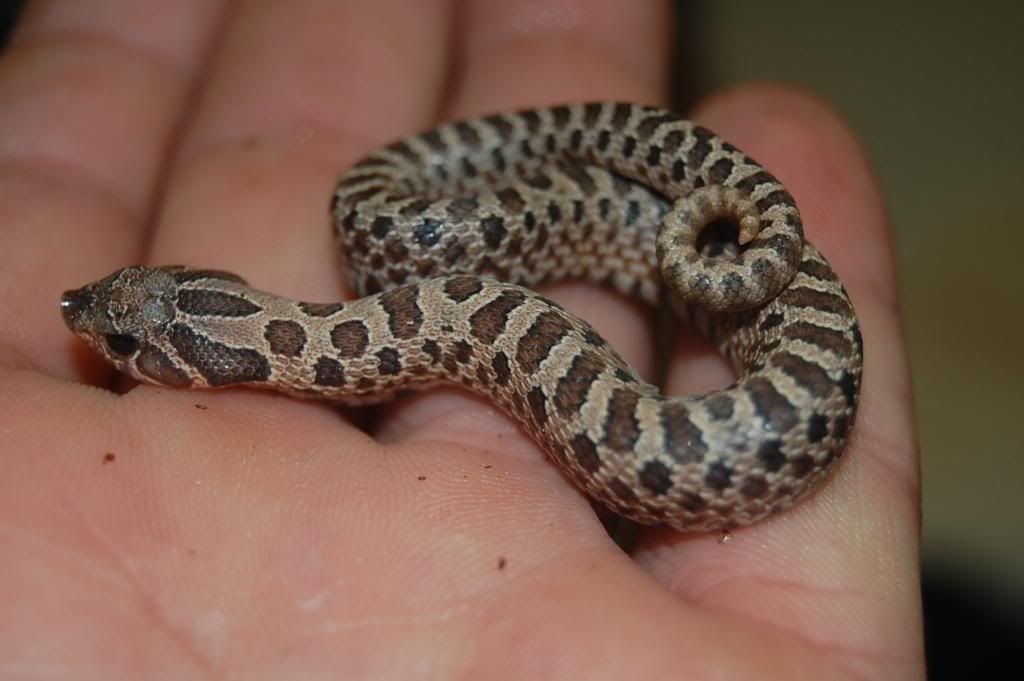
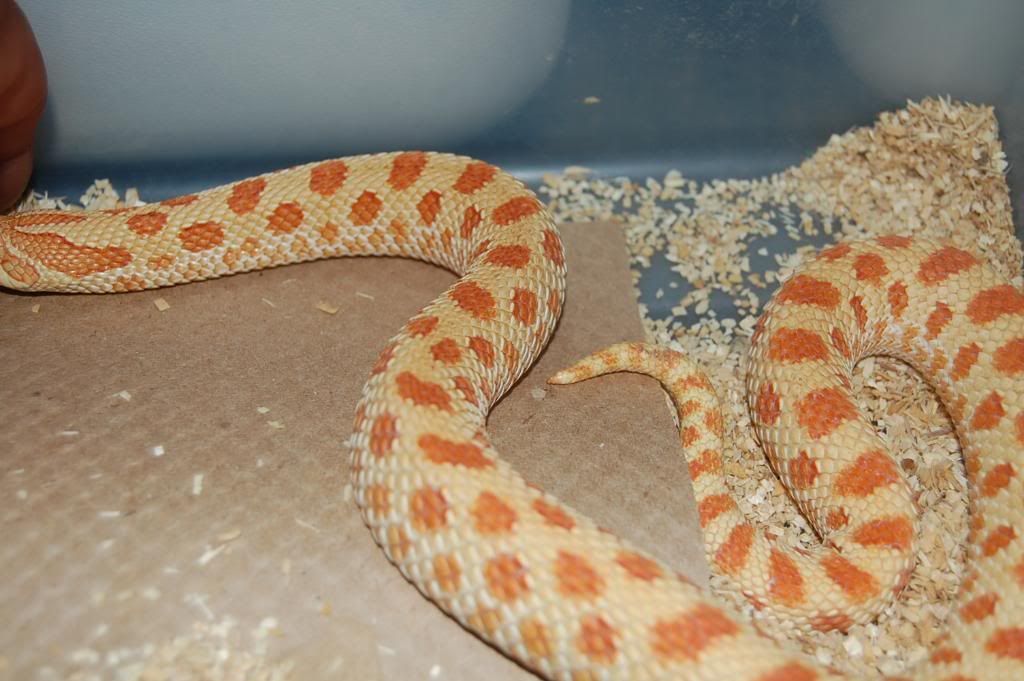
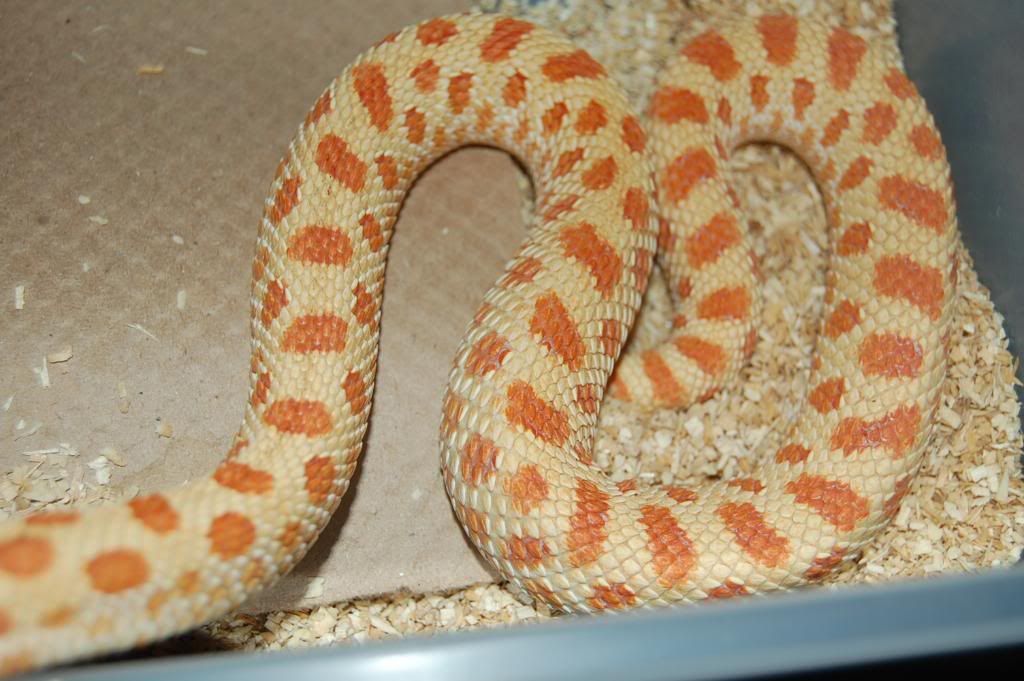
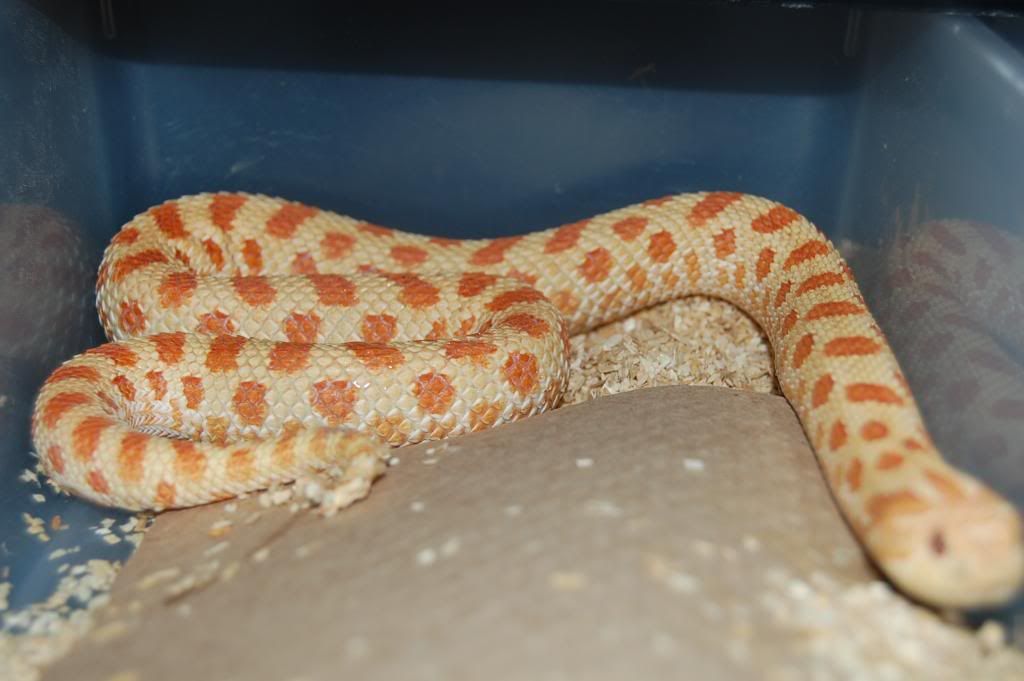
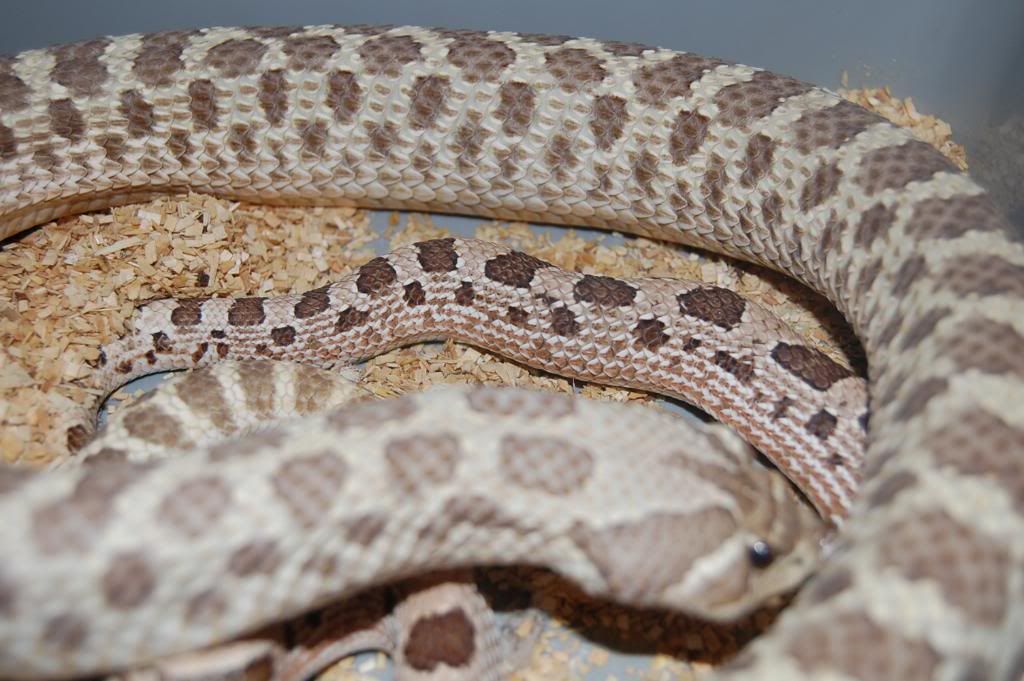
Here are some smoke hypos I hatched out.


I would say this male I have is not a hypo because the pattern is faded and not just a reduced production of melanin. It looks like an eraser has been taken to it but the black is still black.

Here is one of my favorite albinos, yes OT I know but she's pretty.


This big female with my 07 male anaconda looks hypo dorsally but has a reduced pattern black belly, not a hypo.

This one is also close but not a hypo. Black belly.

This one.....ok I'll admit. Idk wtf it is other than codom/dom and cool. I have some saved back from last year that are turning out crazy. Kind of looks hypoish.

And since I said something about anacondas I'll show what one of my breeder conda males did to this conda female. Whenever I see this on one I know he's marked his territory LOL!


-----
www.hognosefarm.com

FastDad Aug 27, 2010 12:41 AM

does she has black pupil and an black tongue? or do they look some kind of purple?
will be interesting to see her offspring...btw, her pattern and color reminds me at the mosaics
-----
Greetings from Berlin
Stefan & Raimo

Reptiles-Breeding-Enterprise.com

StevePerry Sep 03, 2010 10:06 PM

This all makes a lot of sence to me and this topic fits with sooo many species.
I'll just interject my opinion on the paradox example.
The descrition of paradox albino should always remain even when it is expected and reproduced readily. The Paradox in this example is not whether or not it is abnormal or different from the rest in a clutch or morph but rather an abnormallity of the defenition of the morph (albino) itself.
IMO
-----
Steve Perry
North Idaho.

Site Tools