


Reptile & Amphibian Forums

Welcome to kingsnake.com's message board system. Here you may share and discuss information with others about your favorite reptile and amphibian related topics such as care and feeding, caging requirements, permits and licenses, and more. Launched in 1997, the kingsnake.com message board system is one of the oldest and largest systems on the internet.

Click for 65% off Shipping with Reptiles 2 You
https://www.crepnw.com/
Click for 65% off Shipping with Reptiles 2 You

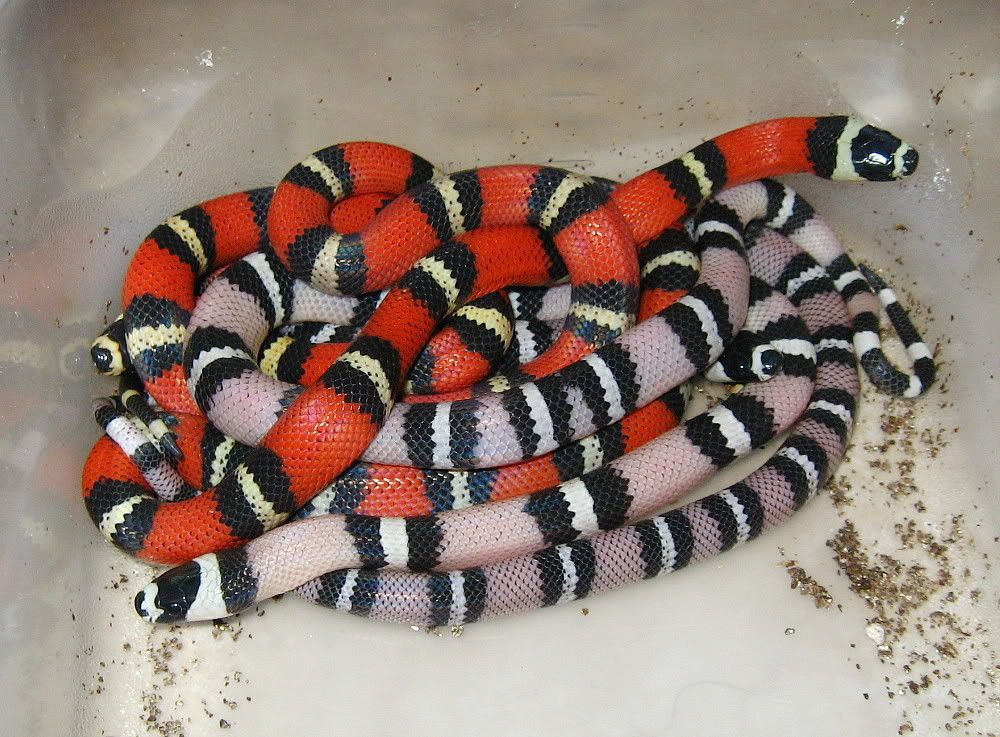
difference in anery's

DMong Sep 10, 2010 10:25 AM

Here you can definitely see the difference in these two anery phenotypes. Also, like I and some other's have known for many years, this clearly depicts that the so-called "anerythristic" Honduran's are actually hypo-erythristic animals.

The amount of melanin in many individuals gives the impression to many that they have NO red pigmentation(erythrin), but in all actuality, there is indeed enough within these pigment cells to display a very noticeable pink hue, and this is not due to the animals blood and tissue showing through.

Also, think of it this way.....how on earth could many of the "snows" you see which is a composite of "anery" x amel have a pink as a very common color scheme to them. It just ain't possible if these animals were truly anerythristic, or their normally red/orange bands would be totally void of ANY pigment,although you still might see just a bit of the blood in their tissue from their scales and skin being so thin at this size.

Anyway, look how much cleaner this one "anery" is compared to the other next to it. You can clearly see what would be pink result in a more gray coloration due to the melanin involved.

BTW Rusty, yep!, there were two!..LOL!, a perfect 50% ratio by the numbers of this breeding.

~Doug

-----
"a snake in the grass is a GOOD thing"

my website -serpentinespecialties.webs.com

Replies (14)

RG Sep 10, 2010 01:38 PM

that lighter anery is a male and the darker a female, I've seen that happen many times!
Let me know once you have them all sexed out.
Glad that male worked out for you.
-Rusty

DMong Sep 10, 2010 03:23 PM

Yeah, I would bet that is indeed the case, and the male is the lighter dimorphic individual.

I will let you know what they sex out as after their sheds.

Yes, it is very cool that the hypo was indeed het like the dude said he was......and thanks again for him being part of my collection here. He is really doing great too!

~Doug
-----
"a snake in the grass is a GOOD thing"

my website -serpentinespecialties.webs.com

markg Sep 10, 2010 04:59 PM

I really like that bright red anery on top there.. oh wait.. DANG, normals look good in the right context!
-----
Mark

DMong Sep 10, 2010 05:20 PM

Yeah, you're right,....I certainly didn't mean to downplay the natural beauty of a nice normal tricolor. As a matter of fact, I like them alot myself.

~Doug
-----
"a snake in the grass is a GOOD thing"

my website -serpentinespecialties.webs.com

tspuckler Sep 10, 2010 06:21 PM

I dig that variability, Doug!

Tim

DMong Sep 11, 2010 12:30 AM

I do too man!.....

~Doug
-----
"a snake in the grass is a GOOD thing"

my website -serpentinespecialties.webs.com

amazondoc Sep 11, 2010 02:39 PM

Well, of course you already know that you can see the same effect in corns. Coral snows, bubblegum snows, neon snows, champagne snows, and so on, all have a good deal of pinkish pigmentation despite being amel and anery. Is this pinkish hue truly erythrin? I dunno! There are currently two main genetic theories to explain these pink tones in corns -- first, that they are anery plus amel PLUS hypo, and second that they are anery plus amel PLUS a "strawberry" gene. But that doesn't really explain the chemistry involved...


-----
----

0.1 Peruvian rainbow boa (Amaru)
2.0 Brazilian rainbow boas (Arco, Olho)
1.3.1 Honduran milksnakes (Chicchan, Chanir, Chakar, Hari, Saksak)
1.0 Thayeri kingsnake (Coatl)
0.0.1 Mexican black kingsnake (Mora)
2.7 corns (Cetto, Tolosa, Uce, TBA)
1,000,000.1,000,000 other critters

DMong Sep 11, 2010 03:24 PM

Yeah, but those corn's genes are a bit different than these "anery's" in my opinion. If these Hondo's were true authentic anery's, they would be solid black/gray and white, just like anery alterna, Black Ratsnake's, flavirufa, and a few other mik ssp. like the anery gentilis, etc...

Now don't get me wrong, they can and do display varying amounts of pink pigmentation from individual to individual. And the amount of melanin each animal has will also play a huge factor as to what it looks like to the human eye as well.

When you see some of the snow Hondos displaying very distinct rings of strong pink in every set of triads as you look down the snake, it certainly ain't blood tissue you are looking at. Know what I mean?

Anyway, lot's of other milk "guru's" see it like this too, including Shannon Brown, Terry Dunham, Rusty Green, and so on. The name stigma itself that has been labeled to these is the toughest thing to get past, as they have always been called this since the early 90's. But I and many others have wondered about it since that time too..LOL!, and then when the snows come along years later it just really reinforced it for me.

I still call them anery's though, after all, who the heck needs even MORE confusion with the names in the hobby?, and certainly I am not just referring to Hondo's..LOL!

~Doug
-----
"a snake in the grass is a GOOD thing"

my website -serpentinespecialties.webs.com
amazondoc Sep 11, 2010 07:34 PM

>>Yeah, but those corn's genes are a bit different than these "anery's" in my opinion. If these Hondo's were true authentic anery's, they would be solid black/gray and white, just like anery alterna, Black Ratsnake's, flavirufa, and a few other mik ssp. like the anery gentilis, etc...

What do you think is different about them? I know it's not always possible to compare one snake species directly with another, but I don't see why the pink effect in anery hondos should necessarily be categorically different than the pink effect in anery corns.

btw, here's a pic of a gorgeous "coral" ghost corn (not my snake) --


-----
----

0.1 Peruvian rainbow boa (Amaru)
2.0 Brazilian rainbow boas (Arco, Olho)
1.3.1 Honduran milksnakes (Chicchan, Chanir, Chakar, Hari, Saksak)
1.0 Thayeri kingsnake (Coatl)
0.0.1 Mexican black kingsnake (Mora)
2.7 corns (Cetto, Tolosa, Uce, TBA)
1,000,000.1,000,000 other critters

DMong Sep 11, 2010 11:37 PM

Well, the coral ghost there is pretty, but it certainly doesn't have anything to do with the anery issue since it obviously has TONS of red pigment and involves a not much understood "strawberry" gene as well. But who knows, maybe even some of the normal anery corns aren't really even completely anerythristic, since you wouldn't be aware of a pink casting in a dark black and gray snake anyway. Maybe that is why some snows are pinker than others, because the gene can void all or leave tiny amounts for different reasons. I just don't think anyone knows all about this, and may never quite frankly(shrug).

All I know is that by definition, an anery should not have ANY, and if they do, it would be more accurately be an extreme form of hypoerythrism(reduction of red).

Some very true anery animals are stark black, gray, and white, and those are what I would consider truly anerythristic, but it might take the productions of snows to actually prove this beyond the shadow of a doubt to. But this is just my opinion of course, and I certainly don't proposing a decades old renaming of all this stuff..LOL!

~Doug
-----
"a snake in the grass is a GOOD thing"

my website -serpentinespecialties.webs.com

amazondoc Sep 12, 2010 12:03 AM

>>I just don't think anyone knows all about this, and may never quite frankly(shrug).

I think this is the real take-home message. These guys are *called* anery in both species -- and we know that they have the "anery" gene from their breeding. But perhaps there are other genes that modify the effects of the "anery" gene, or perhaps the pink pigment isn't truly erythrin, or perhaps something else we haven't thought of yet. I personally think, given the wide range of phenotypes, that it is probably a multigenic phenomenon. Whatever it turns out to be, though, it sure does make for some pretty snakes!

And btw -- in case you hadn't noticed, I especially love these pink snows. The champagne and coral snow pics I posted are my own animals, and I have two other coral snows beside that one. And as you may remember, I have two nicely pink snow hondos as well. I'm very fond of pink snakes!
-----
----

0.1 Peruvian rainbow boa (Amaru)
2.0 Brazilian rainbow boas (Arco, Olho)
1.3.1 Honduran milksnakes (Chicchan, Chanir, Chakar, Hari, Saksak)
1.0 Thayeri kingsnake (Coatl)
0.0.1 Mexican black kingsnake (Mora)
2.7 corns (Cetto, Tolosa, Uce, TBA)
1,000,000.1,000,000 other critters

DMong Sep 12, 2010 02:11 AM

Actually, that is correct. Nobody could possibly know with any certainty how and why all these things happen, and the precise dynamics of all the different types of enzymes, and proteins that coincide within these pigment cells. They are just to darn complex, and can behave totally differently from individual to individual as well. We like to keep things in categories, but it is very tough to do with certain things..LOL!

Yes, you are indeed the "Pink Lady"..LOL!

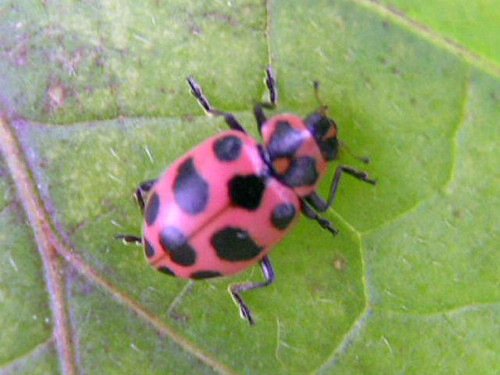
Here is a pink (hypo-E) Lady Bug!..LMAO!!

~Doug
Image
-----
"a snake in the grass is a GOOD thing"

my website -serpentinespecialties.webs.com

amazondoc Sep 12, 2010 03:08 AM

>>Yes, you are indeed the "Pink Lady"..LOL!

Yeah, that's me.

And it gets even worse -- I forgot to mention that I have two bubblegum snow corns as well. Pink everywhere! LOL!!
-----
----

0.1 Peruvian rainbow boa (Amaru)
2.0 Brazilian rainbow boas (Arco, Olho)
1.3.1 Honduran milksnakes (Chicchan, Chanir, Chakar, Hari, Saksak)
1.0 Thayeri kingsnake (Coatl)
0.0.1 Mexican black kingsnake (Mora)
2.7 corns (Cetto, Tolosa, Uce, TBA)
1,000,000.1,000,000 other critters

DMong Sep 13, 2010 02:21 PM

.
-----
"a snake in the grass is a GOOD thing"

my website -serpentinespecialties.webs.com

Site Tools