Is the coastal plains milk snake really a hybrid between the Eastern Milk Snake and the Scarlet King Snake?
Thanks, Michael
Welcome to kingsnake.com's message board system. Here you may share and discuss information with others about your favorite reptile and amphibian related topics such as care and feeding, caging requirements, permits and licenses, and more. Launched in 1997, the kingsnake.com message board system is one of the oldest and largest systems on the internet.

Is the coastal plains milk snake really a hybrid between the Eastern Milk Snake and the Scarlet King Snake?
Thanks, Michael
Since both are milksnakes, it isn't a "hybrid" at all, but rather an isolated intergrade form that has actually became it's own entity. This has been a very complex topic for MANY years.
Here is a link to an article by Tony Dungarra that might help you understand "temporalis" a bit better.
regards, ~Doug
Link
-----
"a snake in the grass is a GOOD thing" 
my website -serpentinespecialties.webs.com
......not Dungarra..LOL!
Sorry Tony!..HAHAA!!

-----
"a snake in the grass is a GOOD thing"
my website -serpentinespecialties.webs.com
>>Since both are milksnakes, it isn't a "hybrid" at all
Welll......that kinda depends on whether you give elapsoides full species status or not. Are there still people calling it L. elapsoides, or has everyone firmly settled on L. t. elapsoides?
-----
----
1.2 Peruvian rainbow boas (Amaru, Asiru, Kulipsa)
2.0 Brazilian rainbow boas (Arco, Olho)
1.3.1 Honduran milksnakes (Chicchan, Chanir, Chakar, Hari, Saksak)
1.0 Thayeri kingsnake (Coatl)
0.0.1 Mexican black kingsnake (Mora)
2.4.4 corns (Cetto, Tolosa, Uce, TBA)
1,000,000.1,000,000 other critters
Well, yes, that is true too, and as of right now from DNA testing, it seems they are indeed being "anticipated" to be renamed to their own distinct species. They are very distinct from other triangulum, I am just so "old school" about their taxonomic status, I can't quite think of them as anything other than a milk(which BTW I will always consider them as).
I really do not agree that everything should be classified according to DNA alone either. For many countless years things have been classified mostly with phenotype and scalation meristics, which is an extremely affective way of categorizing plants and animals. It has worked just fine for the most part for hundreds of years. DNA alone is not always the best answer in my opinion, but in some certain cases and applications, it could very well be, and probably is. It just all depends on many different things I think(shrug).
Anyway, for anyone that wants to know, here is the latest on elapsoide's status from CNAH.........
Taxonomic Comments:
Armstrong, Frymire & Zimmerer (2001 Journal of Herpetology 35(4): 688-693) concluded that this taxon exhibits little, if any, gene flow or intergradation with sympatric L. t. syspila in western Kentucky.
Pyron & Burbrink (2009. Molecular Phylogenetics and Evolution 52: 524-529), using both mtDNA and nucleic DNA, recognized this serpent as a distinct species, Lampropeltis elapsoides. Standard common name remains Scarlet Kingsnake.
CNAH Note: CNAH has made this change in anticipation that its snake systematics group will so approve for the next print edition of the CNAH common names checklist.
-----
"a snake in the grass is a GOOD thing"
my website -serpentinespecialties.webs.com
Very interesting, thanks.
The problem with phenotype and meristics is the possibility of convergent evolution. DNA will distinguish those cases.
-----
----
1.2 Peruvian rainbow boas (Amaru, Asiru, Kulipsa)
2.0 Brazilian rainbow boas (Arco, Olho)
1.3.1 Honduran milksnakes (Chicchan, Chanir, Chakar, Hari, Saksak)
1.0 Thayeri kingsnake (Coatl)
0.0.1 Mexican black kingsnake (Mora)
2.4.4 corns (Cetto, Tolosa, Uce, TBA)
1,000,000.1,000,000 other critters
Evolving to look similar doesnt begin to address the problem. The constant intergradation on the coastal plain will continue to muddy anyones tonic. The validation of it as a species will be dependant upon the LOCALE of the DNA sample. I think it ability to intergrade with milks all along its peripheral habitat will ultimately exclude it from Species status.
You're welcome!,....
"The problem with phenotype and meristics is the possibility of convergent evolution. DNA will distinguish those cases
Well, that is true, it will conclude the genetic relation when compared to other examples, but just as many authorities also view this issue, meristics and phenotype alone can also do a VERY good job of describing and distinguishing an animals look as they become more pure in the middle of an area for example, ....then mixed again, into the next abutting ssp.and so on.
This has actually worked very well for many years, regardless of any DNA analysis. The describing and separation of particular distinct "looks" from one another are a very important part of classifying science, and alot of that aspect should not always be overlooked. I think there are many pros and cons to any of this, and you cannot really satisfy all aspects of any of it with only one method in my opinion. Many taxonomists feel this to be the case as well, and it isn't simply so they can feel their work is important or justified, but rather the particular unique "look" of something compared to other similar things literally defines it is being very different, DNA findings or not. It just keep things in order very well by the human eye, which after all, is what most people use in determining a plant or animal as being "different" in the first place(shrug).
regards, ~Doug
-----
"a snake in the grass is a GOOD thing"
my website -serpentinespecialties.webs.com
I've got no argument with any of that.  I think phenotypic/meristic analyses and DNA analyses are great team mates -- one technique might be useful in some situations, and another technique better in a different situation. It's all good!
-----
----
1.2 Peruvian rainbow boas (Amaru, Asiru, Kulipsa)
2.0 Brazilian rainbow boas (Arco, Olho)
1.3.1 Honduran milksnakes (Chicchan, Chanir, Chakar, Hari, Saksak)
1.0 Thayeri kingsnake (Coatl)
0.0.1 Mexican black kingsnake (Mora)
2.4.4 corns (Cetto, Tolosa, Uce, TBA)
1,000,000.1,000,000 other critters
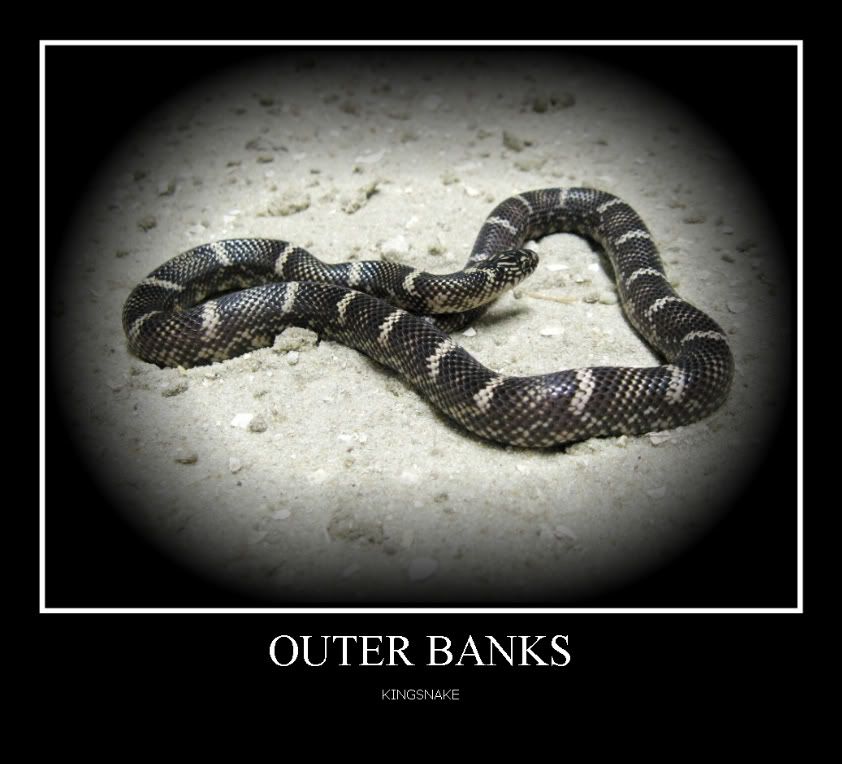
Yes, I would have to agree with that as well. The recent DNA testing(1995) in The Outer Banks king(L.g.sticticeps)for example have been found to have the identical haplotype of DNA from pure mainland forms of Eastern kings, and as far south as south western Georgia. Therefore one can pretty much conclude that this race is not as it was once thought to be, a relict isolated intergrade of floridana x getula from thousands of years ago when it was thought that their ranges were much different.
It is therefore concluded that it is an isolated variant of L.g.getula rather than the intergrade that it was once thought to be. I certainly did find this to be very interesting reading. But even so, just as many have always thought, the snake still deserves unique recognition just the same. This is also how I see this issue too. The snake is still very special, and certainly deserves to be recognized as a unique form of getula regardless of the DNA findings.
I just love the three I have!
~Doug
-----
"a snake in the grass is a GOOD thing"
my website -serpentinespecialties.webs.com
regardless if the coastal is a hybrid, integrade, or full blown species, the animal known as the coastal plains milk has evolved into its present day phenotype after years and years of breeding within a distinct gene pool and within a distinct locality. Simply crossing an eastern x scarlet, or eastern x red in a box will not "create" a coastal milk IMO. Probably not remotely close. Even if some of the babies were phenotypically coastal in appearance, I would doubt future offspring would hold that phenotype with consistency. Unfortunately, I am getting the impression the OP wants to create coastals in a box by crossing eastern x scarlets, and that is the question being asked.
Yeah Kevin, I whole-heartedly agree with you there my friend.
And unfortunately I am afraid you are also correct about the second half there as well.........oh!, the pain!..LOL!
~Doug
-----
"a snake in the grass is a GOOD thing"
my website -serpentinespecialties.webs.com
and then there's the thought of it being an eastern milk crossed with red milk or scarlet crossed with red milk....
?
...my Saint Mary look alot like reds....even a guy at a show was looking at a male red and a male calvert and saying.."they're the same thing,look at them"...and I'm laughing saying "yes I see it ,BUT"...
....and the Tyrell's (pain in butts)...they act like scarlet crosses alot more.......
....
-----
(I can't ,I try,I tried ,but I just cannot)
........
LOL!!,...I know!,....
I must agree!,..I cannot help but see influence from what seems to be syspila in many myself..LOL!
~Doug
-----
"a snake in the grass is a GOOD thing"
my website -serpentinespecialties.webs.com
No
-----
“Nothing is at last sacred but the integrity of your own mind.” Emmerson
Help, tips & resources quick links
Manage your user and advertising accounts
Advertising and services purchase quick links
