Reptile & Amphibian Forums

Welcome to kingsnake.com's message board system. Here you may share and discuss information with others about your favorite reptile and amphibian related topics such as care and feeding, caging requirements, permits and licenses, and more. Launched in 1997, the kingsnake.com message board system is one of the oldest and largest systems on the internet.

Click for 65% off Shipping with Reptiles 2 You
https://www.crepnw.com/
Click for 65% off Shipping with Reptiles 2 You

question about doubl clutching L. greeri

wohlerswi Oct 06, 2010 11:04 PM

Hey Guys,
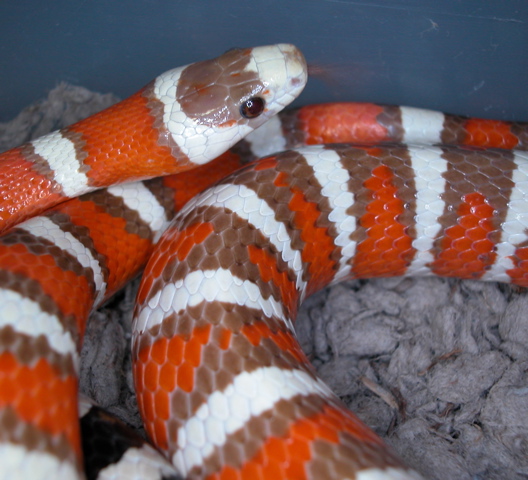
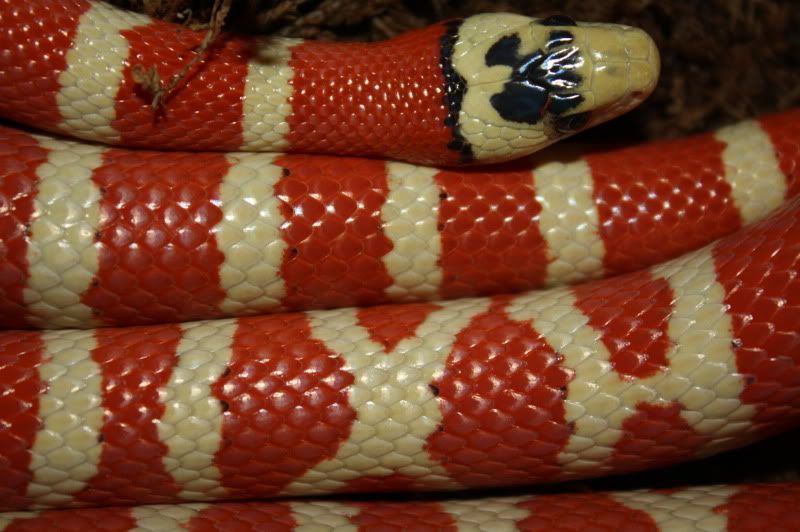
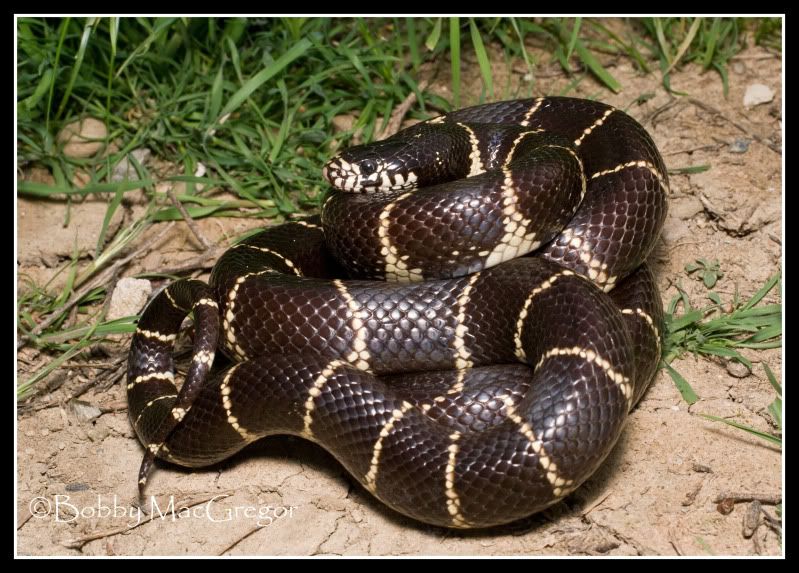
I am new to the kingsnake forum. I am a ball guy, but have recently decided to get back into a select few colubrids. I use to keep mainly colubrids, but in the mid 90's sold most of my collection to focus on my ball python projects. Anyway I acquired an adult pair of het for type II hypo durango kings (well actually 2.4 only 1.1 are ready) from Gregg Feaster. I use to breed greeri, but cannot remember for the life of me how long to brumate. It seems to me that I use to cool for around 3 months. Does this sound about right? Also I have been having trouble finding record or greeri double clutching. I do not remember getting more than one clutch per female years ago, but wondered how easily they will double clutch.

Also there seems to be much debate over the type II hypos. It seems that a lot of people like to call them reduced black rather than hypo. The definition of hypo is exactly that "reduced black" if you look it up. Animals that completely lack melanin are a different story, that makes them amelanistic. So with that being said, any animal showing an inheritable gene to reduce the amount of melanin (no matter how much) in the visual gene carriers, is a hypo. I know Robert Applegate and Shannon Brown both have some extreme examples of hypos lines (and they make me drool), but technically it is a different stain of the same kind of gene. If you are familiar with ball python morphs its kind of like the butter and lesser complex, or even the cinny and black pastel complex. They are different alleles of the same gene, but they produce slightly different looking animals. Anyway I'm trying to figure all this out, as I am new to how you kingsnake guys run things. Any help from you experts would be greatly appreciated, or simply anyone that would like to comment please do. Also does anyone have first hand experience with breeding type II to type II? Do the babies end up more extreme, or basically just a whole clutch or type II's? Anyway thanks guys/gals.
Will
Replies (67)

markg Oct 07, 2010 02:56 PM

Regarding the hypo definition:

I guess in the ball python world, carmel albino would be an example of hypo. The surface area of dark pigment is not necessarily reduced on the snake, but the black color has been replaced with a lighter shade (but darker than no dark pigment at all.)

And maybe spider could be an example of reduced black, where the black color on the snake is indeed black, but the surface area it occupies overall is much reduced compared to normal.

I'm not a ball python guy, but I think the examples above drive the idea home, even if I am off a little on the morph characteristics.

Applegate pyros are reduced black, because what little black is on them is indeed black.

But I don't care what you call them as long as a picture can show the typical inherited characteristic.
-----
Mark

wohlerswi Oct 07, 2010 09:03 PM

I understand what you mean, and thanks for a little help. I guess in a broad generalization you could call a caramel albino a hypo, but the reason it isn't is because they are in fact albinos (t as opposed to t- you couldn't call a t- albino hypo could you?) they just have a different pigment then a regular albino. Anyway do you know about double clutching? thanks
Will

wohlerswi Oct 07, 2010 09:04 PM

n/p

wohlerswi Oct 07, 2010 09:05 PM

n/p

Jlassiter Oct 07, 2010 09:27 PM

>>I understand what you mean, and thanks for a little help. I guess in a broad generalization you could call a caramel albino a hypo, but the reason it isn't is because they are in fact albinos (t as opposed to t- you couldn't call a t- albino hypo could you?) they just have a different pigment then a regular albino. Anyway do you know about double clutching? thanks
>>Will

In the Kingsnake world the T-negative Amelanistics are the "Albinos." Amelanistic means there is NO black Pigmentation.
The Black Patterned area is replaced by the lack of pigment (white).

The T-positives are Lavenders. Some people consider Lavenders as Very Hypomelanistic. T-positives are not Albinos.

The term Albino should be reserved for only true Amelanistic animals in my own opinion......
-----
John Lassiter
Poor planning and procrastination on your part does not constitute an emergency on my part...
www.coastalbendcaptivebreeding.com

wohlerswi Oct 08, 2010 08:45 AM

Thanks for the response, but you are very misinformed on this trait. Amelanistics lack melanin (which give it the black color) as well as have red eyes. T positives (true t positives like caramel albino balls, and T positive Nicaraguan boas) are in fact lacking melanin (black pigment) and have red eyes. They are in fact 100% amelanistic. You cannot argue that. You cannot say that an animal is only amelanistic if it is lacking pigment. Thats crazy. What makes the orange color on albinos? It is a form of pigment. I think the word you were looking for was melanin which is what produces the black color in all things living. Now I don't know if you guys have T positive kingsnakes that are mislabeled, and as such should really be called hypos but that doesn't mean that a true T positive animal is not amelanistic. It simply means that some of you guys out there have mislabeled extreme versions of hypos as t positive amelanistic. I am a geneticist and have spend my entire professional career studying these different genes. Trust me T positives are with out a doubt 100% amelanistic. It is inarguable. That doesn't mean though that some T positive animals are misrepresented as such. The issue I was referring to was the fact that reduced black (type II) are still hypos. If you look up the definition of hypomelanistic is means reduced black pigment (NOT NO BLACK) just reduced black. So both type I and type II are both in reality hypomelanistic. Yes okay type I is more extreme but it is still hypo, type II not as extreme but still hypo. I have found that people in the animal world use a lot of wrong names for traits. We really need to be more responsible with naming of animals and genes, because it does cause a lot of confusion, especially when names like "reduced black" is incorrect. You guys are simply calling type II's by the correct definition of hypo---reduced black. It is really pretty funny if you consider the facts about it. It is like saying an albino isn't an albino it just lacks melanin so we are going to call it "no melanin" instead. Kind of redundant if you think about it.
Will

Jlassiter Oct 08, 2010 11:53 AM

>>Thanks for the response, but you are very misinformed on this trait. Amelanistics lack melanin (which give it the black color) as well as have red eyes. T positives (true t positives like caramel albino balls, and T positive Nicaraguan boas) are in fact lacking melanin (black pigment) and have red eyes. They are in fact 100% amelanistic. You cannot argue that. You cannot say that an animal is only amelanistic if it is lacking pigment. Thats crazy. What makes the orange color on albinos? It is a form of pigment. I think the word you were looking for was melanin which is what produces the black color in all things living. Now I don't know if you guys have T positive kingsnakes that are mislabeled, and as such should really be called hypos but that doesn't mean that a true T positive animal is not amelanistic. It simply means that some of you guys out there have mislabeled extreme versions of hypos as t positive amelanistic. I am a geneticist and have spend my entire professional career studying these different genes. Trust me T positives are with out a doubt 100% amelanistic. It is inarguable. That doesn't mean though that some T positive animals are misrepresented as such. The issue I was referring to was the fact that reduced black (type II) are still hypos. If you look up the definition of hypomelanistic is means reduced black pigment (NOT NO BLACK) just reduced black. So both type I and type II are both in reality hypomelanistic. Yes okay type I is more extreme but it is still hypo, type II not as extreme but still hypo. I have found that people in the animal world use a lot of wrong names for traits. We really need to be more responsible with naming of animals and genes, because it does cause a lot of confusion, especially when names like "reduced black" is incorrect. You guys are simply calling type II's by the correct definition of hypo---reduced black. It is really pretty funny if you consider the facts about it. It is like saying an albino isn't an albino it just lacks melanin so we are going to call it "no melanin" instead. Kind of redundant if you think about it.
>>Will

Will...You certainly misunderstood my reply.....
I know and everyone here knows that an Amelanistic animal is lacking all melanin....not just any pigment......

As for the "type II" greeri....
They are NOT hypomelanistic.
Reduction in black pattern does not make an animal a Hypomelanistic. The melanin itself needs to be reduced not just the pattern.
The Hypo Greeri are truly Hypomelanistic since their melanin is reduced not their pattern alone.....I thought I made that clear in one of my posts here as well....

And the term "albino" should be used ONLY for Amelanistic snakes in my opinion. Where the melanin is replaced by the absence of color (white).

I have thayeri that have no black pattern and I am not calling them Hypomelanistic. Just as the Applegate special Pyros and the Candy Cane Knoblochi....Not hypo, just reduced black pattern.

The first "hypo" cornsnakes were not hypo at all...they just had reduced black patterns. Then came the sunglows (hybino) cornsnakes. They looked different than the amelanistic corns because there was no white at all due to the fact that the black pattern was reduced.

There's other mislabelled snake morphs too....
Anery Hondos aren't anery....they are hypoerythristic.....
A true Anery would be the Black Gap Alterna aneries where the red is replaced by no pigment....white, again.

Breeders have used these terms wrong for a long time.
-----
John Lassiter
Poor planning and procrastination on your part does not constitute an emergency on my part...
www.coastalbendcaptivebreeding.com

Joe Forks Oct 08, 2010 12:33 PM

John,
The problem is that hypo-pigmentation is a general term that covers many specific color aberrations, and amelanism is in fact a form of hypo-pigmentation (or for our conversation, hypo-melanism). Just not all hypo-pigmentation are amelanistic.

Now see where the cornfusion lies? So both type I and type II greeri are hypo-melanistic.

Jlassiter Oct 08, 2010 03:07 PM

>>John,
>> The problem is that hypo-pigmentation is a general term that covers many specific color aberrations, and amelanism is in fact a form of hypo-pigmentation (or for our conversation, hypo-melanism). Just not all hypo-pigmentation are amelanistic.
>>
>>Now see where the cornfusion lies? So both type I and type II greeri are hypo-melanistic.

Joe,
With that explanation I understand it, but that is the first time I heard it explained that way.....

The way I interpret it is that Hypo-melanistic means reduced black pigment....not pattern.....and Amelanistic means the absence of melanin and should be the only mutation called "albino"........

Prefixes we use:
A or An: Total absence of subject pigment.
Hypo: Reduced pigmentation of subject pigment.
Hyper: Exaggerated pigmentation of subject pigment.

Subject Pigments us Kingsnake guys work with:
Erythrin - Red
Xanthin - Yellow
Melanin - Black

So....
Axanthic = Total Absence of Xanthin (No Yellow)
Hypoerythristic = Reduced Erythrin (Reduced Red Pigment)
Anerythristic = Total Absence of Erythrin (No Red)
Hypomelanistic = Reduced Melanin (Reduced Black not pattern)...lol
Amelanistic = Total Absence of Melanin (No black pigment at all)
Hyperaxanthic = Exaggerated xanthin (More than normal yellow).....

So are the Applegate Special Pyros Hypomelanistic?
How about those thayeri that have no black borders?
-----
John Lassiter
Poor planning and procrastination on your part does not constitute an emergency on my part...
www.coastalbendcaptivebreeding.com

Joe Forks Oct 08, 2010 03:44 PM

>>The way I interpret it is that Hypo-melanistic means reduced black pigment....not pattern.....and Amelanistic means the absence of melanin and should be the only mutation called "albino"........

Did you see it defined that way somewhere? I understand your train of thought, but technically, that is not it at all.

>>So are the Applegate Special Pyros Hypomelanistic?
>>How about those thayeri that have no black borders?

Applegate pyros are absolutely hypomelanistic (less black than normal).
In almost every case where the black "pigment" is rendered as "purple", I believe those are the cases where hypomelanistic is not specific enough to describe the trait. (T positive?).

Jlassiter Oct 08, 2010 05:16 PM

>>>>The way I interpret it is that Hypo-melanistic means reduced black pigment....not pattern.....and Amelanistic means the absence of melanin and should be the only mutation called "albino"........
>>Did you see it defined that way somewhere? I understand your train of thought, but technically, that is not it at all.

This is the way I interpret the definition and the way a few others do as well.......If the definition is just reduced black then MANY snakes are Hypomelanistic and we don't call them such......
I high white california king or a 50/50 calking is hypomelanistic then????????

>>Applegate pyros are absolutely hypomelanistic (less black than normal).
>>In almost every case where the black "pigment" is rendered as "purple", I believe those are the cases where hypomelanistic is not specific enough to describe the trait. (T positive?).

So you think the reduced black patterned thayeri are hypomelanistic? I know a few "old timers" that do, but I don't think they are because the black they do have is pure black not reduced melanin.......Again...that is MY interpretation of the definition of Hypomelanism.......
-----
John Lassiter
Poor planning and procrastination on your part does not constitute an emergency on my part...
www.coastalbendcaptivebreeding.com

Jlassiter Oct 08, 2010 05:19 PM

Joe,
Isn't there a difference in a pattern mutation and a pigment mutation?

I think reduced black pattern has nothing to do with pigmentation....the pigment that is there is pure not reduced in a Special Pyro.......
-----
John Lassiter
Poor planning and procrastination on your part does not constitute an emergency on my part...
www.coastalbendcaptivebreeding.com

rtdunham Oct 08, 2010 08:34 PM

>>Isn't there a difference in a pattern mutation and a pigment mutation?
>>
>>I think reduced black pattern has nothing to do with pigmentation....the pigment that is there is pure not reduced in a Special Pyro.......

John, I've expressed those ideas for years too. I think you've got it right.

Your high-white cal king is one of many good examples: Pinstripe hondurans are not hypos (though there can be pinstripe hypos--that dual terminology a good example showing that pattern and pigment morphs are two different things. Another example would be any red rat snake that's not an okeetee--that is, that doesn't have the extra wide black borders to the red saddles: they have less black pattern than an okeetee, but it would be crazy to call them hypos.

Jlassiter Oct 09, 2010 02:28 AM

>>>>Isn't there a difference in a pattern mutation and a pigment mutation?
>>>>
>>>>I think reduced black pattern has nothing to do with pigmentation....the pigment that is there is pure not reduced in a Special Pyro.......
>>
>>John, I've expressed those ideas for years too. I think you've got it right.
>>
>>Your high-white cal king is one of many good examples: Pinstripe hondurans are not hypos (though there can be pinstripe hypos--that dual terminology a good example showing that pattern and pigment morphs are two different things. Another example would be any red rat snake that's not an okeetee--that is, that doesn't have the extra wide black borders to the red saddles: they have less black pattern than an okeetee, but it would be crazy to call them hypos.

Thanks Terry.....
I guess I wasn't the only one that was misinformed and didn't know anything about genetics...........
-----
John Lassiter
Poor planning and procrastination on your part does not constitute an emergency on my part...
www.coastalbendcaptivebreeding.com

Joe Forks Oct 11, 2010 07:59 PM
Jlassiter Oct 11, 2010 08:48 PM

>>en.wikipedia.org/wiki/Pigmentation_disorder

This DOES describe the pattern mutation we are talking about.....Thanks for the link Joe......I did learn something there.....REALLY.....

With the Applegate Special Pyros.....It seems as though the melanocytes are STILL producing melanin but the melanasomes are not transporting the melanin to all the "normal" areas........

YES it is a pigment disorder causing the black pigment (melanin) to not be distributed typically.......BUT is it hypomelanism?

The melanin (color black) is not reduced just the coverage area of melanin (black). The black it does have is still black.....No pigment reduction just a pattern reduction....Yes a pigment disorder but I don't think I would call it hypomelanistic just yet......

I am talking in circles now.....lol

I guess I need to talk to Robert the next time I see him and see how these Applegate Special Pyros came about and the Type II Greeri......I want to hear it straight from him.......

Thanks again Joe.....
-----
John Lassiter
Poor planning and procrastination on your part does not constitute an emergency on my part...
www.coastalbendcaptivebreeding.com

Joe Forks Oct 11, 2010 08:58 PM

My only horse in this race is this; Hypo is a general term, not a specific term, and many aberrations fall under that heading, as illustrated by the chart I provided.

Jlassiter Oct 11, 2010 09:14 PM

>>My only horse in this race is this; Hypo is a general term, not a specific term, and many aberrations fall under that heading, as illustrated by the chart I provided.

Yeah I know....
I can remember back in the early to mid 90s folks were calling anything that was "lighter" than normal a hypo.

I went right along with them and called them hypo too.....
But now I wonder what I was thinking......Hypo-what?.....LOL

Hypomelanistic used to mean a snake was lighter than normal......

It seems now a days Hypomelanistic is more literal......We seem to think that with a hypomelanistic animal the melanin itself should be a color LESS than black like gray/brown/lavender/mocha/silver.......

But I do agree with your explanation of the pattern mutation.....I still don't know if it is hypomelanistic or just that.....a pigment disorder that does not allow the melanin to be deposited in a typical manner but the melanin is still represented as black not reduced black coloration......
-----
John Lassiter
Poor planning and procrastination on your part does not constitute an emergency on my part...
www.coastalbendcaptivebreeding.com

Joe Forks Oct 11, 2010 09:49 PM

well I found some pretty good articles when I was searching, but certainly there things we won't be able to easily explain.

scholar.google.com/scholar?q=chromatophores in snakes&hl=en&as_sdt=0&as_vis=1&oi=scholart

Jlassiter Oct 11, 2010 10:30 PM

>>well I found some pretty good articles when I was searching, but certainly there things we won't be able to easily explain.
>>
>>scholar.google.com/scholar?q=chromatophores in snakes&hl=en&as_sdt=0&as_vis=1&oi=scholart

Yep...It seems melanin can be expressed many different ways.....In many different colors.....Even our own Caucasian skin has melanin in it and it is not black....

Interesting stuff Joe....thanks for the links.....
-----
John Lassiter
Poor planning and procrastination on your part does not constitute an emergency on my part...
www.coastalbendcaptivebreeding.com

Aaron Oct 13, 2010 12:10 PM

I agree with this. Applegate pyros could fall under the term hypo because they are, as you alluded, an abberration.

However, in my opinion, most pinband kingsnakes are not that way due to an abberration. They are simply at the low end of a broad normal spectrum so they should not be called hypo.

Really hypo is a broad definiton that should only be used when we know there is some defect but we don't know exactly what it is, so we can't call it something more specific. An example would be the Black Gap hypo graybands, they are probably a t positive albino(they have ruby eyes and the black color is changed to anything from light brown on up to a sort of waxy dark gray) but nobody has performed the neccessary tests to determine that for sure so we call them hypo. They could just as easily be called Black Gap carmels or Black Gap lavenders because those are made up hobby names but the originator, Dan Johnson, chose to call them hypos and use a broad term.
-----
www.hcu-tx.org/

Tony D Oct 14, 2010 11:50 AM

I wouldn't have had a second though if Bob called those pyros hypo. Except perhaps that it was odd he didn't name them after himself but that's another issue.

For me I look for two things in a trait name, #1 is it descriptive and #2 are the genetics understood. We're seeing a lot of hypo-ish thayeri now but without some understanding of the genetics its hard to say if this is the result of a specific heritable trait of just selective breeding across a gene pool that likely isn't as deep as we'd like it to be.
-----
“Nothing is at last sacred but the integrity of your own mind.” Emmerson

WWW.TDSNAKES.BLOGSPOT.COM

wohlerswi Oct 08, 2010 06:08 PM

Thank you. I don't know why I was having trouble explaining it in those words. That was perfect. The only thing that needs to be added is:

To make any hypo in question a true hypo (type I type II reduced black animals, hypo boas, ghost balls etc) the trait has to be inheritable as either a dominate, co dominate, recessive etc. trait. It cannot be line bred and called a true hypo. While yes some of the line bred animals could pass as extremely nice hypos, they are really not. The black has simply been selectively bred out of them. You have to keep selectively breeding the offspring in order to keep the desired trait alive. With a true hypo this doesn't have to be done. All you have to have is one animal that carriers or shows the hypo gene in order to replicate it. You can breed it to any animal (even the ugliest darkest example of the species) and in the f1(dominate/co dominate) or the f2 (recessive) replicate visual hypos. So anything that is reduced black (pattern or pigment) and can be replicated as a genetic trait is a true hypo. I am glad this is finally starting to get cleared up.

Will Wohlers

Jlassiter Oct 08, 2010 06:32 PM

I'm glad you are convinced.....Me......not so much.....LOL

Actually you just heard what you wanted to hear and now you think it is cleared up.....Hehehehe

Okay then....I will start calling my reduced black thayeri Hypomelanistic.......And my Applegate Special Pyros too...

That is why Bob called them "Special" because he knows they aren't hypomelanistic........

BTW....Everything you stated here I agree with....

To make any hypo in question a true hypo (type I type II reduced black animals, hypo boas, ghost balls etc) the trait has to be inheritable as either a dominate, co dominate, recessive etc. trait. It cannot be line bred and called a true hypo. While yes some of the line bred animals could pass as extremely nice hypos, they are really not. The black has simply been selectively bred out of them. You have to keep selectively breeding the offspring in order to keep the desired trait alive. With a true hypo this doesn't have to be done. All you have to have is one animal that carriers or shows the hypo gene in order to replicate it. You can breed it to any animal (even the ugliest darkest example of the species) and in the f1(dominate/co dominate) or the f2 (recessive) replicate visual hypos. So anything that is reduced black (pattern or pigment) and can be replicated as a genetic trait is a true hypo.
-----
John Lassiter
Poor planning and procrastination on your part does not constitute an emergency on my part...
www.coastalbendcaptivebreeding.com

wohlerswi Oct 08, 2010 06:57 PM

The applegates are hypos. They are recessive hypos. Your thayeri probably would fall into the line bred catagory but I couldn't comment as I do not know how he was produced. I didnt hear what I wanted to hear. I heard someone explain it in a more laymens term than I was. I have spent 25 years studying genetics lol. It is my profession, and I do know what the true meaning of hypomelanistic is. Whom ever you learned your information from was misinformed. They pointed you in the wrong way. I am trying to clear up some misinformation about type I and type II greeri. There is a lot of confusion around, because yes a lot of people misuse names. Have you ever asked Robert if his animals are hypos? He calls them Applegate Specials just the same as he calls all the different traits he has originated Applegate Specials. How bout Applegate Special bulls? They are albino not hypo, but he didn't call them specials because he didn't know they were albino lol. He called them Applegate specials to tie his name to the trait.

Will

Jlassiter Oct 08, 2010 07:35 PM

Okay then......But.....You have yet to "talk over me" with your professional lingo....LOL
I have understood everything that has been corresponded in this thread......
Just wanted to clear that up......hehe

So....The Applegate Special pyro is one of three types of hypomelanisms in the Pyromelana ssp?
Because you are a geneticists I will take your word for it and begin to call them Hypomelanistics.......

I have yet to outcross any reduced black thayeri, but I think they are the result of line breeding........in my opinion.....

Back to the Greeri......

I have the chance to get some offspring from a TypeI X TypeII pairing, but the breeder is overseas and it would be somewhat difficult for me to get them.....If I were to talk to Glades Herps or some other big company that gets imports often I could get them. These double hets are very normal looking but I wonder what a double Homozygous greeri from them would look like........

Will,
While we have you here I would like you to explain how a normal looking Lampropeltis mexicana mexicana ontogentically loses its red pigmentation? After one year of hatching it begins to look Hypoerythristic......I bet eventually its saddles will turn white.....And it will look Anery.......What should I call this one? BTW....it is also from Mr. Applegate's Mex Mex lineage from Valle de los Fantasmas, Mexico.....

What should I be calling this thing? For now I am calling it Hypoerythristic.....LOL

A few months old:

Just over a year old:

Now at Just over 2 years old:


-----
John Lassiter
Poor planning and procrastination on your part does not constitute an emergency on my part...
www.coastalbendcaptivebreeding.com

wohlerswi Oct 09, 2010 09:02 AM

I'm not familiar with this wild type mex mex. They may or may not do it naturally, but for now I think you are correct in calling them Hypoerythristic. We will just have to see how it keeps developing. I do not have an answer for everything lol. In the ball world we have these one gene that we cannot figure out. Anyway the animals are born completely normal, and as they age turn black. And it isn't just a washed out animal. After every shed it actually has normal colored scales that get replaced by black ones (even the gold scales). The best we could come up with to call them were increased melanin gene. So without being familiar with everything going on with the mex mex, maybe you have some decreased erythristic gene? This is where it will get really confusing lol.
Will

ps I never meant to talk over or down to you, and I hope it didn't come off that way. If I did, then I sincerely apologize.

brianm616 Oct 09, 2010 05:55 PM

ontogenic hypermelanism

Jlassiter Oct 09, 2010 06:08 PM

>>ontogenic hypermelanism

I agree....Normal Black Milks go through this as well.....
-----
John Lassiter
Poor planning and procrastination on your part does not constitute an emergency on my part...
www.coastalbendcaptivebreeding.com

Tony D Oct 14, 2010 11:40 AM

If you look at hypo coasts and sispila you see classic examples of how hypo is manifest. In coastals, there is definitely a metabolic interference with the proper production of melanin. In this case I think amelenistic applies because melanin production is atypical. In syspila, I generally see a great reduction in the amount of melanin produced but at least in the animals that I've seen (few) any melanin that is manifest is pretty typical therefore the term hypo still applies but amelanistic would not. Not sure if this jives with other's understandings but it is my take. I found Dr. Bechtel's book a little vague on the subject.

As for the T plus T neg thing. I think that's way over used and often improperly so. Dr. Bechtel's example of this was the two types of black rats and I do not know of any phenotipic difference between these two forms of amelanism. I think its a jump to say one is true amel and the other lavender and am unaware of any skin tests that back this assumption up.
-----
“Nothing is at last sacred but the integrity of your own mind.” Emmerson

WWW.TDSNAKES.BLOGSPOT.COM

DMong Oct 08, 2010 01:27 PM

"The first "hypo" cornsnakes were not hypo at all...they just had reduced black patterns"

Of course as we both know, there is a TON of variation in cornsnake's colors and patterns. Many do indeed resemble true hypomelanistic's, but their inheritence is not a simple recessive gene, but merely a wild variation of phenotype.

From what I have always understood, Bill and Kathy Love along with John Cole produced the first hypomelanistic corns from an animal bought at a store back in 1984. Are you saying the offspring that were produced were not hypomelanistic?

~Doug
-----
"a snake in the grass is a GOOD thing"

my website -serpentinespecialties.webs.com

Jlassiter Oct 08, 2010 02:55 PM

>>"The first "hypo" cornsnakes were not hypo at all...they just had reduced black patterns"
>>
>>Of course as we both know, there is a TON of variation in cornsnake's colors and patterns. Many do indeed resemble true hypomelanistic's, but their inheritence is not a simple recessive gene, but merely a wild variation of phenotype.
>>
>> From what I have always understood, Bill and Kathy Love along with John Cole produced the first hypomelanistic corns from an animal bought at a store back in 1984. Are you saying the offspring that were produced were not hypomelanistic?
>>
I dunno....did they have reduced black pattern or reduced black pattern??????

I am just saying that there are hypo corn snakes now that have the silvery/grayish borders on their saddles.

The first hypos I saw labelled hypo were back in the mid 90s. They had reduced black patterns but the tiny bit of black they had was melanin - BLACK.....they used them to make sunglows (hybinos), but doesn't the amelanistic gene cancel out the hypomelanistic gene? The only difference with the sunglows and the amels was the fact that the patterned area where the black was supposed to be white was absent........
-----
John Lassiter
Poor planning and procrastination on your part does not constitute an emergency on my part...
www.coastalbendcaptivebreeding.com

DMong Oct 08, 2010 04:18 PM

The hypo's I was referring to did indeed have very reduced melanin within the pigment cells themselve's, and were very noticeably true hypomelanistic animals, being a very light opaque greyish coloration around their saddle border's, and even the pattern and border thickness itself was greatly reduced as well.

Yes, the amel gene certainly does mask the hypo gene. I bought a straight up amel hatchling that I cherry-picked from a huge clutch of normal, very typical amels back in 1991 before the term "sunglow" had ever been coined. This animal didn't have one single scale of white on him at all, he just had the light orange background coloration with much darker blotches, with ZERO bordering whatsoever.And as many people know, sunglows today can either have the hypo gene involved, or be simply line-bred regular amels that display very little(if any white).

In any case though, yes, I certainly agree that there are LOTS of corns out there in the hobby that simply have a very naturally occurring pattern reduction to their scheme, and are not true recessive hypo animals at all. For example, there are many animals like that around the Polk county area of Florida where Jorge Sierra lives as a matter of fact, and he has captured quite a few that many people would assume are hypomelanistic corns, when in fact they are actually very reduced-pattern variants of normal/wild phenotype.

Here is a pic of that awesome 1991 animal. Also a king to better stay on topic..LOL!

~Doug

his much more normal sibling from the same clutch........

a killer hypo example female I have........

an interesting colored brooks yearling........


-----
"a snake in the grass is a GOOD thing"

my website -serpentinespecialties.webs.com

markg Oct 08, 2010 12:44 PM

Keep in mind, it isn't whether or not the snake can or can't - they can, if conditions are right. Food is certainly key. So is humidity, or better put, not letting the snake lose too much moisture. And this is so common with montane snakes. For example, keep zonata with access to moisture (and I don't mean just a water bowl), access to cool and warm and they do just fine.

Consider this too. I know a guy who lived up in the mountains where zonata occur. He basically keeps two in a cage and does nothing much for them. They are subject to the ambient conditions of those mountains. And they thrive. Drive down the mountain to where I live with warm Winters and bone dry humidity in Winter, and I have to do all kinds of stuff to make those snakes do well (it is a challenge for sure.) But give me a Cal king (they occur here), and I have to do almost nothing, and it will thrive. So study up on where greeri occur. Probably cool nights are in that equation, along with a smallish basking area that gets upwards of 90 deg.
-----
Mark

wohlerswi Oct 08, 2010 06:19 PM

Thanks man. That helps. I am going to have to look into the conditions they are subject to in nature and go from there. Do you know how if most greeri breeders double clutch? Like with corn snakes, you can safely bet that most people that breed them double clutch, and sometimes triple clutch their animals commonly. Im just trying to figure out if double clutching with greeri is common place or am I really going to have to push them in order to get that second clutch? Also how would it be done to insure copulation on the second go? Would I reintroduce the male and female when she goes through her post lay shed, or would you wait and feed her for a while and then introduce them after she has fed and shed a couple times after the first clutch? Please if there are any greeri breeders out there that commonly double clutch their animals, please chime in. thanks man
Will Wohlers

Jlassiter Oct 07, 2010 03:43 PM

Will,
3 months at 55F in the dark will work....
There are "other" ways as well....

As for the Different types of Hypomelanism.....

Reduced black PATTERN is NOT Hypomelanism.
Hypomelanism is Reduced Black Pigmentation.

So....
The reduced black patterned Greeri are not Hypo but are corectly being called reduced black.
The Hypo Greeri are Hypomelanistic.

The cool thing is that when they are bred to each other they produce very normal looking offspring (Double Hets?)......

They are certainly on my wish list and I plan on acquiring some soon......
-----
John Lassiter
Poor planning and procrastination on your part does not constitute an emergency on my part...
www.coastalbendcaptivebreeding.com

wohlerswi Oct 07, 2010 08:58 PM

Thats what I was looking for. I was correct in saying reduced melanin. I understand the difference that you are talking about though where as my type II will be reduced black in pattern but the black is still a true black. So I assume that the black on the true hypo line is more of a purple like I am use to on a true hypo (i.e. ghost ball pythons)? Anyway do you have any experience with double clutching? thanks man
Will Wohlers

Jlassiter Oct 07, 2010 09:17 PM

>>Thats what I was looking for. I was correct in saying reduced melanin. I understand the difference that you are talking about though where as my type II will be reduced black in pattern but the black is still a true black. So I assume that the black on the true hypo line is more of a purple like I am use to on a true hypo (i.e. ghost ball pythons)? Anyway do you have any experience with double clutching? thanks man
>>Will Wohlers

I believe all Lampropeltis are capable of double clutching......
-----
John Lassiter
Poor planning and procrastination on your part does not constitute an emergency on my part...
www.coastalbendcaptivebreeding.com

a153fish Oct 08, 2010 01:23 PM

Just my 2 cents worth on double clutching! From my experience some snakes are easier to double clutch than others! I know some say any snake can and will double clutch, but I am telling you what I have found out over the years personally. First off if a snake is going to double clutch they will need the optimum conditions, foremost is food. The female shoud be a good eater and resume eating heavily soon after her first clutch. Food I believe is the key that triggers the females to begin ovulating again. Having said that I had a thin cornsnake this year who i did not plan on double clutching and did! Even though I did not feed her heavily after her first. I also have a chunky hypo that I did want to double clutch, and she did not even though she fed very well after her first. So individual results can and will vary! Some species like the Pueblan milks often double and tripple clutch with little effort but they still require good food intake. I never double clutched any of the mexican kings, so I don't know how easy it is. I did double clutch Alterna so I know it is possible with them. So as the Scorpions sing, "give her inches and feed her well!" All you can do is try!
-----
King Snakes! Who can make a better mouse trap?
J Sierra

DMong Oct 08, 2010 01:59 PM

Yes, I tend to agree with that too Jorge. It all depends on many things. As you mentioned, food intake is an important key factor as to how many time a female might ovulate, and it is only very understandable that nature would not generally favor more ovulation in a thin, underweight female. After all, that could very well sign the female's "death warrant" if this was common place for them to do.

~Doug
-----
"a snake in the grass is a GOOD thing"

my website -serpentinespecialties.webs.com

a153fish Oct 08, 2010 03:04 PM

Yeah it only makes sense! If a snake is in an area where food is abundant then nature triggers the snake to produce more babies. If the snake is in an area where food is scarce then it will not trigger the snakes to produce more babies. Very smart design actually.
-----
King Snakes! Who can make a better mouse trap?
J Sierra

DMong Oct 08, 2010 04:25 PM

That is the entire story in a "nut shell"..LOL!

~Doug
-----
"a snake in the grass is a GOOD thing"

my website -serpentinespecialties.webs.com

wohlerswi Oct 08, 2010 07:15 PM

n/p

Jlassiter Oct 08, 2010 03:11 PM

You are right Jorge.....
That is why I said All Lampropeltis are capable.....
It is up to husbandry to allow it to happen.......

If you have things double clutching and you aren't even trying then your husbandry seems to be up to par for that particular species or subspecies.......

I've seen thayeri, ruthveni, mex mex and alterna double clutch many a time........
But...Honestly...I have never successfully had a pair of Greeri reproduce for me.....I hope to change that soon.....LOL
-----
John Lassiter
Poor planning and procrastination on your part does not constitute an emergency on my part...
www.coastalbendcaptivebreeding.com

a153fish Oct 08, 2010 03:55 PM

Well in this case husbandry wasn't good. I had kinda neglected that thin snake cause I wasn't that interested in her breeding, so my attention was focused on other snakes. Yet the skinny one double clutched and the one hypo that I pampered and fed heavy, laughed in my face, lol. Just goes to show there are exceptions to every rule we make.
-----
King Snakes! Who can make a better mouse trap?
J Sierra

Jlassiter Oct 08, 2010 05:12 PM

>>Well in this case husbandry wasn't good. I had kinda neglected that thin snake cause I wasn't that interested in her breeding, so my attention was focused on other snakes. Yet the skinny one double clutched and the one hypo that I pampered and fed heavy, laughed in my face, lol. Just goes to show there are exceptions to every rule we make.

Feeding is not the only aspect to husbandry and double clutching but it is one of them.......
-----
John Lassiter
Poor planning and procrastination on your part does not constitute an emergency on my part...
www.coastalbendcaptivebreeding.com

a153fish Oct 08, 2010 06:17 PM

Everything else was identical except, one is wild caught and one is from a long line of captive bred snakes. But another surprise was my oldest Okeetee. She always double clutches but this year she didn't. Maybe age had something to do with that one?
-----
King Snakes! Who can make a better mouse trap?
J Sierra

Jlassiter Oct 08, 2010 06:32 PM

>>Everything else was identical except, one is wild caught and one is from a long line of captive bred snakes. But another surprise was my oldest Okeetee. She always double clutches but this year she didn't. Maybe age had something to do with that one?

Yep....nothing is predictable......
-----
John Lassiter
Poor planning and procrastination on your part does not constitute an emergency on my part...
www.coastalbendcaptivebreeding.com

Jlassiter Oct 08, 2010 03:15 PM

Is this a Hypo-melanistic thayeri?

-----
John Lassiter
Poor planning and procrastination on your part does not constitute an emergency on my part...
www.coastalbendcaptivebreeding.com

a153fish Oct 08, 2010 03:58 PM

What is the official definition of hypomelanistic?
-----
King Snakes! Who can make a better mouse trap?
J Sierra

Jlassiter Oct 08, 2010 05:18 PM

>>What is the official definition of hypomelanistic?

I interpret it as the reduction in melanin, not the reduction in black pattern........

Joe Forks and I are discussing this further up in this thread....

I do not call Applegate Special Pyros Hypomelanistic nor do I call the Type II Greeri Hypo......If that were the case then these thayeri would be Hypomelanstic as well as High white calkings, Candy Cane Knoblochi and many others......
-----
John Lassiter
Poor planning and procrastination on your part does not constitute an emergency on my part...
www.coastalbendcaptivebreeding.com

Jlassiter Oct 08, 2010 05:40 PM

So this is called a Sentz Line Hypomelanistic Pyromelana....

Much different than the Applegate Special Pyro......
Is the Applegate Special pyro a Hypo?

We won't even go into the BHB "pale" hypos.....lol
-----
John Lassiter
Poor planning and procrastination on your part does not constitute an emergency on my part...
www.coastalbendcaptivebreeding.com

wohlerswi Oct 08, 2010 07:14 PM

Yes they are both hypos. I do not know about your kingsnake. It would depend on if it is an inheritable trait, and what the parents were. Hypos can look very very different. Some lines lack different pigments than others giving lots of different looks in hypos. When you say the "I interpret it as the reduction in melanin, not the reduction in black pattern......." you are contradicting yourself. I understand you wanting to stick to your guns, and I admire that but you are wrong. The reduction of melanin and the reduction on black pattern are the same. You are referring to hypos lacking melanin not reduced melanin. Reduce the melanin in a snake, and what do you have? You have the same original looking snake, with the adsense of a lot of black that would normally be present. It doesn't have to replace the black with grey or purple, is simply REDUCES THE BLACK lol! The def. of hypo is the reduction of black pigment (when you reduce black pigment you reduce the pattern (def. of HYPO!), when you replace black pigment it changes the overall color. BOTH ARE HYPO as long as the trait is not selectively bred to look hypo). Not the absense of black pigment. Think about it and it will be clearer to you. Who taught you genetics man? Just because it is accepted in the kingsnake world doesn't mean it is correct lol
Will

Jlassiter Oct 08, 2010 07:41 PM

I think a pattern mutation is different than a pigment mutation, but since you are the geneticists then like I posted up above I will call everything hypomelanistic that has reduced black pattern and continue to call the ones that have reduced pigment (gray/silver/purple/lavender/mocha/brown...etc) hypomelanistic........

As for the thayeri I guess I will test breed it to see if anything is genetic, but my opinion is they are line bred......And not hypomelanistic......

Thanks for this intersting topic of discussion Will.
-----
John Lassiter
Poor planning and procrastination on your part does not constitute an emergency on my part...
www.coastalbendcaptivebreeding.com

Beaker30 Oct 08, 2010 10:23 PM

John,

You are correct here. The top animal is hypomelanistic, the bottom animal is not. Hypomelanistic used correctly means the amount of black pigment (melanin) is UNDERDEPOSITED in the places it should be deposited. The top animal has under-deposited melanin. The bottom animal has the proper amount of black pigment deposited where it should be deposited in its scales.

If you breed an animal not to have black borders then genetically it is not going to deposit ANY melanin there since its DNA does not call for melanin to be deposited there. If the DNA does call for melanin, and doesnt deposit enough, then you get the look of the top animal.

Craig

Jlassiter Oct 09, 2010 02:30 AM

>>John,
>>
>>You are correct here. The top animal is hypomelanistic, the bottom animal is not. Hypomelanistic used correctly means the amount of black pigment (melanin) is UNDERDEPOSITED in the places it should be deposited. The top animal has under-deposited melanin. The bottom animal has the proper amount of black pigment deposited where it should be deposited in its scales.
>>
>>If you breed an animal not to have black borders then genetically it is not going to deposit ANY melanin there since its DNA does not call for melanin to be deposited there. If the DNA does call for melanin, and doesnt deposit enough, then you get the look of the top animal.
>>
>>Craig

I agree Craig but others do not see it the way we do.......
-----
John Lassiter
Poor planning and procrastination on your part does not constitute an emergency on my part...
www.coastalbendcaptivebreeding.com

Beaker30 Oct 09, 2010 08:26 AM

Supposed geneticist or not, the other guy was wrong. An Applegate pyro doesn't have black bands (for the most part), but it does have black on the head. Therefore, its DNA does not code for any melanin to be deposited in the bands (since there aren't black bands), but does call for melanin to be deposited on the head. Where the DNA does code for melanin deposition (the head), melanin is deposited in the proper amounts resulting in the color black. Melanin is not under deposited where it is supposed to be deposited, therefore the animal is NOT hypomelanistic.

So you are correct, an animal like an Applegate pyro can have a reduced black pattern, meaning places that were once supposed to be black are eliminated and thus no longer are coded to get ANY melanin deposition. Whereas a hypo Greeri still has areas that are coded to get melanin deposition, and in those areas melanin is UNDER deposited resulting in the grayish or brownish look instead of true black. That is then indeed true hypomelanism.

As you know John, I am a science teacher, so I have repeated exposure to the subject matter (genetics and DNA coding) also.

wohlerswi Oct 09, 2010 08:56 AM

Applegates do have black flecking throughout there bodies which is an understated melanin. It is an extreme version but you are incorrect in saying it is not a hypo. You cannot just cay the black cap didn't get transposed in the DNA so it isn't a hypo. You have to look at the entire animal. The Applegates have black flecking throughout their bodies meaning that their DNA understated the melanin not removed it. I hope you aren't teaching the kids your "theory." Science teacher or not, you are wrong. What area of science education did you major in? I have my BA in biological research, and my masters in Biomedical Technologies. I have been studying genetics for 25 years and you are just simply wrong.
Will

Beaker30 Oct 09, 2010 10:06 AM

I beg to differ with your outlook. When in fact I think you are blending two areas together. Black flecking is still black, it is not under deposited. The true meaning of the prefix "hypo" is under. Therefore, those areas that are black on an applegate are still true black...not under-deposited black which results in gray or brown.

An animal that has reduced areas of black, such as an applegate pyro, or a reduced black thayeri simply has had its DNA bred to code to deposit less AREAS of true black where the full proper amounts of melanin are still deposited correctly.

A true hypomelanistic animal still has DNA that codes for black to go in all the normal areas its supposed to go to, yet another gene codes to deposit less melanin in those areas (UNDER deposited) resulting in the normal areas that are supposed to be true black not being black but brown or gray.

And even people with advanced degrees can still make mistakes. So touting your degrees does not make you correct in all instances. So let's not hold degrees up as the defining absolute, because they arent. I also have a Masters, but that is irrelevant to the question we are discussing. And I refuse to get into a personal attack such as you implying that I only teach theory without applied knowledge..of which I have plenty.

Joe Forks Oct 12, 2010 03:08 PM

I would answer the question with a question, but instead just read these two links (linked off other pages I linked)

[urlhttp://en.wikipedia.org/wiki/Hypopigmentation[/url]

en.wikipedia.org/wiki/Melanocyte

Jlassiter Oct 12, 2010 09:23 PM

>>I would answer the question with a question, but instead just read these two links (linked off other pages I linked)
>>
>>[urlhttp://en.wikipedia.org/wiki/Hypopigmentation[/url]
>>
>>en.wikipedia.org/wiki/Melanocyte

Yes...yes...I read all of those links.....
I posted this prior to the links you posted up a ways.....

Thanks again Joe.....
-----
John Lassiter
Poor planning and procrastination on your part does not constitute an emergency on my part...
www.coastalbendcaptivebreeding.com

bmac Oct 13, 2010 08:45 PM

Allan Bartlett has line bread his Agalma for several generations to achieve an animal with very reduced black. I photographed his collection last year and I think it is very interesting to see how easy it is to get a desired look.

Here are pics of his adults. As you can see most would consider them to be typical looking Agalma, nice looking but typical.

Intermediates:

This is an almost now black snake after several generations.

Honestly it is hard for me to consider this snake a hypo. I personally think that for a snake to be considered a hypo it has to be passed on by a simple recessive trait gene.

This is only my point of view.

Thanks for looking!

bmac Oct 13, 2010 10:04 PM

I also had another thought. Would some of you guys call this snake a hypermelanistic? it clearly has more black than a cal king.

Jlassiter Oct 13, 2010 10:19 PM

>>I also had another thought. Would some of you guys call this snake a hypermelanistic? it clearly has more black than a cal king.
>>

Great points Bobby.....

I mentioned that a high white calking is not hypomelanistic....It is just a pattern mutation.....The black is black....not anything less than black......LOL
-----
John Lassiter
Poor planning and procrastination on your part does not constitute an emergency on my part...
www.coastalbendcaptivebreeding.com

Aaron Oct 13, 2010 10:51 PM

Good point Bobby. I would not call it hypermelanistic because it is simply a normal Cal king with wider than average black bands.

Similarly I would not call a pyro that had alot of black crossovers a hypermelanistc.

I think alot of the confusion surrounding these terms is rooted in just a few sellers who know that by putting "-istic" in their ad they can increase the percieved value and desirability of whatever it is they are selling. Since HYPERmelanistic snakes are not that well known or sought after I don't think that term gets exploited like the hypo term does.
-----
www.hcu-tx.org/

Aaron Oct 13, 2010 03:31 AM

I have not read all the responses and I am somewhat late at chiming in but here are my thoughts on reduced black vs. true hypo.

Reduced black as it pertains to captive animals is a relative term. In captivity animals with two, one or even one-half scale wide are often called reduced black. Relative to the wild caught specimens that founded most captive lines, specimens with those lower than average amounts of black can indeed be called reduced black. This is because most captive lines started with average black specimens and selective breeding "reduced" the amount of black.

In nature however, specimens with two, one and/or one-half scale wide black are not reduced. They are completely within the normal range for wild specimens. Yes, such specimens do have less than average amounts of black but they are by no means outside the normal range. They are simply less than average and average, of course, is merely the middle of a natural spectrum. A natural and normal spectrum which includes everything from one-half scale wide(or even less) on up.

A true reduction of black occurs, IMHO, only when the black coloration itself has been reduced to a color that is less than black. In other words, only when the black that is present, be it one-half scale wide or ten scales wide it doesn't matter, has been reduced to a lesser color such as gray, brown, carmel, lavender, etc. can a specimen be considered hypo.

To sum it up: Low black pattern = less than average but still within the normal range therefore not hypo. Lower black color, ie, some shade of gray, brown or lavender where black would normally be = an abnormal reduction therefore hypo.
-----
www.hcu-tx.org/

Jlassiter Oct 13, 2010 09:34 PM

>>I have not read all the responses and I am somewhat late at chiming in but here are my thoughts on reduced black vs. true hypo.
>>
>>Reduced black as it pertains to captive animals is a relative term. In captivity animals with two, one or even one-half scale wide are often called reduced black. Relative to the wild caught specimens that founded most captive lines, specimens with those lower than average amounts of black can indeed be called reduced black. This is because most captive lines started with average black specimens and selective breeding "reduced" the amount of black.
>>
>>In nature however, specimens with two, one and/or one-half scale wide black are not reduced. They are completely within the normal range for wild specimens. Yes, such specimens do have less than average amounts of black but they are by no means outside the normal range. They are simply less than average and average, of course, is merely the middle of a natural spectrum. A natural and normal spectrum which includes everything from one-half scale wide(or even less) on up.
>>
>>A true reduction of black occurs, IMHO, only when the black coloration itself has been reduced to a color that is less than black. In other words, only when the black that is present, be it one-half scale wide or ten scales wide it doesn't matter, has been reduced to a lesser color such as gray, brown, carmel, lavender, etc. can a specimen be considered hypo.
>>
>>To sum it up: Low black pattern = less than average but still within the normal range therefore not hypo. Lower black color, ie, some shade of gray, brown or lavender where black would normally be = an abnormal reduction therefore hypo.

Aaron,
I know you didn't read all the posts but that is almost exactly what I posted in many of these replies.......

There is a difference between a pattern mutation and a pigment mutation........But there just isn't a fancy "name" given to it except for "no black", "reduced black", "Candy Cane" or "Special."
-----
John Lassiter
Poor planning and procrastination on your part does not constitute an emergency on my part...
www.coastalbendcaptivebreeding.com

Site Tools