Reptile & Amphibian Forums

Welcome to kingsnake.com's message board system. Here you may share and discuss information with others about your favorite reptile and amphibian related topics such as care and feeding, caging requirements, permits and licenses, and more. Launched in 1997, the kingsnake.com message board system is one of the oldest and largest systems on the internet.

Click here for Dragon Serpents
https://www.crepnw.com/

Huge Prove out clutch!!!

RG Oct 25, 2010 10:27 PM

So, these babies are about 4 days early...and I couldn't be more excited!

I paired my male Ghost Het Amel (unproven) that I produced a couple of years ago to a female Hypo Het Amel. (poss Het Anery) that I got from Terry Dunham many years ago.

Well, she's Het Amel and Anery (AKA Het Snow) for sure!

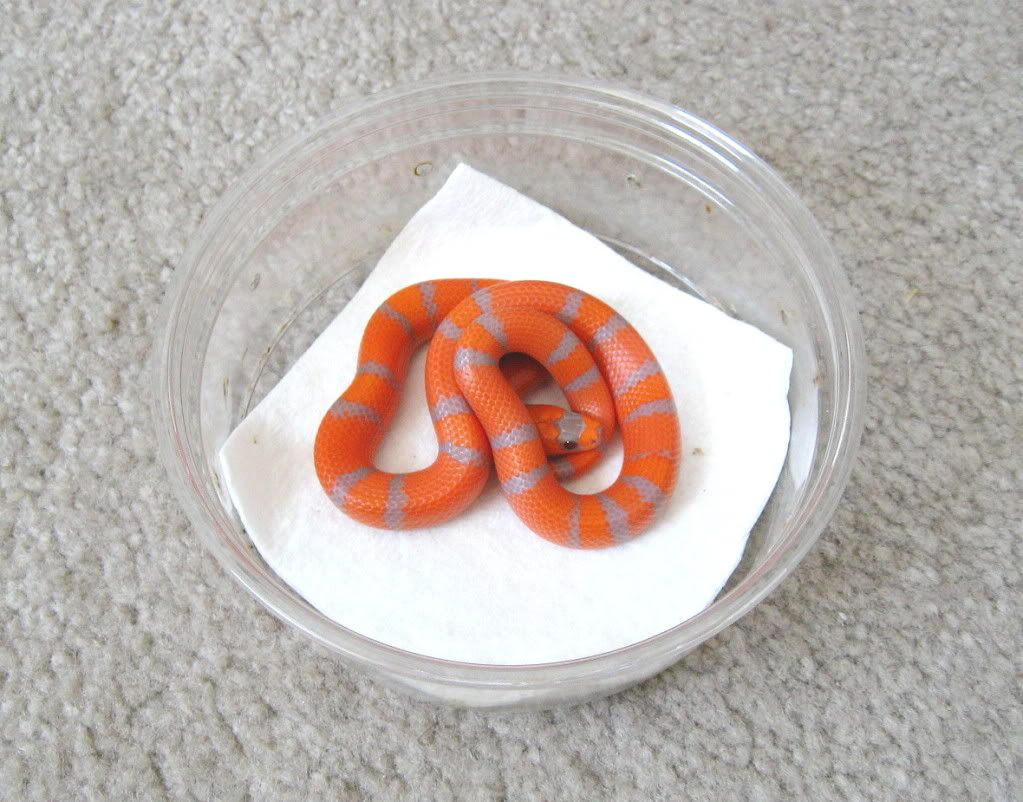
Here's a quick pic (one of each flavor!):

I have:
> 3 Tricolor Hypos Het Anery (really Hypo-Erythristic) 66% Het Amel

> 2 Tangerine Hypos Het Anery (Hypoerythristic) 66% Het Amel

> 1 Ghost 66% Het Amel (super light!)

> 1 Peach Hybino Het Anery (Hypoerythristic)

NOTE: I’m going to start referring to Anerys as what they are Hypoerythristics…Ghosts as Hypoerythristics and Hypomelanistic which still are “Ghosts” but I kinda like Hypo-Merythristics!
HA!
I know Doug is with me on this slight correction misnomer…especially since there very well could be a true Anerythristic gene out there!

Anyway, it was a nice interruption to my scheduled pumpkin carving night!
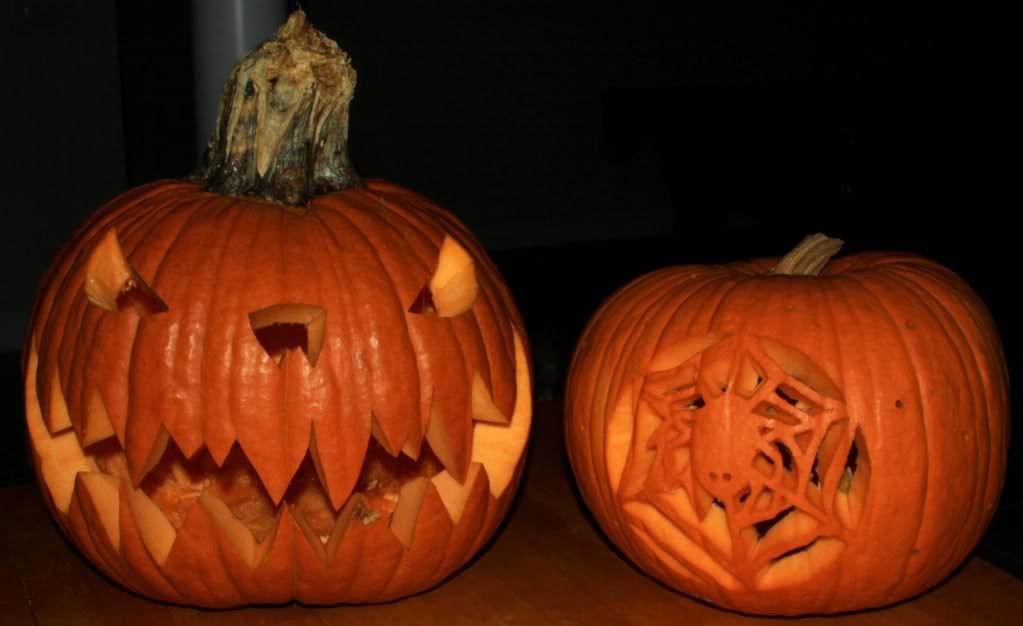
My fiancé’s:
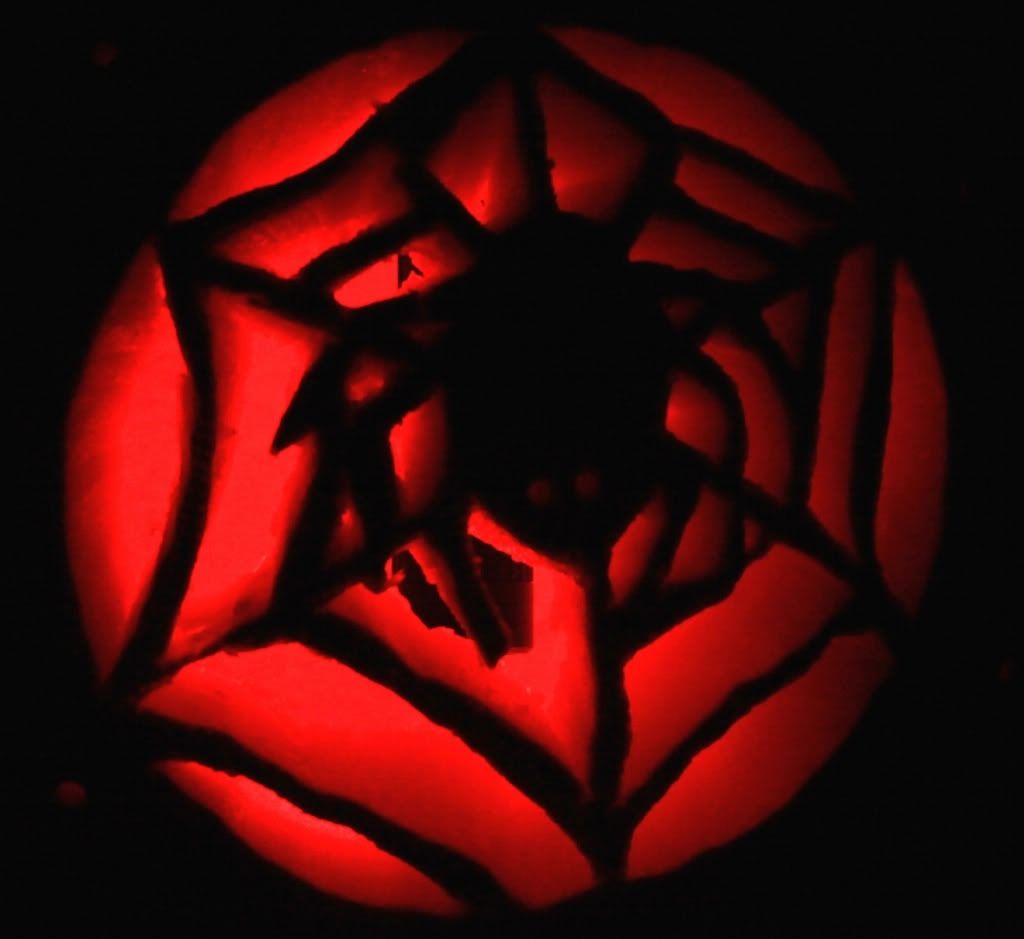
Mine:
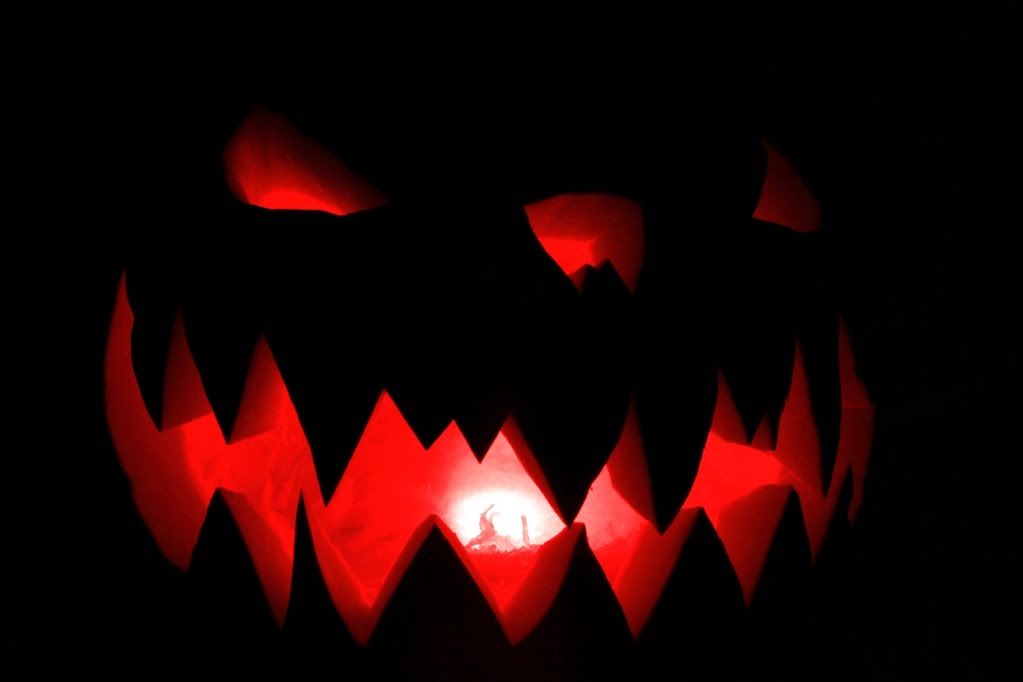
Enjoy!

-Rusty

Replies (17)

DMong Oct 25, 2010 10:48 PM

Awesome critter's peerin out their little windows!!..HAHAA!

Can't wait to see all of them out bro, and Im really excited about what that ghost might turn out to be too!

Yeah, Terry Dunham, Shannon Brown, you, me, John Lassiter, and I'm sure many more folks actually see the proper term as being "hypoerythrism", and not anerythrism. It is simply a more extreme form of hypo-E than some of the other types of hypoerythrism.

Good luck with the hatching bud!

~Doug
-----
"a snake in the grass is a GOOD thing"

my website -serpentinespecialties.webs.com

DMong Oct 25, 2010 10:51 PM

forgot to comment on those killer Jack-O-Lantern's you two did!.....awesome man!!..HAHAA!!

~Doug
-----
"a snake in the grass is a GOOD thing"

my website -serpentinespecialties.webs.com

terryd Oct 25, 2010 10:59 PM

Looks like fun, those are going to be sweet looking little hondurans Rusty.

I got a say I like your punkin the best, the glow looks very nice.

-Dell

Image

tspuckler Oct 26, 2010 07:39 AM

Now THAT'S some cool variety - 4 eggs and 4 morphs.
Those Jack-O-Lanterns aren't too shabby either!

Tim

Jeff Schofield Oct 26, 2010 10:38 AM

Congrats for the clutch and the PROOF! Name changes are tough, I have been trying to get people to call the "hypo" coastals Lav. Albinos for about 10 years! I have also had a problem with "extreme" hypo hondos....but cant argue them anymore.

DMong Oct 26, 2010 01:13 PM

Yeah, now I agree about it being tough trying to "re-invent" the wheel after such a long accepted time. But I don't think Rusty is out to really change the the coined name per se, but is simply preferring to use the term hypoerythristic personally as a more accurate way of referring to the morph.

Now about the extreme hypos, there is no doubt in my mind that they are definitely hypomelanistic animals, and totally allelic with the standard hypo gene. Otherwise you could not produce extreme's in any given clutch with more typical looking hypos, or "ultra-light" hypos that can be in any given clutch of extremes too. The extreme gene is most certainly allelic with the more typical form of hypomelanism we are all familiar with.

It isn't totally understood as to exactly how this gene works, but it is definitely an extreme form of hypomelanism, and not a "lavender", or "tyrosinase-positive" as in some of the other types of snakes in the market.

You can get any combination anywhere between a 1 to a 10 with hypos, and when you breed any two typical hypos that also carry the extreme gene, you can also create "extreme" hypos within the clutch. Additionally, you can breed two extreme hypos together, and also produce very high-end examples of more typical looking hypo's too, although the odds of all them being far above average are GREATLY increased, but the won't necessarily all be extreme hypo's. That cannot happen with the other types you mentioned. Certainly not arguing about this, but just pointing out that it HAS to be a form of hypomelanism that is allelic with the more typical hypo's.

Note that there is some noticable variation within this cutch I produced this year, but all are certainly high-end hypos that will indeed produce screamer extremes too when mature because even the slightly lesser one;s are from an extreme clutch

~Doug

-----
"a snake in the grass is a GOOD thing"

my website -serpentinespecialties.webs.com

amazondoc Oct 26, 2010 01:32 PM

>> You can get any combination anywhere between a 1 to a 10 with hypos, and when you breed any two typical hypos that also carry the extreme gene, you can also create "extreme" hypos within the clutch. Additionally, you can breed two extreme hypos together, and also produce very high-end examples of more typical looking hypo's too, although the odds of all them being far above average are GREATLY increased, but the won't necessarily all be extreme hypo's.

Wouldn't that make you think that "extreme" is actually a multigenic phenomenon? From what you said, it sounds additive rather than a simple on/off effect.

And, of course, beautiful snakes. I'm laughing over the pic with the baby that has a head and no body.
-----
----

1.2 Peruvian rainbow boas (Amaru, Asiru, Kulipsa)
2.0 Brazilian rainbow boas (Arco, Olho)
1.3.1 Honduran milksnakes (Chicchan, Chanir, Chakar, Hari, Saksak)
1.0 Thayeri kingsnake (Coatl)
0.0.1 Mexican black kingsnake (Mora)
2.4.4 corns (Cetto, Tolosa, Uce, TBA)
1,000,000.1,000,000 other critters

DMong Oct 26, 2010 02:02 PM

Yes, there is definitely something pretty complex going on with that particular gene, or "genes" for sure, and I, nor anyone could possibly even begin to know or undrstand very much about it either as you can easily understand. Really all I or anyone else can say about it and has worked with and bred them, is they are best termed a strange form of hypomelanism on "steroids". But as to how it really works is pretty much a mystery I think, and might very well always be.

Lt's face it, how many hobbyists/breeder's, or even professional geneticist's know exactly 100% of what is responsible for what within any given pigment cell(chromatophore), or exactly how it can interact with certain things?.....nobody really, only the simple basic stuff we understand and can properly term.

So many in this hobby don't even have the FIRST clue about how any pigment cells work, or even the correct terminology, so that in itself adds to the already VERY confusing world of genetics and it's terms that are widely misused on a very daily basis..LOL!

I will be the very FIRST to admit to everyone in the hobby that I only know but a tiny fraction of the big picture of genes and genetics, but I can honestly say in the same breath that I do probably understand far more about it than a very large portion of the people in this hobby, of course not that that is really saying an aweful lot either though..LOL!

Anyway,...are many things regarding genetics and how it can operate extremely complex and totally beyond our comprehension??,........most definitely!

~Doug
-----
"a snake in the grass is a GOOD thing"

my website -serpentinespecialties.webs.com

amazondoc Oct 26, 2010 02:15 PM

I hear ya. I never really thought much about how complicated color genetics could be, until I got involved with chickens. Then I discovered that chickens have about 20 **known** color/pattern related genes, several of which have multiple alleles per locus, PLUS other genes that are still debated. And THEN I started getting interested in snake genetics. And while there may not be as many color genes *per species* in snakes as in chickens, you ALSO have to deal with different genes from species to species -- PLUS the long generation time, PLUS the vastly smaller pool of knowledge in snakes as opposed to chickens, and so on and so forth. Color genetics presents many interesting puzzles, and we sure need to keep in mind just how much we DON'T know about the subject....
-----
----

1.2 Peruvian rainbow boas (Amaru, Asiru, Kulipsa)
2.0 Brazilian rainbow boas (Arco, Olho)
1.3.1 Honduran milksnakes (Chicchan, Chanir, Chakar, Hari, Saksak)
1.0 Thayeri kingsnake (Coatl)
0.0.1 Mexican black kingsnake (Mora)
2.4.4 corns (Cetto, Tolosa, Uce, TBA)
1,000,000.1,000,000 other critters

DMong Oct 26, 2010 02:30 PM

Very accurately said!, and I could not have said it any better than that if I had to. Only the simplest of it is understood, most of it is a big mystery. And I whole-heartedly agree about the totally different aspects of it in any given type too. What is one thing in one type, can be TOTALLY different in another type of snake, and still look very similar. Confusing?....boy, you bet!

~Doug
-----
"a snake in the grass is a GOOD thing"

my website -serpentinespecialties.webs.com

amazondoc Oct 26, 2010 02:49 PM

Oh, and we didn't even mention the added mountains of confusion caused by hobby names. Yikes!!
-----
----

1.2 Peruvian rainbow boas (Amaru, Asiru, Kulipsa)
2.0 Brazilian rainbow boas (Arco, Olho)
1.3.1 Honduran milksnakes (Chicchan, Chanir, Chakar, Hari, Saksak)
1.0 Thayeri kingsnake (Coatl)
0.0.1 Mexican black kingsnake (Mora)
2.4.4 corns (Cetto, Tolosa, Uce, TBA)
1,000,000.1,000,000 other critters

DMong Oct 26, 2010 07:01 PM

Yeah, but that certainly goes hand-in-hand with most people not knowing what is responsible for any given mutation, or the proper terms for them too. See, that is really the simplest part of genetics, but even that aspect seems to be a huge mystery to most people..LOL!

Just one simple example of this would be a Yellow Ratsnake morph that was newly discovered around 1995, and I saw hets of this new morph being offered in 1996. This original Yellow Ratsnake was EXTREMELY pale, and was a light cream color, but had the normal dark four longitudinal strips typical of that race. The onlt part of the snake that was yellow was the snout and a bit of the sides of the face, the rest of it was incredibly washed-out of any yellow coloration. The guy had it labeled as an "anerythristic Yellow Ratsnake"..LOL!. I took one look and could plainly see the snake was most certainly hypoxanthic(very reduced yellow pigmentation).

See, the guy was comparing apples to oranges so to speak because he compared it to the way a striped cornsnake looks, and what it is called...LOL!

Yeah, similar "looks", but VERY different genetics involved..HAHA!!

~Doug
-----
"a snake in the grass is a GOOD thing"

my website -serpentinespecialties.webs.com

amazondoc Oct 26, 2010 07:10 PM

>>Yeah, but that certainly goes hand-in-hand with most people not knowing what is responsible for any given mutation, or the proper terms for them too. See, that is really the simplest part of genetics, but even that aspect seems to be a huge mystery to most people..LOL!

Yupyupyup.
-----
----

1.2 Peruvian rainbow boas (Amaru, Asiru, Kulipsa)
2.0 Brazilian rainbow boas (Arco, Olho)
1.3.1 Honduran milksnakes (Chicchan, Chanir, Chakar, Hari, Saksak)
1.0 Thayeri kingsnake (Coatl)
0.0.1 Mexican black kingsnake (Mora)
2.4.4 corns (Cetto, Tolosa, Uce, TBA)
1,000,000.1,000,000 other critters

DMong Oct 26, 2010 02:16 PM

"And, of course, beautiful snakes. I'm laughing over the pic with the baby that has a head and no body"

Yes, you've heard of the "scaleless" morphs, well that is my new "bodyless" morph I just produced and will be working on to see if it is a simple recessive trait to make more of..HAHAA!

~Doug
-----
"a snake in the grass is a GOOD thing"

my website -serpentinespecialties.webs.com

amazondoc Oct 26, 2010 02:47 PM

Well, I gotta say your little bodyless specimen looks pretty happy in his truncated state.
-----
----

1.2 Peruvian rainbow boas (Amaru, Asiru, Kulipsa)
2.0 Brazilian rainbow boas (Arco, Olho)
1.3.1 Honduran milksnakes (Chicchan, Chanir, Chakar, Hari, Saksak)
1.0 Thayeri kingsnake (Coatl)
0.0.1 Mexican black kingsnake (Mora)
2.4.4 corns (Cetto, Tolosa, Uce, TBA)
1,000,000.1,000,000 other critters

DMong Oct 26, 2010 07:07 PM

It sure does seem happy quite content in that photo with being morbidly disfigured.

I guess what you never had, you can't miss or be sad about..LOL!

~Doug
-----
"a snake in the grass is a GOOD thing"

my website -serpentinespecialties.webs.com

Sunherp Oct 27, 2010 09:09 AM

Glad to see things worked out the way you'd hoped! Quite a bit of variety there, buddy!

-Cole

Site Tools