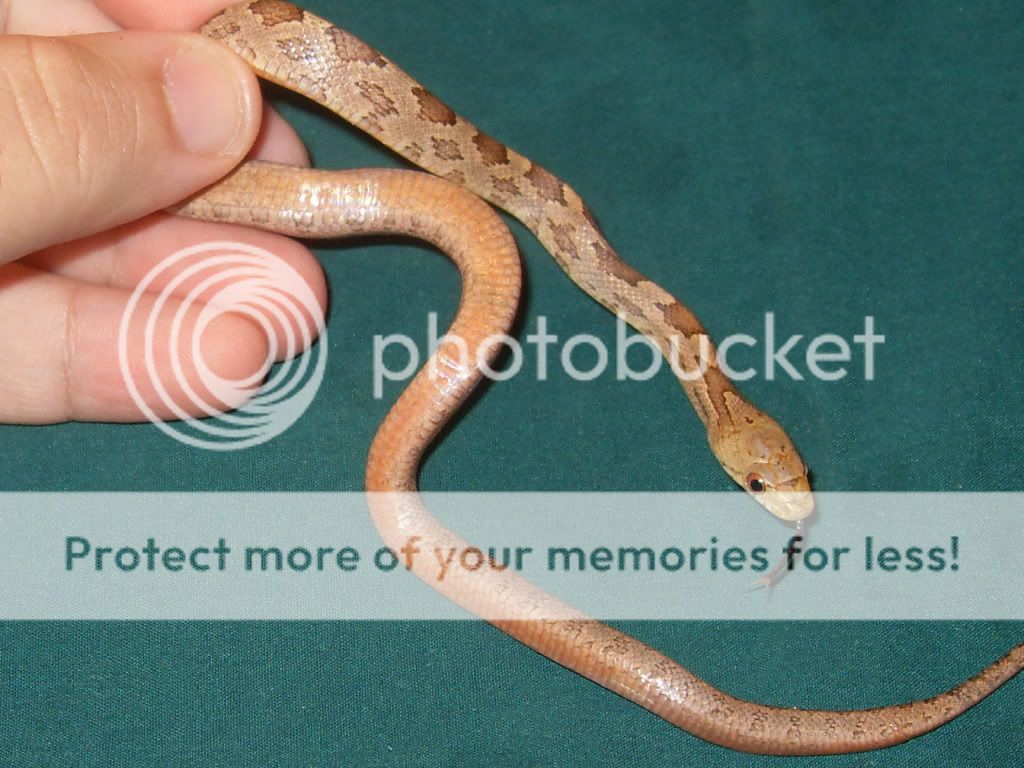
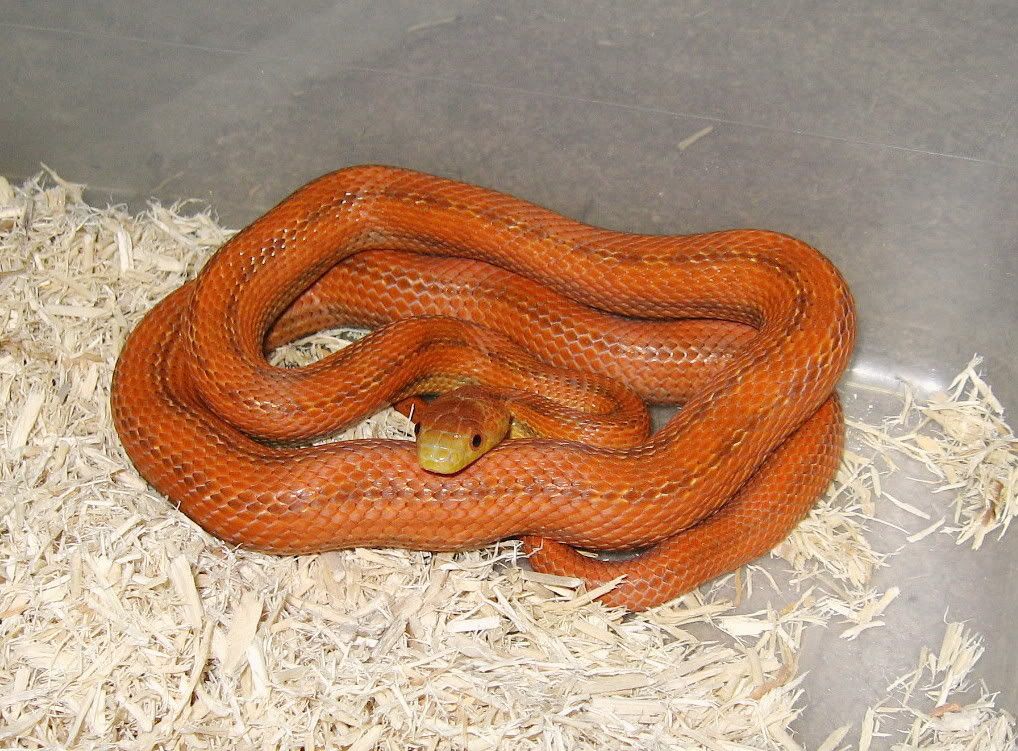
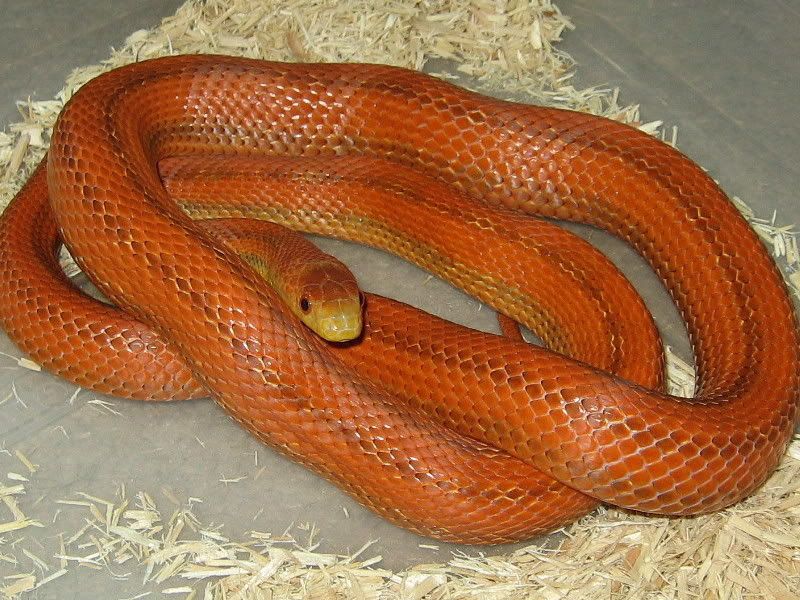
Hi guys. Can anyone shed some light as to what these guys are? What I was told they were is hard to prove or disprove since I cannot find any info on them or pictures to compare them to. Thanks

Reptile & Amphibian Forums
Welcome to kingsnake.com's message board system. Here you may share and discuss information with others about your favorite reptile and amphibian related topics such as care and feeding, caging requirements, permits and licenses, and more. Launched in 1997, the kingsnake.com message board system is one of the oldest and largest systems on the internet.



Help with ID please
goombasreptiles
Nov 23, 2010 01:02 PM
Replies (38)
GoombasReptiles
Nov 23, 2010 02:52 PM
A few shed today. They appear to have more of a orange hue to them. Their bellies were brown a week ago.
cochran
Nov 23, 2010 03:28 PM
They look like everglades babies to me! Where did you get them?
Jeff

draybar
Nov 23, 2010 04:45 PM
They look like everglades to me as well
-----
Corn snakes and rat snakes...No one can have just one.
"Resistance is futile"
Jimmy Johnson
(Draybar)
Draybars Snakes
_____
GoombasReptiles
Nov 23, 2010 05:28 PM
Thank you for your responses. I got them as partial trade for some bp's. Since you guys responded, I can tell you he told me they were hypo everglades. I'm not a ratsnake guy and he got them in trade as well so I wanted to make sure. I only found one other thread on here with everglades baby pics and these guys fell right in between the two shown. I wanted to ask the pros  Thank you
DMong
Nov 23, 2010 07:17 PM
Those definitely are not hypos. And there might only be "SOME" Everglades lineage in them at all to be quite honest. Yours has a VERY noticeably black tongue, and an overall darker appearance not indicative of hypo Everglades rats which are very pale compared to normals, and if they were hypos, they would be even paler yet with solid red/pink tongues too.
The true hypos even have ruby-red eyes as well. Those are likely a composite of yellow x glades, or simply a line-bred yellow that is more of an orange when it matures. But they are not hypo glades for sure though.
Here are some hypo glades babies, and normal Everglades from Bill Love's original bloodline.
Jeff Cochran has some KILLER hypo glades closeups, and you will plainly see that they have VERY solid pink tongues. That doesn't change as their juvenile pattern does as they mature, because they definitely change drastically as they mature with their blotches disappearing and intense orange.
regards, ~Doug
-----
"a snake in the grass is a GOOD thing" 
my website -serpentinespecialties.webs.com
GoombasReptiles
Nov 23, 2010 07:36 PM
Funny, that was the only other thread I saw with pics. It seemed as though these guys fell in between the two pictures shown so that's why I posted my own thread. I have been reading so much conflicting information regarding yellows and everglades being the same thing, some say intergrades, I've seen arguments about tongue color as you mentioned, it's quite confusing. It is highly possible the guy I got them from made a mistake. I just want to know for myself. I'll be hanging on to them for awhile. I'll see how they color up and probably ask again if I cant get any definites on them now. I appreciate the help.
DMong
Nov 24, 2010 01:38 AM
Yeah, I definitely know what you mean. It will be very interesting to see how they color-up when mature too, as that will be the real proof.
Nice snakes regardless!, and from what I see so far, they should produce some good color whatever they turn out to be
good luck with those guys!
~Doug
-----
"a snake in the grass is a GOOD thing"
my website -serpentinespecialties.webs.com
DMong
Nov 24, 2010 02:02 AM
Granted, this one is much older, and is already extremely orange, but this one depicts the light tongue very well. I have however seen some very orange ratsnakes that had both black AND red tongues, but I don't think any true hypos at all have all solid black tongues.
As you mentioned, regarding them being the same as yellows.....they are really like yellow brooksi are to Florida kings. Both are floridana, only the brooksi is a clinal color variant of floridana. With glades and Yellows, it can be a tough nut to crack as to their percentages of mixed lineage in many parts of their range. Some speculate that some of the so-called Everglades in the hobby are simply line-bred Yellow rats that display more orange/red coloration.
Anyway, yep!, sometimes one just can't say either way with any certainty at all..LOL!
But later on you will certainly know if yours are hypo or not.
regards, ~Doug

-----
"a snake in the grass is a GOOD thing"
my website -serpentinespecialties.webs.com
cochran
Nov 24, 2010 08:45 PM
They are pretty but not hypos. Jeff
goombasreptiles
Nov 24, 2010 09:18 PM
Well like Meat Loaf said, "two outta three ain't bad" lol. I really appreciate the help.
tspuckler
Nov 26, 2010 07:48 AM
I'd say that they're yellow rat X Everglades rats. "Pure" Everglades supposedly have all-red tongues. Yellow rats have black tongues. As Doug said, the snake with its toungue out has one that's mostly black. I've seen some 50/50 red/black tongues from Everglades/yellow rat crosses.
Tim
goombasreptiles
Nov 26, 2010 08:31 PM
I apologize for the horrendous pictures. They were not cooperating today. It's a horrible zoom of a pic I did manage to capture. You can somewhat see the difference in color. It seems some of them have all black tongues while others have pink on the back and the front. I still can't make heads or tails out of the tongue discussion. The pic of Jeff's hypo doesnt seem to be a solid red/pink tongue. The middle of it is darker. If any of these were hypos, their tongues would lighten up as well? I'm thinking I might have gotten a mix. Some are darker, almost a brown while others are more orange. How long does it take for them to start to show the hypo?

goombasreptiles
Nov 26, 2010 08:42 PM
wow that came out bad haha.....I will keep trying
pgcc0912
Nov 27, 2010 06:16 AM
Those are too dark to be hypo everglades. I agree with everyone that either they're everglades or an everglades yellow cross. Here is a picture of a hypo everglades I have at 3 months just to show you the difference.

-----
1.2 Chihuahua's
0.1 Cockatiel
1.1 Normal BCI Colombian Boa
1.0 Brazilian Rainbow Boa
1.0 Woma Python
1.0 Jungle Carpet Python
0.1 Leucistic Texas Rat Snake
1.1 Hypo Everglades Rat Snake
0.1 Mexican Black King snake
1.0 Sunglow Corn Snake
1.0 Sunglow Motley Corn Snake
1.0 Coral Snow Corn Snake
1.0 Bearded Dragon
1.0 Blue Tongue Skink
0.2 Leopard Gecko's
0.1 Chilean Rose Hair Tarantula
0.0.2 Emporer Scorpion
0.0.1 Ghost Knife
Assorted Tropical Fish
cochran
Nov 27, 2010 06:56 PM
I'm starting to lean more towards those being yellow rats.They are not hypo by the way,here's what a young hypo glades looks like. Jeff

draybar
Nov 27, 2010 09:34 AM
>>I'd say that they're yellow rat X Everglades rats. "Pure" Everglades supposedly have all-red tongues. Yellow rats have black tongues. As Doug said, the snake with its toungue out has one that's mostly black. I've seen some 50/50 red/black tongues from Everglades/yellow rat crosses.
>>
>>Tim
I read that on the forums but I was reading something the other day, I think maybe by Connant (maybe not) that stated everglades can and do have black on their tongues and that they don't recall ever seeing one with a completely red tongue.
I will see if I can find the article. May be tough, I usually delete my history once a week but I'll look...it was interesting.
seems like I read it in another article by a another "respected" taxonomist/herpetologist
I know I've yet to see one with a "completely" red tongue.
that's like the everglades pictured below....To me he's about as everglades as everglades can get but he had some black on his tongue
and before anyone starts jumping up and down.. I'm just stating what I've read.


-----
Corn snakes and rat snakes...No one can have just one.
"Resistance is futile"
Jimmy Johnson
(Draybar)
Draybars Snakes
_____
draybar
Nov 27, 2010 09:41 AM
or it might be a later article i found at least one earlier article where they state red tongue
I will keep looking...I know it was by a name/names we all recognize...
>>
-----
Corn snakes and rat snakes...No one can have just one.
"Resistance is futile"
Jimmy Johnson
(Draybar)
Draybars Snakes
_____
pgcc0912
Nov 27, 2010 10:35 AM
I would agree with the article. I have two hypo everglades, one has a pure red tongue, while the other has a skinny black streak going down mostly red tongue. I remember a few years back when Jason Hood was selling hypo everglades from Love stock, some had a black tongue while others had a red tongue. If he reads this maybe he can elaborate some more. The picture of the snake below was sold to me as a hypo everglades, but it's the one with the skinny black streak. I will see in 2012 if in fact it is a hypo.
-----
1.2 Chihuahua's
0.1 Cockatiel
1.1 Normal BCI Colombian Boa
1.0 Brazilian Rainbow Boa
1.0 Woma Python
1.0 Jungle Carpet Python
0.1 Leucistic Texas Rat Snake
1.1 Hypo Everglades Rat Snake
0.1 Mexican Black King snake
1.0 Sunglow Corn Snake
1.0 Sunglow Motley Corn Snake
1.0 Coral Snow Corn Snake
1.0 Bearded Dragon
1.0 Blue Tongue Skink
0.2 Leopard Gecko's
0.1 Chilean Rose Hair Tarantula
0.0.2 Emporer Scorpion
0.0.1 Ghost Knife
Assorted Tropical Fish
pgcc0912
Nov 27, 2010 10:36 AM
Sorry here is a picture of the snake.

-----
1.2 Chihuahua's
0.1 Cockatiel
1.1 Normal BCI Colombian Boa
1.0 Brazilian Rainbow Boa
1.0 Woma Python
1.0 Jungle Carpet Python
0.1 Leucistic Texas Rat Snake
1.1 Hypo Everglades Rat Snake
0.1 Mexican Black King snake
1.0 Sunglow Corn Snake
1.0 Sunglow Motley Corn Snake
1.0 Coral Snow Corn Snake
1.0 Bearded Dragon
1.0 Blue Tongue Skink
0.2 Leopard Gecko's
0.1 Chilean Rose Hair Tarantula
0.0.2 Emporer Scorpion
0.0.1 Ghost Knife
Assorted Tropical Fish
tspuckler
Nov 27, 2010 11:38 AM
Jimmy,
I've started "jumping up and down!"
Yeah, I no expert on Everglades Rats and I'm just stated what I've read. Here's an excerpt from Dick Bartlett's book "In Search of Reptiles and Amphibians." It is in the section "The plight of Rossalleni" where he discusses if there's any "pure" Everglades Rat Snakes left in the wild:
"Obviously of yellow rat snake lineage but more intensely colored and with a red, rather than black, tongue it was a characteristic serpent from the environs of Okeechobee southward into the 'glades."
Later he states:
"The yellow began its insidious southward movement and the Keys phase began moving north. This further increased pressure on rossalleni which were now feeely interbreeding with the newcomers. By the time the mid-70s had rolled around, most of the snakes to be found between South Bay and Andytown displayed intergrade characteristics. Rather than orange snakes with faded stripes and red tongues, they were yellow-orange with rather promonant striping and tongues that were half red, half black."
Tim
tspuckler
Nov 27, 2010 12:03 PM
If you look in Conant's field guide, it states (in italics) for Yellow Rat "Tongue black." And for Everglades Rat "Tongue red."
Tim
draybar
Nov 27, 2010 04:16 PM
>>If you look in Conant's field guide, it states (in italics) for Yellow Rat "Tongue black." And for Everglades Rat "Tongue red."
>>
>>Tim
You can stop jumping up and down...lol
It'll be OK ...
Yeah,I found several Conant references..."red tongues"
of course I already stated that my original mention of Conant was wrong....
I will keep looking for the article...
It basically stated that some black present on the tongue does not necessarily mean intergrade....
I may find the article only to find out it was by Joe Blow and not a "name" but I am pretty sure it was a name I recognized
-----
Corn snakes and rat snakes...No one can have just one.
"Resistance is futile"
Jimmy Johnson
(Draybar)
Draybars Snakes
_____
goombasreptiles
Nov 27, 2010 04:41 PM
HAHAHAHA I'm glad I posted this. The lack of "solid" information and the plethora of contradicting information makes for a good thread. It is interesting though for anyone to say that true everglades no longer exist. I understand that their ranges cross, but does that now mean that there are no true yellows either and that should either locality show up, we are to assume its been line bred? Forgive me, I am only posing questions. I like to play both sides so that I can better understand as well. I'm always leary when the "big guys" say/imply that no one will ever have anything as "pure" as what they have or have encountered, a notion that runs rampant in the python world.
DMong
Nov 27, 2010 05:27 PM
"It basically stated that some black present on the tongue does not necessarily mean intergrade"
I pretty much have to think that is indeed the case. For the "most-part", a greater prcentage of the tongue being red would indicate an Everglades, but I seriously doubt ALL Everglades have "only" red tongues, and zero black on them. Some very orange one's I have seen with "some" dark coloration on their tongues too. Quite possibly, Some might not have much red on them at all too I would guess anyway, but how would anyone know the exact percentage(if any) of the geneflow from either...it really can't be done unless someone dedicates many years to crossing the two from several localities to find all this out. We have all seen many genuine types of snakes that don't quite fit the typical norm out there.
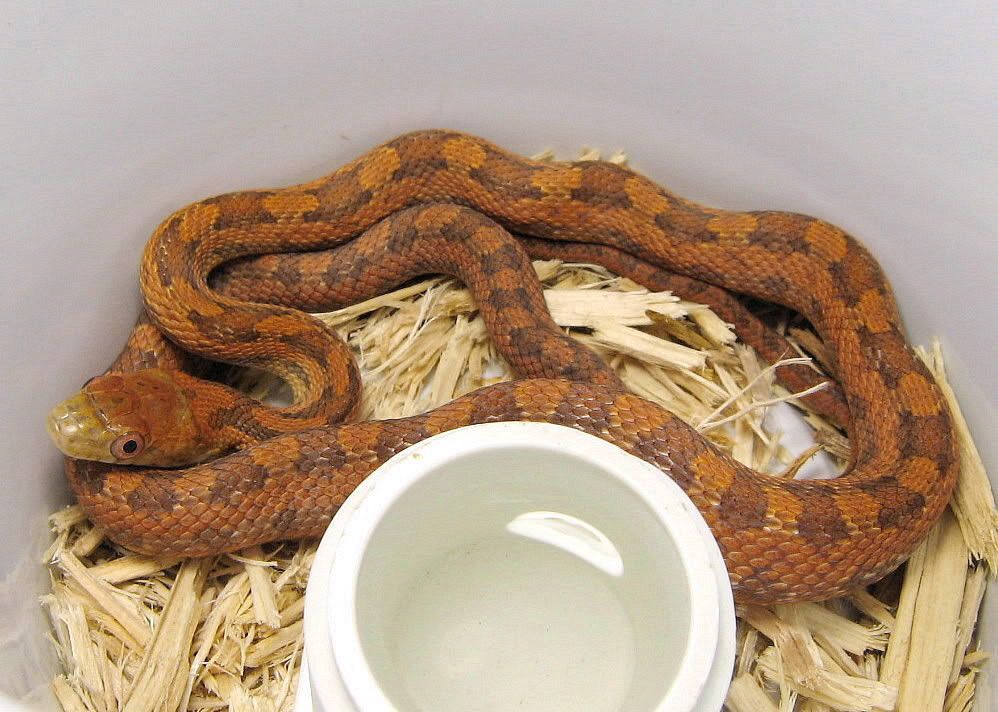
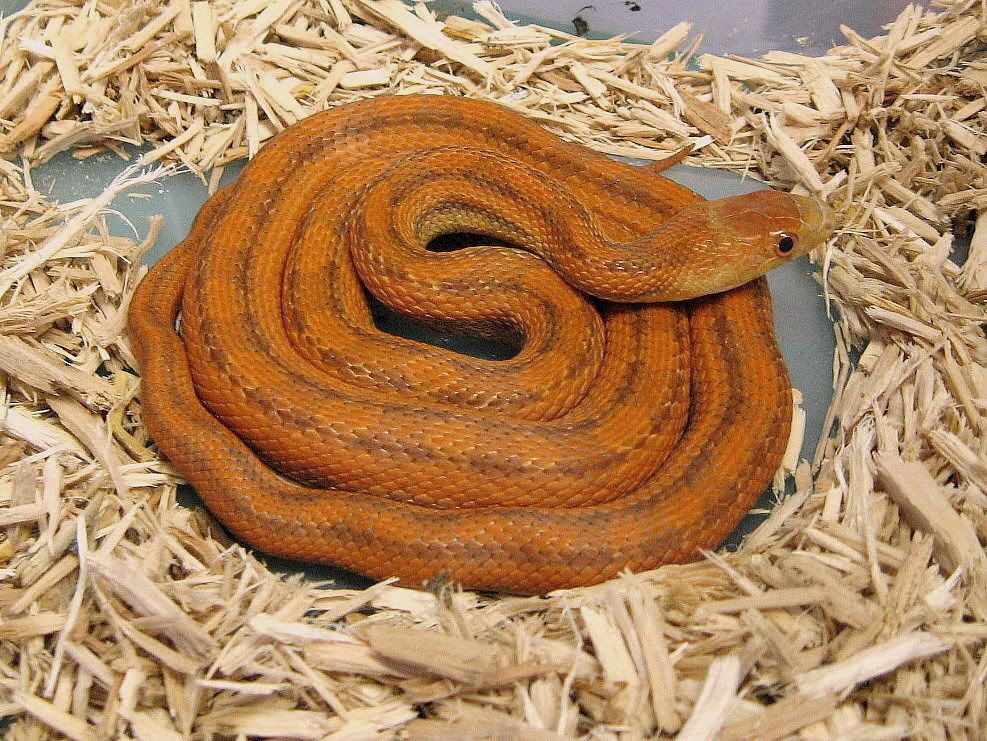
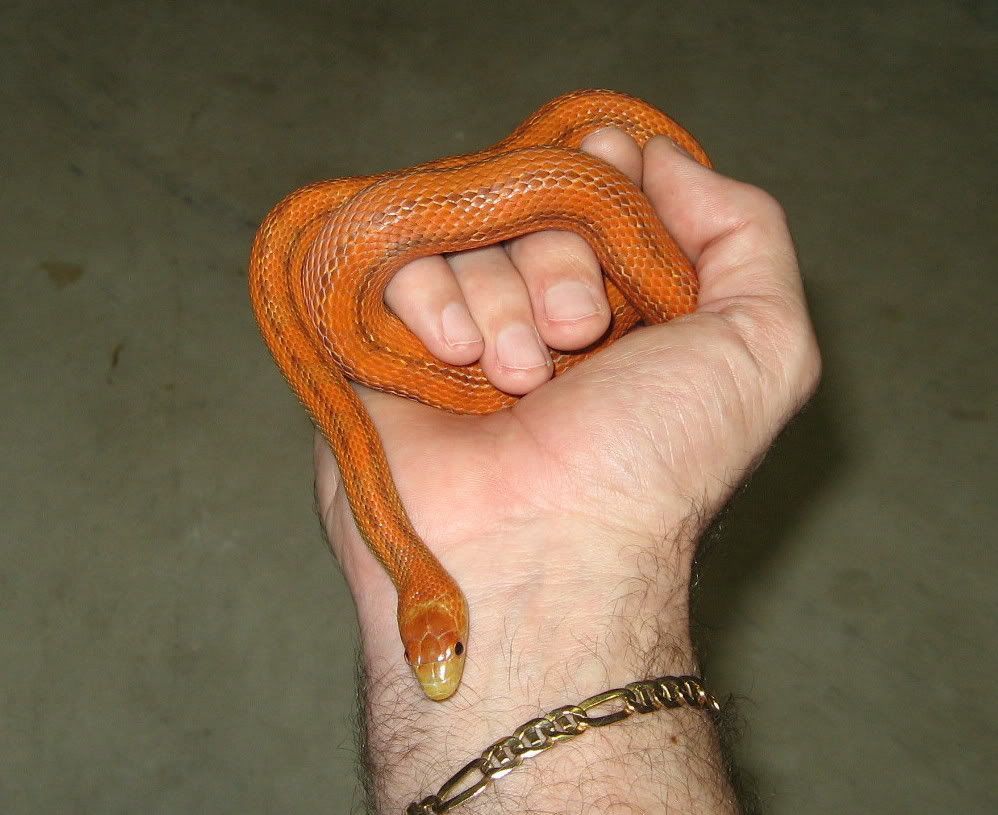
Here are some progression shots of the male I had that descended from a wild-caught Hendry County female that was very red/orange. He does happen to have a red tongue as well, and turned into quite a nice specimen.
~Doug

-----
"a snake in the grass is a GOOD thing"
my website -serpentinespecialties.webs.com
cochran
Nov 27, 2010 07:05 PM
Wow! Nice glades! Jeff
DMong
Nov 28, 2010 09:14 AM
Thanks Jeff!
I am glad I was able to document it's ontogenetic change into adulthood as well.
~Doug
-----
"a snake in the grass is a GOOD thing"
my website -serpentinespecialties.webs.com
foxturtle
Nov 28, 2010 01:30 AM
All this has been hashed out on the forum many times before.
The original description of the everglades rat snake called for a red tongue, but did not explicitly state a "solid red tongue". I had a pet yellow rat that I caught in Pinellas County, FL that had a solid red tongue, and it most certainly was not a Glades rat.
As an avid field herper who has caught some ridiculous thousands of snakes, I can tell you that every trait of every species is subject to variation. There are no homogeneous populations of snakes that fit any printed description to the letter.

DMong
Nov 28, 2010 09:22 AM
Yeah, that is very interesting that the Yellow Rat there had a solid red tongue. Nature certainly does go by it's own set of rules, and seems to have it's fair share of exceptions to things.
Some awesome stuff!
~Doug
-----
"a snake in the grass is a GOOD thing"
my website -serpentinespecialties.webs.com
foxturtle
Nov 28, 2010 01:20 AM
But those observations are anecdotal. The influx of yellow rat snake geneflow into Everglades rat snake territory is not documented in photos, just personal observation.
I know collectors that have been catching rat snakes since the 60s and 70s and will tell you that they have observed no difference in the appearance of rat snakes in the region.
tspuckler
Nov 28, 2010 10:44 AM
No disrespect, but your observations and reports from collectors are anectodal as well, so they don't hold any value over literature published by two of the most well-known herpers in the last 50 years.
What is the difference between a yellow rat snake and an Everglades? Is it location alone? If so, everglades and yellow rats may very well simply be color variations of the same snake.
If these collector friends of yours are still finding "pure" Everglades, I'd like to see some photos.
Tim
RichardHurtz
Nov 28, 2010 03:20 PM
An everglades and a yellow rat snake are like a Miami and New Jersey cornsnake. The Miami is red and gray, while the New Jersey corn is reddish brown. There are obvious differences by locale. But it's still a cornsnake! You would be amazed if you only knew what genes were lurking in those so-called pure snakes. There is no such thing as a pure anything.
tspuckler
Nov 28, 2010 05:23 PM
Then why are Jersey Corns and Miami Corns the same subspecies, while yellow rat snakes and Everglades rat snakes classified as different subspecies?
Tim
RichardHurtz
Nov 28, 2010 06:06 PM
Thank you, exactly my point. They shouldn't be. They're both the same species in my opinion. The only difference is some are orange while others are yellow and I believe this is caused from locale just like a Miami corn compared to a South Carolina corn.
DMong
Nov 28, 2010 06:40 PM
Yeah, I think they are a definitely a noteworthy race that certainly deserves it's own recognition, but In more recent years I tend to think they are more than likely a form of "clinal variant" of the Yellow Ratsnake. Similar to what the brooksi is to floridana. Very distinct looking from one another, but both 100% floridana nonetheless.
I will still always refer to them as Everglades rats, just like I will always refer to the lighter/yellower floridana as brooksi as they were originally described many years ago. It is much easier to distinguish what someone is talking about this way, and helps eliminate confusion in conversations in my opinion.
~Doug
-----
"a snake in the grass is a GOOD thing"
my website -serpentinespecialties.webs.com
foxturtle
Nov 30, 2010 02:07 AM
Because W T Neill chose to describe Everglades Rat Snakes as a separate subspecies. No one did the same for Jersey or Miami Corns. Subspecies lines change all the time. The Deckerts and Gulf Hammock Rat Snakes were once described as subspecies, and have since been sunk.
Rossalleni has been sunk too. They are all Scotophis alleghaniensis now. No subspecies.
foxturtle
Nov 30, 2010 01:59 AM
My point was that it is all anecdotal. Guys like Bill Love and Tom Crutchfield will tell you that yellows have always been found side by side with Glades. They are certainly well-known and respected.
As far as Glades Rats being found in present day, the first rat snake I found south of Lake Okeechobee was a perfect Glades Rat. I was surprised because popular literature said they didn't exist anymore. I have herped that area extensively over the last 7 years and have seen hundreds of rat snakes from out there. You've got about a 1 in 10 chance of finding something that looks like a Glades, and occasional one turns up that rivals the best captive specimens. The captive specimens are just selective bred to be awesome. The original description for Everglades Rats was a lot more forgiving than hobbyists are.
A photo of one I collected with Daniel Parker is shown on his website ( the adult sitting on dirt):
http://www.sunshineserpents.com/Rat snakes/Everglades Rat.htm
Here's a photo of 3 rat snakes sporting different looks we found together under the same piece of bark

goombasreptiles
Dec 02, 2010 04:54 PM
The input is very interesting. Let me ask this. Regardless of what I may or may not have, why are there two different "colors"? Why are some dark and brown while others are getting lighter and orange? Is it possible I got a mixed group? Is it just a difference in growth rate? Truth be told, they are all eating great and doing great and I just want to keep a few and sell the others and I want to know what they are. I dont really have the space or funds to keep them all for a year til they "color up".
PeeBee
Dec 03, 2010 12:37 AM
I'm not sure how everglades can be considered a subspecies since most of the animals found within their range show traits of both yellows & everglades. How can an animal be considered a subspecies if the traits that define it are rarely found on any of the animals within its defined range?
In the northern portion of yellow rat range, yellows can range in color from olive to yellow. They're just different morphs. What the difference between situation there, v.s. the situation in S FL.
Ironically, the "purest" everglades are now the ones that have been produced through selective, successive breedings of animals with everglades traits.
PB
