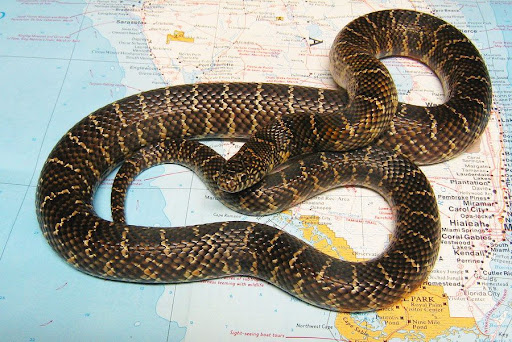
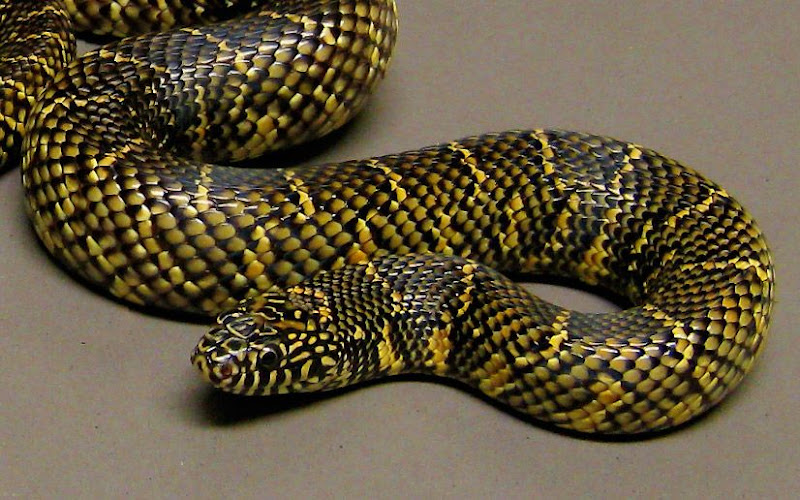
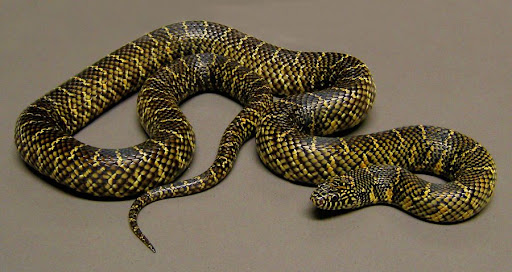
The female of my pair of Hillsborough Florida Kings just shed so I thought to post the pair. She is not as flashy as the male but I think she is pretty cool. These guys are 2 years old and were produced by Lindsay Pike from wild collected adults.
-
Female
Male
Full Body male
Reptile & Amphibian Forums
Welcome to kingsnake.com's message board system. Here you may share and discuss information with others about your favorite reptile and amphibian related topics such as care and feeding, caging requirements, permits and licenses, and more. Launched in 1997, the kingsnake.com message board system is one of the oldest and largest systems on the internet.


Floridana
bone47
Dec 12, 2010 10:45 PM
Replies (37)
pyromaniac
Dec 13, 2010 06:08 AM
I like those big beefy Florida kings. Cool how you posed the female on the map of Florida! LOL!
-----
Bob/Chris
Pyromaniac AKA Greatballzofire
markg
Dec 13, 2010 12:42 PM
I've always like the look of the Florida kings like your male there. Female too actually. Florida kings in general just like they look in the fields. Really neat.
-----
Mark
mbrawley
Dec 13, 2010 01:24 PM
Never been to Florida, but I've always wanted to go and see Florida Kings in the wild...but from what I understand, they're harder and harder to find in the wild due to commercial collectors. THAT SUCKS.
KevinM
Dec 13, 2010 02:41 PM
I am currently reading a natural history book on getula I just received indicating commercial collection is probably not responsible for declining populations. The literature references invasive species like fire ants, habitat destruction, and habitat alteration as the most likely culprits for declining populations. Habitat alternation infers that areas returning to more natural states may acutally be causing declines of populations. This being due to population booms that could be sustained in the altered habitat that can not be sustained in the "natural" habitat. It makes sense. Remove the structure and prey that became abundant during the alteration, and naturally you would see a decline in the populations when structure and prey declined. A prime example is the population boom of floridana in the new habitat formed in Florida by the sugar cane industry. The canals and ditches dug actually provide more water resources, prey, and structure for the floridana populations to boom and increase. If these man-made alterations were removed and the area allowed to go to its natural pre-sugar cane industry state, then the floridana populations would likely decline as a result if this theory holds true.
mbrawley
Dec 13, 2010 03:23 PM
Hmmm, very interesting. I guess I'm glad to hear then, that for once, it's NOT mankind screwing up the ecology. I've just read and heard so often people talking about about collecting florida kings back in "the old days" and how finding a nice brooks these days is somewhat uncommon. Everything you said makes sense to me though, regarding the "before and after" as it relates to the cane fields and irrigation ditches. Good stuff.
Thanks for the reply.

mbrawley
Dec 13, 2010 03:49 PM
On second thouught, after thinking about what you said, I guess the booming populations of Floridana, resulting from the ag related development (cane fields and irrigation) WERE a result of mankind. So my bad. It just seems to me, as a Florida King enthusiast - not a biologist of course, that this ecological impact caused by humans actually resulted in a native species thriving, rather than declining as seems to be what usually happens in situations like this.
KevinM
Dec 13, 2010 04:18 PM
Its a weird concept, but man-made alteration having beneficial impact on population booms is feasible. Sure, "prime habitat" may have been destroyed to create that new golf course and the existing populations may have been affected. Fast forward a few years with increase of prey items associated with food availability from garbage cans or thrown on the course, establishment of constant water sources that never dry out with more frogs and other ectothermic prey available now, and even creation of better structures to promote prey abundance and secure hiding areas, and you have created a situation that may promote populations above and beyond what existed before the development occurred.
orchidspider
Dec 14, 2010 03:56 PM
All the info you are interested in is in Brian Hubbs's book Common Kingsnakes and thats the book that the natural history info is comming from. EVERY KINGSNAKE HOBBYIST SHOULD HAVE a copy and I feel it is required reading (not to mention VERY enjoyable reading) for every kingsnake keeper! No one is every going to be able to borrow my copy!
-----
BULLS: Pr normal (KS&TX), 1 Pr Northern (M Medicine Hat, Alberta, Canada & F Minn), Pr Kankakee Co, Ill, CORNS: Pr Okeetee, SC, FOXES: Pr Western, KINGS: Pr Black Eastern (L.g.nigra) Todd Co. KY, Pr. NC Eastern Chains (M from Union Co. & F from Mecklenburg Co.), Pr."Goini", Franklin Co. Fla, Pr. Costal Banded Cal (M Hypo & F normal) Pr Speckled, Harris Co. TX, PINES: Pr Louisiana (pure descendants of Terry Vandeventer stock), Pr Southern (F light phase & M- Aiken, SC), PYTHONS: Pr normal Ball, RATS: Pr Black, Henderson Co. NC, Pr Black (M White Side & F Leucistic), Western Green, F (Mt. Hopkins, Cochise Co. AZ), OTHERS: 10 Tarantulas, 155 Orchid plants, 30 assorted tropical plants and violets, 3 Freshwater Planted Aquariums with West African Dwarf Cichlids and 2 condo-porch gardens with Bonsai, Roses and etc...
KevinM
Dec 14, 2010 08:45 PM
Yup, reading it now. I like his perspective on several subjects, or at least the way he presents them. Not saying everything in it is the gospel truth, but he is not eluding it is either, or being arrogant about its presentation IMO.
DMong
Dec 14, 2010 09:01 PM
That's right Kevin. Hubbs did a fantastic job of gathering the book data from as many sources as humanly possible, which took several years to compile. He merely presents most of this information, and lets the reader judge for themselves as to how they want interpret alot of it. A good portion of it is pretty hard accepted fact, and of course another good percentage is open for interpretation.
I also think every getula keeper should own a copy, both beginner AND advanced! . No matter how much one person knows, or thinks they know about common kingsnakes, the book will most definitely help anyone become a more knowledgeable, well-rounded herper/hobbyist. 
~Doug
-----
"a snake in the grass is a GOOD thing"
my website -serpentinespecialties.webs.com
Jeff Schofield
Dec 14, 2010 10:31 PM
Still waiting for my free copy.....
JKruse
Dec 15, 2010 12:53 AM
n/p. OHHHHHHH, by the way buddy.....I recently saw a Monster with my own eyes via a mutual friend.......fu*king insane Jeff......I'm a believer all the way. 
-----
Jerry Kruse
www.zonatas.com
And God said, "Let there be zonata subspecies for all to ponder..."
KevinM
Dec 15, 2010 09:20 AM
The formatting and presentation of the book reminds me very much of what I experienced reading the Kaufield and Pope books back in the day in the school libary. I think the importance of a book such as this for hobbyist, especially beginners, lies in the presentation of the natural history and field aspects the deli herpers do not experience. I will be honest, the book reminded me of herping the field and I cannot wait until spring to hit the woods again. Definitely revitalized that aspect of the hobby for me.
DMong
Dec 15, 2010 12:20 PM
LOL!!,....I know what you mean about it revitalizing the yearning to want to find a few specimens again personally.
I also thought about a few places I might hit when the weather is right.
~Doug
-----
"a snake in the grass is a GOOD thing"
my website -serpentinespecialties.webs.com
orchidspider
Dec 15, 2010 12:50 PM
This is my first kingsnake I ever caught- took me till this year to do it but so it goes its an Eastern King I caught, and it will always be a favorite of mine. The habitat forest pics of NC piedmont region in Hubbs's book are alot like those here in Charlotte.


-----
BULLS: Pr normal (KS&TX), 1 Pr Northern (M Medicine Hat, Alberta, Canada & F Minn), Pr Kankakee Co, Ill, CORNS: Pr Okeetee, SC, FOXES: Pr Western, KINGS: Pr Black Eastern (L.g.nigra) Todd Co. KY, Pr. NC Eastern Chains (M from Union Co. & F from Mecklenburg Co.), Pr."Goini", Franklin Co. Fla, Pr. Costal Banded Cal (M Hypo & F normal) Pr Speckled, Harris Co. TX, PINES: Pr Louisiana (pure descendants of Terry Vandeventer stock), Pr Southern (F light phase & M- Aiken, SC), PYTHONS: Pr normal Ball, RATS: Pr Black, Henderson Co. NC, Pr Black (M White Side & F Leucistic), Western Green, F (Mt. Hopkins, Cochise Co. AZ), OTHERS: 10 Tarantulas, 155 Orchid plants, 30 assorted tropical plants and violets, 3 Freshwater Planted Aquariums with West African Dwarf Cichlids and 2 condo-porch gardens with Bonsai, Roses and etc...
DMong
Dec 15, 2010 03:30 PM
That's a sweet looking Eastern!, and I'm sure that will be a very special snake you will always remember because you captured it yourself.....very cool!
~Doug
-----
"a snake in the grass is a GOOD thing"
my website -serpentinespecialties.webs.com
KevinM
Dec 15, 2010 08:38 PM
Orchidspider, that truely is a great find. As Doug stated, it probably has more meaning to you based on the fact you captured it. Reading books like Hubbs reminds me of the uniqueness of the animals and gives me respect for their natural history. I have a WC texas rat juvie I caught this past spring and a WC black rat juvie from W. Virginia collected by another forum member that was sent to me. My interest in them was fading until I started reading Hubbs book. I realized that these animals represented something above and beyond their physical existence and I am happy to be keeping them for those reasons.
denbar
Dec 17, 2010 01:14 PM
That's a beautiful specimen! Congratulations. Were you actually hunting for snakes or did you find him by accident?
--Dennis
Jeff Schofield
Dec 13, 2010 03:41 PM
Now it may well be that ants destroy eggs etc but always be on the lookout for a smokescreen. Collection of kings has dropped off in the past few years but for a while it had to be the 2nd biggest predator, to development of course. Often you will find its conservation minded folks writing books and include different angles that make folks think differently. Commercial exploitation is completely legal in Florida with a permit so someone with a permit, who knows ALOT about them, can write a book throwing off the scent. The truth always lies in between everything you cant prove so always read as many books and listen to as many educated opinions as you can. As far as creating suitable habitat for kings, we surely destroy 100x more than we can ever create.
KevinM
Dec 13, 2010 04:12 PM
Jeff, that may be true. However, I have yet to see or be presented with accurate statistical information supporting ANY theory on population declines, etc. I think the "over collected" argument is just too easy for the uber conservation and anti-pet groups to throw out there to justify there cause while playing a round of golf on the recently developed 10-acre golf course or cruising the new Mall for no furbearing clothing (saying this sarcastically of course). In truth, no one wants to point the finger at themselves as to the cause of these declines. I think its all contributed to population declines at various levels in various areas. Over collection could very well be the culprit in Area A, but not Area B where it is fire ants or development. I do not read information and accept all in black and white as the definitive reason for ANYTHING LOL!! Still, good food for thought IMO.
KevinM
Dec 13, 2010 04:23 PM
Jeff, I will agree with you that the habitat destruction or alteration that renders it completely non-inhabitable likely far outweighs the alterations that may improve viability. However, some alteration is beneficial in a warped and perverse way. I used a golf course analogy with the poster above. Some alteration may cause an initial decline due to the destructive aspects of the development, but over time may prove more beneficial than the original habitat ever was.
Jeff Schofield
Dec 13, 2010 10:17 PM
Kevin, habitat alteration can make it easier for us to FIND them, but that doesnt mean there are more there. And our disrupting the habitat could cause an initial boom in rodent population(for example)but it is too often followed by the bust cycle when balance is restored.
KevinM
Dec 14, 2010 08:39 AM
Jeff, I personally think there are types of alteration that do initially benefit the snakes and promote increased populations. However, I see your point that these altered site could/would probably bust for various reasons. Areas improved for agriculture may be providing more cover and prey like the cane fields. However, I wonder what the application of fertilizers, pesticides, and herbicides is actually doing long term to these boomed populations. Abandoned sites/structures and dump sites will eventually be altered again, and that usually involves complete removal of suitable habitat, manmade or natural.
Tony D
Dec 15, 2010 02:59 PM
I'm gonna side with Jeff on this one with a single qualifier that the area is somewhat restricted. It is hard for me to imagine collectors being able to impact snake populations, even locally, when the habitat is huge. Cleaning out 40 acers of marginal habitat with 4 lane highways on all sides absolutely!
Anther thing that I've noticed is some restricted areas is that after awhile when people have pulled enough kings out of an area black racers experience ecological release and take the place over. In a way collecting is habitat alteration. This is one reason I'm very hesitant to take any animal from east coast locations that are currently secure. Establishing a new locality just doesn't seem good enough of a reason to take animals from the wild anymore. Anyway that is my east coast sentimentality, I'm sure that if I lived out west my perspective would be different.
-----
“Nothing is at last sacred but the integrity of your own mind.” Emmerson
KevinM
Dec 15, 2010 08:33 PM
Tony, my perspective of collecting is very naive. I guess I look at the way I collect one or two animals infrequently here and there, and not true mass collection on a commercial scale. Field herping has never been my strong suite and most of the WC animals I acquire are random occurrences where I happen to be in the right place at the right time and not actively hunting them. Fortunately for the majority of the ones I captured it was on job sites where mass clearing of habitat was being done for contaminant remediation in soils and other cleanup activities for EPA.
Tony D
Dec 16, 2010 10:44 AM
Kevin it is quite true that each person's experience will flavor their perspective. My take was primarily directed at spots that become known and over harvested. Random removal I don't think has any more impact than if a hawk got it.
-----
“Nothing is at last sacred but the integrity of your own mind.” Emmerson
CrimsonKing
Dec 13, 2010 06:36 PM
....well the areas where they are/were doing best near Lake Okeechobee was really more of a man-made snake heaven.... They have done very very well there as have prey species obviously. That is where the majority of "commercial" interests have done well also.
In the majority of floridana's range, it is habitat destruction or change in some way (fragmentation) that is a likely culprit in their disappearance there...
Tiny "pockets' or "islands" of small populations exist but they are at the mercy of many factors as to their survival too.
In some areas, many acres were cleared in anticipation (speculation) that there would soon be a boom town or subdivision w/strip malls etc. to follow. With the last few years' of downturn in the building and housing mkts. many of those spots are left to slowly slowly return to a more normal habitat, but as you might figure, much damage was already done and the inevitable day will come when those areas are again sought after and construction/destruction will again resume.
I'm still a bit skeptical of a huge affect from fire ants. No doubt they do cause some problems, but there are other egg layers that seem to do pretty well in the same areas where getula were once doing good.
Feral hogs ARE a big problem for lots of natives and I suspect they are at least as responsible for the kings decline as fire ants yet you don't see them mentioned as often.
Back to the Lake area.... it will be intersting to see what becomes of the population of kings once (IF) the 'glades are restored to their natural state...Kings liklely will not be there in the numbers they were in the 70's-80's. but maybe a healthier scene all around, huh?
:Mark
-----
Surrender Dorothy!
a153fish
Dec 13, 2010 05:23 PM
Those guys have an interesting look to them. I was gonna try to get a pair from Lindsay this year, but I never got the chance. Maybe next year?
-----
King Snakes! Who can make a better mouse trap?
J Sierra
CrimsonKing
Dec 13, 2010 07:12 PM
...this guy... but at the time I didn't think too much of him...
I'd be hard pressed to find another in the wild like him I think.

he passed a few years back and I regret not breeding him to more locals...
I bet I could've passed him off as brooksi since he looks as good or better than many "marketed" as such...
:Mark
-----
Surrender Dorothy!
bone47
Dec 13, 2010 08:27 PM
Mark
Thats a stunning King! I really like the look of the Kings from that area. I hope the male keeps some of his green coloration. Besides the look of the pair I have I really appreciate that they are just regular Florida Kings. I like the morphs dont get me wrong but something about a nice normal is pretty fricken cool. Thanks for posting that pic.
Bone
a153fish
Dec 14, 2010 09:16 AM
A few years ago I wouldn't have thought too much of that guy either, but I am developing a real appreciation for local Kings, and your right. That guy would have made some very nice babies.
There has to be some left out there somewhere? And I think you know where they are, lol.
-----
King Snakes! Who can make a better mouse trap?
J Sierra
CrimsonKing
Dec 14, 2010 01:10 PM
I bred him to my Pinellas county female and still have one of their babies...
I used to call 'em Tampa Bay kings since the parents were from either side of the Bay.

He looks about 50-50...(Hillsborough and Pinellas)
:Mark
-----
Surrender Dorothy!
CrimsonKing
Dec 14, 2010 01:14 PM
....trust me, if I flip one that looks anything like his dad, he'll have plenty of pix taken of him....
:Mark
-----
Surrender Dorothy!
a153fish
Dec 14, 2010 05:44 PM
Good luck! I'm rooting for you man!
-----
King Snakes! Who can make a better mouse trap?
J Sierra
foxturtle
Dec 15, 2010 10:05 AM
So you've got some surefire spots for them these days, huh?
a153fish
Dec 14, 2010 05:47 PM
Nice! Do you still have the Pinellas female?
-----
King Snakes! Who can make a better mouse trap?
J Sierra
CrimsonKing
Dec 14, 2010 08:35 PM
sadly no. She also has passed. I think she was at least 15 or so..

:Mark
-----
Surrender Dorothy!
