Is there anyone who still has pure meansi anymore?
Gerard
Welcome to kingsnake.com's message board system. Here you may share and discuss information with others about your favorite reptile and amphibian related topics such as care and feeding, caging requirements, permits and licenses, and more. Launched in 1997, the kingsnake.com message board system is one of the oldest and largest systems on the internet.


Is there anyone who still has pure meansi anymore?
Gerard
...on what your criteria for "pure meansi" are.
There are a lot of Apalachicola kings produced every year, but the exact lineage is not known. It is possible Florida kings have been crossed into these lines, but who knows?
There are a few CB offspring every year from Apalachicola Kings with known lineage. These can be striped, aberrant, patternless, or banded. More and more should be available over the next few years as holdbacks are raised to adult size.
Well, if you watch Means' kingsnake video on Animal Planet he will make you think that there is such a thing as a "pure" snake and that it is elusive and super rare. The more apt truth is that there is a myriad of patterns in the kings of the Appalachicola region. Patternless is one of these phases(IMHO), not a "pure" form.
That said, there is only 1 morph available in this ssp, BLAZE(my bet is better than 50% of everyones collection is a morph or het now). With its color and variability its kinda easy to figure that Goini blood could be mixed with other eastern Getula ssp morphs to create some bizarre multimorphs and their corresponding hets. The dirt cheap low price of normal Goini($35 at hatch)doesnt pursuade anyone to breed them "pure" either. The popularity of alot of these crosses has made an illusion that that there arent many out there, there are plenty. And just because you breed these crosses doesnt mean you dont have or breed "pure" Goini either! This year I had some normals, some hets some morphs and some crosses.

I understand that there are alot of natural occurring intergrades in their small range. I guess my question is if anyone is working with wild collected adults from the Appalachicola region? More specifically in the counties where meansi are said to occur. That is a beautiful snake in that picture by the way!
Gerard
Well, there are people working with lines collected in Franklin and Liberty Counties, but not all kings from those counties are considered to be "pure" meansi. Further, determining what is an intergrade or pure is arbitrary. There are kings inside the pure meansi zone that look like pure eastern kings, and kings inside the intergrade zones that are patternless and striped.
People I know of that have Apalachicola kings of known lineage are Brad Bauserman, Shannon Brown, and Peter Jolles. I have a few, but they are all female.
Thats what I wanted to know. Thank you very much.
Gerard
Hopefully in 2011 this guy will breed...

to this girl....
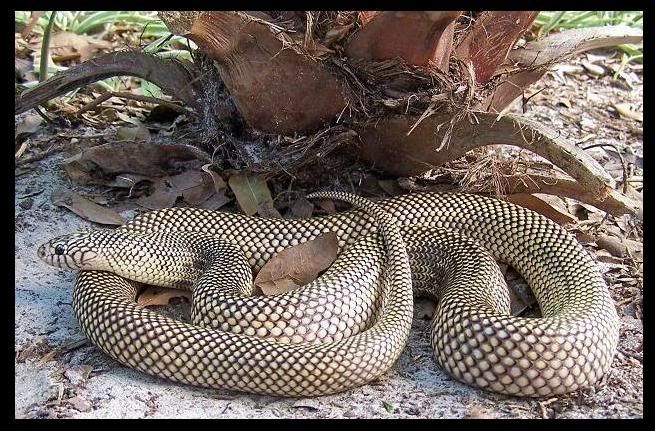
and this wild caught male....

will breed two of my other females....
...we'll see...
:Mark
-----
Surrender Dorothy!
Those aren't meansi Mark....Those goini!......LOL
Nice snakes as always!
And Merry Christmas to you and Trudy from Deborah and I.....
-----
John Lassiter
Poor planning and procrastination on your part does not constitute an emergency on my part...
www.coastalbendcaptivebreeding.com
Thanks John! I hope yours is a great one too!
:Mark
-----
Surrender Dorothy!
n/p
-----
 See all my snakes at SerpenTrack.com
My personal feeling is that the patternless type is a relic of what was a pure unique kingsnake from that area that no longer exists in pure form due to intergrades with every other type around it. If we could produce a true breeding patternless by selective breeding, basically breed out the intergrade genetics, I think we could recreate the now extinct pure form. The patternless is the only unique feature that would warrant it’s own type, a type that does not occur in any of the contributing intergrade types. I also feel the blaze is nothing. Man made selectively bred enhancement of a secondary coloration found in just about all the Eastern Kings.
I think striped pattern is very unique also. I don't know why it should be thought of anything but an area where Getula overlaps with Floridana? Hard to believe a separate subspecies would live alone while sorrounded by other ss on every side. That would explain the diversity of the animals found in those regions. Just my thoughts.
-----
King Snakes! Who can make a better mouse trap?
J Sierra
There are no Floridana up there. The entire Apalachicola kingsnake range is surrounded by eastern kings.
>>There are no Floridana up there. The entire Apalachicola kingsnake range is surrounded by eastern kings.
So is it more reasonable to say it is a remnant group of Eastern Kings that were once influenced by Floridana, or make it yet another ss that's completely in the middle of Easterns? It just seems a bit of a stretch? I could see the area of Floridana subsiding and Easterns taking over areas which creat an Island of Goini so to speak. But trying to imagine a third ss in such a small zone just seems less likely. It reminds me of the new Bacteria which Nasa says could be proof of life on another planet? Because it thrives on Arsenic it is unlike any other bacteria on earth. So they conclude it may have originated somewhere else. Meanwhile overlooking the obvious fact that it is found here on this planet.
-----
King Snakes! Who can make a better mouse trap?
J Sierra
18,000 years ago the sea level was about 390 feet lower (the last ice age) but in the past 6,000 warmer years the sea level has gradually risen to where it is today. Most of the coastal continental shelf areas along the Gulf side of Florida would have been land covered in land animals and potentially a type of kingsnake that would have either disappeared or gradually interbred and lost to the larger distribution of the Eastern type. I believe the remnants of the extinct type are seen from the light Brooks floridana types, to the lowland evenly speckled holbrooki and most evident in the genetics that remain most true in the purest of “Means”, the patternless types. The Holy Grail of Goini or Means is extinct and represented as a relic in the genetics we see that are still passed down in modern types. Just my theory on the whole thing.
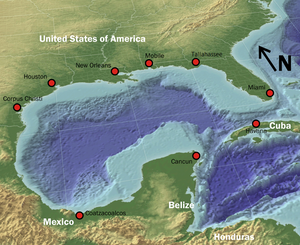
Jorge, it may appear to be stretch based on the geography we see today, but at one time it may have been an integrade that became separated from the parental species entirely for quite some time before being able to come back into contact with them as they are today. Over time while isolated, these relict integrades may have developed their own unique and stand alone phenotype. Similar to OBX kings and coastal plains milksnakes. Meani appears to refer to the patternless and striped animals found in the eastern portion of the range, while goini refers to the animals to the west. I think the split between meansi and goini is a bit ridiculous and I wonder if any DNA testing has been done to confirm this split in the types.
I Agree, And i still think that the Meansi/Goini is an eastern desendant.and never intergraded with Floridana,but the floridana may also be a old desendant, Evolution!.Merry Christmas All
>>Is there anyone who still has pure meansi anymore?
>>
>>Gerard
What is the difference between Meansi and Goini? I am finding images of both and they are overlapping on the internet with who posts them.
-----
Sonya
I'm not mean. You're just a sissy.
Happy Bunny
You obviously need "Common Kingsnakes" by Brian Hubbs ...in depth accounts of every getula. A truly epci works and a must have for any kingsnake lover.
-----
See all my snakes at SerpenTrack.com
That is a great book. It really explains all about getula. It is one of my favorite books.
Gerard
both names refer to the same form
-----
“Nothing is at last sacred but the integrity of your own mind.” Emmerson
They are one and the same. The names have been changed to protect the innocent. Yeah I still use Goini, Meansi sounds so mean, lol!
-----
King Snakes! Who can make a better mouse trap?
J Sierra
Some use Goini to describe just the intergrade eastern/Apalachicola kings, while others use Goini and Meansi interchangeably.
The difference between meansi and goini? About 2 or three base pairs! (i.e., the terms are use to describe the same population of king snakes...)
Most breeders have been using the term GOINI for the past 20 plus years. MEANSI is a recent term as scientists more or less "corrected" the GOINI definition at the holotype and renamed it. To use an anaolgy, GOINI describes the snake 98% and MEANSI 100%. The original scientists did most of the work and these guys dotted the eyes and crossed the T's and hijacked the name!! Is it more correct, probably. Did they truely do enough work to justify renaming the subspecies?? IMHO--hell no. To me it was a scientific circle jerk from the beginning and using the MEANSI name condones it. I think there are others here that think like me.....

The original scientist (Wilfred T Neill) named the goini subspecies after nine intergrade specimens found west of the Apalachicola River near Wewahitchka, FL. They did not examine any animals that today would have been considered pure "meansi".
The more recent work by Krysko examined hundreds of specimens over a wide area in the panhandle to redefine the subspecies and determine its full range.
That is to say, the original scientists didn't even have it half right, and a lot more work has been done in recent times to define this form.
Isnt it also true that they basically took alot of the info that was already common knowledge in the herp community? We know they examined specimens, but they certainly didnt collect that many. They took other peoples range extentions and reshuffled the same deck. I havent seen any "pure" Meansi that wouldnt fall into the prior definition of Pure Goini given the range extensions. Have you?
I have to agree with Jeff on this. When I first became introduced to "goini" back in the mid-90s, the blotched, striped, and rarer patternless specimens looked a bit different than what is being marketed today IMO. I believe goini back then were what is considered meansi today. What happened to that animal to become what is represented today as goini is unknown to me and I feel its a crap shoot as to what anyone buying an "Appalachicola" king will get as it matures.
The recent research by Krysko did confirm a lot of what hobbyists had already observed as far as the phenotypes produced by this form, and expanded upon that by helping to define range, intergrade zones, etc.
But I was actually responding to this statement:
"The original scientists did most of the work and these guys dotted the eyes and crossed the T's and hijacked the name!!"
It doesn't sound like you've even read the paper. Here you go:
http://www.cnah.org/pdf_files/524.pdf
I haven’t read the paper, but it is disrespectful in my opinion to invalidate what was done by Wilfed Neil and his naming the “Goini”. He preceded anybody else no matter how many specimens he did or did not examine and was first to write it up. I would accept if further study invalidated his findings and that the consensus was there was no such thing to warrant the special name. But this work seems to give further evidence (validate) that he was right. So why rename it? BS.
"Goini" was sunk by Blaney in the 70s, and the population designated a relict intergrade between Eastern and Florida kings.
The reasoning behind not using the name "goini" was that what Neill described as "goini" is now understood to be an intergrade population with "getula". It was because of the semantics of naming conventions that they had to come up with a new name.
Personal I would have preferred they use the name "goini", as that is what we were all familiar with.
So what you are saying is that one guy who didnt know what he was doing "sunk" the name, and another guy suggested the original hypothesis--tweaking it a bit--and renamed it because Goini didnt exist?? Pantherophis(not Elaphe), Morelia(not Chondro), I understand you cant fight city hall but the hobby never stopped using Goini so why adopt Meansi at all??
I think my previous post wasn't clear enough. The snakes named "goini" by Neill would today be considered Meansi/Getula intergrades.
When Krysko defined the kingsnakes in that area, "goini" was not used because it originally represented only intergrades between Getula and what was then an unnamed subspecies (now meansi).
Personally I dislike the name meansi, and would have bent the rules and used goini had it been my choice.
The description for meansi was very different than the description for goini. No one submitted the original hypothesis with a changed name and just a few tweaks.
Roger that ,QSL, 10-4
>>>>Is there anyone who still has pure meansi anymore?
>>>>
>>>>Gerard
>>
>>What is the difference between Meansi and Goini? I am finding images of both and they are overlapping on the internet with who posts them.
>>-----
>>Sonya
>>
>>I'm not mean. You're just a sissy.
>>Happy Bunny
-----
Sonya
I'm not mean. You're just a sissy.
Happy Bunny
Sonya, look at RossCA's post below to see a map of the current ranges meansi and meansi/easterns are supposedly located today. At one time, snakes found in the entire dark and light green areas were known as "goini" or Appalachicola kings/blotched kings. At one point, the subspecies designation of goini was questioned and those snakes in that entire area were considered by some to be integrades of florida and eastern kings. Then, newer studies indicated there were some animals in the overall area that are actually subspecies and these animals became the meansi of today. Meansi are supposedly located only in the dark green area. The animals outside the dark green area and located in the light green area are considered to be just integrades of meansi and surrounding eastern king populations. Basically, these integrades probably arent even refered to as "goini" by these scientists.
Also if I understand correctly, the true meansi can be differentiated from these integrades or "goini" by having more lighter coloration in the dark areas of their patterns and produce striped and patternless animals. However, I think even the animals considered integrades can produce striped individual, and meansi can produce blotched individuals.
Back in the day when all the snakes from the dark green and light green areas were lumped together and called goini, both these supposedly true meansi and supposedly integrade animals came into the hobby and breeding colonies as "crappy" and "good" examples of goini. Some breeders strove to produce the patternless or striped variant with higher yellow coloration, or brighter coloration in general. So, the integrades and meansi were probably mixed back then based on availability. True meansi as understood today probably did not last long in the hobby IMO due to this breeding of "crappy" and "good" animals that were available. Also as Jeff pointed out in earlier posts, several of these Appalachicola or Blotched kings available on the market today are probably byproducts of morph making and have floridana and eastern mixed into the integrade/goini or meansi bloodlines.
I am sure you could find true meansi if you can find a breeder who has kept the locality lineage of his "Appalachicola" kings limited to the now defined range of meansi. I am sure you can also find animals that are pure lineage from the dark and light green ranges, but these would be considered integrades.
If you really want to know what the differences are, I suggest buying Brian Hubbs book called Common kingsnakes. Here is a range map from that book. Just to let you know, nothing is written in stone and the subspecies "meansi" will probably always be debatable.

-----

>>If you really want to know what the differences are, I suggest buying Brian Hubbs book called Common kingsnakes. Here is a range map from that book. Just to let you know, nothing is written in stone and the subspecies "meansi" will probably always be debatable.
>>
>>-----
>>
May get that book now that I know it is good.
As for written in stone..... as an undergrad I worked for Jack Sites and his grad student developing films of DNA gels of sceloperus lizards...showing the evolution of the species where they overlapped. Organisms change.
Thanks for all the great info. I printed it so my old ADD brain can read it and learn.
-----
Sonya
I'm not mean. You're just a sissy.
Happy Bunny
Organisms change and that was the basis for all Darwin's work back in the day. As far as meansi/goini are concerned, I think you can still find animals in the hobby that would be classified today as meansi. These locality based phenotypes will be around regardless of scientists calling them meansi, goini, or Fred Flintstone IMO. And they will change naturally in that range based on encroachment by surrounding phenotype animals.
I want a "Fred Flintstone" morph!
100% pure Bedrock locale bro!..LMAO!! I think Barney Rubble bred a few of those that were originally captured at the rock quarry if I'm not mistakin'..... purple with black spots as I recall...then Joe Rockhead started crossing them in his basement, which pissed Barney off big-time!, so Barney simply got out of the hobby altogether!..
~Doug
-----
"a snake in the grass is a GOOD thing" 
my website -serpentinespecialties.webs.com
Help, tips & resources quick links
Manage your user and advertising accounts
Advertising and services purchase quick links
