Reptile & Amphibian Forums

Welcome to kingsnake.com's message board system. Here you may share and discuss information with others about your favorite reptile and amphibian related topics such as care and feeding, caging requirements, permits and licenses, and more. Launched in 1997, the kingsnake.com message board system is one of the oldest and largest systems on the internet.

Click for ZooMed
Click here to visit Classifieds

Yellow vs. Everglades Rat Snake

slitheringdead Mar 08, 2011 01:52 PM

Hi, are there any features other than color, that differentiates a yellow ratsnake from an everglades ratsnake? I've seen adult yellow ratsnakes that are kind of orange and look just like a glades to my untrained eyes.

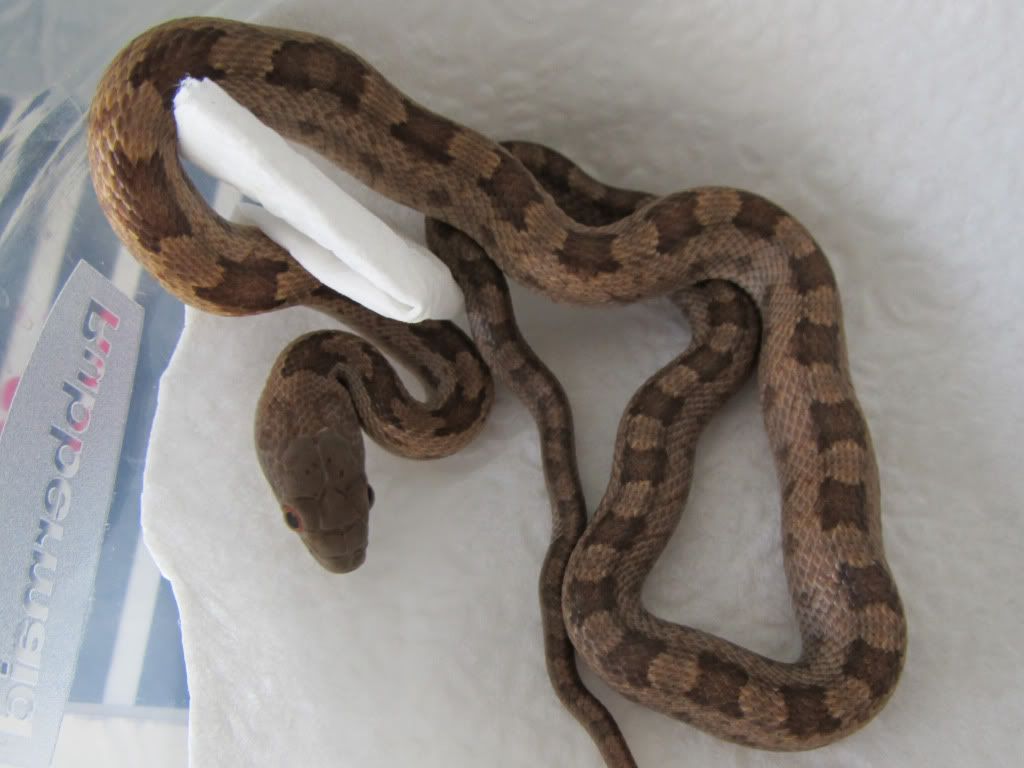
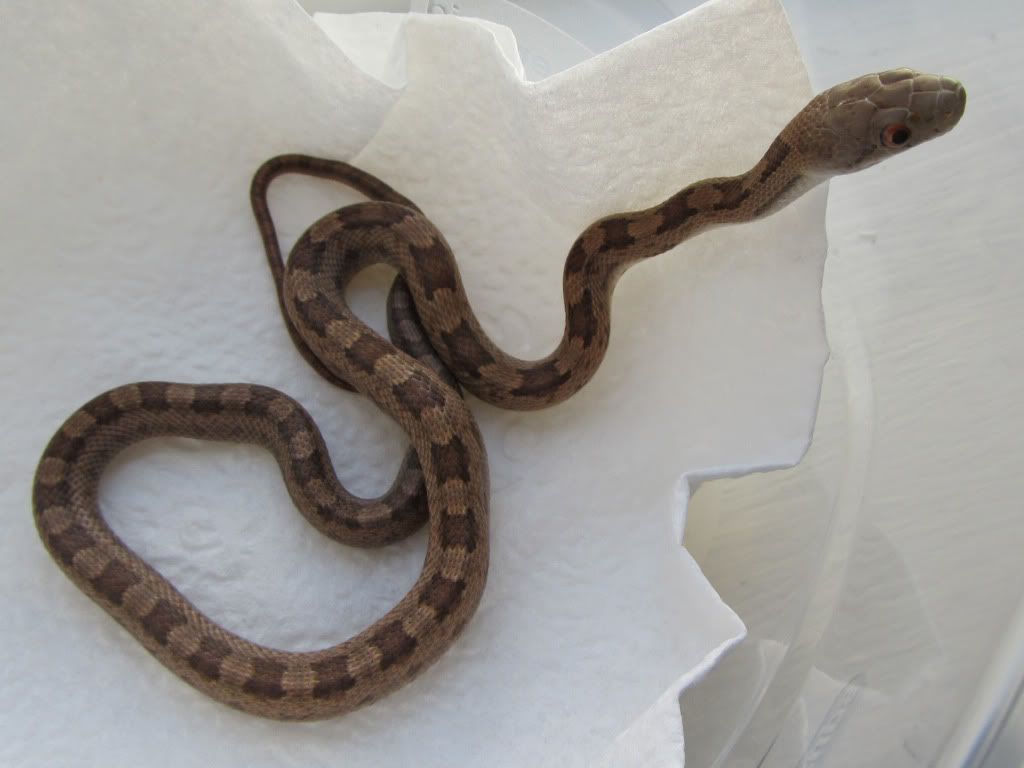
It's probably even more difficult with hatchlings. Take this one for example, is it a yellow or glades?

Replies (14)

cochran Mar 08, 2011 02:34 PM

I'd call it an everglades but like you said,maybe it's a yellow!Either way it's a nice one! Jeff

slitheringdead Mar 08, 2011 03:13 PM

Yeah, i like both yellow and everglades ratsnakes the same.

What makes you think it's an everglades though?

cochran Mar 08, 2011 04:37 PM

Well, first of all I kinda see a reddish tint in his overall color and look at those red /orange eyes!Just my opinion,I could be wrong.The baby yellow rats I've seen in the past weren't as orange at that size. Jeff

slitheringdead Mar 08, 2011 05:16 PM

Ok, so those are the features that you look for... ground color and eye color. I wasn't sure because they look so different as hatchlings. And yes, he is an everglades.

cochran Mar 08, 2011 08:06 PM

That is,like I said my opinion.I'm surprised no one else has chimed in with theirs.Some folks rely on tongue color.The reason I focused on the eyes is because I have a pr. of amel. yellow rats that had yellow eyes until recently. Jeff

cochran Mar 08, 2011 08:10 PM

Forgot to ad.If I were looking for a "normal" glades I'd buy him as such because he's purdy!Lol! Jeff

slitheringdead Mar 09, 2011 01:14 AM

Heh heh, he is mine already. I was buying another snake and then found out that he was available, so i made an impulse buy.

DMong Mar 08, 2011 11:57 PM

Well, in alot of older literature, you will see that they mention that orange irises and red tongues are only indicative of Everglades Ratsnakes. But over the years it seems that there can often be exceptions to this previously thought "hard rule".

Orange irises and red tongues are always nice to see in attempting to key-out nice examples of Everglades, but I have also seen a good number of very orange Ratsnakes with mostly black, or mottled black and red tongues that made me think that this once thought "decisive" indicator may not be as decisive as once thought.

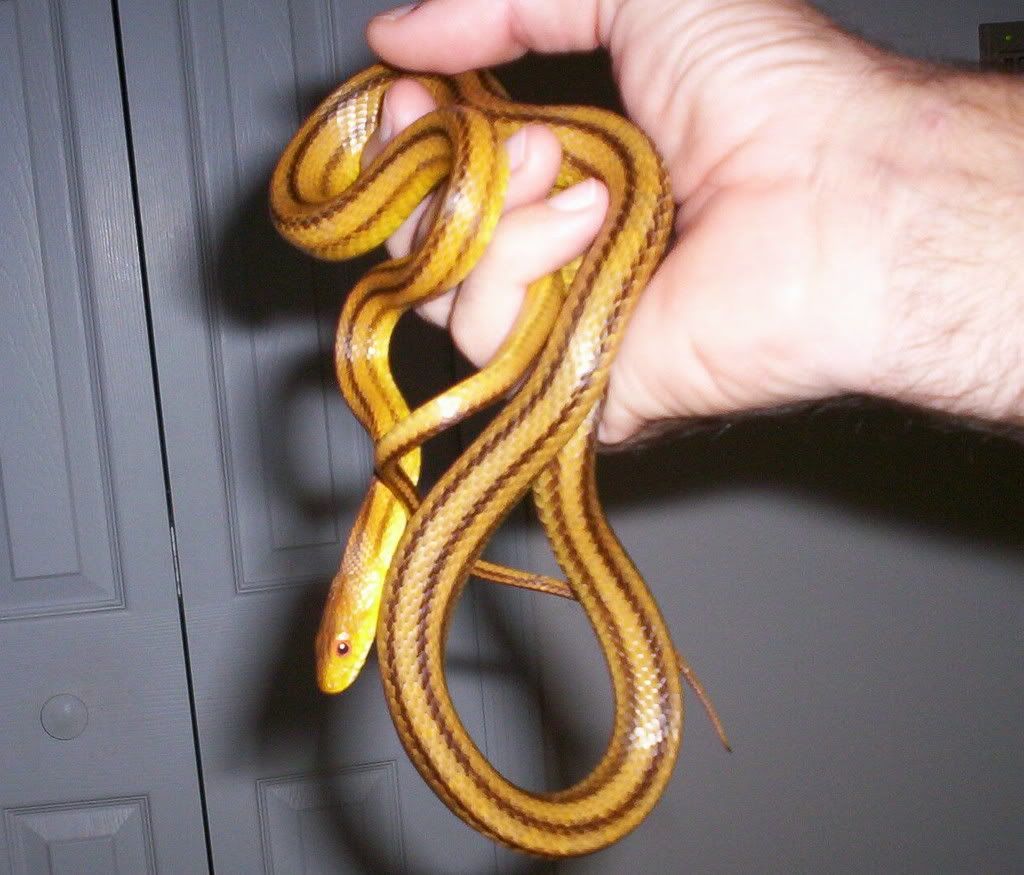
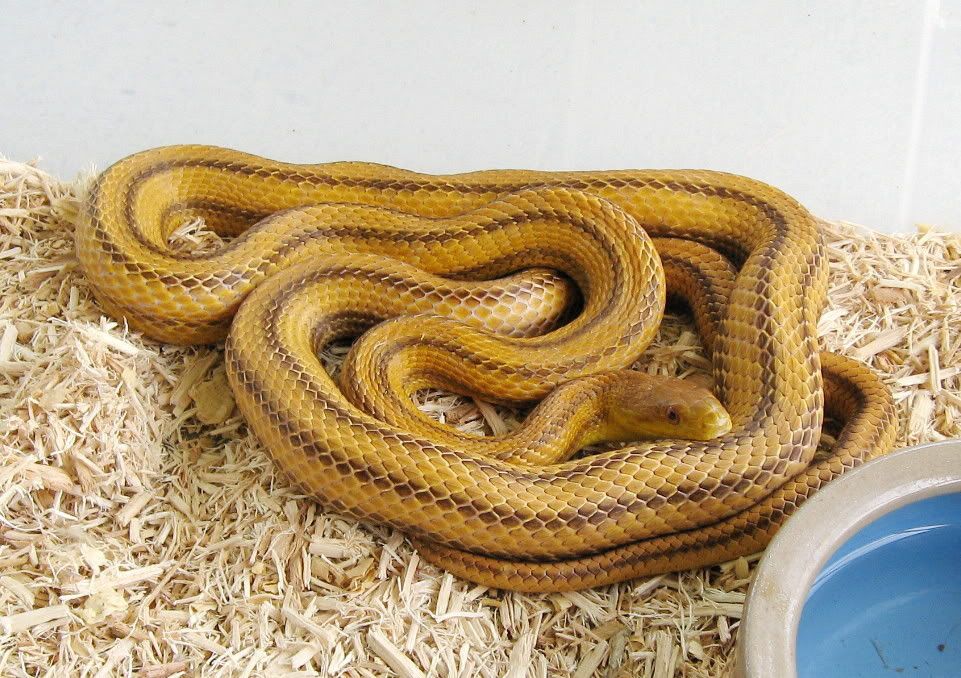
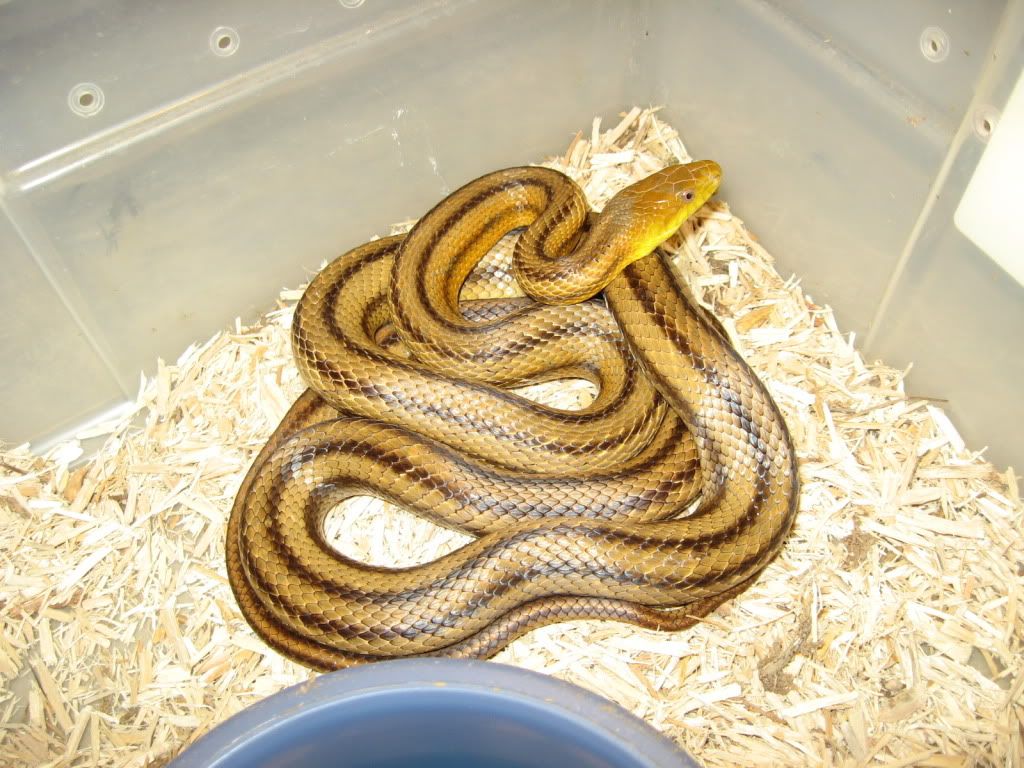
This locality Yellow Ratsnake male I captured myself on the extreme east coast of central Florida in Brevard County is nowhere even CLOSE to any Everglades range, yet it has VERY noticeable orange/red irises, whereas most typically have more tan colored irises. It did have a black tongue however and was a very definitely a true Yellow Ratsnake by every definition and range.
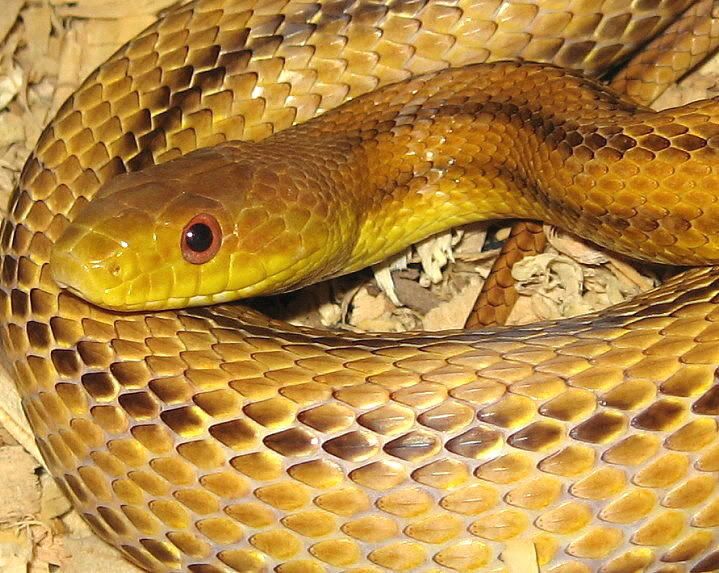
Here is another wild-caught Yellow Rat female I captured exactly 10.5 miles SSE of the above male Yellow Rat. Note her more typical tan-colored irises.
Most Everglades seem to start out a fairly pinkish to rusty color, then gradually become more orange, or orange/red as the gradually mature. This one I used to own was VERY rusty brown as a young hatchling, and progressively followed suit by getting richer and richer orange/red as it got older.

The real proof of what it really is and what it might ultimately look will have to be seen when it is an adult more than likely. Seeing what the parent lineage looks like can be a great indicator too.
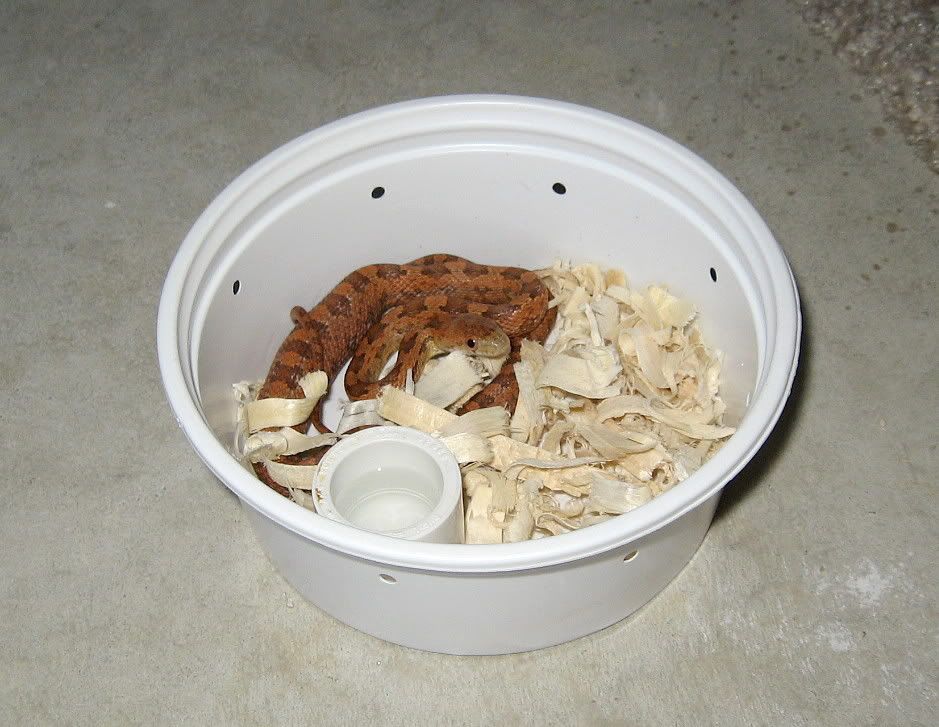
same hatchling.....
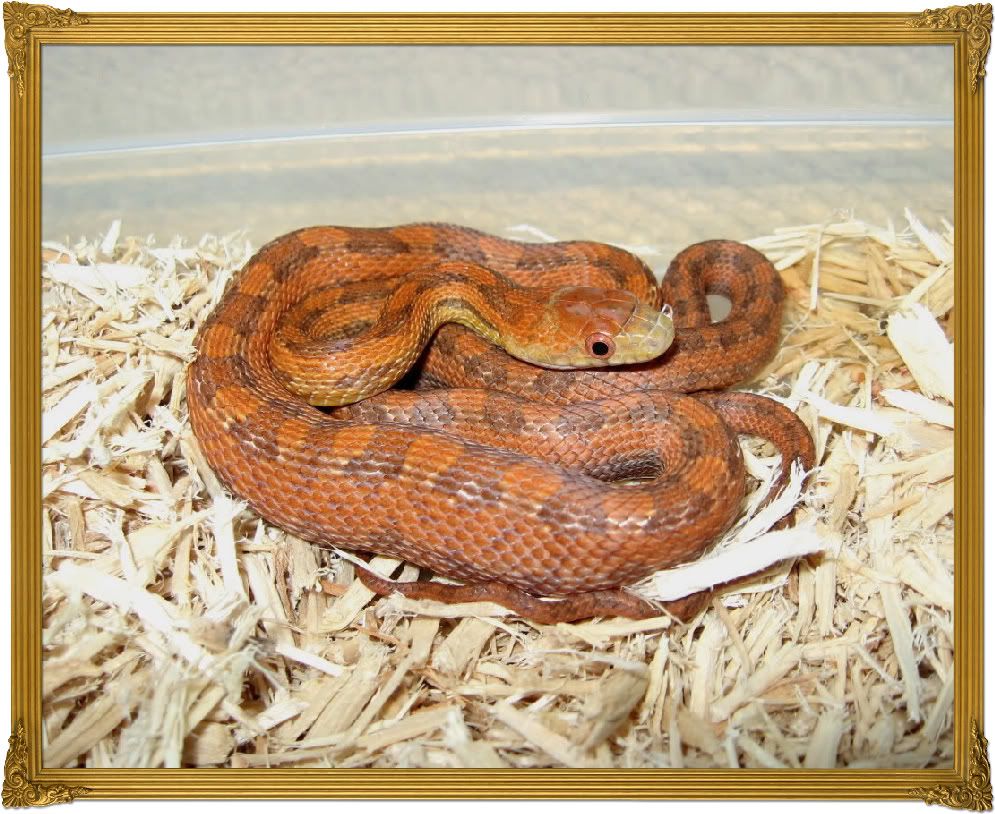
Showing the red tongue....

As it got a bit older.....
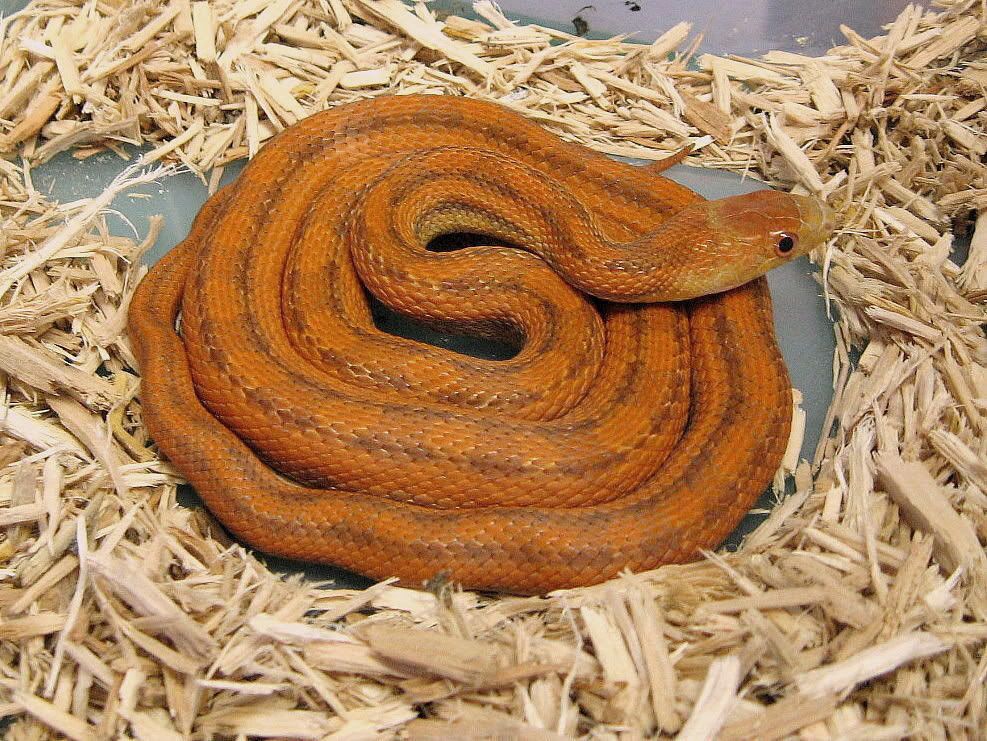
a good bit older......
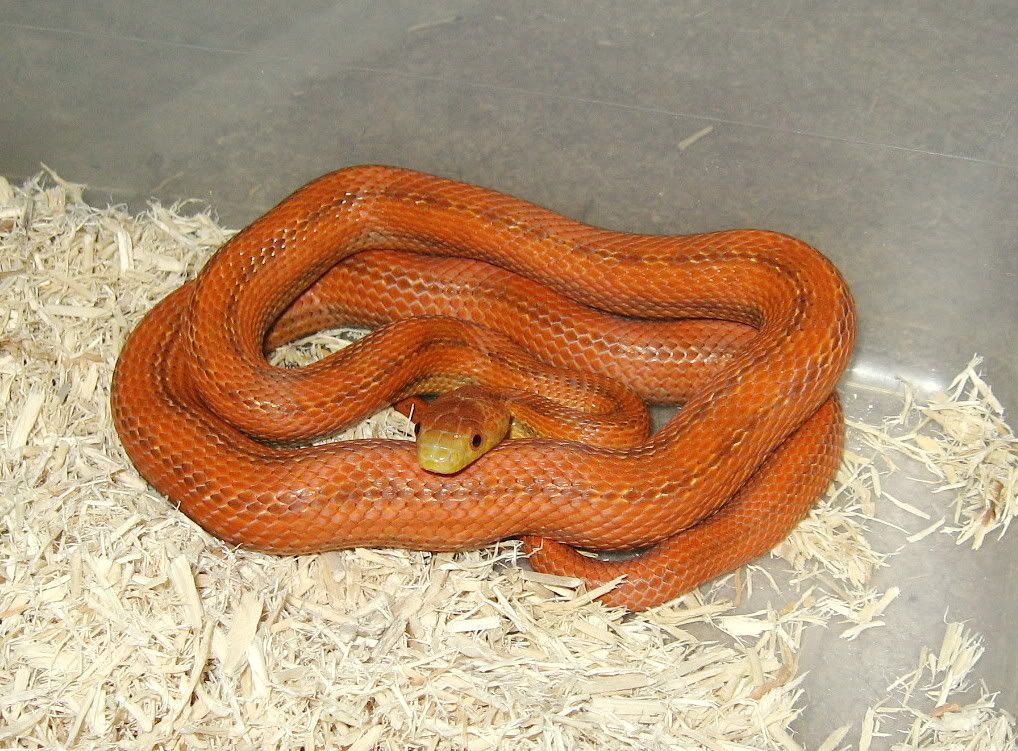
And as a nice two year old young adult....
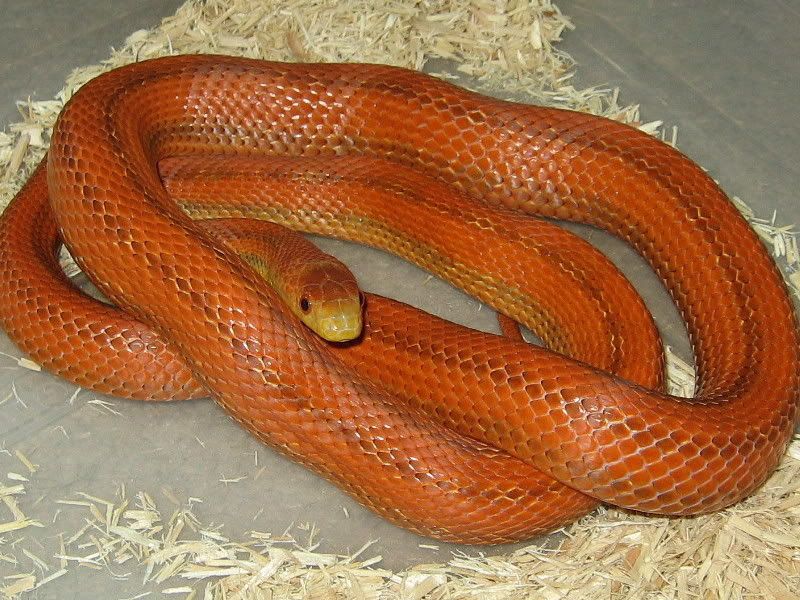
Here is the nice wild-caught mother of the Everglades in the above photos that was found and bred by Mark Kenderdine.
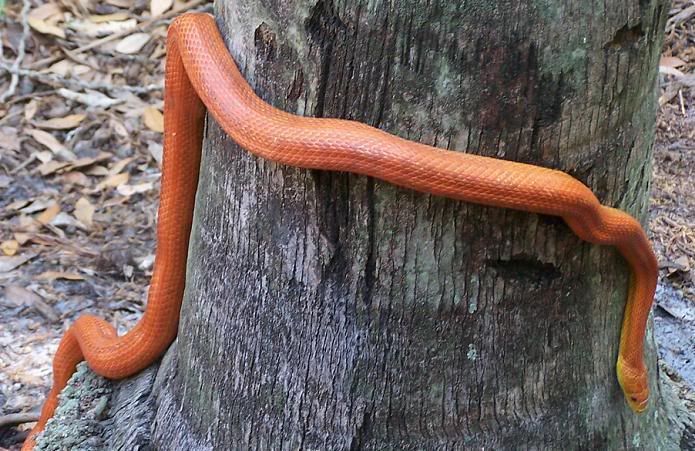
Anyway, I'm not real sure anymore that all Everglades necesarily have to have red tongues anymore, but it seems that "most" probably do is all. Also one has to keep in mind that there are many Yellow x Everglades out there too, and what exactly would they look like?. I am quite sure there would be some pretty decent variation of phenotypes within any given clutch of either type.

I think the bottom line here is that Everglades Rat identification might not be as absolute as it was once thought, even though many nice examples of them DO have the orange irises and red tongues. Because on the flip-side of the coin, there have been some very surprisingly nice orange snakes that did not have solid red tongues. And it it=s also interesting to see a 100% pure Yellow specimen with red/orange irises too.

~Doug
-----
"a snake in the grass is a GOOD thing"

my website -Serpentine Specialties

slitheringdead Mar 09, 2011 01:12 AM

That was an interesting read Doug. Thanks for the thorough explanation. Maybe that yellow rat with the orange eyes was an escaped intergrade It's absolutely beautiful. Do you still have it?

As for the hatchling in my original post, i can't wait to witness his color/pattern transformation. He's tiny right now. He only weighs 13g. I have seen a pic of his mom and I doubt he'll be nearly as bright as the glades in your post, but he'll still look nice.

I already know the answer to this question, but i might as well try... a 5g fuzzy is too big for him right? The reason i ask is because i'm all out of pinkies and he's the only snake in my collection that would need them. I have plenty of fuzzies. Just thought i'd check because some snakes can take down much larger prey than one would think.

Rick

DMong Mar 09, 2011 01:45 AM

Thanks man,....

Well, given that this Yellow Rat was captured in a VERY wooded rural neighborhood, and seeing that it is a very solid yellow both top and bottom, I seriously doubt he is an escaped intergrade..LOL!

Here is another pick of his very thin self just after I captured him back in June of 2005.

And here is a full-body shot. Just no way he is anything but a pure Yellow Rat. I also captured one just like it that was UNBELIEVABLY yellow almost 30 years ago not even one mile away from where this one was caught.

Anyway, I had him for just over 5 years and was doing fantastic the whole time, and he very sadly suddenly passed away about a year ago. That female I caught was going to be bred to him, but after he died I let her go right where I captured her.

Yes, a 5 gram fuzzy is asking for a regurgitation problem for sure with a hatchling that small.. Even though it "might" be lucky enough to manage to finally get it down. A tiny hatchling doesn't have the stomach enzymes, acids, and gut flora to properly digest a meal that big. Large meals can require lots of extra warmth to assist digestion too. I wouldn't even attempt a meal that big being that the snake itself only weighs that little. It wouldn't be worth the problems it could easily cause.

Anyway, good luck with the nice ontogenetic change that little guy will go through!

~Doug
-----
"a snake in the grass is a GOOD thing"

my website -Serpentine Specialties

slitheringdead Mar 09, 2011 02:07 AM

Sorry to hear about his sudden death. He was quite a looker.

Well, looks like i'll be heading to the local petco to buy some pinkies. Luckily there's a reptile expo in less than a month, so i can stock up there instead.

DMong Mar 09, 2011 10:52 AM

Thanks,......yes, I was really bummed when he passed away.

~Doug
-----
"a snake in the grass is a GOOD thing"

my website -Serpentine Specialties

mhaze Mar 09, 2011 07:47 AM

Great looking yellows! They remind me of the ones around my house where I grew up in Ft. Pierce.

DMong Mar 09, 2011 11:05 AM

Thanks!......yes, these two were captured only about 30 minutes north of Ft. Pierce as a matter of fact.

~Doug
-----
"a snake in the grass is a GOOD thing"

my website -Serpentine Specialties
Site Tools