Reptile & Amphibian Forums

Welcome to kingsnake.com's message board system. Here you may share and discuss information with others about your favorite reptile and amphibian related topics such as care and feeding, caging requirements, permits and licenses, and more. Launched in 1997, the kingsnake.com message board system is one of the oldest and largest systems on the internet.

Click for 65% off Shipping with Reptiles 2 You
https://www.crepnw.com/
Click for 65% off Shipping with Reptiles 2 You

Hypo Pueblan....

KcTrader Apr 02, 2011 09:39 AM

Hey guys, let me pick your brain on this. Last year I bred a Visual Hypo Pueblan to a Visual Hypo Pueblan, the end result were all normal looking babies. Unfortunately before the eggs hatched I sold off my male and kept the female. The female is a "Bell line" Hypo. I actually was able to get a "Lousiana Line" male this year from Shannon B., which I believe my male was from last year. Here's my question, do you think the end result this year will be the same?

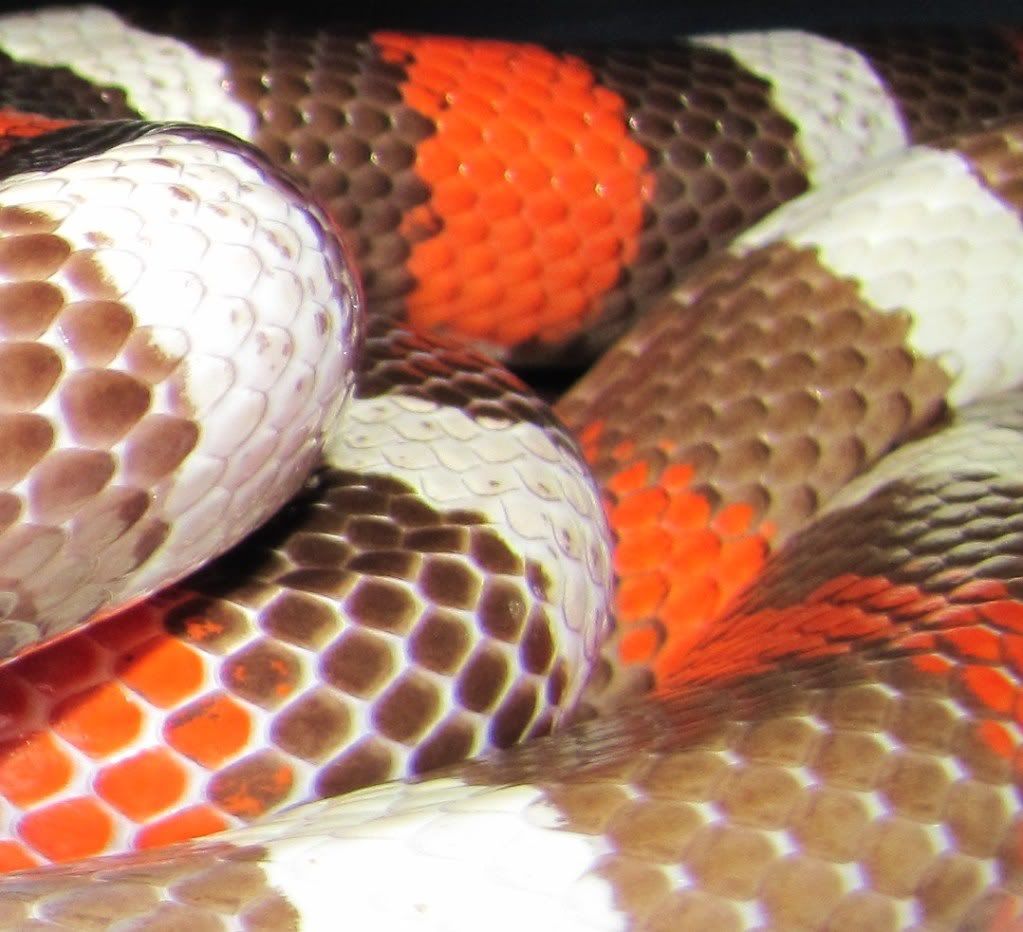
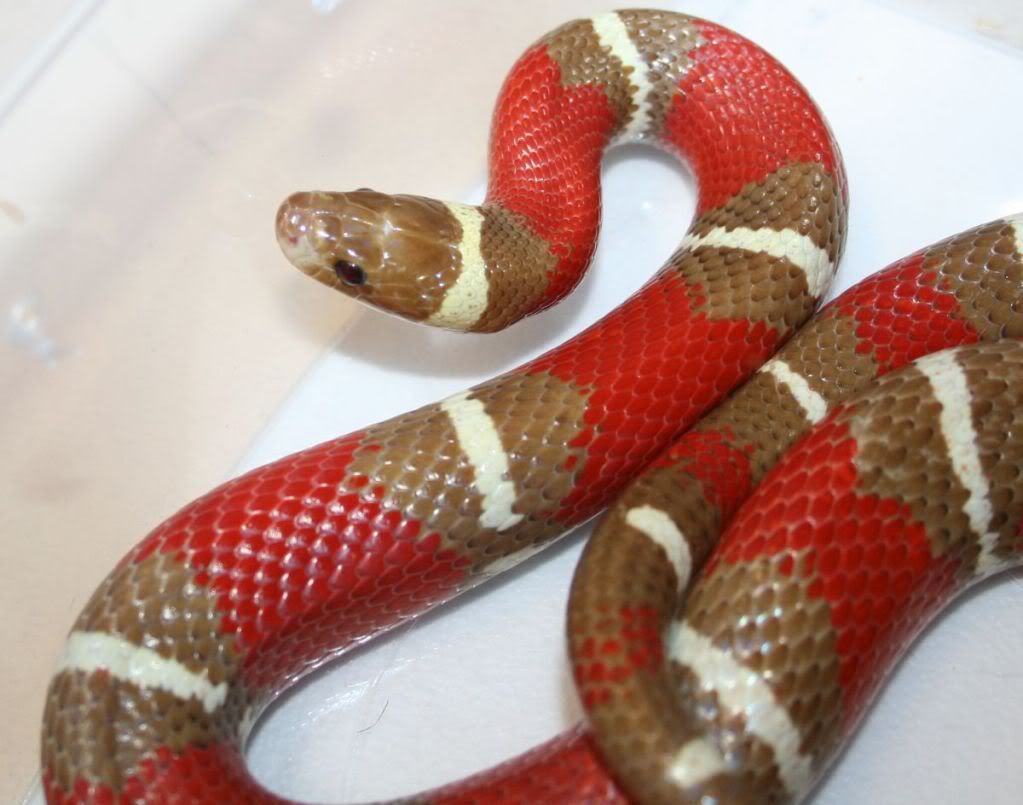
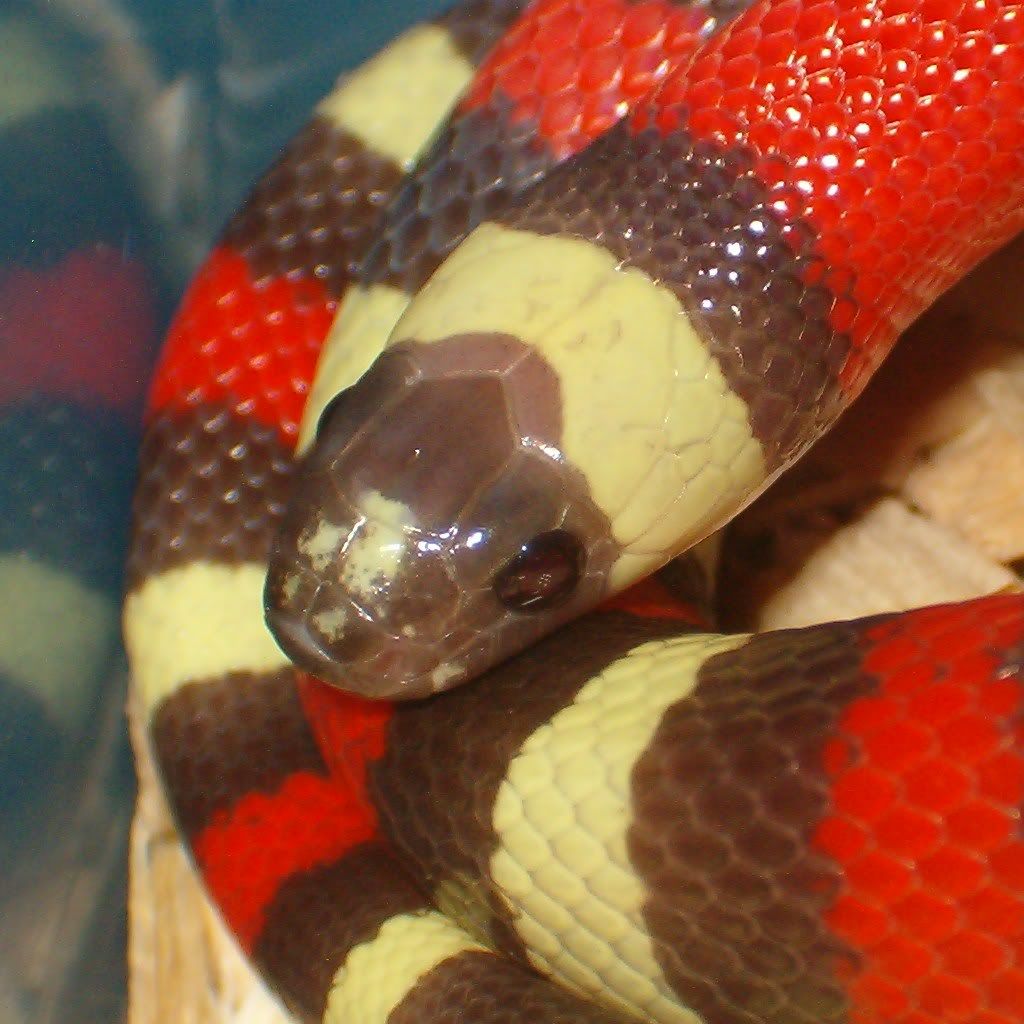
Take a look at these photos. Tell me in your honest opinion one doesn't look more like a t plus rather than a hypo?
without flash

with flash

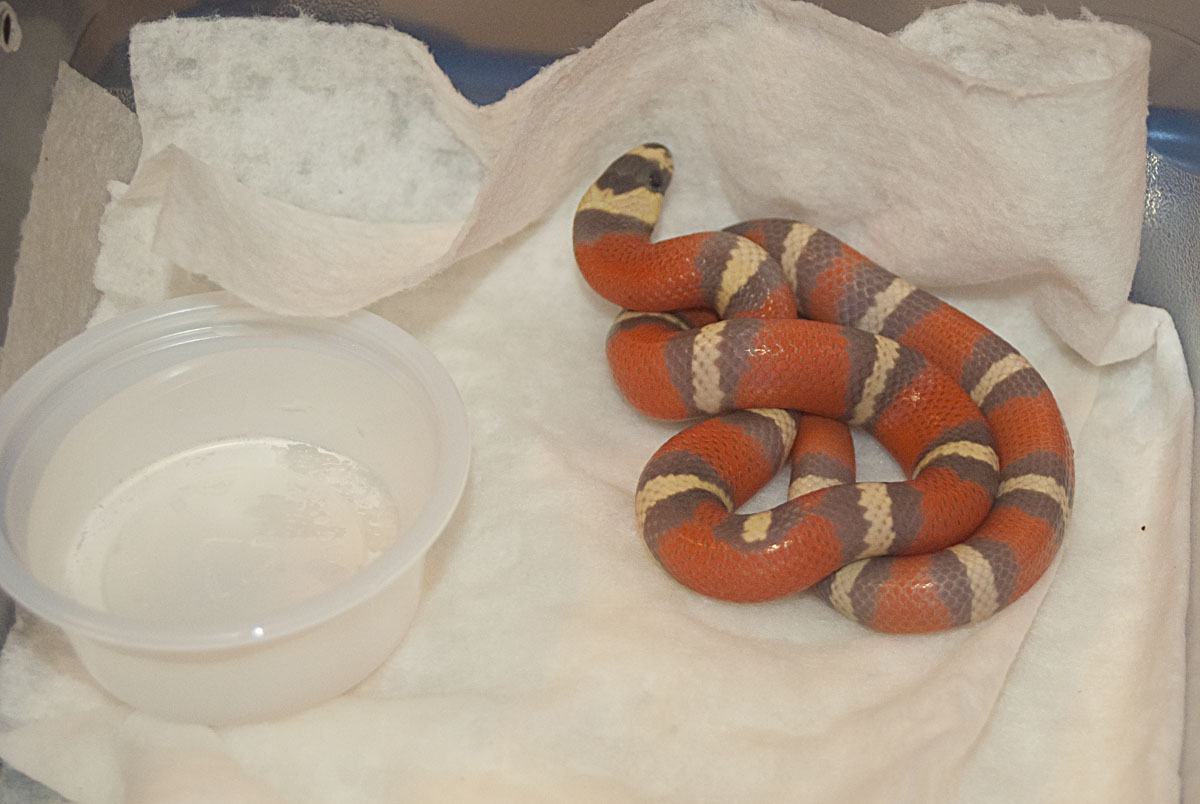
I held back a trio from last year and should be ready in 2012 to breed, do you think if these are double "hets" will the outcome be? If both traits prove to be simple recessive will one mask the other or will it enhance the other?

without flash

with flash

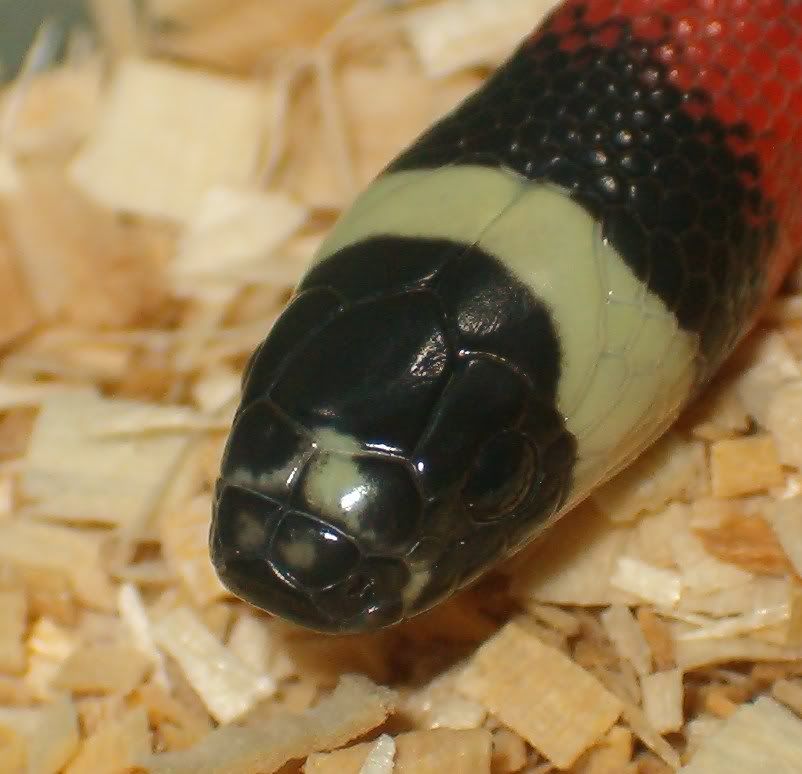
Here is a picture of Shannon's t plus Nelsoni for comparison.
Photo courtesy of Shannon Brown

I have discussed this already with some of you so feel free to chime in if you want. Also I know the pictures don't show the greatest detail of the difference in coloration, but believe me there is.
-----
Jimmy Tintle

Replies (39)

DMong Apr 02, 2011 11:02 AM

Jimmy,......

Well, that is a bit odd, but if they are from totally different hypo lines that are incompatible (non-alellic), this can easily happen. There are many different hypo genes in corns that are this way too.

Also, I definitely wouldn't rush into calling it a "T-Plus" either for the simple fact it could easily just be a more reduced form of hypomelanism....similar, but certainly not identical to "extreme" hypo Hondos, ultra-lights, etc...that display different amounts of melanin.

Trying to distinguish what is TRULY a tyrosinaise-positive animal versus a drastically reduced hypo by mere sight is virtually impossible anyway. People in the hobby simply call them this to describe a certain "look" for convenience, but as to all of these different snakes actually being "T-positive or hypo is all just pure speculation. There is WAAAY more that goes on(or doesn't go on) within pigment cells(chromatophores) than meets the eye so to speak..LOL!

Furthermore, ALL snakes that display ANY shades of dark pigment WHATSOEVER are actually "t-positive", as tyrosinaise is simply a precurser enzyme/protein within the dark pigment cells (melanophores that synthesizes chemicals within the melanocyte into actual melanin. It can be displayed in an animal anywhere from zero(t-negative), to fully dark(normal), and anywhere in between. But what hobbyists choose to call them is a very different story altogether and is not necessarily accurate at all. Many mutations in the hobby are very inaccurately termed.

The pigment cells(melanophores) in all the different strains of hypomelanistic (and T-plus) snakes can produce extremely varying amounts of tyrosinaise to produce melanin.

Technically speaking, a snake that produces absolutely ZERO melanin, yet ONLY produces the melanin protein precursor (tyrosinaise) within the pigment cells that is visually seen but is incapable of producing any melanin at ALL would be considered a true T-positive animal.

Also, nobody really knows very much about the "t-plus" nelsoni that Shannon has produced other than the fact that they are very odd looking, and the gene seems to be inherited in a much different way than most all other simple recessive colubrid traits, and it "could" be alellic somehow with the amelanism gene only, but that still has yet to be absolutely proven or not. But what gives the snake it's different looking "chocolate" appearance, nobody is really sure.

The only way to know something produces the protein/enzyme tyrosinaise, but cannot actually synthesize any of it into melanin is by performing an "L-DOPA" test for it's presence.

Anyway, yeah, that is a really reduced-melanin animal there Jimmy, but I would probably simply call it a hypo for now though..

~Doug
-----
"a snake in the grass is a GOOD thing"

my website -Serpentine Specialties

KcTrader Apr 02, 2011 11:38 AM

Thanks Doug for the detailed reply! I wasn't calling them t plus or even thought of calling them that. I was just making camparisons between the Nelsons animal and the Pueblan. And was looking for answers which you have completely answered with great detail.My thought process is of a chimpanzee when it comes to the genetics of animals. I will have to read more on genetics to really consume the volume of information given.

I also do undertand that there are variable degrees of hypomelanistic animals. My thought process is by physical appearance and that alone. I also understand that the names given to certain animals are not correctly expressed in the scientific reality.(which I hope to understand more as time allows)

Basically, the one question I am really looking for answer to is if the offspring is normal looking and the are double homo, with 2 different alellic hypo genes will the offspring between to "hets" be masked by the lighter of the 2 or will they enhance the one single hypo visual look? ( I hope I am stating everything correctly)
-----
Jimmy Tintle

DMong Apr 02, 2011 12:22 PM

"Basically, the one question I am really looking for answer to is if the offspring is normal looking and the are double homo, with 2 different alellic hypo genes will the offspring between to "hets" be masked by the lighter of the 2 or will they enhance the one single hypo visual look? ( I hope I am stating everything correctly)"

Now THAT is a GREAT question Jimmy!,....because who really knows what would actually happen???

I would "tend" to think that the individuals produced would more than likely be a bit variable, and of course some could indeed look more of one type or the other if the gene is indeed incompatible and are actually two separate mutations. But only future test breeding will conclude any of this. This is what makes stuff so interesting..LOL!

Looks like you have a very interesting project ahead of you bro!. Your outcome would no doubt be interesting to many other milk folks too...me included!

Look forward to seeing your future results on those Jimmy!

I have some future projects here that will definitely have me scratching my head over as well, so don't feel all alone brother..LMAO!!

I have some very young "t-plus" carriers here from Shannon's nelsoni line too, and I don't know what the heck to expect later on to be quite honest. Nothing about it seems to be real conclusive or predictable thus far about exactly how the gene dynamics works or is inherited other than it "seems" to be a so-called "co-dominant" gene alellic with amelanism??. Maybe it works something like the "ultra/ultramel" gene in cornsnakes..*cough*(hybrids)

Another weird one is this bizarre "moonshine hypo?" greenish ratsnake gene I have here that was just recently discovered from a wild/caught locality animal back in 2006 and more were propagated in 2008 through 2010 when bred to other locality normal females. These are definitely not "cookie-cutter" phenotypes either, so it will be an on-going interesting project as well.

Have fun with figuring some of it out Jimmy!, heck, that's part of all the fun!

~Doug
-----
"a snake in the grass is a GOOD thing"

my website -Serpentine Specialties

KcTrader Apr 02, 2011 12:51 PM

I would "tend" to think that the individuals produced would more than likely be a bit variable, and of course some could indeed look more of one type or the other if the gene is indeed incompatible and are actually two separate mutations. But only future test breeding will conclude any of this. This is what makes stuff so interesting..LOL!

I will have to agree with you that they will be variable, it'll be a long time as to seperate the genes and make sure I have a double homo or a "Lousiana line" het "Bell" and/or a "Bell" het "LA line"

Looks like you have a very interesting project ahead of you bro!. Your outcome would no doubt be interesting to many other milk folks too...me included!

I almost decided to let go of the whole clutch last year as I was down sizing my Pueblan collection. I am sure glad I decided to hold back a trio.

I have some very young "t-plus" carriers here from Shannon's nelsoni line too, and I don't know what the heck to expect later on to be quite honest. Nothing about it seems to be real conclusive or predictable thus far about exactly how the gene dynamics works or is inherited other than it "seems" to be a so-called "co-dominant" gene alellic with amelanism??.

They are on my wish list for this fall.

Another weird one is this bizarre "moonshine hypo?" greenish ratsnake gene I have here that was just recently discovered from a wild/caught locality animal back in 2006 and more were propagated in 2008 through 2010 when bred to other locality normal females. These are definitely not "cookie-cutter" phenotypes either, so it will be an on-going interesting project as well.

I saw your photos of them on the ratsnake forum and they are pretty sweet looking and definately not "cookie cutter"! Good luck with them! Let me know when you have any to go around.

It sure is the fun of the hobby to see how some of these genes work with each other, and I will keep you posted on the progress of this project.
-----
Jimmy Tintle

DMong Apr 02, 2011 01:18 PM

I agree, the narrowing and isolating the gene(s) will definitely be what takes time to do.

All part of the genetics game we play I guess..LOL!

~Doug
-----
"a snake in the grass is a GOOD thing"

my website -Serpentine Specialties

shannon brown Apr 02, 2011 05:13 PM

Well, I agree with Doug pretty much all the way but!!!!! I do have to think that the Louisiana line is a t plus and not a hypo.Now,I have nothing to back this up except looks alone.They have red eyes and basically no pigment.If there was a true line of amel out there in Campbelli I would just about bet anything it would be allele with the hypo line just like in the Nelsoni.Because they are both albinos they usually tend to be compatible.Hypo's aren't compatible with any amel lines in any snakes that I know of.
Anyway, time will tell but I bet one day it proves out to be t plus albino rather than hypo.
We all know the term hypo is used way to much anyway.Take any freaking pair of wild snakes and breed them three or four generations and you will have hypos.Now, when the black bands actually turn a totally different color and you start to see ruby eyes etc.. I think thats the t plus at work.

L8r

DMong Apr 02, 2011 06:15 PM

"If there was a true line of amel out there in Campbelli I would just about bet anything it would be allele with the hypo line just like in the Nelsoni. Because they are both albinos they usually tend to be compatible.Hypo's aren't compatible with any amel lines in any snakes that I know of"

I think you meant to say allelic with an amel gene if there was a true line of amel campbelli in the hobby...correct?, otherwise the gene would be a form of hypomelanism and not be expressed in the first generation if not compatible and allelic.

That seems logical to me as well if there are a percentage produced in the first generation with a normal amel. It would prove the gene resides on the same locus, just as it seems to be with the so-called t-plus nelsoni you are working with.

After reading all about the way the ultra/ultramel gene in corns works and is inherited, this seems to be VERY similar to the nelsoni gene you are working with, although the animals themselves are NOTHING alike...I'm referring just to the way the gene itself works and is inherited..LOL!...know what I mean?

~Doug
-----
"a snake in the grass is a GOOD thing"

my website -Serpentine Specialties

shannon brown Apr 03, 2011 06:04 PM

Yes, that is what I meant Doug,LOL...I guess I had a few to many beers before posting that.

Anyway,I agree the nelsoni gene is much like the hybrid garbage they cal ultra's or whatever.It also is much like the t neg and peanut butter oatmeal raisin bagel kings.

DMong Apr 03, 2011 11:16 PM

"It also is much like the t neg and peanut butter oatmeal raisin bagel kings"

HAHAHAA!!!!..

~Doug
-----
"a snake in the grass is a GOOD thing"

my website -Serpentine Specialties

KcTrader Apr 05, 2011 09:21 PM

peanut butter oatmeal raisin bagel kings.

Now that is funny! LMAO

Are those Kosher??? Please tell me they have been blessed by the Snake Gods!!!

-----
Jimmy Tintle

KcTrader Apr 02, 2011 07:44 PM

Take any freaking pair of wild snakes and breed them three or four generations and you will have hypos

Agreed!!!!

I think your Candy Cane Knobs,Applegate Pyros, are some true examples of Hypomelanistic, "most" everything else including my "Bell Line" pueblans,BHB Hypo Pyros,may even list some hypo hondurans(except for the extreme line) should be just reduced black. The Sentz line pyros almost look like a t plus, it's been a while since I seen one in person but if I remember correctly the black actually turns to a different color.

Just my thoughts, take it with a grain of salt!
-----
Jimmy Tintle

shannon brown Apr 03, 2011 06:08 PM

Yep, I agree that the sentz line pyros are probably t plus and I am sure the temps are as well.I bet in years to come many of the hypo lines out there will prove to actually be a form of albanism instead of hypo.
Its kinda a catch 22 though,cause in the hobby now we expect a "hypo" to have brown or purple bands ( no matter the width)and ruby eyes so when somebody says the have a hypo we look for that but in actualality its the other way around and a hypo is reduced black.LOL....
I think the hypo stillwater bulls are a great example.They are very reduced black but where they are black its still BLACK!But look at some hondos or pueblans that we call hypos,they have wide ass even crossovers that are purple etc....

L8r

mfoux Apr 05, 2011 08:02 PM

This is turning out to be a really fun thread. I've always loved hypo Pueblans. Take a look at this Hondo and tell me what it looks like to you guys. I've adjusted the colors in Photoshop to match the actual color of the snake, although some days it is actually purple just like a purple Clark strain retic. You can't see in this photo, but the eyes are halfway between ruby and normal. I'll tell you guys more about it after I hear some feedback.


-----
---
http://www.mikefoux.com
http://www.snakerack.info

Hondurans
Pueblans
Corns
Grey-banded King
California Kings
Speckled Kings (Calcasieu Parish locality)
Brooksi
Goini/Brooksi Crosses
San Diego gophers
Texas Rat
Jungle Carpet Python
Ball Python
BCI
Sulcata
Leopard Geckos
Wife, Caucasius Mexicana Integrade WC

DMong Apr 05, 2011 08:30 PM

Mike,..

That is what I would call a very nice hypo. Judging by the very reduced dark rings, I would expect that individual to not have black eyes, or real red eyes either, but something intermediate between the two.

These have to be hypos in my opinion, since you could breed it to a very normal mediocre hypo, or extreme hypo, and you would still get hypos. So obviously it is allelic on the same locus, whereas you would get normals when bred to any amel.

Anyway, that is a REALLY nice looking tricolor hypo bro!

~Doug
-----
"a snake in the grass is a GOOD thing"

my website -Serpentine Specialties

DMong Apr 05, 2011 08:35 PM

....I would say it is certainly worthy of "ultra-light" hypo status too, but not quite extreme.

That's one of the nicest tricolor hypos I have seen man!

~Doug
-----
"a snake in the grass is a GOOD thing"

my website -Serpentine Specialties

mfoux Apr 05, 2011 09:43 PM

Thanks Doug and Jimmy. That's exactly what I was thinking since there's no extreme blood in this line (to my knowledge) and the eyes are more maroon than ruby. I was super-excited to see this come out. I've seen quite a few nice tri-color hypos up close, but never one with this color.

So here's the background on this guy:

-This is the first (and only) hypo I've produced.
-It popped out last September from normal parents I got as babies from Tom Stevens (Terry Dunham line).
-The parents are both het for albino and possible triple het (so now we know they're both het for hypo as well).
-Out of seven eggs there were two albinos, this hypo, a couple of normals and the other eggs didn't make it (I found a third beautiful but deformed albino dead in egg)
-----
---
http://www.mikefoux.com
http://www.snakerack.info

Hondurans
Pueblans
Corns
Grey-banded King
California Kings
Speckled Kings (Calcasieu Parish locality)
Brooksi
Goini/Brooksi Crosses
San Diego gophers
Texas Rat
Jungle Carpet Python
Ball Python
BCI
Sulcata
Leopard Geckos
Wife, Caucasius Mexicana Integrade WC

DMong Apr 06, 2011 12:22 AM

Now all you need is to pop out an anery, or a ghost, and you will have proven them BOTH to be definite triple hets!..

Yeah Mike, a real nice tricolor hypo there bro!, and I also love looking at the assorted stuff pipping the eggs..LOL!

~Doug
-----
"a snake in the grass is a GOOD thing"

my website -Serpentine Specialties

KcTrader Apr 05, 2011 09:17 PM

Mike,

That is one nice Hypo tricolor for sure! Thanks for showing, if it wasn't for the high variation in Hypo Hondurans I would say that it classifies in the coloration of a T plus animal....Now from what Doug just posted I am assuming the T plus gene is only capable of being produced with an albino gene present...Correct me if I'm wrong Doug.

Still a great looking Hypo!!!
-----
Jimmy Tintle

DMong Apr 06, 2011 01:35 AM

Well, not quite, what I was really pointing out is that the hypo gene in Hondos DOESN'T have anything to do with the typical amel gene.

The T-plus gene only seems to be allelic (co-dominant?) sharing the same allele with amelanism in Shannon's line of European nelsoni. But alot more has to be learned about that gene too like so many others in this hobby. It seems to be inherited like the PB/jelly traits in floridana, and the ultramel gene in the corn/grey rat hybrids.

Those are the only genes like this in colubrids that I am aware of. The actual term t-plus(tyrosinaise positive) has too many unknown factors to it to be honest. It can actually work all sorts of different ways, and with many variables, it can "seem" to be a form of hypo, or amel, or neither one at all and be totally independent of either one, and it actually IS most all the time with very few exceptions.

After learning more about it over the years, I actually now know LESS about it to be honest, if that makes any sense...LOL!. It is one complicated nut to crack Jimmy. That is why all the different so-called types of t-plus(lavender) animals out there have all these different looks. Because many different things can be going on in the pigment cells to cause them to look that way. It is similar to a ink drum leaking into a big swimming pool. The "ink" being the purplish colored tyrosinase, and the water in the pool is the melanin being produced in the pigment cell. All these different types of lavender, or t-plus looks can be caused by all sorts of different dynamics within the melanocyte that causes them to leak out no tyrosinaise enzyme, or any variable amount, and the genes responsible for the coding of these cells can reside at totally different places on the chromosome helix. So in essence, many of these looks might "seem" similar to something else in the hobby, but can be TOTALLY different genes altogether.

A true "T-plus" animal has tyrosinaise within the pigment cell just as ALL normally dark pigmented animals do, but it is kept from being mixed into melanin for unknown reasons and codes from the cells. The pigment cell retains tyrosinaise, and is stored there, but theoretically synthesizes NO dark melanin at all(which gives them the lavender/purple look we associate with t-plus, or lavender animals, or the cell synthesize just a tad bit into melanin, or even a more substantial amount of it can mix to produce yet more melanin within the cell, and of course would cause them all to look totally different and would be daker looking the more that is allowed to mix into actual melanin. But usually these mutant genes aren't allelic with the typical hypo or amel genes in the hobby, except for those other's I mentioned earlier. It usually is an entity all it's own, and is incompatible with other types(non-allelic).

This is why unless any of these different types of so-called t-plus, or hypo, or amel reside on the very same locus on the chromosome helix, it won't be passed on because it takes two(one copy from each parent) to make a visual homozygote of any of them.

I know the way I tried to explain some of it was probably very confusing, and it was pretty tough to even attempt to explain just a small fraction of it to be honest, but this is an area of genetics that is EXTREMELY complex to understand even the basics of, let alone throw all the terms around like most do when they can be as different as night and day.

Ohhh!, typing that even made MY head hurt man!..LMAO!!!

~Doug
-----
"a snake in the grass is a GOOD thing"

my website -Serpentine Specialties

KcTrader Apr 06, 2011 09:09 AM

for this.....I have many of questions but want to reread it after the coffee enters the blood stream....LOL
-----
Jimmy Tintle

DMong Apr 06, 2011 11:36 AM

But rest assured, even with ten pots of coffee, nobody will ever really understand alot about how chromatophores work, there are simply too many different variables and causes of the different phenotypes in both hypomelanism and tyrosinase-plus(albinos).

some other related stuff........

T stands for tyrosinase which contains copper molecules. Tyrosinase is one of the enzymes involved in making the black pigment (melanin) in a snake's skin when it oxidizes with other enzymes within the melanocyte.

A tyrosinase-negative (T-neg) albino snake lacks the black pigment because it lacks tyrosinase.

There are basically three categories of tyrosinase-positive (T-pos) albino snakes:

1. The snake has normal tyrosinase but lacks some other enzyme that is required to convert into melanin.

2. A snake that has less than normal black pigment. The snake has normal tyrosinase but lacks some other enzyme, or even the amount of pigment cells themselves that is required to make the normal amount of melanin. Many different enzymes/proteins are needed to make melanin, so there are many different, unrelated mutant genes that can make these sort of T-positive snake we see in the hobby.

3. A snake that has less than normal black pigment. The snake has abnormal tyrosinase that can make some melanin but not the full amount.

Tyrosinase-positive - An albino animal which is capable of producing tyrosinase, but not melanin. This indicates that there is another mutation in the melanin pathway, causing no melanin to be formed. This is a commonly mis-used term for any form of albino snake that is different in color, i.e. not a t-negative amelanistic only dislaying white. The only way to tell if an animal is tyrosinase-positive is to have a sample tested for enzymatic activity (L-dopa test) to see if the enzyme reacts and oxidizes to form melanin.
As you can see, the term "t-plus" gets commonly tossed around haphazardlyin this hobby all the time for any type of dark coloration that isn't quite normal, but as to what cell dynamics causes all these different looks, or what exactly is responsible can be worlds apart.
Also, where exactly does hypomelanism start and end, or become some type of t-plus??. All we really know is that many of these different phenotypes are not inherently compatible.

In other words, it's all as clear as mud..LOL!

~Doug
-----
"a snake in the grass is a GOOD thing"

my website -Serpentine Specialties

KcTrader Apr 08, 2011 08:24 PM

Alright your right Doug, I drank 10 pots and read what you wrote 6 times and I still am right at where I started, full circle. J/K Thanks for the info....It may take a little time to digest though, as soon as I get some sleep....lol
-----
Jimmy Tintle

JYohe Apr 02, 2011 12:09 PM

my thoughts

I have seen "hypo" campbelli for sale and pics on here a few plus times....they all look....normal? to me...

your one...looks like you said...hypo or T neg

keep the one ....breed it to the kids....

.....if you like breed the other one to the other kids...

I don't know which is male or female....

...have fun.....T neg on!!

...
-----
........JY

KcTrader Apr 02, 2011 12:31 PM

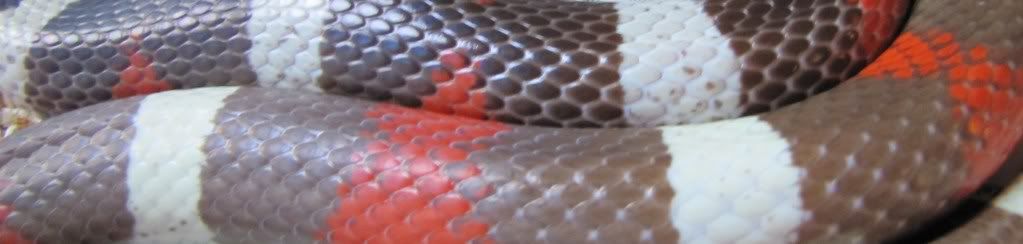
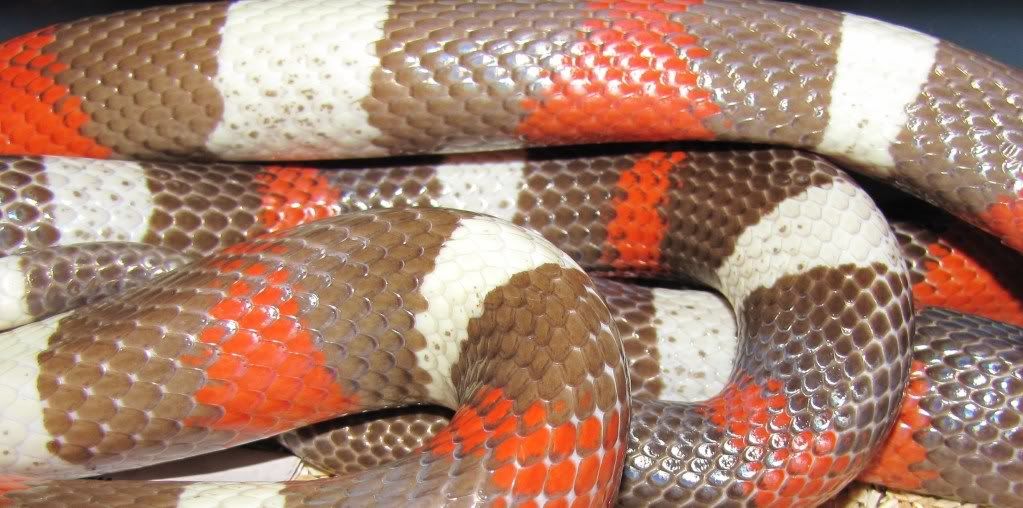
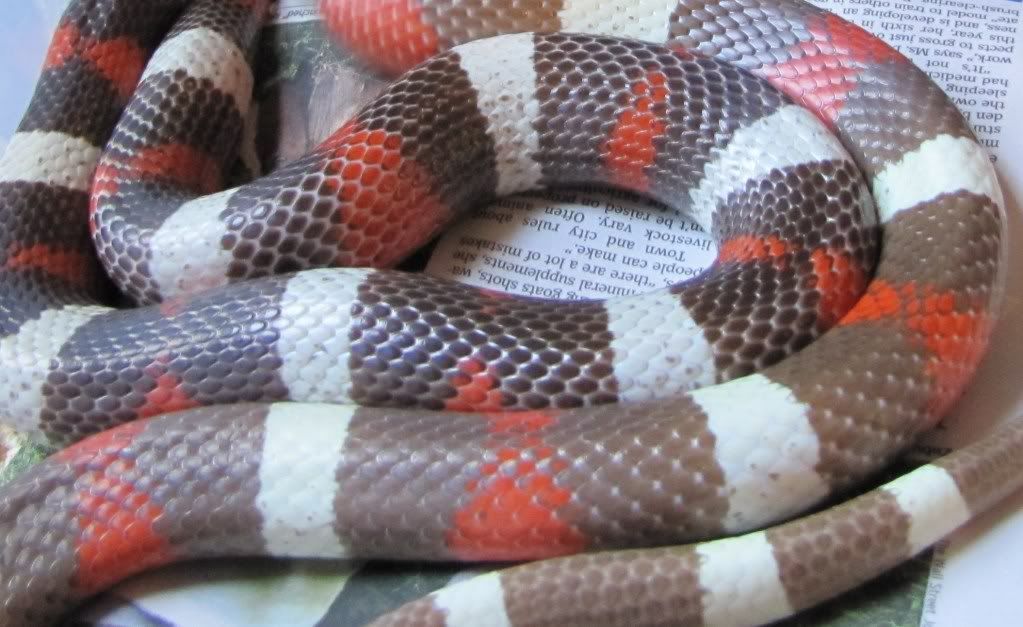
JY thanks for your input...Here check out these 2 pics from hatchlings last year, ones a hypo and one is a normal het for hypo from the same clutch. I am sure by these head shots you can tell the difference...( These are Lousiana line hypos)


-----
Jimmy Tintle

JYohe Apr 02, 2011 06:41 PM

Oh Yes....I can see it...the problem with most pics I see on here...is probably the cameras used by people...and talent to use them ....hypo anything when taken pics of, always seems to want to show more pigment than the animal has in real life ...

you get it....

.....Nice snake.....

........
-----
........JY

DMong Apr 02, 2011 01:12 PM

T-negative animals are totally amelanistic(albino) with zero dark pigment(melanin).

~Doug
-----
"a snake in the grass is a GOOD thing"

my website -Serpentine Specialties
JYohe Apr 02, 2011 06:45 PM

I should read what I wrote again......
I get that it isn't Neg...but hypo....but still has that good looking chocolate color to it.....

I have a T neg Calvert Co coastal....pretty critter....no mate ,but he is still cool...

all good lookers.......good luck.....

......hopefully I get Ltc eggs in a week or so...haven't had them here in like a decade.....ouch! (got duds last year from 2 females...getting closer they are)...
-----
........JY

Joe_M Apr 02, 2011 09:11 PM

>>
>>I have a T neg Calvert Co coastal....pretty critter....no mate ,but he is still cool...
>>
>>-----
>>........JY

Jeff, You have a T neg (amelanistic) coastal??? I think you mean you have a hypo (or what some believe may possibly be a T pos) coastal...

If you do in fact have a T neg coastal you need to get a camera and learn to post photos so that we can all see... I don't believe I've ever seen that one...
-----
Joe

DMong Apr 02, 2011 09:19 PM

"I think you mean you have a hypo (or what some believe may possibly be a T pos) coastal"

Ditto that Joe!

~Doug
-----
"a snake in the grass is a GOOD thing"

my website -Serpentine Specialties
JYohe Apr 03, 2011 08:49 PM

I dood it agin... ....hypo....yea...

.thought they were T pos.......I gotta stop writing while I am stupid....not neg.

I got a hypo....T whatever coastal calvert....

..I quit....LOL
-----
........JY

DMong Apr 02, 2011 09:14 PM

" I have a T neg Calvert Co coastal....pretty critter....no mate ,but he is still cool"

Again,...if your temporalis isn't ALL WHITE where the black normally was, it is a hypo, or "possibly" a t-positive(tyrosinaise some melanin possibly) which they are also commonly referred to, but NOT a t-negative AMELANISTIC temporalis. See what I mean??..LOL!

"T-neg"(tyrosinaise negative) means NO TYROSINASE to be converted into dark pigment(melanin), so they are pure white where the dark pigment would normally be. Whereas "t-plus"(tyrosinaise positive) means there is only the puplish/chocolate coloration where the tyrosinaise enzyme melanin precursor is present in the cell, but synthesizes very LITTLE to NO melanin, which gives the animal it's deep purple/lavender hue. Different amounts of tyrosinaise being synthesized into melanin by any given animal give different snakes their different unique looks, but the principle is the same regardless.

If you have an actual t-negative amel temporalis, you are sitting on the first one known to exist!..

~Doug
-----
"a snake in the grass is a GOOD thing"

my website -Serpentine Specialties
JYohe Apr 03, 2011 08:52 PM

Yes....I write the wrong crap in here ....bad week ...brain on backwards.....

I know what T neg and T pos are in snakes ,humans, etc....

...and NO I do not have a T neg ......

......typos.....

I quit ....again.....!!!

...
-----
........JY

mikefedzen Apr 02, 2011 05:17 PM

Do you have pictures of both snakes including their heads?

I've had probably 6 hypo pueblans, and 2 of them looked completely different than the rest of them. That pair I got from Bayou Reptiles and raised up from hatchlings. They looked more T plus than hypo, when compared to the other line of "hypos".
Image
-----
Mike
KingPin Reptiles
www.kingpinreptiles.com

KcTrader Apr 02, 2011 06:02 PM

Mike, nice looking clutch of apricot hypos? As we all know they don't like to stay still long enough for a good head shot....but I'll try tonight or tomorrow...All the photos are of the two snakes and their heads are pretty much the same as the black bands on the body.
-----
Jimmy Tintle

mikefedzen Apr 02, 2011 07:12 PM

Hey Jimmy,
That's actually a clutch of regular apricot pueblans.

Here is a picture of the "Hypo" female (possible T plus albino) I had from Bayou Reptiles. Not the best picture, but it's accurate as far as coloration goes...

and here is a picture of a different line of Hypo, a female around the same size, still Hypo, just more dull in coloration.


-----
Mike
KingPin Reptiles
www.kingpinreptiles.com

KcTrader Apr 02, 2011 07:29 PM

Mike do you have a male hypo pueblan to breed to both lines? Those are about the same as my pics in the original post.The coloration almost matches yours too...
-----
Jimmy Tintle

mikefedzen Apr 02, 2011 09:26 PM

The Bayou Reptiles pair I got in 06, in 09 the male escaped before I switched over to the rack system. And in 2010, I don't know what happened to the female but she died out of nowhere. I think she might of took down some bedding or something because she had a pretty odd bump in her but I didn't feel the need to cut her open. And I decided to get out of pueblans to focus on mexican milk snakes, that 2nd female Hypo I posted was sold with the last of my hypo apricots.

Those Hypos from Bayou Reptiles were nice looking, I definitely wish I still had those.
-----
Mike
KingPin Reptiles
www.kingpinreptiles.com

KcTrader Apr 02, 2011 09:39 PM

Sorry for the loss there Mike. Those albino Mexican milks you have are SWEET!!! too!!!! Good luck with your new endeavor!
-----
Jimmy Tintle

mingdurga Apr 03, 2011 08:18 AM

My original male hypo campbell came from Louisiana. Bred him to several normal females and got all normals with a few apricots thrown in.
Bred a pair of het hypos (female was apricot) and got 50% hypos and 50% normal. Sold this pair along with the male hypo. Just kept a pair of hets from my oreo fem. x male hypo. Will try breeding this season and maybe something different turns up.
Have a bunch of ph's and hypo babies from last season that I'm giving away in a few hours, locally, along with my entire corn collection. Didn't want to bother selling them over KS. I am not enthused with hypo campbells or T-plus, whatever they're called. I still like the high orange apricots and oreos. The hondo hypos are still the best in my opinion.

Mike

Site Tools