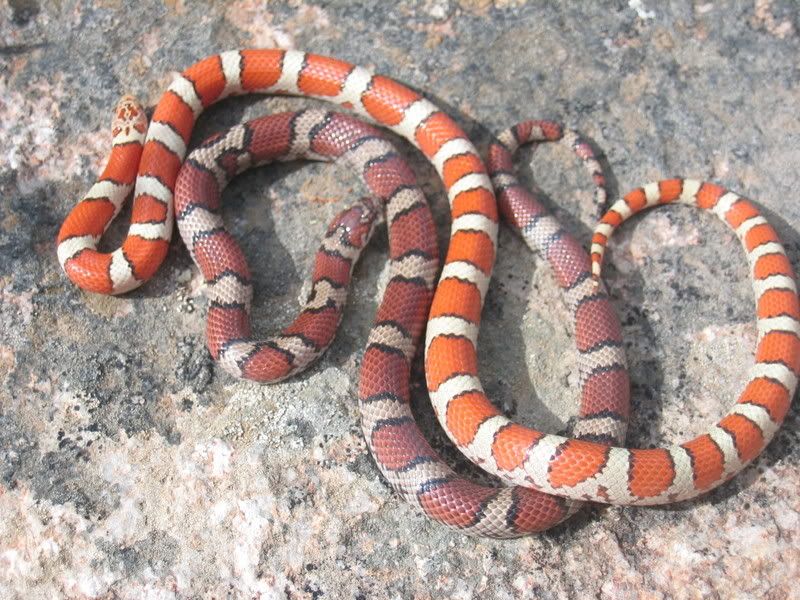
Does one look Hypo?

-----
Boneyardreptiles.com
Welcome to kingsnake.com's message board system. Here you may share and discuss information with others about your favorite reptile and amphibian related topics such as care and feeding, caging requirements, permits and licenses, and more. Launched in 1997, the kingsnake.com message board system is one of the oldest and largest systems on the internet.


.

-----
Boneyardreptiles.com
Nice. It reminds me a lot of this one I found last year.

Hypo??? I don't know. Easterns are extremely variable. I believe you'd have to breed it a couple generations and prove it to be inheritable.
-----
Joe
That is a beauty. Can you get a close up of the borders to the botches? Are they a more grey or still black?
Do the borders look like the ones in this picture?
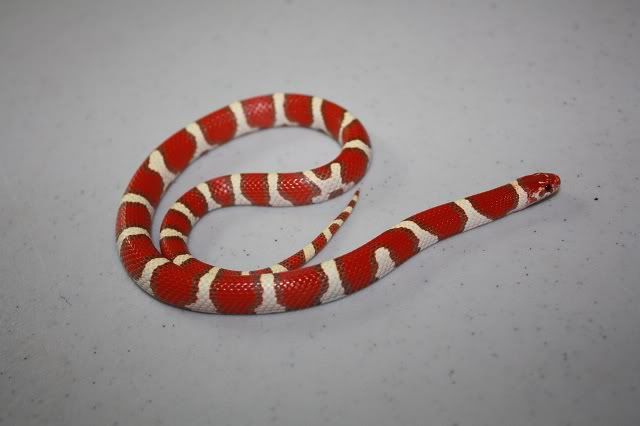
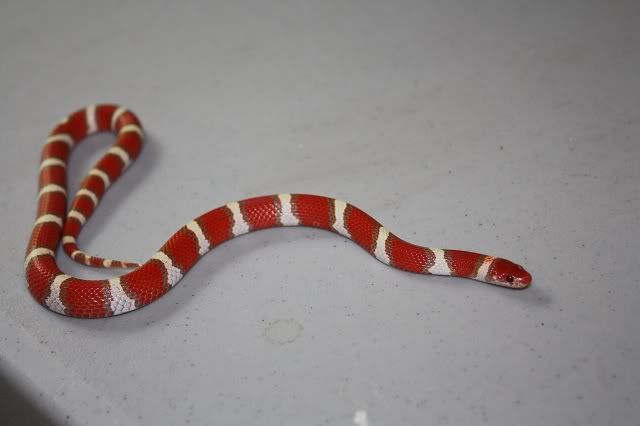
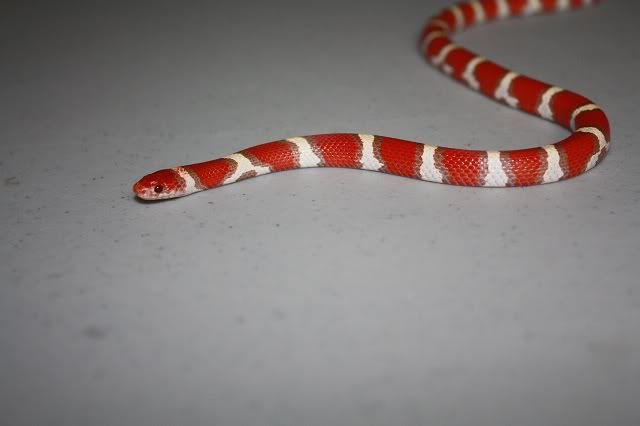
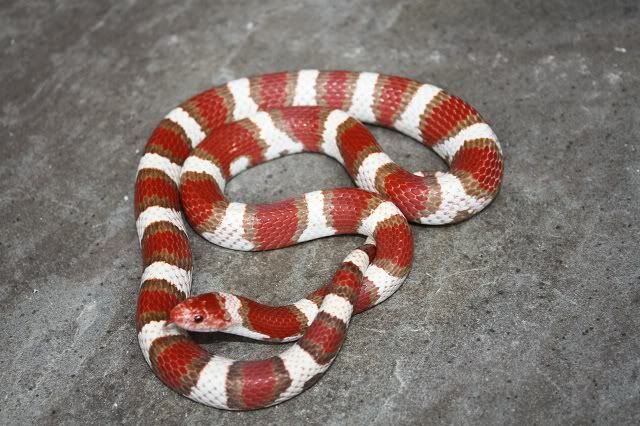
Dave
Dave that almost looks like a T positive? Amazing!
-----
King Snakes! Who can make a better mouse trap?
Jorge Sierra
My Site > www.Sierrasnakes.com
Hey Jorge - in my opinion, it is a T ! This has been debated before but the hypo Calvert Co. MD Coastal plains milks look T to me.
I'm sure you will agree that is the very same "chocolatey" look that the nelsoni you and Shannon have, and that Christos Skliris of France originated by total accident in 2005. They could certainly be T-plus, and probably are, just no way of really knowing for certain that absolutely NO melanin is present in the melanophores without an actual "L-dopa" test done on some scale tissue. They sure as hell look alot different than most other known types of hypos, that's for darn sure... . I am thinking this particular type of tyrosinaise-plus gene probably does allow a small given amount of melanin to be synthesized and produced within the melanocyte because it is not really the light purplish/lavender phenotype we are accustomed to seing in some of the other t-plus type animals, where there is typically no melanin processed, just the presents of the lavenderish/lilac colored tyrosinase?.
Another angle to this would be that it could even be caused by an OVERABUNDANCE of tyrosinase within the cells, which in turn might give them a more dark "milk chocolate" look to them, who knows???
The thing that alot of people don't often think about is that all of these different types of T and hypo in all these different snakes in the hobby more than likely deal with some very closely related causes and mechanisms, but depending on some of the precise chemical and enzyme cell dynamics in any given type of these different animals(and different T-plus strains), it can make some of them look very different to the human eye than others in regards to their different shades and intensities,.....know what I mean?.
Anyway, definitely a killer animal there Dave, I've always thought those were just insane man.
~Doug
-----
"a snake in the grass is a GOOD thing"

Can't tell from the dark and far away pics, but if it has lighter, milky, translucent borders as Dave mentioned, then it definitely is a hypo. Also as Joe said, they can be EXTREMELY variable, and some are simply a very reduced "pattern" of black pigmented borders that can be interpreted several different ways technically.
Very nice either way, that's for sure!!
~Doug
-----
"a snake in the grass is a GOOD thing"
I personally don't think it looks hypo, young eastern milk snakes tend to be a lot lighter than adults.
-----
Mike
KingPin Reptiles
www.kingpinreptiles.com
Hypos can be difficult to determine sometimes, and with better photos we could come to a better conclusion here for you. With that said, neonates are often brighter then subadults or adults.
I for one think your chances of that triangulum being a hypo is very good because it's such a brightly colored milk, but would like to see better photos.
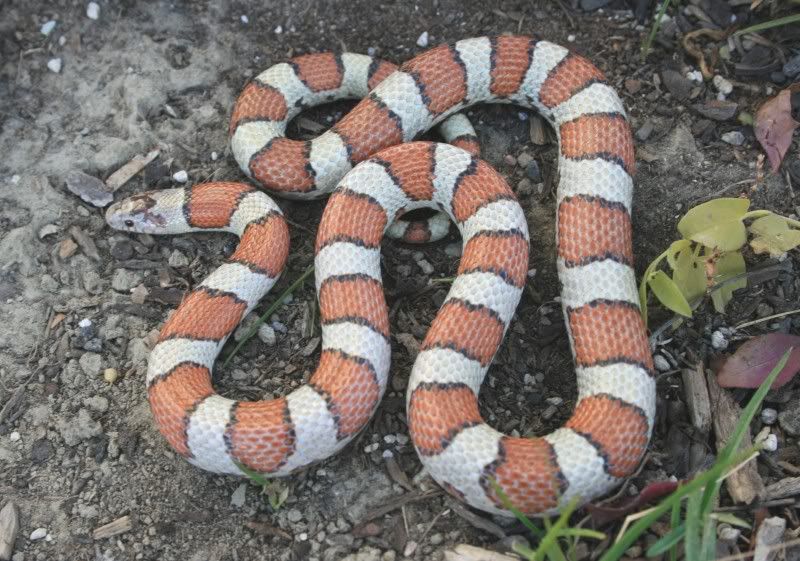
Here are a few hypo syspila with much variability, but all hypos non the less.
This adult ♀ is a little washed out for a hypo but produces bright screamer progeny.
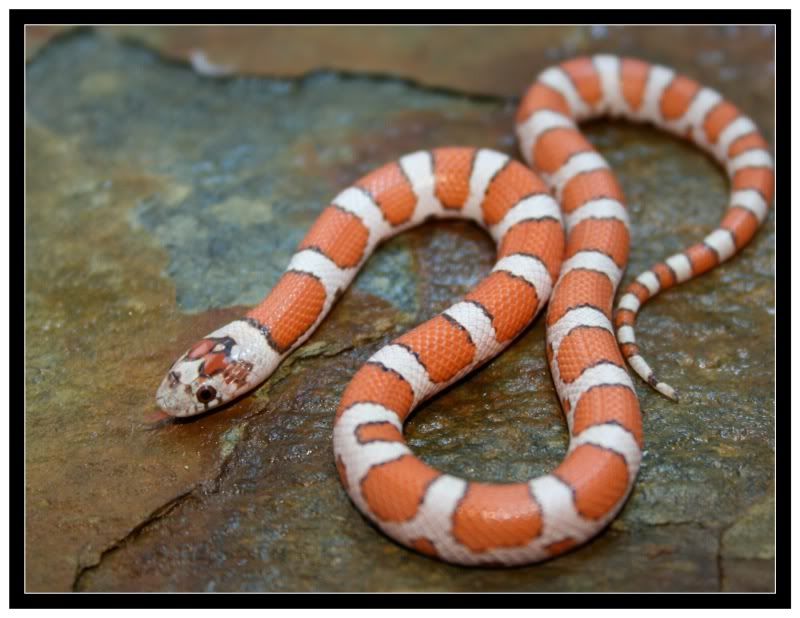
And here is one of her neonate for example.
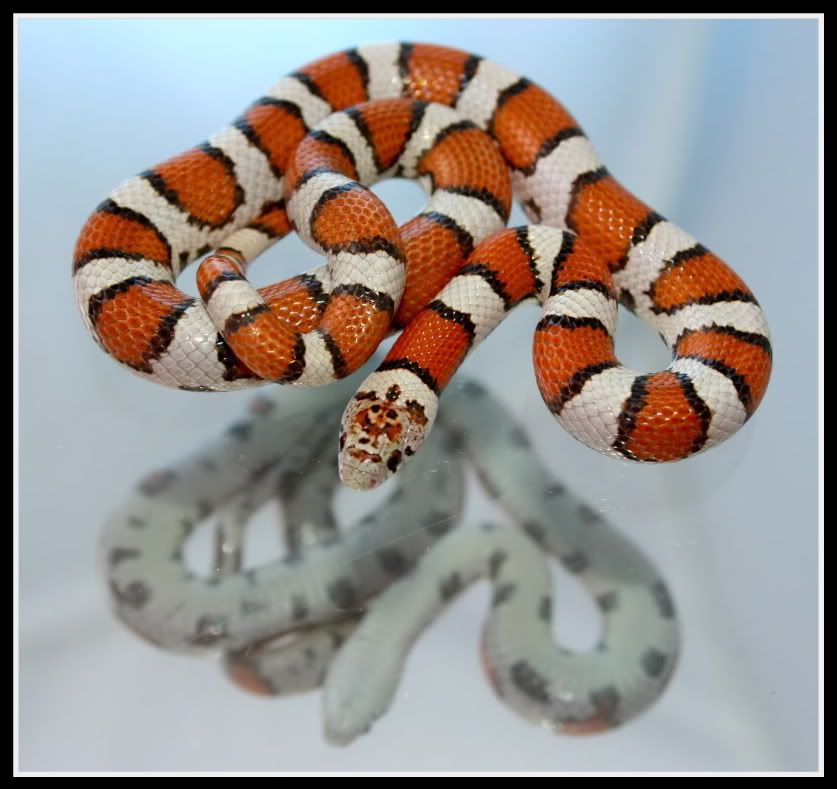
This is a hypo that I wasn't sure about as a neonate, but has grown into a for sure hypo over the last couple of years.
Adult ♂ hypo.
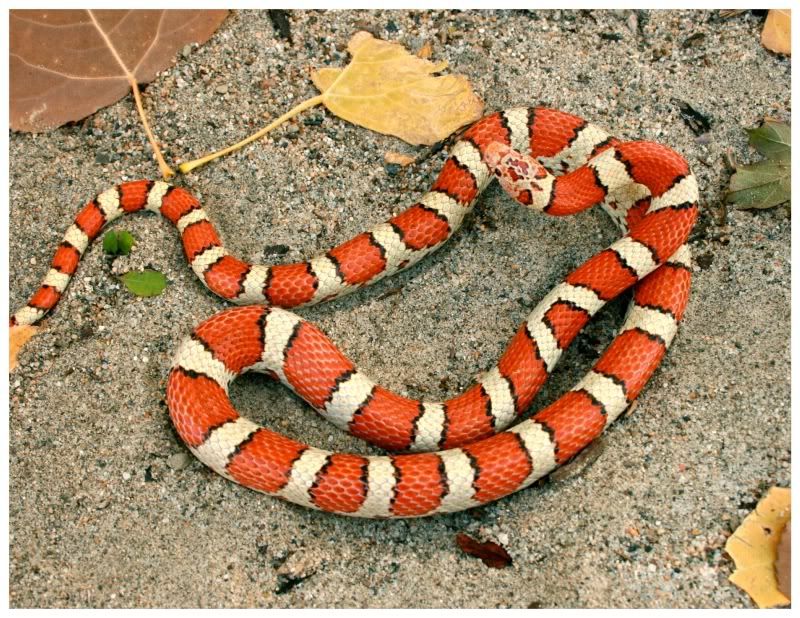
Above ♂ with a normal syspila. Best of luck, oh, and the hypo Dave Niles posted is one of the best looking North American milk hypos I've ever seen. Come on Dave you're killing us all with that one.
your hypo syspila may win in a beauty contest! That adult male is smokin!!
You see, this is why I don't like coming over here on this forum. I want to buy everything I see, lol! those are gorgeous Terry!
-----
King Snakes! Who can make a better mouse trap?
Jorge Sierra
My Site > www.Sierrasnakes.com
I've caught a lot of juvenile eastern milks and that one looks to be within the normal realm of variation. However, it is hard to pick out any nuances from those photos.
Help, tips & resources quick links
Manage your user and advertising accounts
Advertising and services purchase quick links
