Reptile & Amphibian Forums

Welcome to kingsnake.com's message board system. Here you may share and discuss information with others about your favorite reptile and amphibian related topics such as care and feeding, caging requirements, permits and licenses, and more. Launched in 1997, the kingsnake.com message board system is one of the oldest and largest systems on the internet.

Click for 65% off Shipping with Reptiles 2 You
Click for ZooMed
Click for 65% off Shipping with Reptiles 2 You

White sides at night

DMong May 27, 2011 12:22 AM

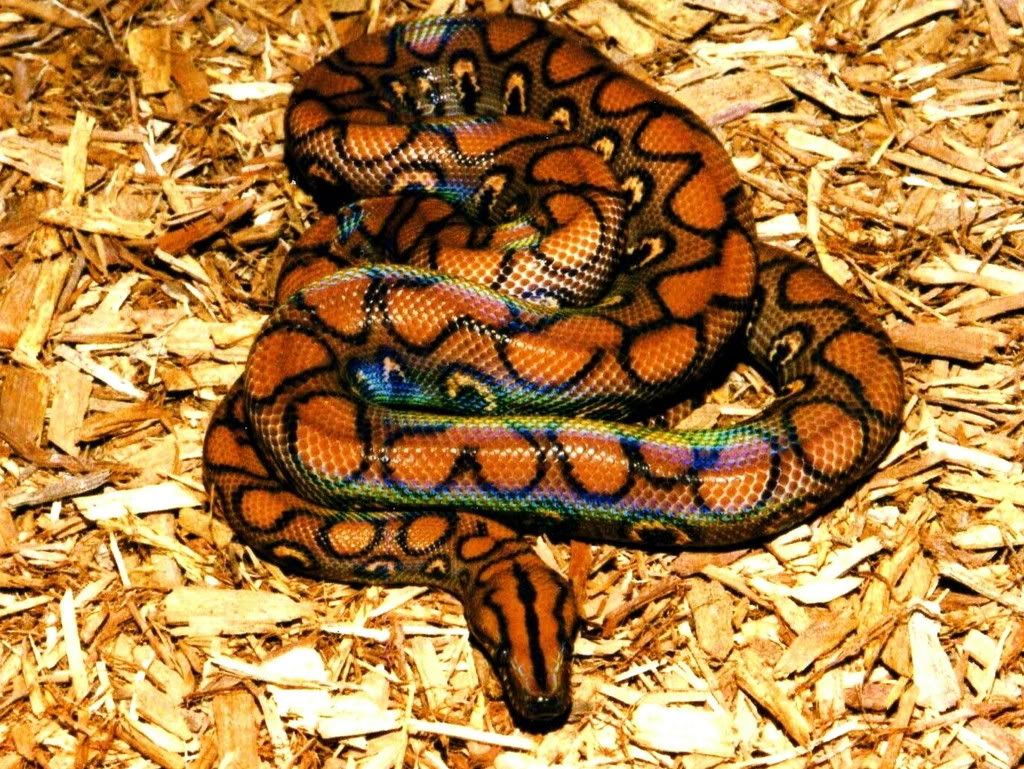
This has probably been brought up many countless times over the years here, but since my real forte has always been colubrids, I would like to here some of your ideas on exactly why BRB's get MUCH whiter on their sides at night. Many years ago I had a good group of "Bill Lamar" line BRB's I got from another old-timer by the name of Bob Roth of "Animals of Distiction", and when I would walk into the snake room at night and flick on the light, the color difference on the lower sides would then be freakin MIND-BLOWING!. I have some possible ideas, but what seems to be the popular consensus here as to the reason for this to happen when it is dark. No real temp difference, just dark.

cheers, ~Doug

-----
"a snake in the grass is a GOOD thing"

Replies (12)

Jeff Clark May 27, 2011 07:43 AM

Doug,
...Really good question. I do not know the answer. As you mentioned it probably does not have anything to do with temperature regulation. The snakes are nocturnal and secretive and seem to not bask in the daytime sun to gain heat like many other snakes. Perhaps it has something to do with being less visible to predators and/or prey? If that were the case it would initially seem that the color change was exactly wrong. A lighter color would be easier to see at night. The pattern of ground color with dark line markings and then super bright crescents would all seem to make the snake more ratherr than less visible in the dark. The nighttime color vision of potential predators and prey may be very different than what we would think and so the light sides with darker markings and bright highlighted crescents may be viewed diffeently than we would assume. Rather than the change to light side color at night being for the above reasons I think it instead may have something to do with reproduction. All Rainbow Boas seem to have this ability and can do it at all ages but it seems more pronounced in some of them such as the Brazilians and the ones more similarly marked like them than it does in others. I have noticed that it is most pronounced in mature snakes and more so in females than males and this is what makes me think it may be related to reproduction.
Jeff

DMong May 29, 2011 10:02 PM

Thank you VERY much for your input, both Jeff and Cliff!. Yes, in all of my 44 long years of owning, studying, reading about, and breeding many countless hundreds of snakes, I have never yet read anything regarding this whiter coloration issue in the BRB's. It is most bizarre for sure., or at least so we HUMAN'S think anyway, as Jeff mentioned as well..LOL!.

All of your possible ideas were very interesting, and were also ideas that I myself was tossing around too. One thing I am always telling people in the snake hobby, and that is sometimes the more one finds out about certain things, the LESS one seem to actually know about them..LOL!. The actual dynamics of how pigment cells (chromatophores) work is like this. I see mutations improperly termed all the time in this hobby. some mutations are very simply termed, while others can be as complex as the day is long, and may never be thoroughly understood, if at all.

Thanks again guys for your responses, I just knew this wasn't something that the answer was going to be common knowledge, or something that is seen brought up in any of the numerous snake books that I have ever read over the years either, that is the reason I figured I would come over hear to ask about it..

cheers, ~Doug
-----
"a snake in the grass is a GOOD thing"

curaniel May 30, 2011 03:57 AM

It's really interesting. When I got my little BRB out tonight, she was as dark as she gets. After she sniffed around for awhile, I watched as she brightened up before my eyes. She's not sexually mature yet, but the change was very noticeable.
-----
~Cynthia

"And in the spring, I shed my skin and it blows away with the changing wind..."

DMong May 31, 2011 08:10 PM

LOL!,...yeah, isn't that CRAZY!!..

It's definitely bizarre, and basically unexplainable. In over four decades of working with snakes, I have NEVER heard, or read of this phenomenon being brought up whatsoever.

~Doug
-----
"a snake in the grass is a GOOD thing"
curaniel Jun 01, 2011 01:12 AM

What seems crazy is that no one's gotten a grant to study it!
-----
~Cynthia

"And in the spring, I shed my skin and it blows away with the changing wind..."

Jeff Clark Jun 01, 2011 09:28 AM

Doug,
...We have been talking about it here on kingsnake since before this rainbow forum and the Rainbow Boas were covered in the boa forum.
Jeff

rainbowsrus May 30, 2011 04:12 PM

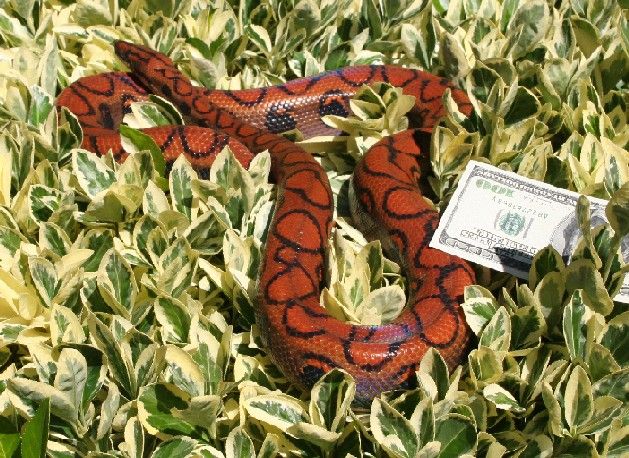
I honestly do not know. All the theories proposed are all possible in my mind. One other point not mentioned is whatever the reason, it is likely hardwired in the genetics and that it is showing up in captivity might have nothing to do with external influences like temp variation. Only thing that does seem to trigger it is nightfall.

Whatever the reason, it is pretty cool to see.....

Same snake, SAME day, about 12 hours apart.....


-----
Thanks,

Dave Colling

www.rainbows-r-us-reptiles.com

0.1 Wife (WC and still very fiesty)
0.2 kids (CBB, a big part of our selective breeding program)

LOL, to many snakes to list, last count (02/01/2010):
42.61 BRB
27.40 BCI
And those are only the breeders

lots.lots.lots feeder mice and rats

DMong May 31, 2011 08:19 PM

HAHAA!!,....Yep!, you depicted it PERFECTLY in that sequence of shots....great stuff indeed!

I have even wondered if anxiety of some sort bring this on, but it seems VERY unlikely this is the case because I usually(if not always) noticed it when they were relaxed in their enclosures at night in the dark too. I assume your bottom pic was also at night when you took her out of the enclosure, correct?

One of life's true mysteries..LOL!..

~Doug
-----
"a snake in the grass is a GOOD thing"
waspinator421 Jun 02, 2011 09:52 AM

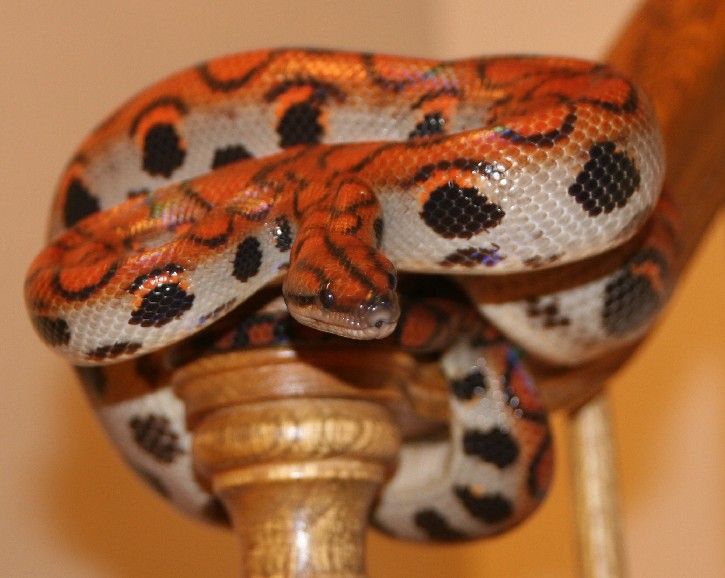
Dave, those pictures show it really well! Just like every one else here I've often wondered what the purpose would be to such a color change. I've noticed variations in the intensity of individual snakes. Some get really high sides like the one in your pic, and I've seen some where some of the scales in the background color don't change as much as the surrounding scales... giving it a more light speckling look.

I wonder if they do it more during certain times of the year. I certainly do not see my BRBs get their white sides every night. Would be very interesting if someone were to observe the frequency and intensity a few times a day for at least a year.... or perhaps from baby to breeding age. Taking temperature readings as well.

Another interesting note is that I occasionally see the white sides in the daytime. Here is an example:

-----
Aubrey Ross

©
www.SlipstreamSerpents.com

DMong Jun 02, 2011 03:53 PM

VERY interesting indeed, Aubrey!

One would have thought it would have been studied in more detail in recent years...

Excellent photo, as were the others!

~Doug
-----
"a snake in the grass is a GOOD thing"

DMong Jun 03, 2011 10:44 AM

Thanks a bunch, Cliff!

Those are perfect depictions of the bizarre phenomenon. I'm sure the exact reason/cause of this, and precise chromatophore dynamics involved with this will continue to be a "head-scratcher" for quite a while yet until it is intensely studied.

The fact that a snake can "de-melanize" so quickly is just mind-boggling..

Thanks again for the great shots there Cliff!

~Doug
-----
"a snake in the grass is a GOOD thing"

Jeff Clark Jun 03, 2011 08:12 PM

Cliff,
...I think I see it more often during the breeding season though I definitely see it often at other times of year that seem to be outside the breeding season.
Jeff

Site Tools