Reptile & Amphibian Forums

Welcome to kingsnake.com's message board system. Here you may share and discuss information with others about your favorite reptile and amphibian related topics such as care and feeding, caging requirements, permits and licenses, and more. Launched in 1997, the kingsnake.com message board system is one of the oldest and largest systems on the internet.

Click here to visit Classifieds

Rarest Cal King

trivirgata Aug 15, 2011 10:44 AM

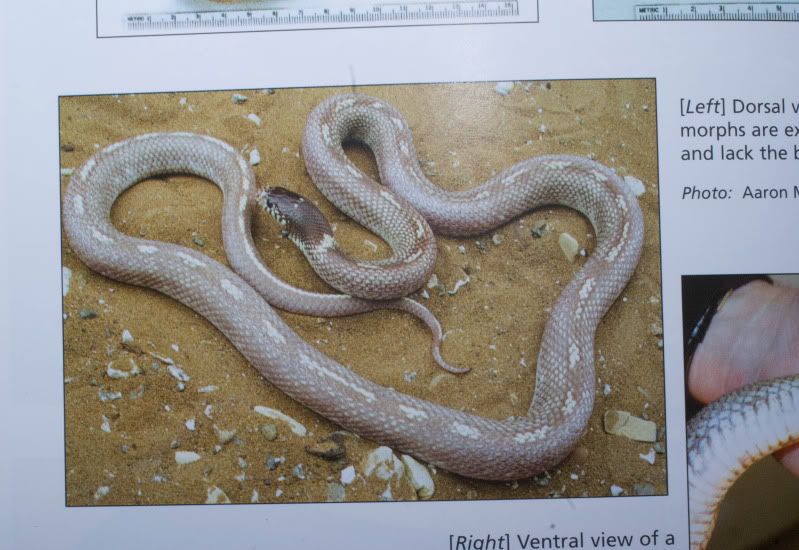
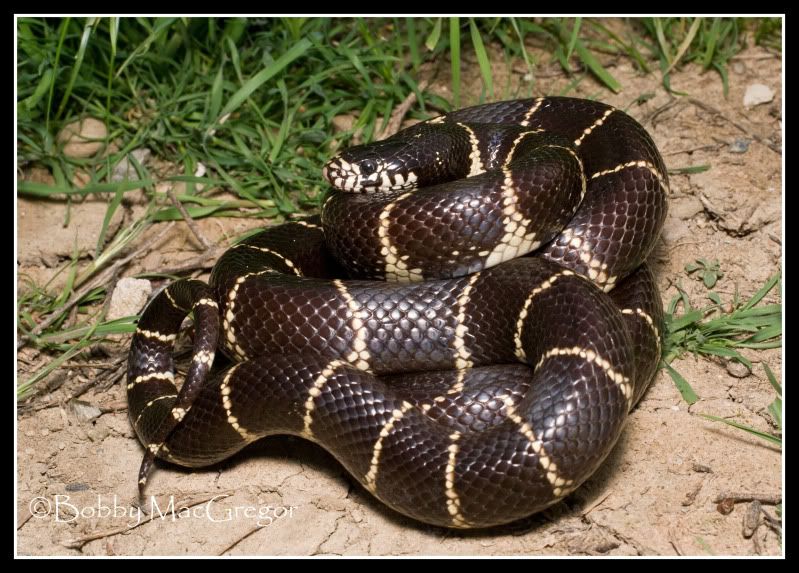
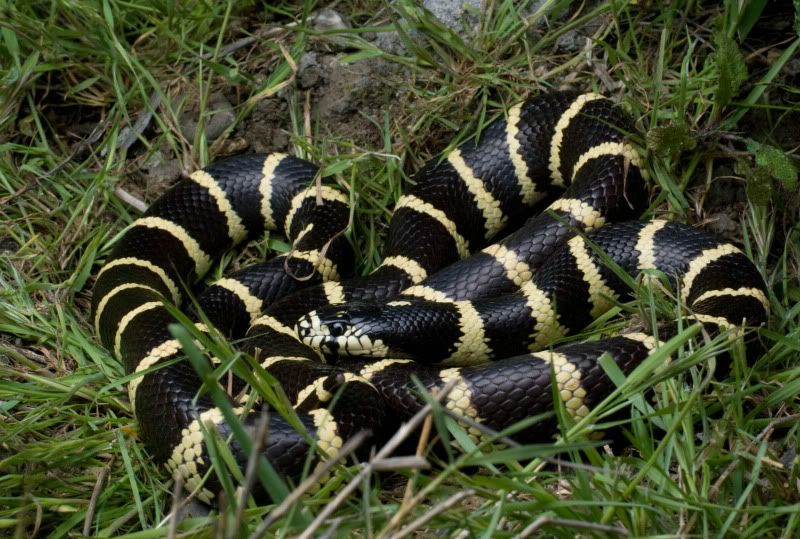
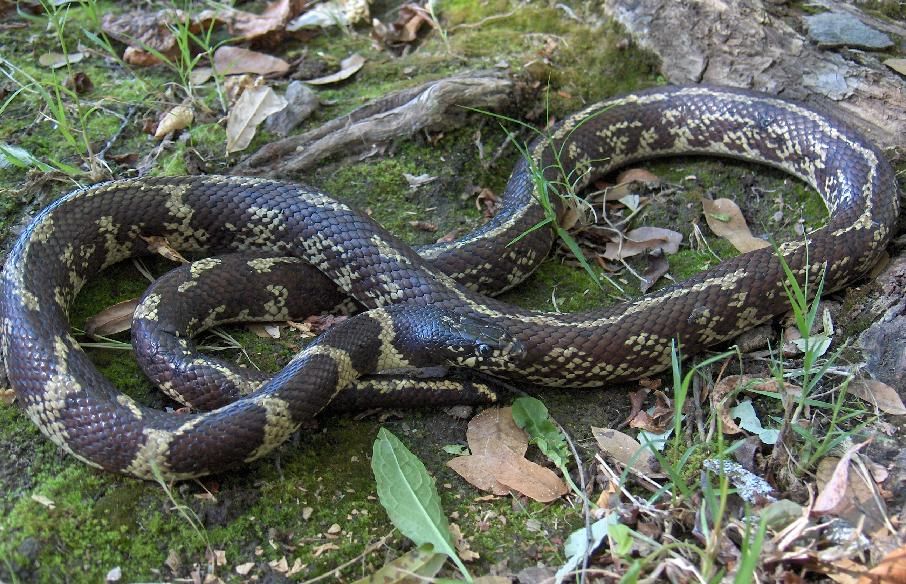
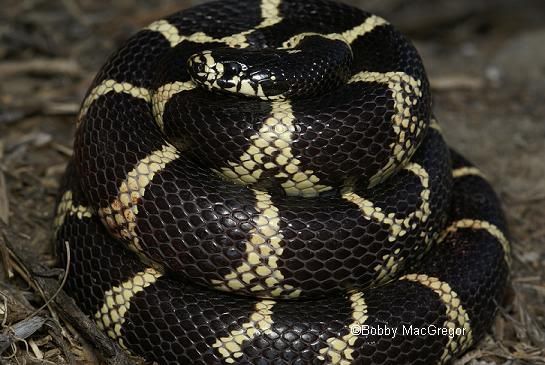
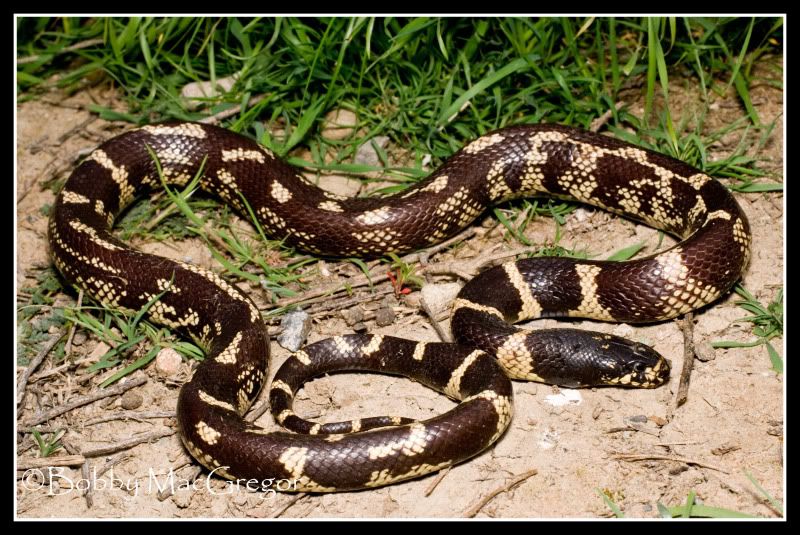
Opinions wanted.........I your opinion, what is the rarest naturally occurring morph in the wild. IMO, it would be the unicolor or reduced pattern morphs found in LA County. The animal pictured in Hubb's book that the late Lloyd Lemke had is the coolest and rarest Call King I have seen.

Jer

Replies (65)

rosspadilla Aug 15, 2011 10:59 AM

Most of the really rare Cal king morphs are from L.A. Co. which probably has a lot to do with the loss of habitat. All we can go by is what's on record.

Unicolor morph- Only one found that I know of.

Striped Mud morph- Only two found that I know of.

Blotched mud morph- Only two on record I know of.

Then there is the Ghost Eiseni morph that was produced in captivity from a pair a wild caught (I believe) adults. I guess that doesn't count but if it ever did turn up in the wild, it would be considered a very rare find.

rosspadilla Aug 15, 2011 01:54 PM

bmac Aug 15, 2011 11:49 PM

Ross said,
'Then there is the Ghost Eiseni morph that was produced in captivity from a pair a wild caught (I believe) adults. I guess that doesn't count but if it ever did turn up in the wild, it would be considered a very rare find."

That morph was produce by a gravid Black Belly that Keasler found in Fresno County.

Thanks
Bobby MacGregor

Bluerosy Aug 15, 2011 11:57 PM

"Ross said,
'Then there is the Ghost Eiseni morph that was produced in captivity from a pair a wild caught (I believe) adults. I guess that doesn't count but if it ever did turn up in the wild, it would be considered a very rare find."

That morph was produce by a gravid Black Belly that Keasler found in Fresno County.

Thanks
Bobby MacGregor"

--------------------------------------------------------------------------------

Anyone have a pic of one of the Ghost Eiseni?
-----
www.Bluerosy.com

These animals live in nature, without you. They know when to eat, when not to eat, how much to eat, etc. Why do you think they cannot do that in captivity? They do know, you are suppose to support what THEY DO, not hold back food because you keep them at temps they would not pick.
Frank Retes

Kerby... Aug 16, 2011 12:12 AM

Actually the Ghost/Palomar and the "blackbellies/hypermelanistic" are TWO different recessive genes.

Hubbs freedom in using the "eiseni" in identifying the Mendota/hypermelanistic gene was to hide the locality that it came from (Mendota, CA). Has nothing to do with the Ghost/Palomar cal kings. Hubbs specifically told me that he did not want the name "Mendota" or "Davis" associated with the hypermelanistic gene to prevent wild snakes from over collection.

That came from Hubbs mouth and into my ear.

Just saying.....

Kerby...
-----
Life is like a bunch of fish in an aquarium....we all get along (bonding) until I want to eat you....and I do.


bmac Aug 16, 2011 12:32 AM

Kerby,
I think you're are confused with what Ross and I are talking about. Keasler Collected a gravid king that produced a very light colored almost ghost in appearance snake. If you go to page 84 on Hubbs' kingsnake book there is a picture of that morph. It is titled Ghost Eiseni

Aaron Aug 16, 2011 12:44 AM

Yeah, Bobby is right. There are two totally different "ghosts", niether of which are true ghosts aka hypo anery. There are the Palomar Ghosts which are fairly well known but there was another king called a ghost that came from a wc gravid blackbelly. It has the pattern of a blackbelly but almost in reverse as the belly is solid yellow instead of black/brown and instead of being dark hypermelanistic it is light brown, almost hypo looking.

This snake is pictured in Hubbs book. I used to own this snake but never bred it and I gave it away. I have also talked to a resident in the area it was collected who may have seen one. I used to be allowed to hunt on his property and he described a king he saw and the description was like the ghost eiseni to a T.
-----
www.hcu-tx.org/

bmac Aug 16, 2011 12:58 AM

This pic does not do the animal justice.

You want one now don't you Kerby. lol

rosspadilla Aug 16, 2011 02:48 AM

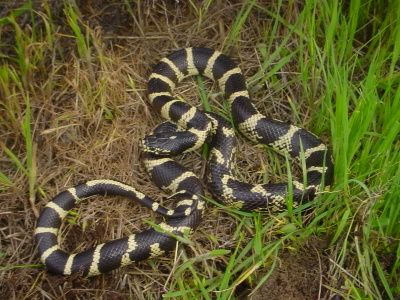
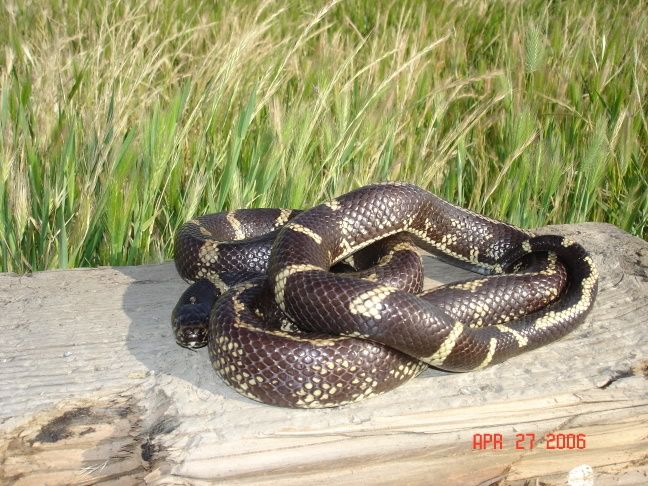
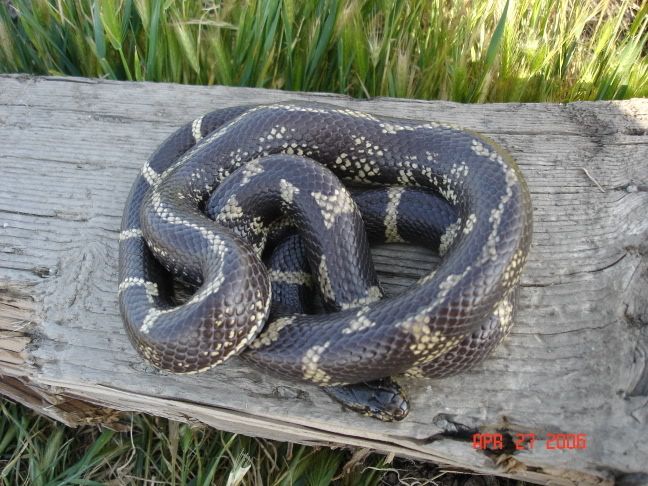
Thanks Bobby. That would make it wild caught, so it is just as rare as any morph that has only been found once. Here is the picture.

rosspadilla Aug 16, 2011 02:58 AM

Here's a shot of it you wont find in the book.

a153fish Aug 16, 2011 10:23 AM

is this animal called?
-----
King Snakes! Who can make a better mouse trap?
Jorge Sierra

My Site > www.Sierrasnakes.com

DMong Aug 16, 2011 12:14 PM

It's known as a "ghost" Eiseni morph Cal. King. Not a hypo x anery, but it's phenotype is extremely pale and very unique.

~Doug
-----
"a snake in the grass is a GOOD thing"


serpentinespecialties.webs.com

Kerby... Aug 16, 2011 12:33 PM

So now we have two different cal king morphs called Ghost?

And two different cal king morphs called "eiseni"?

Kerby...
-----
Life is like a bunch of fish in an aquarium....we all get along (bonding) until I want to eat you....and I do.


rosspadilla Aug 16, 2011 01:14 PM

So now we have two different cal king morphs called Ghost?

And two different cal king morphs called "eiseni"?
I don't know why Hubbs named it a ghost other than he probably thought it was a cool name. So in doing that, it was a good idea to add the Eiseni name to it because it distinguishes it from the Palomar Ghost and shows its relation to the Eiseni. It was born from an Eiseni parent.

DMong Aug 16, 2011 01:48 PM

Yeah, Hubbs doesn't know the first thing about genetics, and he will be the first to admit this too. I talked to him on the phone a long time ago, and when I mentioned some basic genetic stuff, the phone went earily silent like I was talking a foreign language or something..LOL!

He just named it that because it was very pale and faded I'm sure without thinking about it confusing anything. He should have called it a "bleached" or "pale" Eiseni morph maybe..LOL!

~Doug
-----
"a snake in the grass is a GOOD thing"


serpentinespecialties.webs.com

Bluerosy Aug 16, 2011 02:39 PM

Yeah, Hubbs doesn't know the first thing about genetics, and he will be the first to admit this too.

Yeah and he is highly allergic to mice as well. That why he chooses to keep lizard feeders.
-----
www.Bluerosy.com

These animals live in nature, without you. They know when to eat, when not to eat, how much to eat, etc. Why do you think they cannot do that in captivity? They do know, you are suppose to support what THEY DO, not hold back food because you keep them at temps they would not pick.
Frank Retes

rosspadilla Aug 16, 2011 02:54 PM

Or maybe the stone washed Eiseni morph. lol

DMong Aug 16, 2011 09:41 PM

"Or maybe the stone washed Eiseni morph"

HAHAA!!!..

~Doug
-----
"a snake in the grass is a GOOD thing"


serpentinespecialties.webs.com

Kerby... Aug 16, 2011 03:11 PM

We are now throwing out terms that are already being used in the same species.

Brian told me a few years a go in person (before his book came out) that he was going to start calling my Mendotas (hypermelanistics) "eiseni" to divert the locality (Mendota & Davis) attached to the snake in order to stop people from going to those locales and looking for those snakes.

The term Ghost/Palomar refers to a specific recessive gene which IS NOT the same recessive gene of hypermelanistic that occurs in Mendotas and Davis blackbellies). The Davis blackbellies and the Mendotas is the same recessive gene, but is NOT the same gene that is the Ghost Palomars.

Someone needs to breed the snake in this thread to a hypermelanistic to see if it is the same or to a Ghost/Palomar to see if it is the same.

A few years back I bred a Ghost/Palomar to a Mendota hypermeleanistic and produced double hets....they ARE NOT THE SAME gene.

Kerby...
Image
-----
Life is like a bunch of fish in an aquarium....we all get along (bonding) until I want to eat you....and I do.


rosspadilla Aug 16, 2011 04:12 PM

Its too late now he already wrote the book and doesn't want to hear it. lol I tried telling him this one time over the phone and he got angry fast and tried to talk over me, well actually he did. lol I didn't like how he classed the striped mud morph with the blotched mud morph. The striped mud morph should have been classed with the Whittier morph. He should have called it a striped Whittier morph, not a striped mud morph, but there's nothing that can be done now. The book is out and I guess people will have to figure this stuff out for them selves.

Dobry Aug 16, 2011 04:30 PM

Thanks for the clarity Kerby,

I hatched some of those Mendotas this year from the pair I got from you, and some splendida's too. Those mendota black bellies are stellar!

Here is a pick of a solitary venomous creature!

-----
"We are challenging the soft bigotry of low expectations" George W.

Kerby... Aug 16, 2011 04:55 PM

Glad you produced some. They are nice looking for sure.

Kerby...
-----
Life is like a bunch of fish in an aquarium....we all get along (bonding) until I want to eat you....and I do.


bmac Aug 16, 2011 07:41 PM

I personally don't like the term Herpermelanistic to describe the Eiseni/Black Belly gene. I think it is too vague of a term. I have found snakes that are very dark that express the gene, but I have also found others that are very light as well.
I think the term Eiseni work because we all would know exactly what type of king it is.

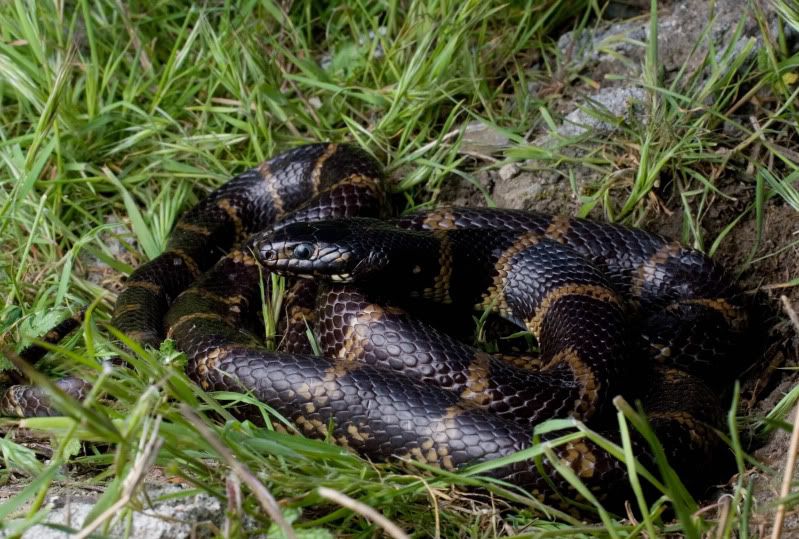
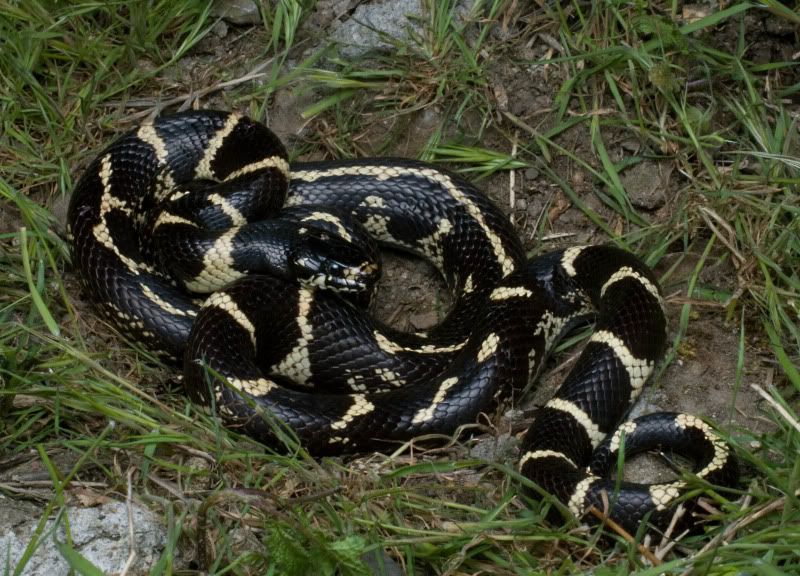
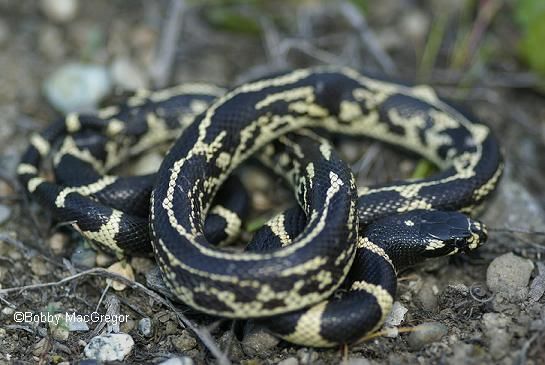
Here is a dark Eiseni I found this year:

And here is a light Eiseni I found. She was only a couple hundred feet away the male above.

If I had kept them back to breed I'm sure they would have produced some animals that where dark and other that where light and some that are in between.

To prove my point further here is another animal that I found only a stone's throw away from the dark one. I would consider him to be intermediate of the two.

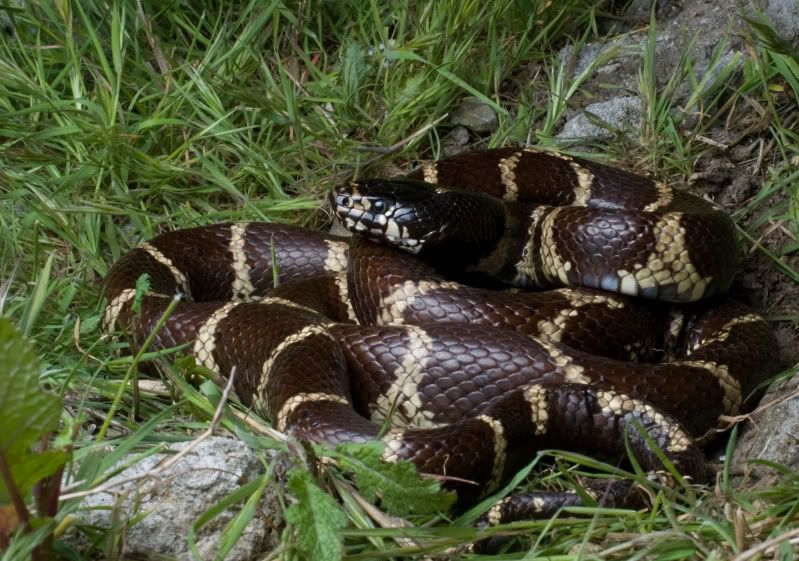
These next animals are normal I have found in the same area. I only post them so you can have an idea of what normal's can look like.

Thanks
Bobby

Kerby... Aug 16, 2011 08:07 PM

The gene of hypermelanism ("black-bellies" is a single recessive gene, not a dominant gene. And I did breed the Davis to the Mendota and got all the same. I also bred a Blizzard (albino & hypermelanistic) to an albino and got all albinos (het hypermelanistic) and also bred the Blizzard to a Mendota and got all hypermelanistics (het albino).

For wild-caught snakes then that would be a good distinguishing name, but for captive breeding a recessive gene is what it is and locality is no longer there......unless one is breeding strictly locality to same locality.

When I bred the Mendotas to the Davis, I got all hypermelanistics and can no longer them either Mendotas or Davis....although they look exactly like them.

Kerby...
-----
Life is like a bunch of fish in an aquarium....we all get along (bonding) until I want to eat you....and I do.


rosspadilla Aug 16, 2011 08:46 PM

That is very interesting, Bobby. No doubt its the same gene but its odd how they change from one color to the next. Those are some great shots as well!

bmac Aug 16, 2011 09:17 PM

Yeah they are sooo much fun to find. Hubbs and I found a crazy looking BB a couple years ago. If you look in his book on page 85 he calls it the "Speckled Eiseni". What made it a little more unique is that it doesn't have a Black Belly.

Sorry for hijacking your thred.

Thanks!
Bobby

rosspadilla Aug 16, 2011 10:21 PM

No that's fine. Was that the same one crossing the road? I don't have the book with me right now.

bmac Aug 17, 2011 12:03 AM

The one that Hubbs and I found we flipped. It could be if he latter took a pic of it in the road.

Dobry Aug 16, 2011 11:03 PM

Only one of those pics looks to be expressing the hypermelanistic trait. The others are probably hets or not. Why would you think that a gene that is recessive, would be expressed in 100% of the population? If you did take them and breed them you would get the normal odds associated with dominant and recessive alleles. It has already been done.
-----
"We are challenging the soft bigotry of low expectations" George W.

Bluerosy Aug 16, 2011 11:45 PM

Only one of those pics looks to be expressing the hypermelanistic trait. The others are probably hets or not.

I was kinda scratching my head and thinking the same thing.
-----
www.Bluerosy.com

These animals live in nature, without you. They know when to eat, when not to eat, how much to eat, etc. Why do you think they cannot do that in captivity? They do know, you are suppose to support what THEY DO, not hold back food because you keep them at temps they would not pick.
Frank Retes

bmac Aug 17, 2011 12:26 AM

Dorby,

This is exactly the point that I was trying to make about that gene. I don't like it when people call them hypermelanistic. The point that I was trying to make is that the gene expresses many different looks. The can be HYPERmelanistic, HYPOmelanistic, banded, striped, banded striped combo, speckled, and any combo of the mentioned looks to them. Really they are just a crazy looking snake. The one thing that they all have in common 95% of the time is that they have a black belly. This is obviously the biggest indicator of the gene.

The Eiseni gene that we are talking about is not shown in 100% of the population. We find way more normal banded king than we do Eisenis. The odds are about 1 in every 3 to 4 kings we find will be Eiseni.

I have heard many different names that describes the recessive gene in question.

Here are a couple of them:
Medonta, Davis, Delta, hypermelanistic, Eiseni, and Black Belly.

Here is a ventral shot

I hope I have made more sense out of this thread than I did the other one.

Thanks
Bobby

Kerby... Aug 17, 2011 12:38 AM

**I don't like it when people call them hypermelanistic.**

It IS a simple single recessive gene. That is not an opinion. And yes a cal king can be displaying that recessive gene and be aberreant, banded, or striped (which are dominant genes).

Hypermelanism is a recessive gene. Not all the snakes that are pictured are displaying the recessive gene of hypermelanism although they are from the same locale.

And a lot of cal kings can display the the "black belly" and not be displaying any recessive gene.

**The can be HYPERmelanistic, HYPOmelanistic,**

Those are 2 separate recessive genes.

**banded, striped, banded striped combo, speckled,**

Those are dominant genes.

Kerby...
-----
Life is like a bunch of fish in an aquarium....we all get along (bonding) until I want to eat you....and I do.


bmac Aug 17, 2011 01:36 AM

The simple recessive trait gene that we find in the Central San Joaquin Valley is a crazy looking snake. The point that I am trying to make is that it comes in soooooooo many different variety of color and pattern.

I am not discussing weather or not Hypermelanistic or hypomelanistic is a recessive gene. I agree it is.

Eiseni can be very dark like a Hypermelanistic gene or they can be very light like a Hypomelanistic gene. Then within the overall color of the snake their pattern can be banded, stripped, dotted, speckled, etc. To call an Eiseni a simple recessive hypermelanistic snake is completely inadequate.

I don't know how ells to explain myself other than to post more examples of a Eisenis.

All of these snakes are expressing the same gene. If you were to breed any of the above snake to a normal banded Central San Joaquin Banded snake that did not carry the gene you would produce heterozygous babies. If you where to then breed those babies together 1/4 of them could look very dark like a hypermelanistic snake or it could look very light like a hypomelanistic snake with extremely crazy pattern that could be banded, stripped, specked, dotted, etc with a black belly. I fill like I'm being redundant here.

Thanks
Bobby

Kerby... Aug 17, 2011 01:50 AM

None of those are hypomelanistic. Hypermelanistic is separate from the banding, striping, aberrant patterns.

Not all albino cal kings look alike either, but they are still albino.

That goes for all recessive genes.

If you take 2 cal kings, one black & white and one brown & yellow and then breed the hypermelanistic, (or albino, or hypo, or whatever recessive gene)....then the outcome will be two different looking cal kings.....but will still be the same gene.

It is that simple.

Kerby...
-----
Life is like a bunch of fish in an aquarium....we all get along (bonding) until I want to eat you....and I do.


bmac Aug 17, 2011 02:48 AM

Kerby,

I have seen almost 100 of these in the wild and I can tell you that the gene is alot more complicated than just being hypermelanistic. Yes I agree that SOME are dark but I have seen some that are very light like a hypomelanistic snake.

Like I said to call that gene hypermalanistic doesn't completely describe it.

I like using Eiseni, Black Belly, Mendota, Delta, Davis,etc because we know exaclty what gene where are talking about. A simple recessive aberrant king from the San Joaquin Valley.

Thanks!!
Bobby

Dobry Aug 17, 2011 12:36 PM

Dude you are not getting it.

Wild populations are full of variation. That is key to evolution. All your field observations tell us is that locality has a lot of diversity, and the hypermelanistic gene is prevalent in that locality.

It makes perfect sense; your observations are congruent with the hardie-weinberg principle.

What you are observing is many different genes at work.

Hypermelanism is independent of those other traits you described. However it is very possible that that gene is physically located close to other traits, and they are commonly inherited together because of their locations on the chromosomes. See linkage disequilibrium.

Kind of like white skin, blond hair and blue eyes are commonly found on the same individual, but every once in a while you find a black person with blue or green eyes and literally every combination inbetween. Those are different genes.

There is not some magical gene that has many phenotypes, they are independent genes, that can be associated with each-other due to their presence in the population AND their physical location to one another within the genomes of the snakes.

Look at this variation.

-----
"We are challenging the soft bigotry of low expectations" George W.

bmac Aug 17, 2011 03:02 PM

Dorby,
I think you misunderstood the point I was making. Can you please go back and reread my other post.

The gene in question shows many different color variations similar to what you have just described. Some are very dark and others are very light. The best way to describe how this simple recessive gene works is to simply say that it can come in many different levels of light pigmentation or dark pigmentation. The pattern can range from banded, stripped, speckled, blotched or any combo of those variations.

Also I would like to add that the gene that causes the aberrancy is only found in the San Joaquin Valley. Not everyone of the king we find show the aberrancy only a very small amount of them do.

Both of these animals were produced by the same simple recessive gene.
As you can see one is darker than the other. But the same mutation caused them to express these colors and patterns.

Again, all I am saying is that to define that one particular gene mutation that produces this simple recessive aberrant animal as hypermelanistic because SOME can be dark is incorrect.

Thanks!!

Dobry Aug 17, 2011 04:42 PM

What I am saying is there is NO evidence that is the case. As Kerby has pointed out he has done the breeding experiments and shown that the darker individuals are clearly expressing a single mutant allele that happens to be recessive.

I have also done these experiments THIS YEAR, so I have SOME limited data on this subject.

What I am saying, (my hypothesis) and I do intend to prove this out, is that the striped aberrant is one allele, hypermelanism is another allele, hypomelanism is yet another allele, the black belly is probably also an independent allele. (THEY COULD BE DIFFERENT MUTATIONS WITHIN THE SAME GENE, but that does not really change the explanation or the experiments to prove it so)

You are looking at this from a population perspective, and I am looking at this from an individual genetic perspective.

If said individual does not appear darker, it is not expressing the hypermelanism trait. HOWEVER.......That does not mean, that individual does not carry the trait to pass on to future generations. Perhaps the hets do have a different look, they are still not expressing the darker pigment.

Maybe the hets have some type of survival advantage, and that keeps the recessive mutation's presence at a high percentage within the population, because in every litter there is a percentage that are hypermelanistic.

You cannot say, just by looking at several individuals within a population, that clearly have phenotypic differences, that they are all variants of a specific gene just because of where they are found. There is NO evidence of that.

It is like saying that a southern accent is genetic because everyone that lives in the south talks funny, but that the gene has much variation because it can be found in almost everyone that lives there.

However, from breeding experiments that I and others have done before me have shown, that the darker phase is regulated by a single recessive mutation.

I predict that you could isolate the aberrant gene and produce litters with 100% aberrant individuals without the darker appearance and vice versa. Same with hypomelanism, black bellies and the like.

While I am not saying that your observations are wrong, I am saying that there is an explanation that can be tested with carefully planned breeding experiments, and what you will see is the variation you see for the Eiseni "locality" is regulated by the independent expression of several genes OR different mutations within the same gene. The fact that several of these traits are commonly found in the same snake, and locality suggests that this cluster of genes (or multiple mutations within a gene) are often inherited together.

However the fact that they can also be isolated from eachother clearly shows that they are independent mutations/phenoypes.

If someone can show otherwise with breeding experiments I will stand corrected, but at this point all the evidence points to the simple recessive allele explanation.
-----
"We are challenging the soft bigotry of low expectations" George W.


bmac Aug 17, 2011 07:27 PM

"While I am not saying that your observations are wrong, I am saying that there is an explanation that can be tested with carefully planned breeding experiments, and what you will see is the variation you see for the Eiseni "locality" is regulated by the independent expression of several genes OR different mutations within the same gene. The fact that several of these traits are commonly found in the same snake, and locality suggests that this cluster of genes (or multiple mutations within a gene) are often inherited together. "

"However the fact that they can also be isolated from eachother clearly shows that they are independent mutations/phenoypes."

I agree 100% with your points here. I support the idea that in this case there could be different mutations within the same gene. This whole time I've been trying to say that there is sooooo much more here going on.

I would be very interested to see how some of your own experimentation turn out. Although, I think it would be very hard for you to come up with any definite conclusions with such a small sample size. Do you have any wild caught animals? If the animals in your collection where captive bred then your data would be incomplete without a control.

Thanks!!
Bobby

Dobry Aug 18, 2011 12:04 AM

I don't have any wild caught snakes from that area, but I am pretty sure that others have already shown most of these traits to be independent mutations by isolating them and line breeding just for aberrant or the darker form, ect.

I hatched both hypermel/banded and hypermel/aberrant stripped from a normal banded het hypermelanistic male to a banded hypermelanistic female I got them both from Kerby, it was a first clutch and small a few eggs went bad and I only hatched two. The aberrant was a surprise.

The thing is this is a slow process. I will need to backcross both parents and hatch several clutches to see what else is hiding in there. Then anytime you want to bring in a new individual there you have the same thing. It will be several years of experiments, but we are lucky as Kerby has done a lot of work for us, and he is here to tell about it.

I think his experience is very valuable in this, cause he has more than me, I know a lot of theory, and I want to test it out!

I am interested in getting some wildcaughts from that area.
-----
"We are challenging the soft bigotry of low expectations" George W.

bmac Aug 18, 2011 12:42 AM

I am totally willing to help you guys out with your own hypothesis/experiments with this gene. Any data I can provide will only help to understand the gene in question. which is mutually beneficial.

Please email me when you get a chance.
bobby_macgregor@yahoo.com

Thanks!!
Bobby

davidtobler Aug 18, 2011 04:15 AM

It'd be so relaxing to blindly jump to conclusions, and make assumptions as to knowing exactly how the genetics of these snakes work. I've adopted a more conservative approach to testing my hypothesis and drawing conclusions. I've made more field observations than anyone currently working with or seeking after these kings, as well I've started captive breeding efforts to isolate inheritable genes. I found the majority of this thread to be utter nonsense. I also have shared information on recent discoveries that I hope will not be passed on. I will be willing to share all my findings when I feel the evidence is more concrete.

Thanks
The guy doing all the leg work!

Rick Staub Aug 18, 2011 05:27 AM

Hey David. I doubt the field work will get you very far since you will not know the phenotypes of the parents. You will only be able to calculate frequencies of the different phenotypes. The captive breeding though might be fruitful in deciphering the genetics/heritability. I have only done breedings within the Davis locality and can back up Kerby's assertion that the hypermelanism is recessive. IMO this is only one of 3 or more genes that control pattern and color in this population. And yes I do consider it one population since black bellies are found nearly continuously from Davis south to Mendota. I like Hubb's term Delta kings for this reason. Back to the genetics. It seems much more likely that the black ventor, speckling, and aberrent pattern are controlled by separate genes on separate loci from the hypermelanism. This is because all these characters can be found independent of hypermelanism, eg. normal colored and even normal banded snakes with black venter with or without speckling. It would be a reach to believe that all these differing phenotypes were being controlled by mutations or variants of the same gene/loci.

Separate expression of these traits is much more common in the south. I have never seen a hypermelanistic snake from near Davis that was not also aberrent. Davis does have normal kings with only side speckling though, but to my knowledge none have been found with a black venter that were not also hypermelanistic. This suggests that the hypermelanism loci is very close to the loci controlling the aberrent pattern and the loci controlling the black venter. I have never heard of a hypermelanistic king that did not also have a black venter, so these two loci need to be very very close on the same chromosome. Sorry to get technical with the genetics but what this means is that the closer the loci are to each other the less likely it is that a crossover event will occur during meiosis that would separate the two loci and therefore the two phenotypes. This has obviously happened in the south since you can find normal colored snakes with black bellies or aberrent patterns. In Davis this is not the case as there are only normal banded snakes and hypermelanistic black bellied snakes. This is likely just due to the fact that these genes are much rarer near Davis so the chance of getting that cross over event to separate the phenotypes is much lower. I think Bobby said that about 1 in 3 to 4 kings down south had some or all of these aberrent genes. In Davis the numbers are more like 1 in 30 or more kings, and I am so due to find another one since I have at least 50 found since my last black belly. So David, I hope you are able to figure it all out. I am going to start cally you Mendel, if you succeed. If my postulate is correct you should even be able to calculate the genetic distance between the loci on the chromosome. The difficulty is that it may take many hundreds or more of breedings to get statistically meaningful numbers, especially if the genes are as closely linked as they seem to be.

Shoot me a pm or email if I am close.
-----
Rick Staub

Dobry Aug 18, 2011 06:26 PM

Are you doing any molecular work in tandem?

My colleagues and I made a Burmese python BAC library for Todd Castoe. It is available to the public/scientific community. I will be talking about the power of this genomic resource at the snake genomics meeting in Oct.

http://genomebiology.com/content/pdf/gb-2011-12-7-406.pdf

The python genome is going to be the foundation for mapping out the snake chromosomes and all the various housekeeping genes, and much of that data with be very useful for the other snake genomes as well.

There are lots of good things to come...

-----
"We are challenging the soft bigotry of low expectations" George W.

Kerby... Aug 17, 2011 01:59 AM

**All of these snakes are expressing the same gene.**

And that gene is hypermelanism. Not "eiseni". So they are hypermelanistic cal kings - pretty simple. That is more accurate than "eiseni".

Not all Albino cal kings look the same....but they are still albinos.

Kerby...


-----
Life is like a bunch of fish in an aquarium....we all get along (bonding) until I want to eat you....and I do.


Aaron Aug 16, 2011 07:11 PM

Actually Hubbs wasn't the one who named it a ghost. It was named long ago by the collecter. It may have even been named before the proper ghost name that we accept as a hypo anery was even named.
-----
www.hcu-tx.org/

rosspadilla Aug 16, 2011 08:59 PM

Thank's Aaron for that info!

DMong Aug 16, 2011 02:02 PM

just the normal Eiseni pattern morph and the ghost Eiseni as far as I know.

~Doug
-----
"a snake in the grass is a GOOD thing"


serpentinespecialties.webs.com

Aaron Aug 16, 2011 07:08 PM

Not exactly. eiseni is the blackbelly. So a ghost eiseni is basicly a double homozygous, although nobody I know of has worked out the exact genetic path so it could also be just a color phase of the blackbelly, aka eiseni. That's my take, albeit conjecture. Nonetheless the snake does exist, undeniably lol.
-----
www.hcu-tx.org/

Kerby... Aug 16, 2011 07:39 PM

That's what I said, the "eiseni" is a hypermelanistic cal king, just like the Davis and Mendota hypermelanistic cal kings.

It is irrelevant which one was "coined ghost" first. I got my
Ghost from Brian at B.H.B. in 2002 and he told me his take on the history of the Ghost/Palomar which in my opinion is more accepted. Mine are no longer locale specific.

When I did breed the Ghost/Palomar to the Mendota, I got all normal double hets.....and all males. So I need to do that project again. LOL It would be interesting to see if that is what this snake is.... a double homozygous or just another different single recessive gene, which I think it is.

Is the person who has this snake doing breeding projects to further the gene?

Thanks

Kerby...
-----
Life is like a bunch of fish in an aquarium....we all get along (bonding) until I want to eat you....and I do.


bmac Aug 16, 2011 07:48 PM

Kerby,
I would really like to see you complete this project. I have debated with a close friend of mine regarding if this gene is a simple recessive or something completely different. I think it is simple recessive and your experiment would help support that. Also, I think it would be cool just to see what can be produced by mixing the gene with others.

Good luck.

Thanks
Bobby

Kerby... Aug 16, 2011 08:00 PM

Well I have the hypermelanistic gene and the Ghost/Palomar and will have to continue that project again, but I do not know who has the snake in this thread.

Kerby...
-----
Life is like a bunch of fish in an aquarium....we all get along (bonding) until I want to eat you....and I do.


bmac Aug 16, 2011 08:03 PM

Shoot me an email when you get a chance
bobby_macgregor@yahoo.com

Kerby... Aug 16, 2011 09:19 AM

**You want one now don't you Kerby. lol**

I would like to breed it to other morphs to see what it is.

It is a very unique looking cal king, but does not have the characteristic "face" of the Ghost/Palomar cal kings, but more of the hypermelanistic cal kings.

Kerby...
-----
Life is like a bunch of fish in an aquarium....we all get along (bonding) until I want to eat you....and I do.


Bluerosy Aug 16, 2011 10:34 AM

I have pics of something more unusual than that from aabout 21 years ago. . Also came from the Fresno area. I have to take the pics to get scanned at Walmart and then I can post.
-----
www.Bluerosy.com

These animals live in nature, without you. They know when to eat, when not to eat, how much to eat, etc. Why do you think they cannot do that in captivity? They do know, you are suppose to support what THEY DO, not hold back food because you keep them at temps they would not pick.
Frank Retes

trivirgata Aug 16, 2011 12:01 PM

Looking forward to seeing'em man.....

Jer

JoeBudro Aug 18, 2011 08:56 PM

I have read Hubbs' book on Common Kingsnakes and he states that several Ghost Eiseni have been found in the wild, so I guess it is a valid morph, but still a rare find.

The problem with most herpers today is that they seldom read the "text", and only look at pictures...Pg.71 for those who can read...

grnpyro Aug 16, 2011 04:14 PM

hmmm, what about the catalina island kingsnake?? I think it was from catalina island and it resembles more of the splendida... and there was only one collected ever I thought so wouldn't that be the most rare??

rosspadilla Aug 16, 2011 04:25 PM

The problem with that snake is no body even knows if its really a Cal king. But yes, that is considered really rare too if not extinct.

Bluerosy Aug 16, 2011 05:44 PM

Yeah, that one is so rare it is extinct.
-----
www.Bluerosy.com

These animals live in nature, without you. They know when to eat, when not to eat, how much to eat, etc. Why do you think they cannot do that in captivity? They do know, you are suppose to support what THEY DO, not hold back food because you keep them at temps they would not pick.
Frank Retes

Kerby... Aug 16, 2011 06:11 PM

Well, it was a rare find when it was alive, but once they do not exist and it can't be found anymore, then "rare" is no longer an option by definition.......because it does not occur.

So if that locale does not exist anymore then it is no longer rare, but extinct.

Just sayiing...........

Kerby...
-----
Life is like a bunch of fish in an aquarium....we all get along (bonding) until I want to eat you....and I do.


Bluerosy Aug 16, 2011 06:46 PM

Maybe it is just so rare that we can't find one.
-----
www.Bluerosy.com

These animals live in nature, without you. They know when to eat, when not to eat, how much to eat, etc. Why do you think they cannot do that in captivity? They do know, you are suppose to support what THEY DO, not hold back food because you keep them at temps they would not pick.
Frank Retes

Kerby... Aug 16, 2011 07:05 PM

That is possible, as some "extinct" species have been found found later, thus making them rare again.

But extinct species are not and cannot be rare.....becasue there is no chance in finding one.

Kerby...
-----
Life is like a bunch of fish in an aquarium....we all get along (bonding) until I want to eat you....and I do.


DMong Aug 17, 2011 10:05 AM

Even though it seems that almost ANYTHING is possible when it comes to certain things in nature, nobody even knows for absolute certainty if the two herpetologists Van Denburgh and Slevin weren't simply out to make a big name for themselves by "claiming" that they actually found this animal there on Isla Santa Catalina in 1921. The island alone is 85 miles from the coast of mainland Mexico to the east, and there at the coast would be nigrita x californiae phenotypes and splendida x nigrita phenotypes according to any known range maps I have ever seen. And beyond that around an additional 70 to 90 miles inland from that before the more bonified splendida phenotypes would be found just beyond the mountain range.

For all anyone really knows it could have simply been an odd aberrant splendida found hundreds of miles from the island, and claimed it was captured there. I mean who could DISPROVE it?..LOL!. I'm certainly not saying it happened this way, but just pointing out it easily COULD if they wanted to pull a hoax on the scientific world.

A major storm(flotsam debrit), or some other means of transplantation could have also made this possible too I guess, who the heck knows. Nobody will ever know I guess until another one like it, or even a normal splendida looking animal is actually found there to prove or disprove it's possible legendary existence there. To me, it does seem sort of a stretch though, but we all know crazy stuff does happen quite often on this planet..LOL!

~Doug
-----
"a snake in the grass is a GOOD thing"


serpentinespecialties.webs.com

JoeBudro Aug 18, 2011 08:59 PM

I could have swore that this thread was about rare "Cal Kings". The Catalina snake is a splendida! It's from Mexico, not CA. Why would we even be talking about it?

Site Tools