I've heard this saying and i just wanted to know if it was true
or not... it's about poisonis snakes...
red touches black..go ahead jack
red touches yellow..you're a dead fellow
Is this true...
thanks
Chargo
Welcome to kingsnake.com's message board system. Here you may share and discuss information with others about your favorite reptile and amphibian related topics such as care and feeding, caging requirements, permits and licenses, and more. Launched in 1997, the kingsnake.com message board system is one of the oldest and largest systems on the internet.


I've heard this saying and i just wanted to know if it was true
or not... it's about poisonis snakes...
red touches black..go ahead jack
red touches yellow..you're a dead fellow
Is this true...
thanks
Chargo
This is true for telling a coral snake from other non-venomous colorful snakes such as scarlet snakes and scarlet kingsnakes. However, there are still many other venomous species than the coral snake. But pretty much anything that has a colorful pattern without red and yellow bands toutching each other is harmless.
In south America (and most of the old world)that could get you in trouble.
Cheers, Lee.
Well, yeah I figured he was talking about north america.
While you can identify a North American coral snake that way, nobody gets bitten by these inoffensive snakes unless they are picking it up bare handed and playing with it. There are a few bites recorded every year in North America and all of the reports I have seen describe extended and careless freehandling of the snakes or grabbing them with bare hands.
Coral snakes are shy little burrowers with poor eyesight; they cannot strike forward very well and do not tend to bite defensively unless they are actually grabbed. Also they cannot bite through normal outdoor clothing or shoes as their fangs are quite tiny. You are in no danger from a coral snake unless you do something fairly foolish with it on purpose.
Something that this whole rhyme thing leaves out is abnormal colored animals. What happens with an amelanistic snake? Or a melanistic TX coral snake, one was misidentified in TX years ago and resulted in a bite, and how about the animal found in AZ without black dorsal bands at all(it had them on its venter however)....
Just food for thought
Chionactis are an example of an exception... red touches yellow, yet it is harmless...
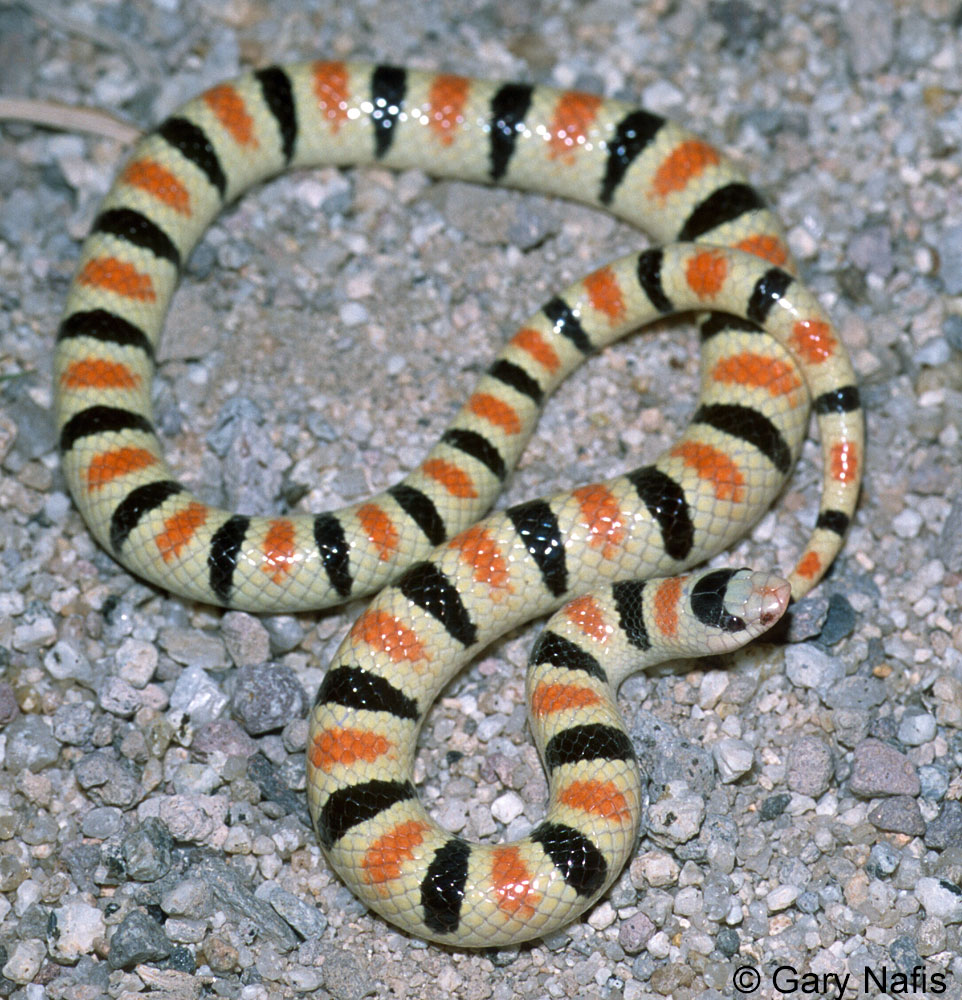
Image from http://www.californiaherps.com/snakes/images/coannulataoc03.jpg
The problem here is that the rhyme actually was first intended for recognizing the Eastern Coral which of course has no other snakes that would conflict with the Red-yellow ID.This does not rule out abberant snakes like a black and yellow (with a couple of tiny red dots) coral I saw back in 78. I have to point out that regular outside clothes would not protect against the bite of a large specimen.
Frank
Help, tips & resources quick links
Manage your user and advertising accounts
Advertising and services purchase quick links
