A lot a times it's hard for us to convey to others the spectacular colors of our animals without some high quality photos. I'm happy to say that this past weekend during the Anaheim NARBC Show, I was able to secure the services of good friend Bob Hansen to photo all of my babies and a few hold backs I'm working with. The results are just amazing. Enjoy


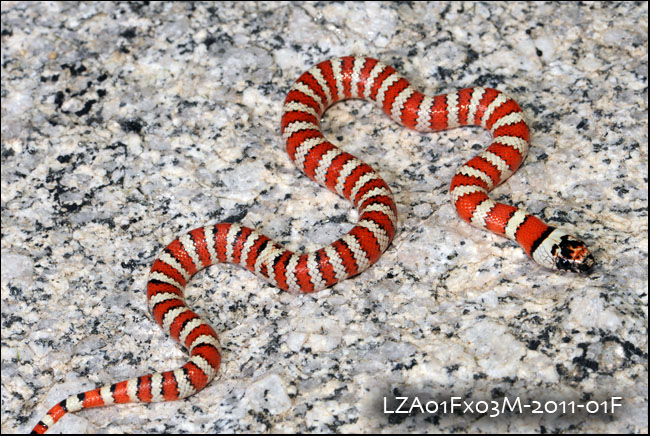


I'll post the rest of the babies in another post later. Thanks for looking
Juarez Wonders
Reptile & Amphibian Forums
Welcome to kingsnake.com's message board system. Here you may share and discuss information with others about your favorite reptile and amphibian related topics such as care and feeding, caging requirements, permits and licenses, and more. Launched in 1997, the kingsnake.com message board system is one of the oldest and largest systems on the internet.


Axanthic Pure Martir Update.....
AllanBartlett
Sep 05, 2011 12:47 PM
Replies (10)
GerardS
Sep 05, 2011 01:00 PM
Awesome! I can't think of anything else.........
-----
Gerard
www.livebaitclip.com
rosspadilla
Sep 05, 2011 01:12 PM
Very nice! I like the head pattern on the 3rd snake down. It looks like it has flames.
-----

Zach_MexMilk
Sep 05, 2011 01:19 PM
Gorgeous snakes, all of them, but the one that really stands out is the last one. I love seeing some black on agalma!
trevid
Sep 05, 2011 02:01 PM
Spectacular! thanks for sharing...Dave.
DMong
Sep 05, 2011 02:58 PM
That is one SPECTACULAR animal Allen!
However, I think the correct term for that specific mutation is actually hypo-erythrism (extremely reduced red, not absent red..i.e. erythrin), and not axanthism (a total lack of yellow..i.e. axanthin) even though the inner triad rings are indeed pure white. The RBR(red body rings) are what seem to be far more affected from the normal coloration.
Axanthism can only occur in forms of animals that normally display yellow pigment. Which is why so many people can get confused by many snakes in the hobby that look very similar, but are composites of totally different color schemes. The red rings seem to be GREATLY reduced in coloration, not completely absent of red which gives it that extremely light pink coloration.
This can be compared to what have always been commonly called "anerythristic" Hondurans too. However some of those seem to be more extremely hypo-erythristic rather than anerythristic, and the white rings are also affected making them pure white. This is simply because "xanthophores" are responsible for creating yellows, reds and oranges in snakes.
Xanthophores
These chromatophores produce red and yellow pigments known as pteridines. These may vary in color from pure yellow to pure red, as well as intermediate shades. Xanthophores possessing a predominantly red coloration are referred to as erythrophores., which is the very root word of the genetic term hypo-ERYTHRISTIC (literally meaning pertaining to hypo-erythrism).
Anyway, ...again, that animal is simply gorgeous Allen!..
~Doug
-----
"a snake in the grass is a GOOD thing" 

JKruse
Sep 05, 2011 05:10 PM
Wonderfully lavender....can't wait to see it in a couple more years and hope it's now eating well voluntarily as I know you had a bit of a struggle initially.
-----
Jerry Kruse
UPDATED!
www.zonatas.com
And God said, "Let there be zonata subspecies for all to ponder..."
Jlassiter
Sep 05, 2011 11:55 PM
All are very nice Alan.....And VERY nice pics Bob (as always).....
But I, too think if an animal such as a zonata has no YELLOW in the first place a morph of that animal can not have the absence of yellow (axanthism) ever.
I see that the first animal isn't the normal pink like the Hypoerythristic Agalma that others produce........With the lavender coloration I still don't know if I would call it Anerythristic (lack of all red pigment) either.
It is certainly something different and new but it looks as though it may be more Hypo-E than anything else.......in my opinion. Definitely not Axanthic...again, in my opinion. I don't think an animal that NEVER displays yellow pigmentation could be axanthic........
But I'll take two when you produce more......LOL
-----
John Lassiter
Poor planning and procrastination on your part does not constitute an emergency on my part...

a153fish
Sep 06, 2011 06:25 PM
.
-----
King Snakes! Who can make a better mouse trap?
Jorge Sierra
My Site > www.Sierrasnakes.com
JR56
Sep 07, 2011 08:23 AM
WOW.......great photos
www.4lakessnakes
denbar
Sep 07, 2011 08:46 AM
BEAUTIFUL! We should all have a Bob friend like that.
--Dennis
