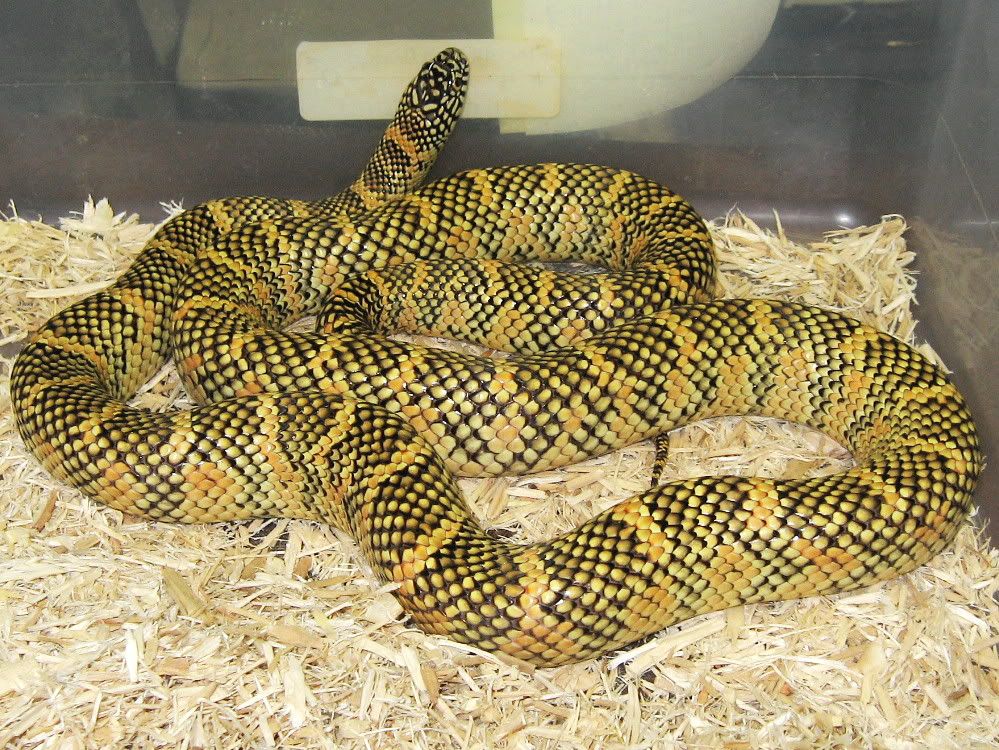
With my line, you can expect to toss alot of this totally out the window. I have had hatchlings that are black and beige(zero red) that become insanely green/yellow, orange/reds gold become awesome golden yellow, very red and brown juveniles become insanely golden/bronze/copper, dark brown and reds become very mahogany and gold with light peach highlights, brown and reds become nice and green/yellow, and even some that have insanely wide bands of all these different types become composits of all the above and many with hints of light peachy orange highlights, and even a few with ridiculously wide red and/or yellow cross-bars that made the dark inner-banding become blotches like some of the nicest Abbott Okeettee in existence that the deep red gradually became orange and then orange-ish yellow. ALL of these became HIGHLY basal lightened(speckled)as well. Nick can tell you about these popping out some crazy anomalies himself. He had one that started out very similar to what mine did. His came from W/C Hillsborough county stock. And I strongly suspect mine have some of this sulfer lineage and then were further line-bred.
Bottom line is it all depends on MANY unknown factors as to what alot of floridana will "actually" become. Wild type stock is a bit more predictable with more of a consistant phenotype. Yes, parents are certainly a good indication too as they both mentioned. But when there is so much killer variation in some of the clutches they themselves came from, it is virtually impossible to really know with any degree what many will really look like when mature. These things I have have no rhyme or reason and practically cover the entire color and pattern spectrum. This is certainly due to all of the line-breeding that has gone on with this particular bloodline, as it is exposing many bizarre hidden traits that would normally never come to the surface if they were constantly out-crossed like so many other lines. Just as they would in nature, all these little individual traits would normally never be exposed because the likelyhood of the same line animals constantly meeting up and exchanging the same "like" genes would be practically non-existent. All these little weird traits that are within their genetic code would normally be constantly diluted and absorbed with the other snakes very different genetic make-up.
There are literally countless MILLIONS of genetic codes floating around within their genetic makeup, and when they repeatedly keep getting matched up on the chromosome helix from directly related offspring(siblings), you can get some insane results!
Believe me when I say.....Nobody here can accurately predict what many of mine will become whatsoever. Even I am blown out of the water as to what I have seen with these things.
I have a ton of different pics that would leave anyone's jaw on the floor if they saw before and after pics of their ontogenesis....
As the other's said, many times you can get a pretty good general idea in many types of lines from looking at certain characteristics, but these things are like opening up Christmas presents when I put hatchling pics side by side on my computer photo program and look at them side by side as to what they have actually become as they matured.
Anyway, you will see what I am talking about later on..
just a couple quick examples......please excuse their little waterbowls. I was cleaning all of them as I was taking the pics, but didn't want them bolting out or not holding still for the pics..LOL!
#3 female as a tiny hatchling

same #3 female as a young adult
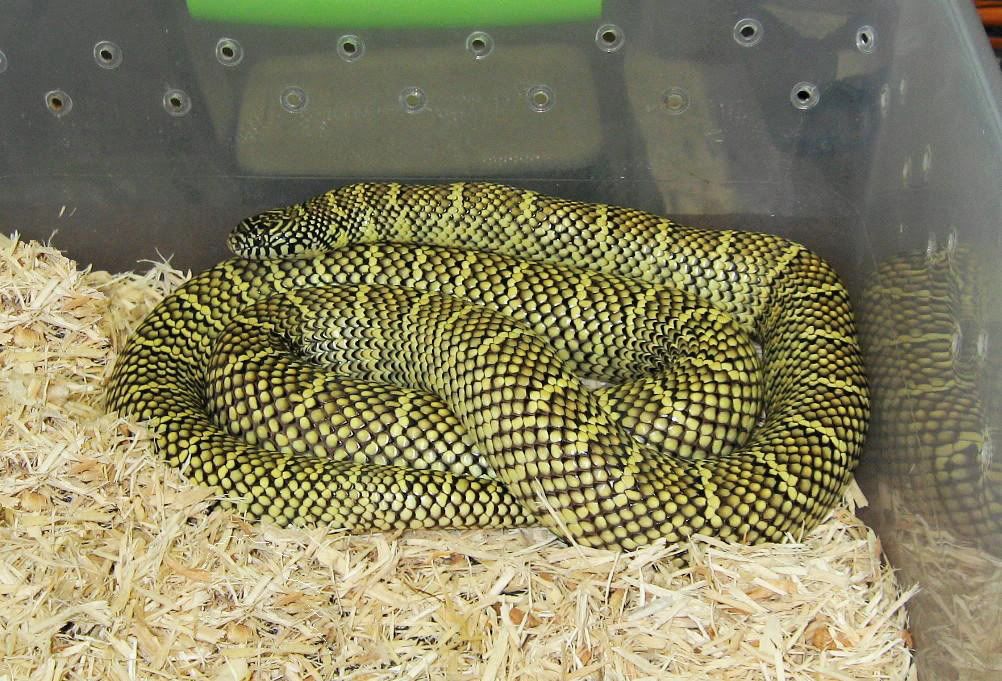
#7 male as a hatchling

#7 male over a year later...
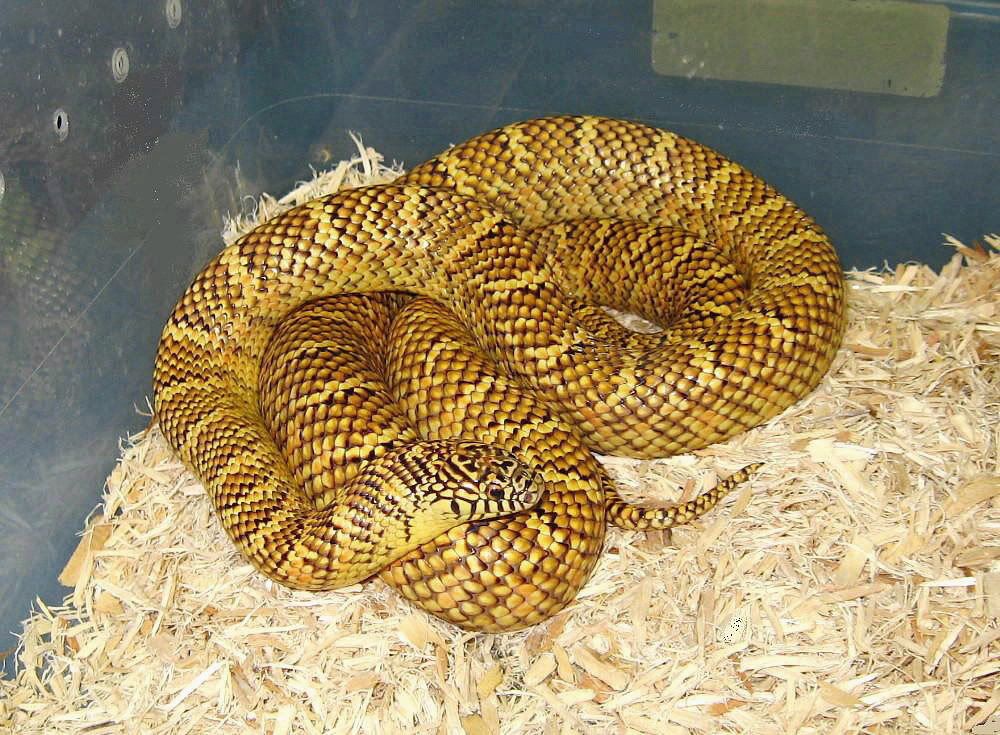
original parent female of these as a tiny '07 hatchling

same original female several months ago...
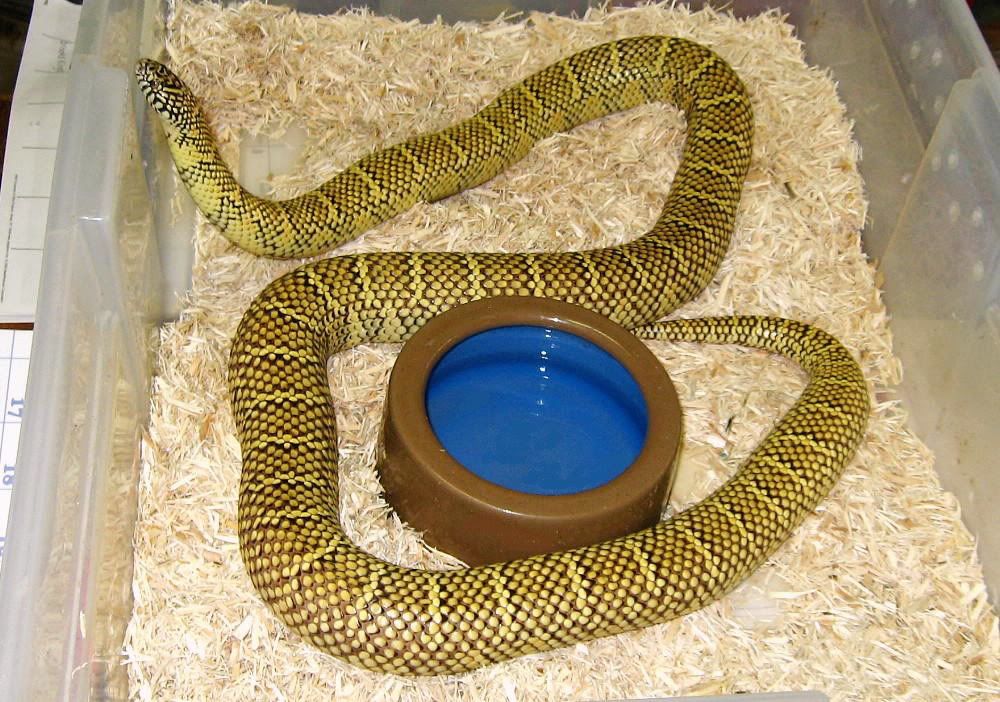
female #8 as a tiny hatchling....

same female #8 over a year later...
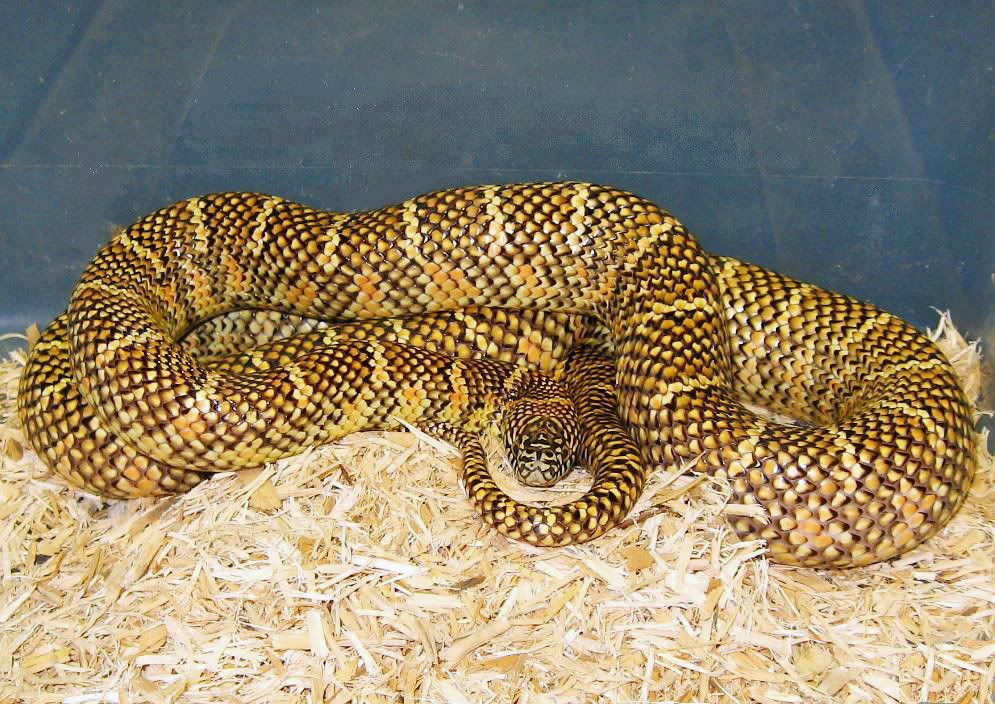
anomaly phenotype male #2 as a hatchling(very same clutch)

same #2 male at only one year. This is nothing,..you should see him NOW!!..
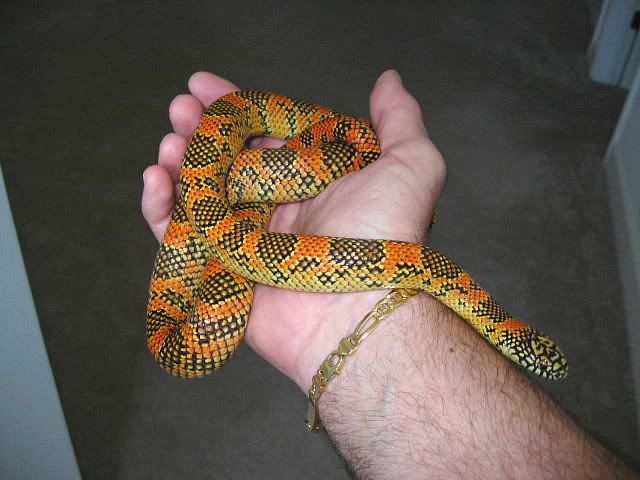
original '07 male sire as a tiny hatchling..

same '07 sire as a young adult...
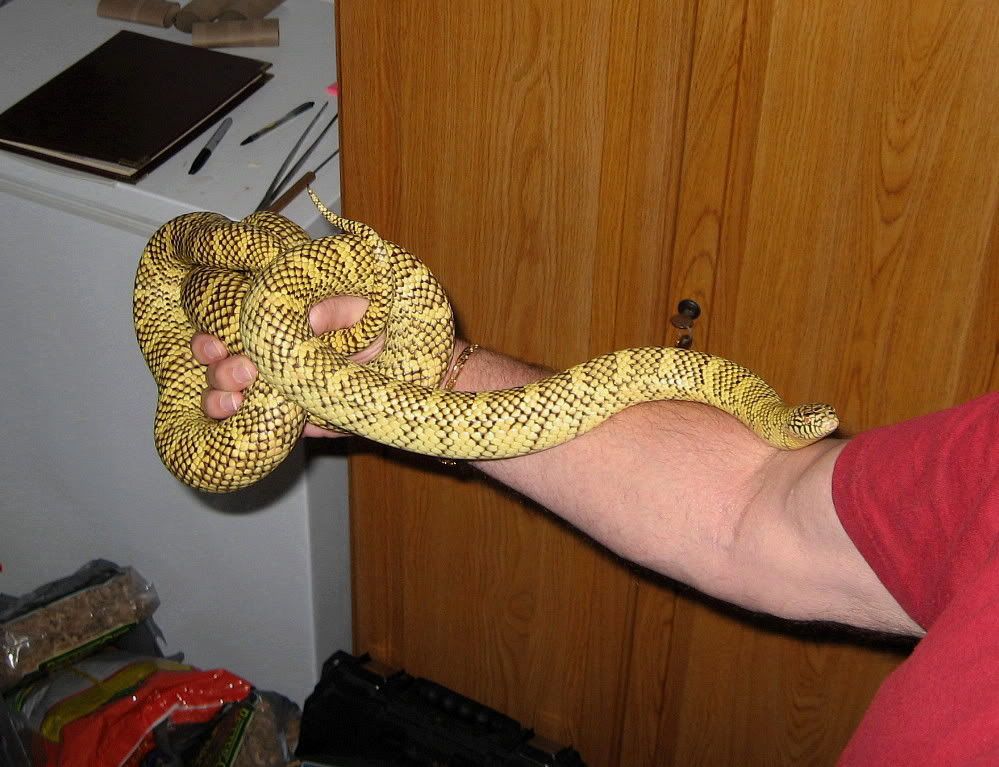
here is another strangely cool recent phenotype!

thanks for looking!
~Doug
-----
"a snake in the grass is a GOOD thing" 

serpentinespecialties.webs.com