Reptile & Amphibian Forums

Welcome to kingsnake.com's message board system. Here you may share and discuss information with others about your favorite reptile and amphibian related topics such as care and feeding, caging requirements, permits and licenses, and more. Launched in 1997, the kingsnake.com message board system is one of the oldest and largest systems on the internet.

Click here to visit Classifieds
Click for ZooMed
Click for 65% off Shipping with Reptiles 2 You

Hondos _ Snow VS Pearl

RG Nov 04, 2011 06:10 PM

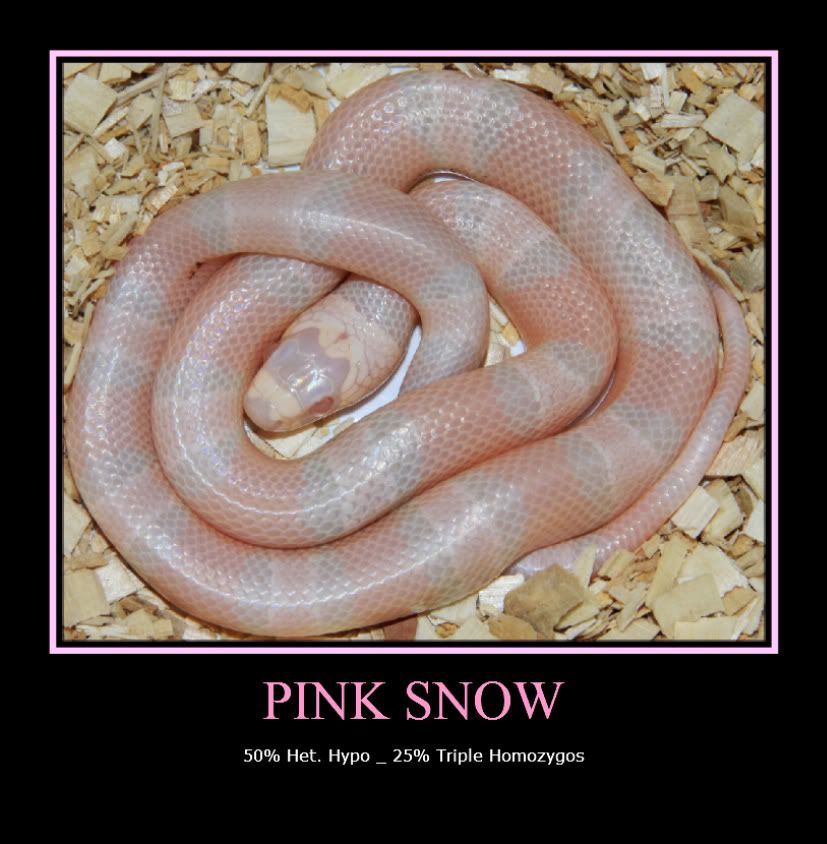
So I asked a while back...if anyone has a Snow Hondo, that was only pink and white (no yellow pigment).

I didn't see anyone post pics...so please post them if you have pics.

My theory is that Snows that don't have any yellow...could be Triple Homozygous (Anerythristic and Amelanistic and Hypomelanistic, AKA Pearls).

I've only seen 2 100% Pearls and both had no yellow at all. I also have a Snow that is possibly a Pearl, and he too has no yellow pigment; he still remains unproven.

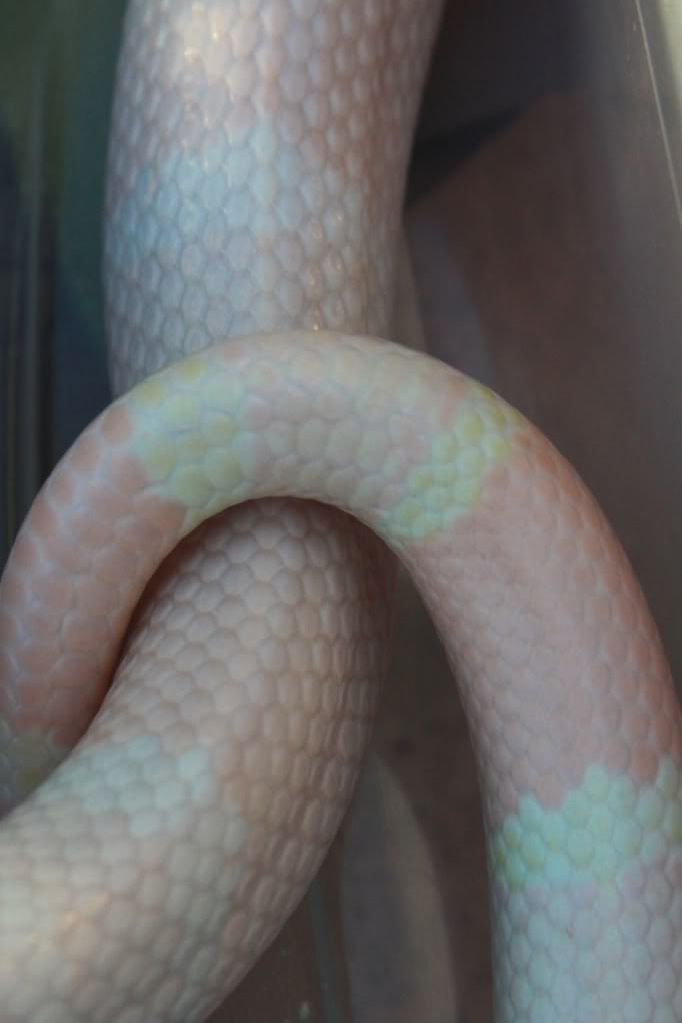
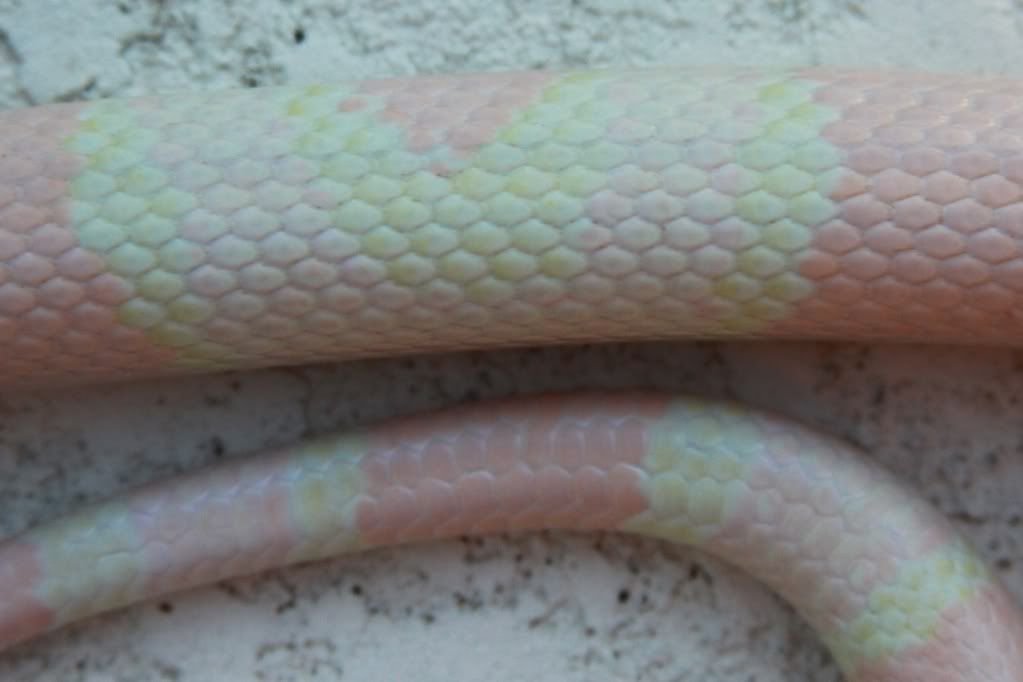
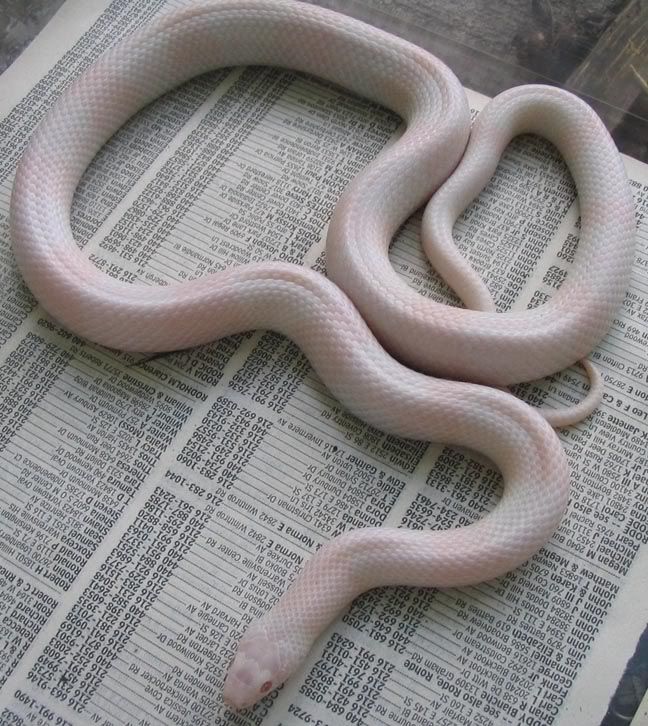
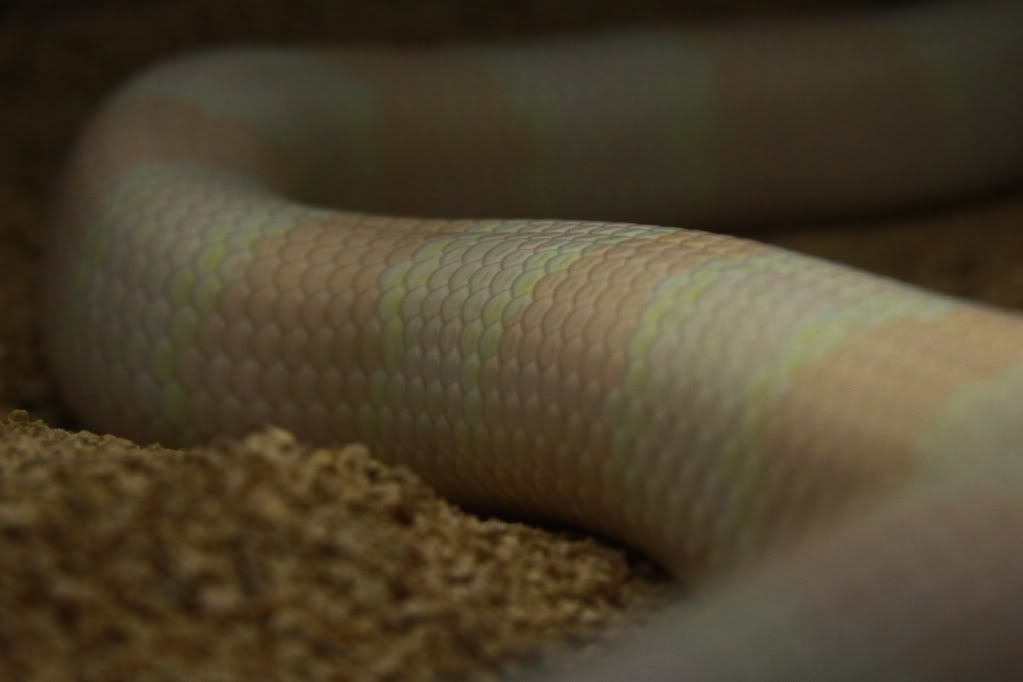
Here are some comparison photographs of a female Snow (66% Het Snow) and a male Triple Homozygous...the yellow one is the Snow.
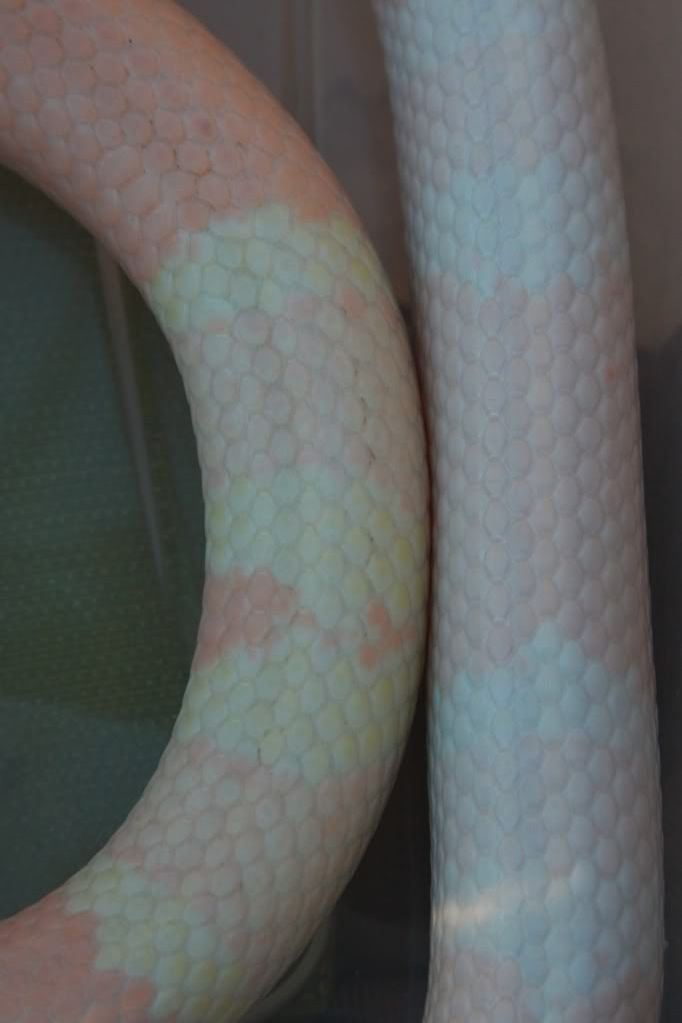
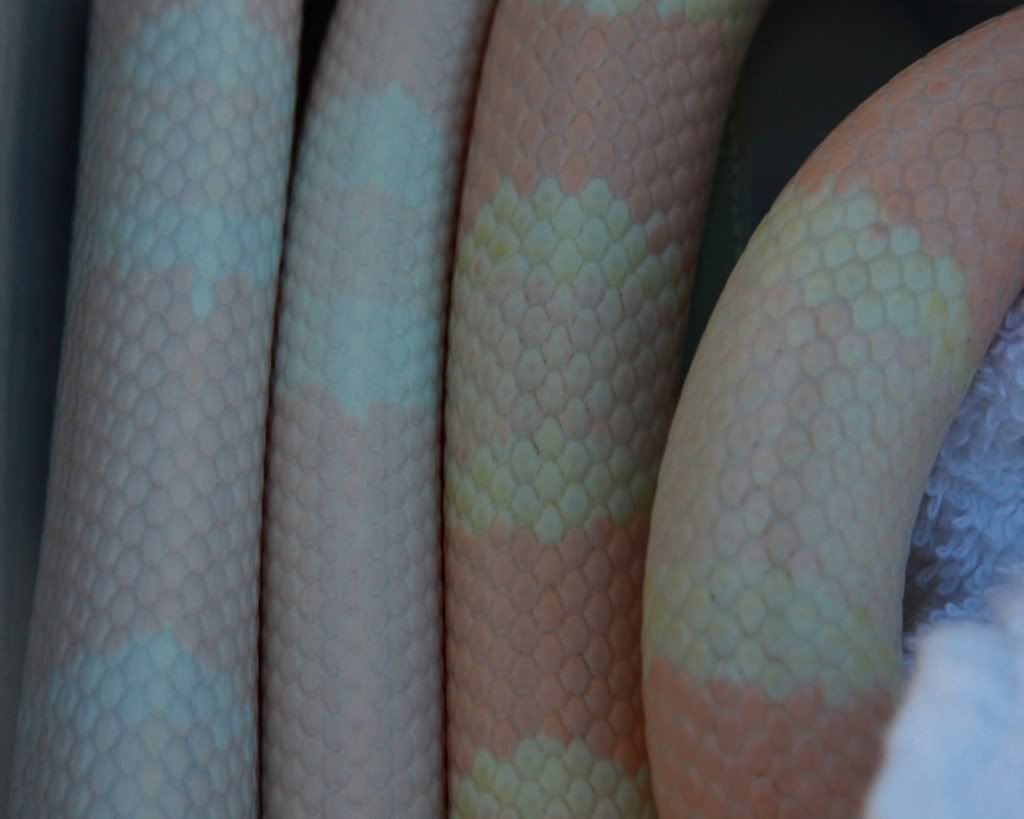
I had to take all these pics in low light so that the sun or flash didn't overexpose the already washed out (reduced) colors.
Can you see the three different colors in the Snow?

Both of these Hondos are only a tad over a year old. The male Pearl is 300g and the female Snow is 370g.
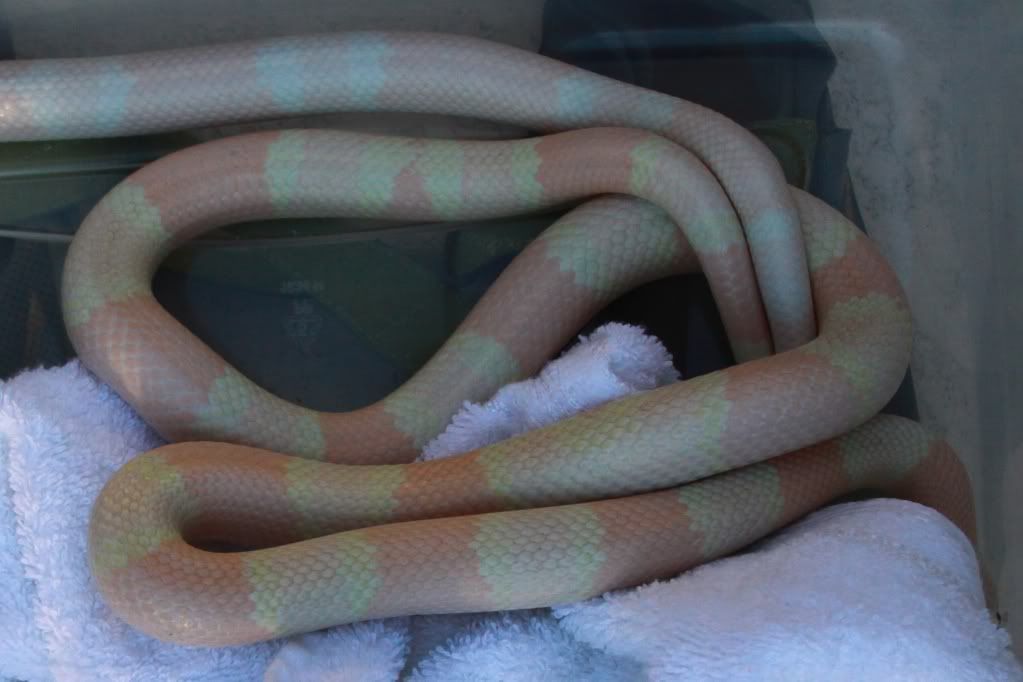
These pics also illustrate that Anerythristic is not really the best term for the phenotype, they really are Hypoerythristic and/or Hypoxanthic, reduction in red/orange and yellow.

This last shot (from her cage) really shows the three distinctive colors (Pink, light Pink, and Yellow) in the Snow:
It will be interesting if you all have different observations, please post some pics!

-Rusty

Genetic Terminology

Replies (17)

DMong Nov 04, 2011 06:23 PM

Very interesting comparison pics Rusty!

It's hard to imagine that hypomelanism and amelanism would have anything to do with any other underlying coloration displayed once the amel and hypo genes stripped the dark melanin away, but one never knows at all just how the crazy dynamics might really work within the actual pigment cells in certain genetic circumstances. It will be very interesting to see more outcomes in the following years for sure dude.

Love the different subtle colorations you were able to capture there Rusty..

~Doug
-----
"a snake in the grass is a GOOD thing"


serpentinespecialties.webs.com

RG Nov 05, 2011 06:55 PM

Yeah, who knows!

Without many Triples out there, it's very early to be sure of anything.

Maybe we can identify Hondos that are Axanthic (or not)...the Amels, Anerys or Snows that don't show any yellow pigment?

-R

DMong Nov 05, 2011 09:36 PM

"Maybe we can identify Hondos that are Axanthic (or not)...the Amels, Anerys or Snows that don't show any yellow pigment?"

That seems pretty doubtful to me though since there are many amels that display white OR yellow that are known straight-up amels. Alot of that still depends on the other remaining colors that are mixed in with the black pigment once it has been eliminated by the amel gene. Also the individual snake's genetic pre-disposition to get yellower/greener as it matures due to carotenoid retention as they mature. As you know, I have several here like that, and Tim Spuckler also has a line of amel nelsoni that are EXTREMELY yellow that start out very normal and white where the black pigment would normally be...

~Doug
-----
"a snake in the grass is a GOOD thing"


serpentinespecialties.webs.com

denbar Nov 04, 2011 07:00 PM

Fascinating stuff. You seem to have really captured the true colors!

--Dennis

RG Nov 05, 2011 06:56 PM

Thanks! I've been wanting to do this photo shoot for months...I never seem to have any spare time!

-R

Dniles Nov 05, 2011 03:37 PM

Rusty

Those are some fantastic pictures that really capture the colors nicely. Very nice post.

Dave
DNS Reptiles - Milk Snakes

RG Nov 05, 2011 06:56 PM

Thanks Dave!

-R

tspuckler Nov 05, 2011 06:06 PM

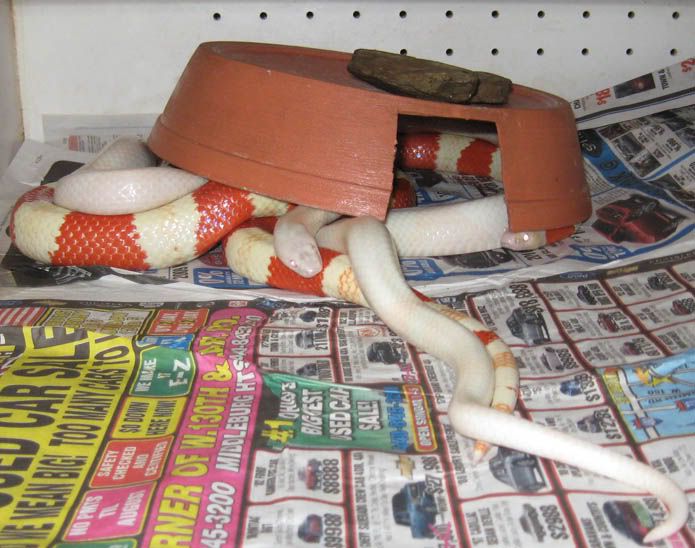
I have pink and white snows:

Third Eye

RG Nov 05, 2011 07:00 PM

Thanks for posting pics Tim.

Any chance that Snow is a Triple? If so, have you bred it to a Hypo or Ghost?

He's obviously a tangerine Snow at least!

Are all those pictures of the same Snow?

All adult pics?

Thanks for posting!

-Rusty

HondoAberrant Nov 06, 2011 12:04 AM

This looks like most of my Snows for sure, with very little Yellow and VERY light at that. I do not have any that look like the one in the original post, with the Orange and Yellow visible - that looks almost like some form of Hypo to me.
-----
Scott MacLeod
2.6 Snow Hondurans
1.1 Aberrant Snow Hondurans
2.4 Aberrant Hondurans
1.3 Aberrant Tangerine Hondurans
1.2 Aberrant Hypo Hondurans
0.1 Aberrant Hybino Honduran
1.3 Extreme Hypo VP
1.1 Tricolor Hypo VP
1.3 Hypo E Sinaloan
1.0 Het Hypo E & Amel Sinaloan
0.1 Amel het Hypo E and Splotched
1.1 Albino Striped Sinaloan
2.7 Striped Splotched Sinaloan
1.2 Poss Het T pos Sinaloan
2.2 T pos Sinaloan

HondoAberrant Nov 06, 2011 12:07 AM

That darker one with the visible Orange and Yellow sure looks like something other than a Snow to me, based on what I have and have seen from others. I have some Amels that are only slightly darker than that.
-----
Scott MacLeod
2.6 Snow Hondurans
1.1 Aberrant Snow Hondurans
2.4 Aberrant Hondurans
1.3 Aberrant Tangerine Hondurans
1.2 Aberrant Hypo Hondurans
0.1 Aberrant Hybino Honduran
1.3 Extreme Hypo VP
1.1 Tricolor Hypo VP
1.3 Hypo E Sinaloan
1.0 Het Hypo E & Amel Sinaloan
0.1 Amel het Hypo E and Splotched
1.1 Albino Striped Sinaloan
2.7 Striped Splotched Sinaloan
1.2 Poss Het T pos Sinaloan
2.2 T pos Sinaloan

RG Nov 06, 2011 07:37 PM

Yeah, she had tons of color even as a neonate.

The color that you see is exactly why Snows, Ghost and Anerys are really not true Anerythristics...the correct term is Hypoerythristic.

Here's a pic of her as a nate:

-Rusty

DMong Nov 06, 2011 11:13 PM

"The color that you see is exactly why Snows, Ghost and Anerys are really not true Anerythristics...the correct term is Hypoerythristic"

~Doug
-----
"a snake in the grass is a GOOD thing"


serpentinespecialties.webs.com

vjl4 Nov 07, 2011 11:09 AM

Really awesome pics.

I think it is really interesting that even the pink on the peal is lighter than on the snow. Makes me wonder about how the hypo mutant is working. It could either reduce the amount of black pigment, or the space available for that pigment to be put into (maybe it makes the melanocytes or melanosomes smaller, or all pigment cells smaller).

Best,
Vinny
-----
“There is a grandeur in this view of life, with its several powers, having been originally breathed into a few forms or into one; and that whilst this planet has gone on cycling according to the fixed laws of gravity, from so simple a beginning endless forms most beautiful and most wonderful have been, and are being, evolved.” -C. Darwin, 1859

Natural Selection Reptiles

RG Nov 08, 2011 10:20 AM

"It could either reduce the amount of black pigment, or the space available for that pigment to be put into (maybe it makes the melanocytes or melanosomes smaller, or all pigment cells smaller).

In my opinion, both of those options are feasible and occur! The fun/hard part is isolating those genes.

I was just talking to Doug about how many different forms of Corns that are out there...so many varieties; I don't think I could list them all. So, why wouldn't any other species of snake (like Hondos) be any different?

It's very genetically fun stuff!

-R

SunHerp Nov 08, 2011 10:51 AM

Interesting ideas, Rusty. It seems strange that genes controlling the production and/or deposition of melanin would have an affect on the reds and yellows, but as Vinny pointed out, it's not out of the question.

Just to throw another wrench in the gears, Shannon pointed out a while back that there are two (I believe) forms of the anyerythristic/hypoerythristic trait in the hobby. There's a good chance that one is hypoerythristic while the other is anerythristic. That alone could account for the differences we see in the different snows and pearls. Add to that the increasing liklihood that there are several different forms of tyrosinase-positive amerlanism and hypomelanism masquerading under yhe name "hypomelanism" and we've got quite the mess to figure out!
-----
_______________________

-Cole

RG Nov 08, 2011 08:46 PM

There are so many things that are going on...it will take many many years to even start to come up with any solid proof.

It's fun stuff either way...at least for me!

-R

Site Tools