Reptile & Amphibian Forums

Welcome to kingsnake.com's message board system. Here you may share and discuss information with others about your favorite reptile and amphibian related topics such as care and feeding, caging requirements, permits and licenses, and more. Launched in 1997, the kingsnake.com message board system is one of the oldest and largest systems on the internet.

Click here for Dragon Serpents
Click for 65% off Shipping with Reptiles 2 You

t-positive / extreme hypo discussion

snakebuz Apr 24, 2012 03:09 PM

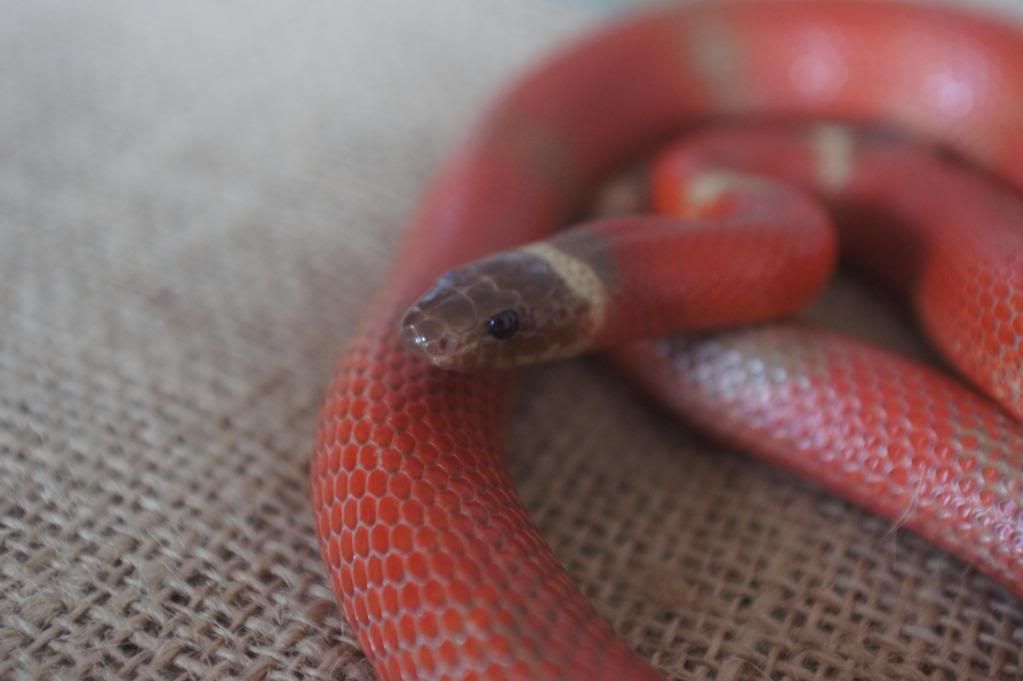
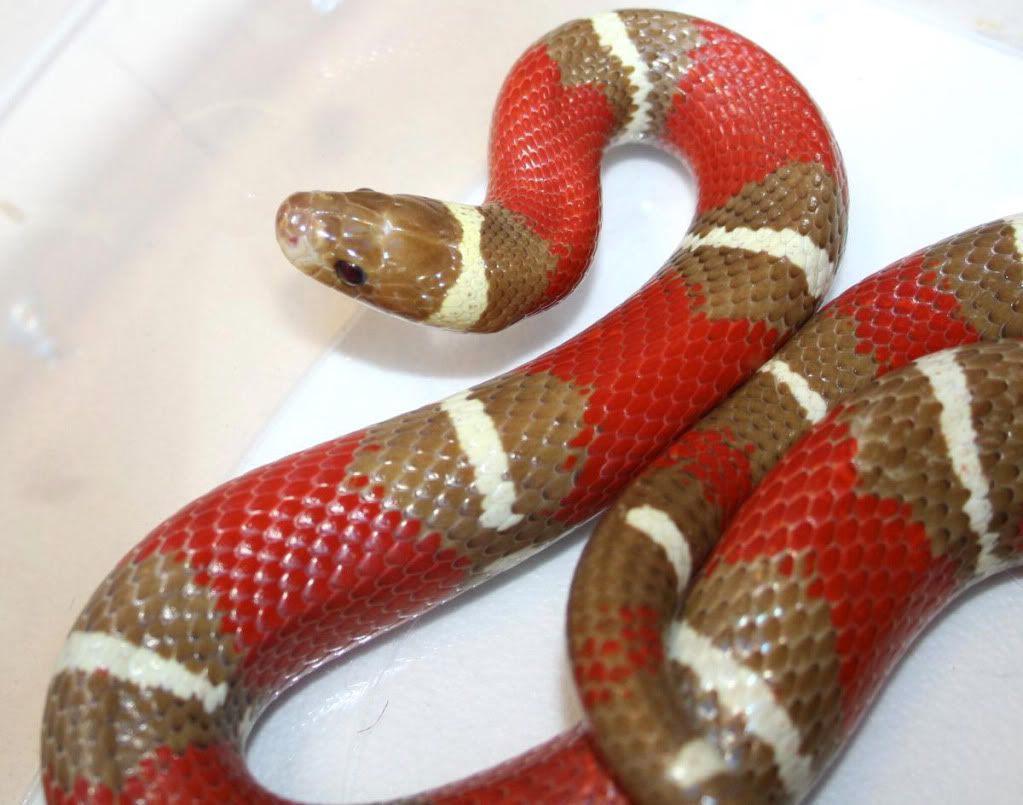
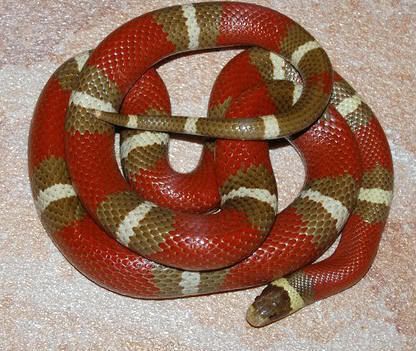
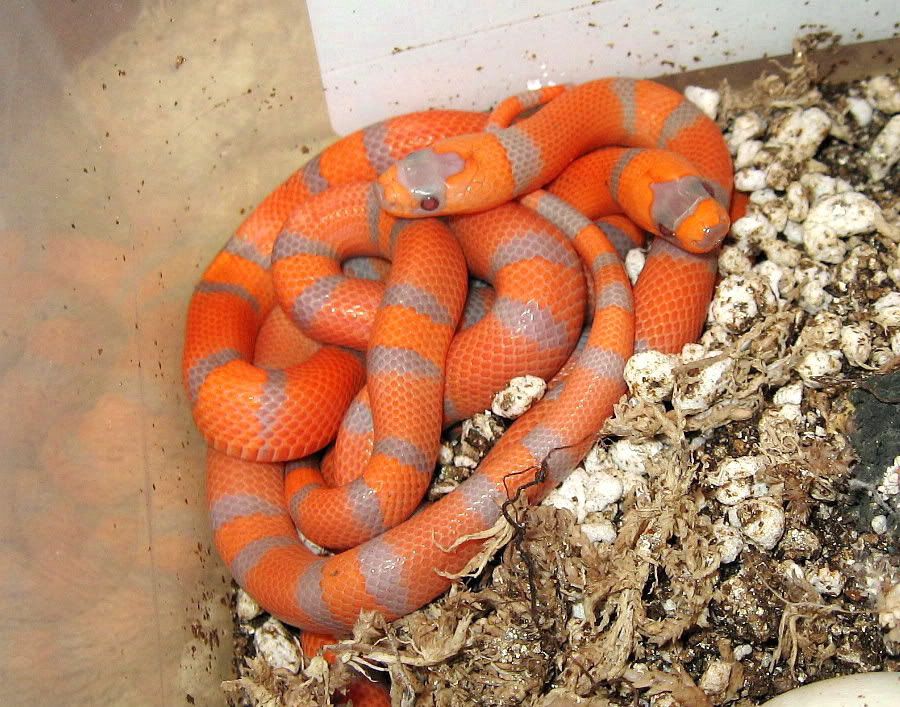
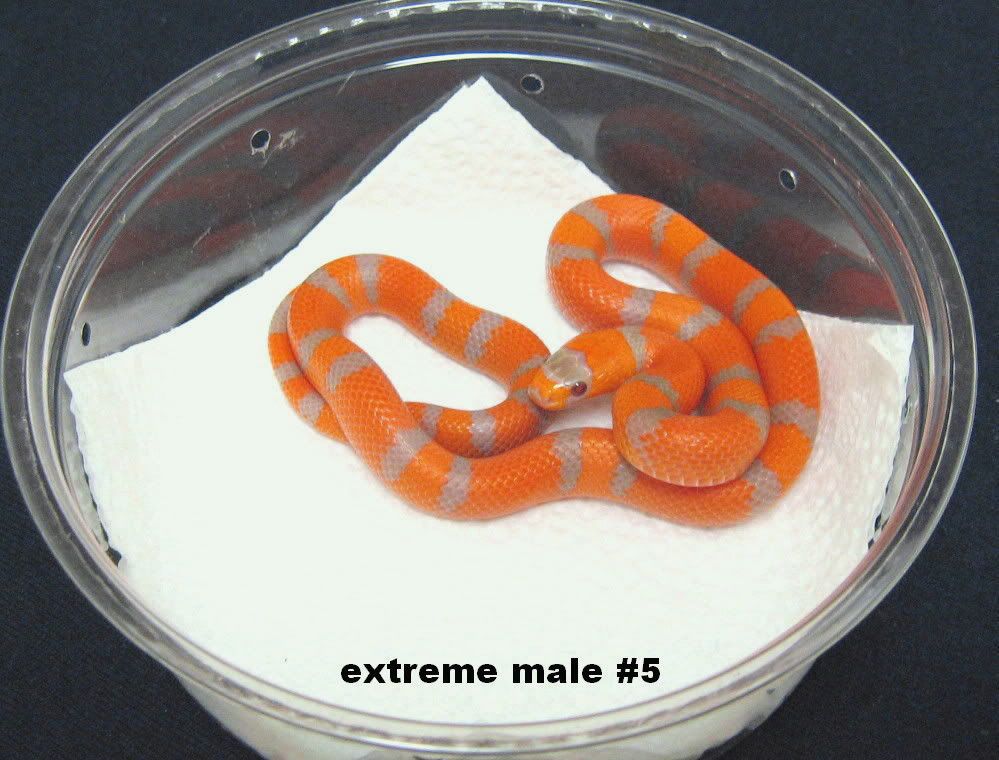
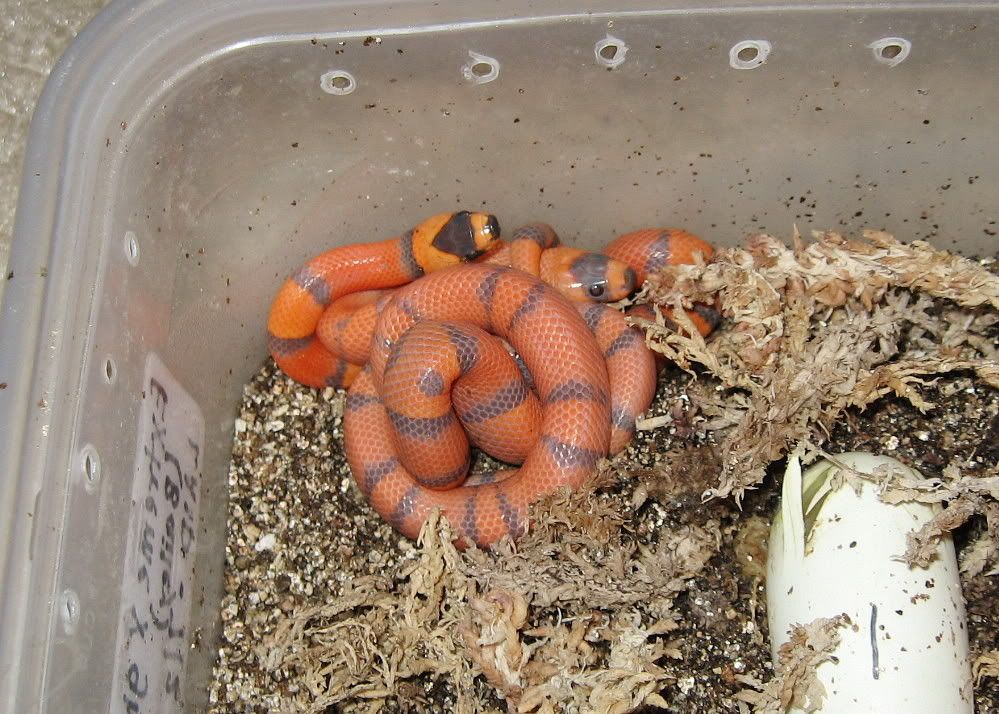
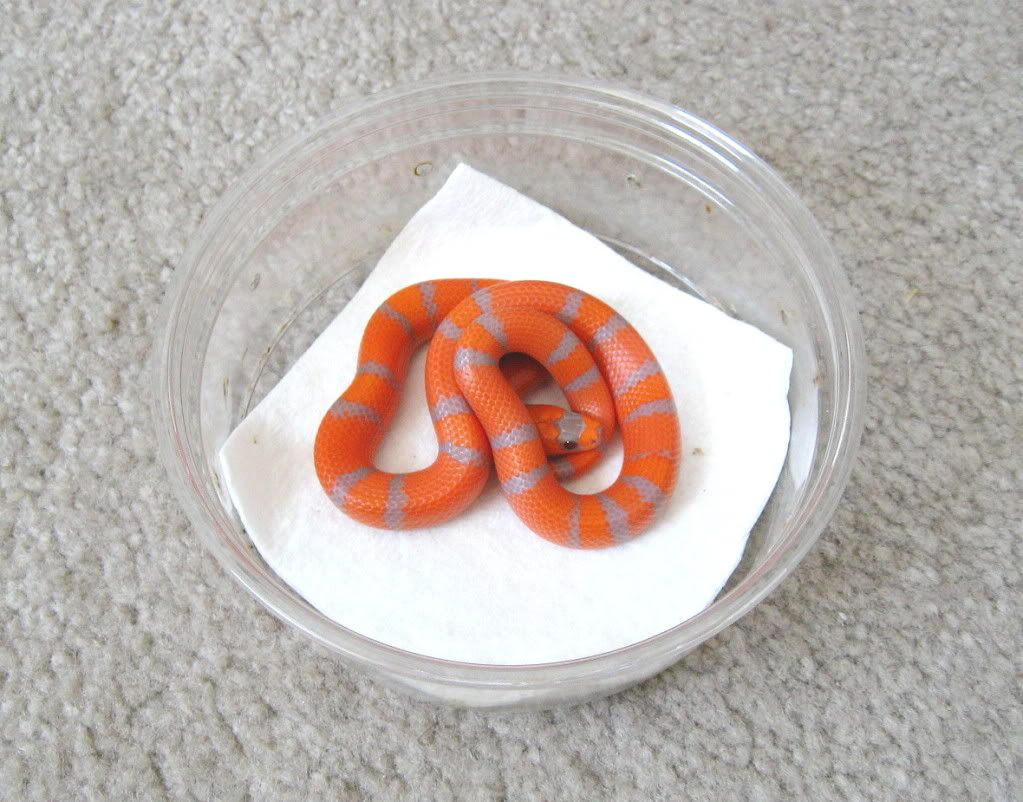
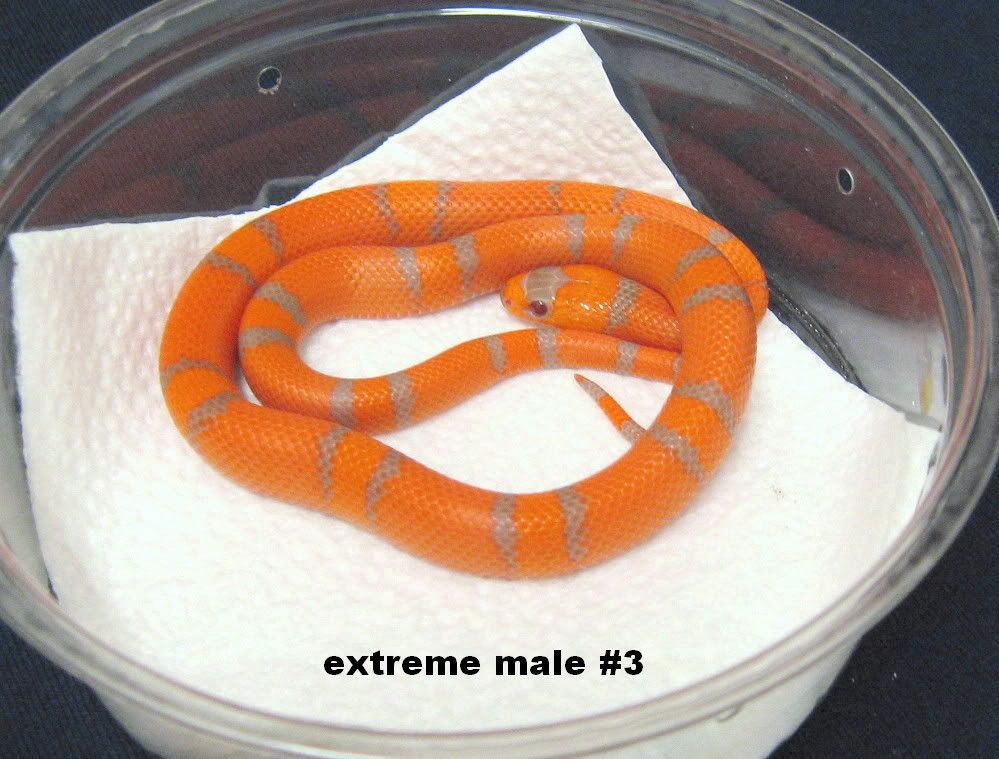
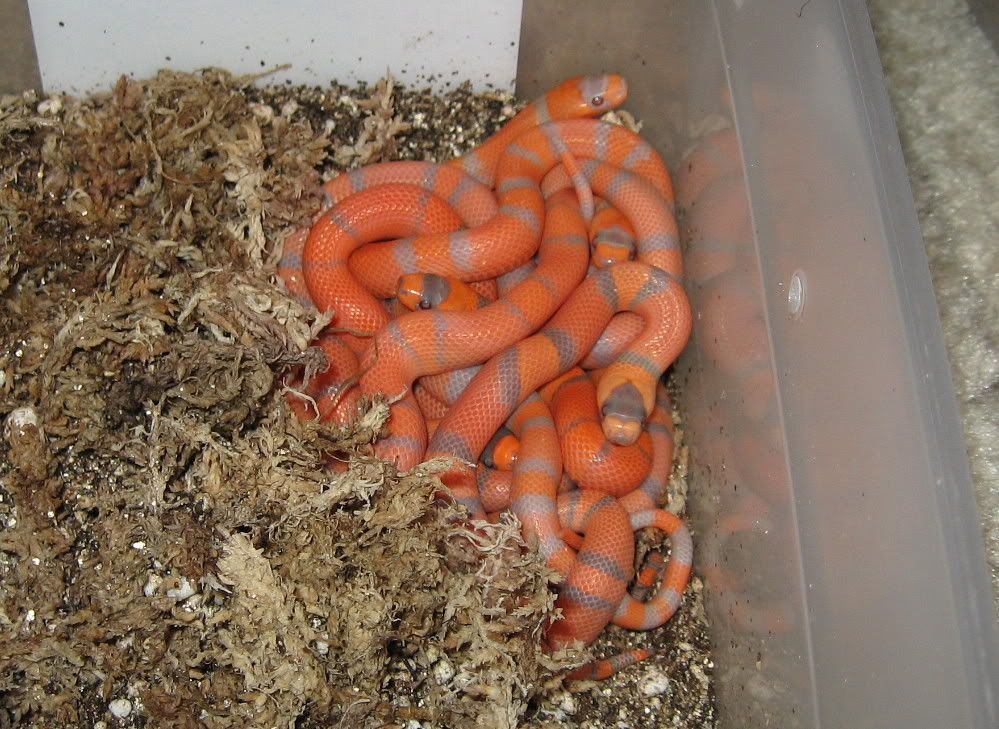
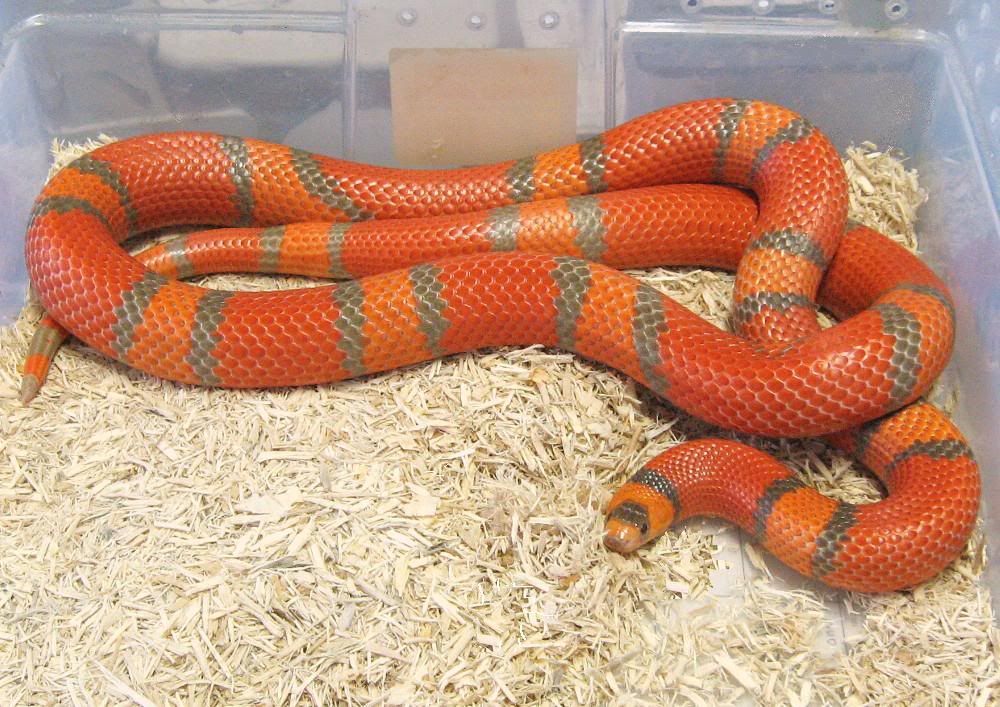
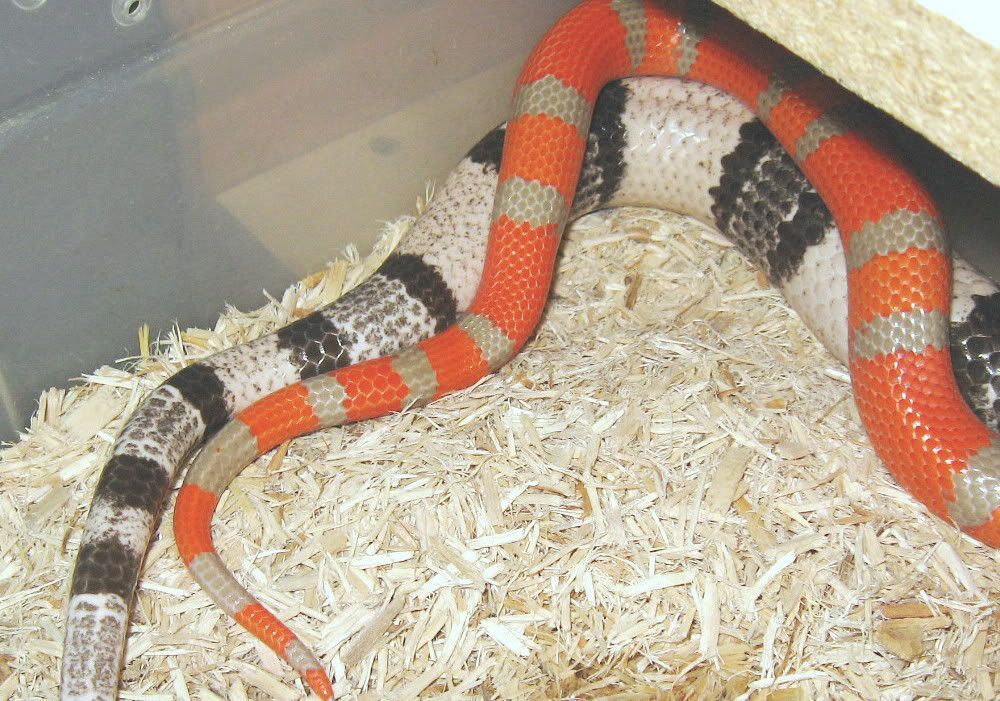
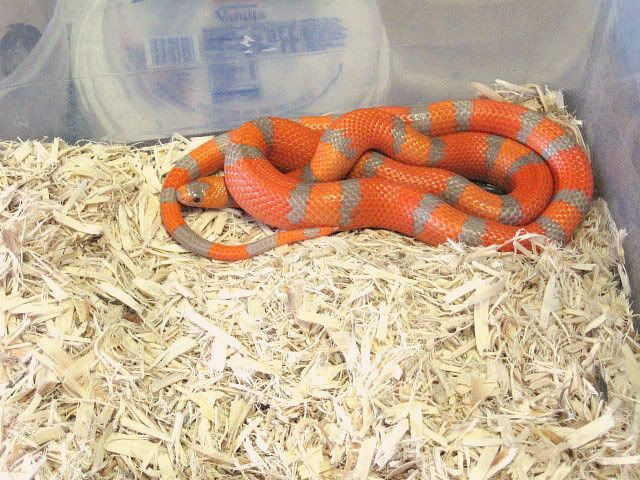
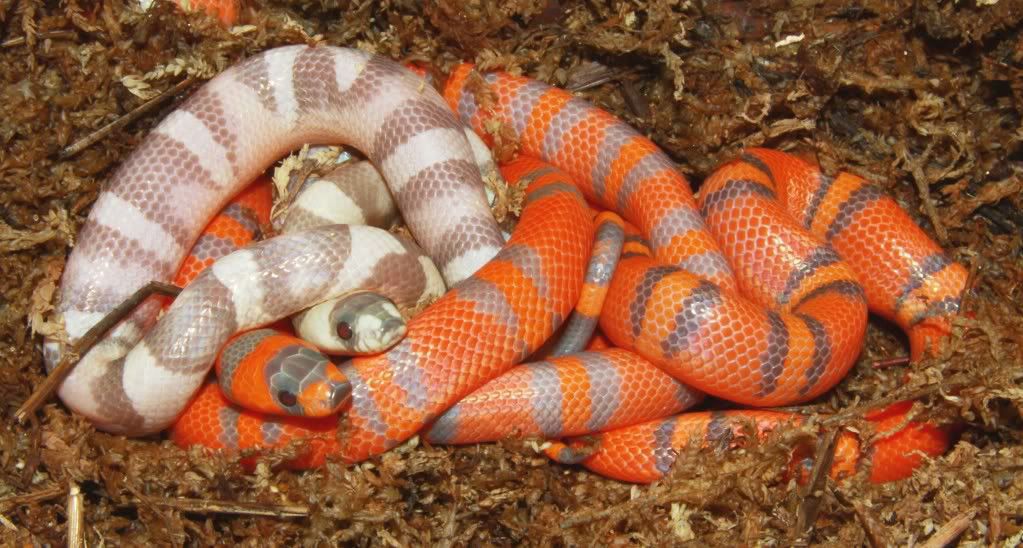
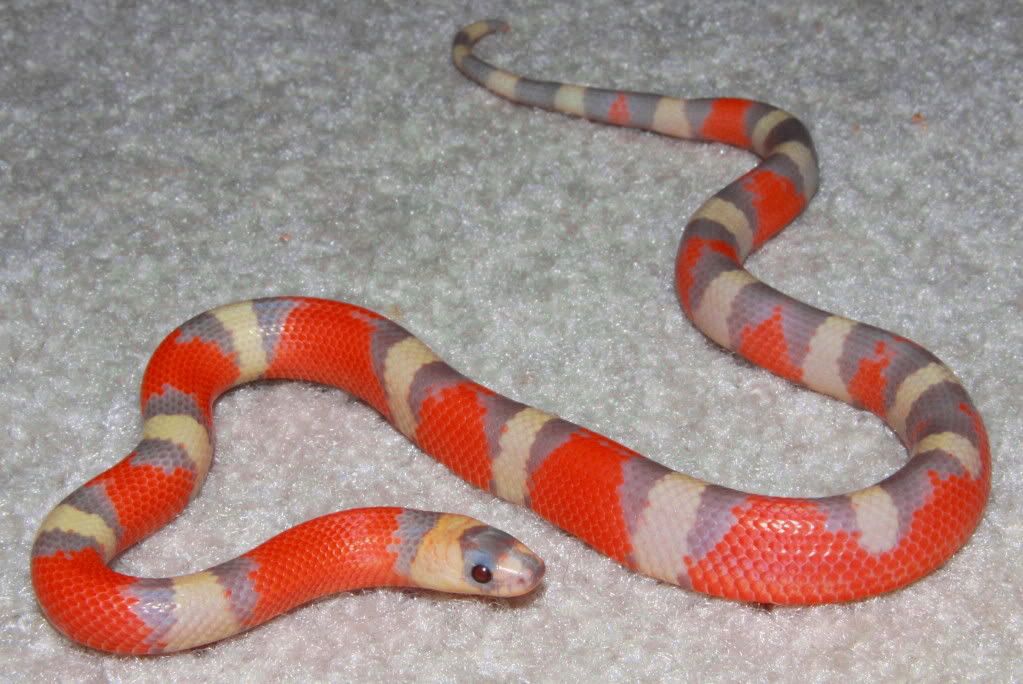
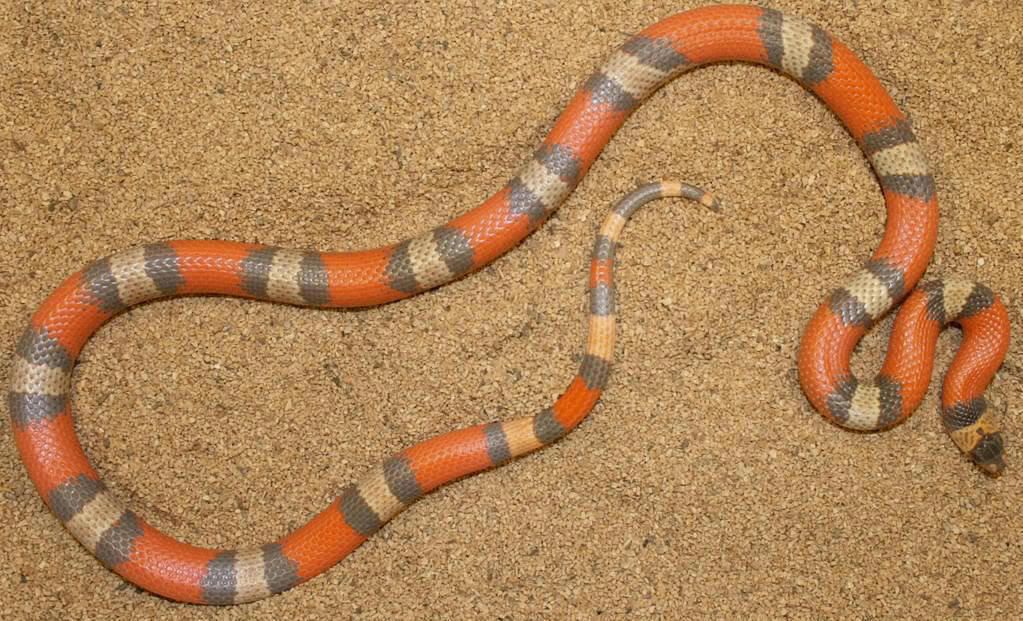
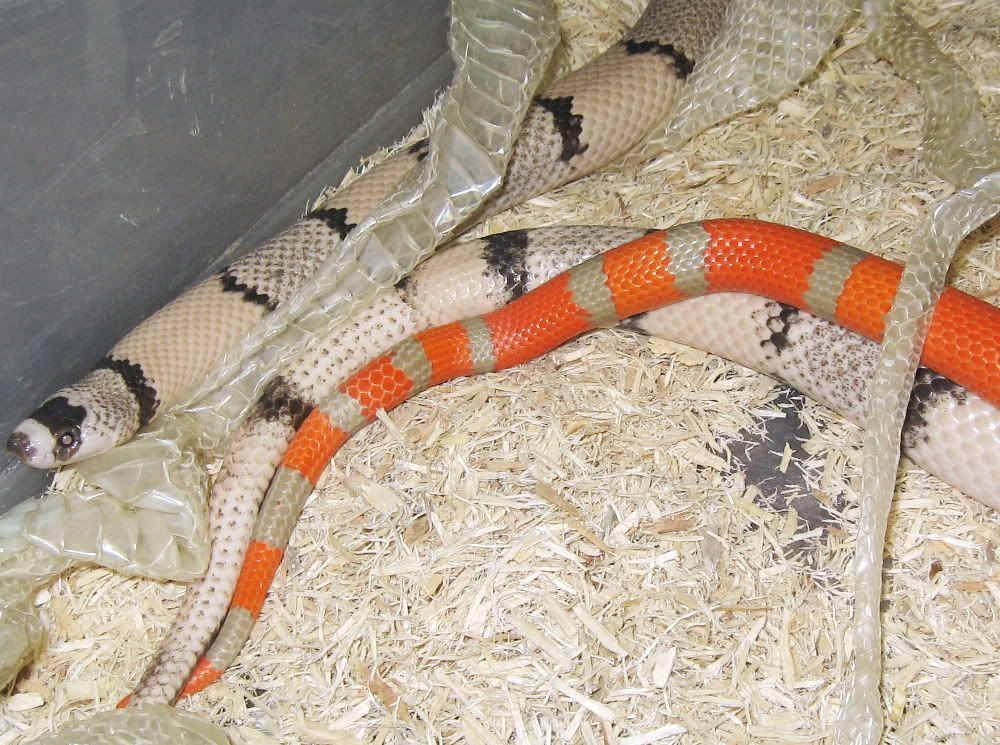
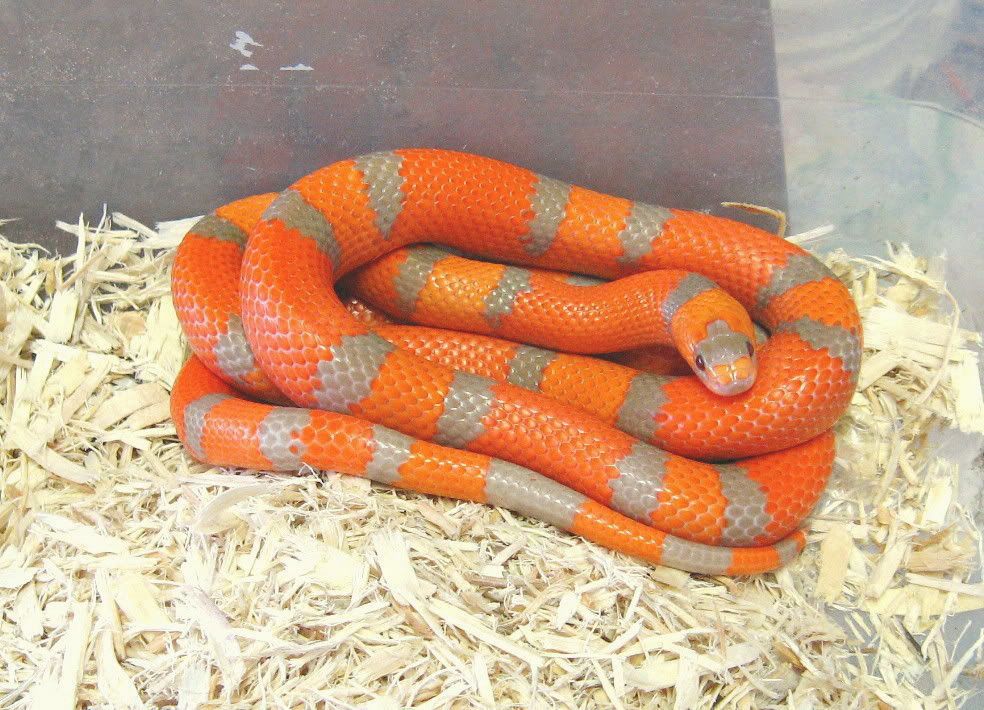
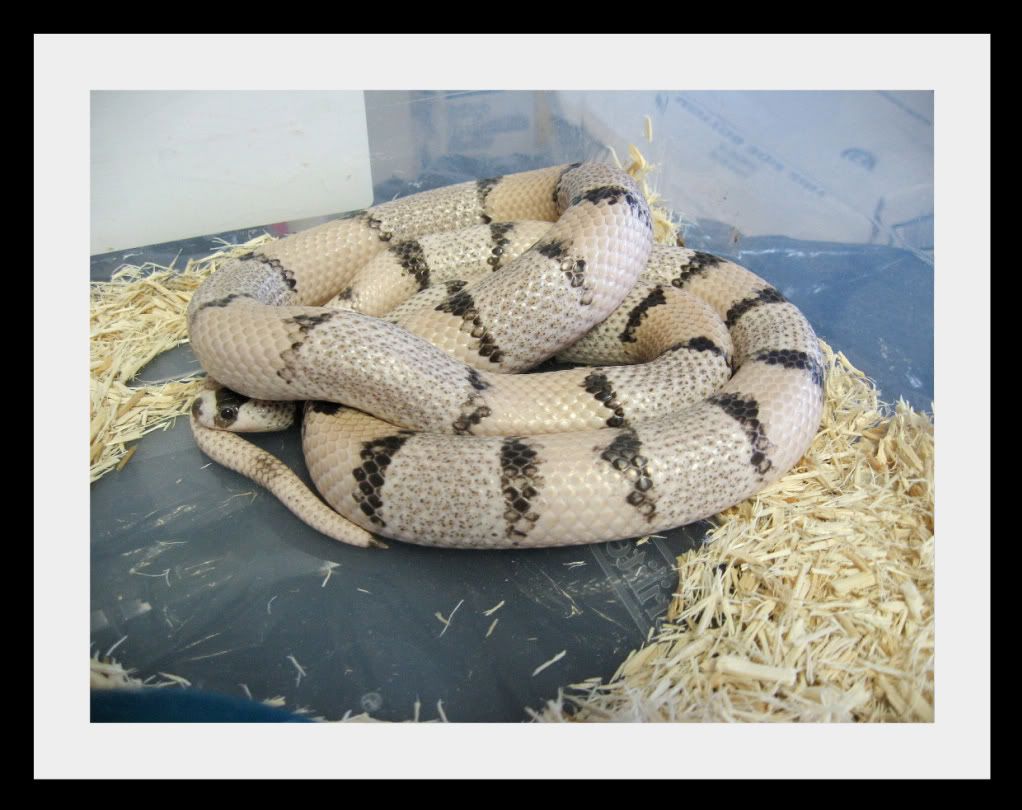
My color vision isn't the best, and I know it's hard to work from pictures anyway, but I have been looking at the pictures Don Shores has on his site of a extreme hypo honduran and a t positive albino nelson, and they are looking almost the same to me in the ares that should be black. Anyone know if it is a similar type genetic aberation? Looks pretty close to me.


Thanks to Don Shores for the use of the pics.
-----
It's a sick world and I'm a happy man!

Replies (27)

DMong Apr 24, 2012 09:52 PM

Hi John,.....

No, those two genes are VERY different from each other, even though they might look somewhat similar to many people. The extreme hypos are an exaggerated form of hypomelanism that is a light silvery/gray with ruby-red eyes. This is a recessively inherent gene.

The t-plus nelsoni were first produced by pure accident by a guy named Christos Skliris over in France in 2005, and were genuinely authentic L.t.nelsoni with no "stolen" genetics from being crossed with anything else whatsoever. They are a form of tyrosinaise positive "albino" (but are not amelanistic) that has an ENTIRELY different unique mode of inheritence from most all other known colubrid genetics. This t-plus gene is a co-dominant gene and is 100% allelic with the typical amel gene. When you breed a t-plus to an amel, you will produce roughly 50% amels and 50% t-plus offspring. In other words, it cannot be visually expressed without the amel gene also being involved in the two parent's genetics. And every single VISUAL t-plus animal also has a normal amel allele on the very same chromosome locus. It's tough to explain all this in a simple post, but they are NOTHING alike whatsoever......NOTHING!. A normal looking nelsoni cannot be "het" for the t-plus gene either, but it can be het for the amel gene.

These snakes aren't really a light silvery gray ether like good examples of the extreme hypos are, but rather a sort of chocolatety/purple hue with deep ruby-red, or sometimes deep purplish/red eyes. The look they have is thought to be from the pigment cells known as melanophores posessing tyrosinaise which in itself is a "pre-cursor" chemical that is synthesized with other amino acids to produce normal dark pigment (melanin). However, these pigment cells do not allow the tyrosinaise to mix normally as they should with the other amino acids, or at best, only allow only a small quantity to be synthesized into melanin, so basically your eyes see just the tyrosinaise within these pigment cells, or maybe only just a very small amount of melanin in the scale's pigment cells giving it this unique look.

Yes, this either helped you some, or confused you much more, and there is WAAAY more to it than I just explained. But take my word for it, the two genes of these snakes are as different to each other as night and day...

good luck with things my friend!

~Doug
-----
"a snake in the grass is a GOOD thing"

serpentinespecialties.webs.com


"some are just born to troll and roll"

snakebuz Apr 25, 2012 07:41 AM

Wow Doug, blow me away! I figured I'd get a few different opinions on the subject and points to ponder. Shows how little I knew of the subject, lol. I really have only had recessive animals and not any co-dom animals, so never "researched" the co-dom traits any, and was intrigued by the visual similarities. Your "not all inclusive" definitive post now has me wanting to find the out the "rest of the story", lol. If you could point me towards a "primer" to get me going I'd sure appreciate it. John
-----
It's a sick world and I'm a happy man!

DMong Apr 26, 2012 12:02 AM

John,.....
Yeah, they are a pretty crazy deal. Hey, sorry I didn't get back to your replt earlier, but I had to go take care of some things tonight. Give me a shout on the phone after 7:00PM EST or on weekends and we can go over some stuff regarding the t-plus genetics.

cheers, ~Doug
-----
"a snake in the grass is a GOOD thing"

serpentinespecialties.webs.com


"some are just born to troll and roll"

Burnsy Apr 27, 2012 08:01 AM

Hi

My theory of the T pos. nelsoni still is:
T pos. gene is on the same locus as the amel. gene.
T pos. gene is recessive to the wildtype gene.
T pos. gene is dominant over the amel gene.
From what I have heard any breeding result fits to this.
But I will be open to discuss this or learn something new.

Gerrit
Königsnattern - Lampropeltis

-----
http://www.lampropeltis.de.vu

KcTrader Apr 27, 2012 07:06 PM

T pos. gene is recessive to the wildtype gene.

Gerrit,

By the statement above I am understanding if you breed a T pos. to a normal all the offspring will be het for both T pos. and Amel, correct? Has anyone bred those normal het offspring back to each other and produced T pos. offspring?
-----

Burnsy Apr 28, 2012 01:13 AM

Hi,

no, that is not correct. Since there is either T pos or the amel gene on the same chromsome, there are two possible types of T pos animals.

First is the one that has one T pos gene on one chromosome and the amel gene on the other. Since the T pos gene is dominant over the amel gene the phenotype is T pos. Breed thisone to a normal and you will get 50% of animals with the amel gene and the other 50% will be with the T pos gene.

The second possibility is that one animal carries on both chromosomes the T pos gene. Since the amel gene and the T pos gene are at the smae locus, there can be either the amel Gene or Tpos at that place on the chromosome. The animal is from what I have heard the same phenotype as the half T pos half amel animals.
Breed this animal to an amel and you will get 100% T pos animals as the result. This happened to a few breeders.
Breed this animal to a Wildtype het for nothing animal and you will get 100% het for T pos. The amel gene is no longer present.

But again, this are just my thoughts about how this works.
I do just have animals that still carry the amel gene. It will take me a few more days to prove this out.

Gerrit
Königsnattern - Lampropeltis

-----
http://www.lampropeltis.de.vu

KcTrader Apr 28, 2012 10:46 AM

Gerrit,

Thanks, I think I understand it for now.LOL. That would give reason to breeding a T pos. to an amel and produce all T pos. Now the question is? If you breed a T pos.(single chromosome) X T pos.(single chromosome) would all offspring be Tpos. and carry the T pos. gene on both chromosomes?

Has anyone bred this double chromosome carrying to a wild type yet? Then bred those offspring back to brother and sister yet? To see if they were just carriers of the T pos. gene and not the amel gene?

Also, quick question for you? A few years back you were posting pics of Hypo nelsoni could you post a few again? What ever came about with them?
-----

Burnsy Apr 28, 2012 11:07 AM

Hi,

if you breed the single chromosome T pos. to each other there should be 25% normal albinos in the clutch. I don't know if this fits.

I have to check if I find those pics. I gave the line to a "friend" in Denmark and never heard back from him. He is owing me a lot of money as well. Sad story.

Gerrit
Lampropeltis - Königsnattern

-----
http://www.lampropeltis.de.vu

KcTrader Apr 28, 2012 11:46 AM

Another words the offspring would be 50% single chromosome T pos. 25% double chromosome T pos. and 25% amel. This makes for some very interesting outcomes. Is there any visual differences between a single chromosome and a double?

Sorry to hear about a deal gone bad. I am looking forward to seeing those hypo's.
-----

Burnsy Apr 28, 2012 12:02 PM

Yes, ratio is correct to my theory. I don't know if there is any different look. What I recognized is, that there are lighter and darker T pos animals. The animals I do hatch out are way darker and do look somewhat hypoish while other seem to hatch out red eyed animals. Maybe incubation temps play a role here.
In the end all animals seem to look nearly the same as adults.
I have to state here that I have seen probably just 10 - 20 adults and subadults in total, that's it.

Again, if anyone has heard something different, pls let me know!
Gerrit
Lampropeltis - Königsnattern

-----
http://www.lampropeltis.de.vu

Rainshadow Apr 27, 2012 10:10 AM

The "extreme" Hondurans are T positive albinos,without any doubt.(IMHO)The fact that another form of T positive albinism in a completely unrelated species was originally produced in the described manner,and seems to be inherited,and expressed in a different way,does not disprove the obvious conclusions drawn in the case of the Hondurans. Hypomelanism & Tyrosinase positive albinism are often misinterpreted initially ...a good rule of thumb that usually holds true across species borders,is: hypomelanism results in a reduction of black pigment,which often allows other colors normally present to appear "brighter",but black is still "black",whereas Tyrosinase positive albino examples show normally black areas as purple/purplish grey/grey,because of a biochemical defect the animal cannot complete the nesseccary steps needed for the final stage of "black".
-----
Captive born excellence through applied genetic theory...and,astute observations based on a keen sense of the sometimes painfully obvious

rtdunham Apr 29, 2012 11:05 AM

Can anyone point me to any lab work proving that the theoretical explanation for what happens in T positive snakes is in fact happening?

Rainshadow Apr 30, 2012 12:58 AM

Dr. Bechtel would be the first name that comes to mind,possibly Dave Barker could as well.
-----
Captive born excellence through applied genetic theory...and,astute observations based on a keen sense of the sometimes painfully obvious

Rainshadow Apr 30, 2012 02:02 AM

And came up with a weeks worth of reading! *lol*
-----
Captive born excellence through applied genetic theory...and,astute observations based on a keen sense of the sometimes painfully obvious

DMong Apr 30, 2012 12:04 PM

There is all sorts of information on melanophores, tyrosinaise, xanthophores, and everything else pertaining to chromatophores (pigment cells) and the dynamics of how they operate, as well as what types are responsible for which colors and combinations. However, regarding the fairly new t-plus gene in the nelsoni you won't really find any specifics on. It hasn't been around long enough to know all the ins and outs of how it works just yet. But regardless of that, there is a lot of info on tyrosinaise positive animals, L-dopa testing, ad all sorts of other in-depth stuff.

Below is just one link to some of Bernard Bechtel's work that correlates precisely with many other things I have read about pigment cell dynamics in the past.

As to precisely WHEN something stops being one descriptive genetic term and begins being another one altogether is quite difficult for any hobbyist to know with any certainty. For instance, on a scale of 1 to 10, when exactly would what is "thought" to be common hypomelanism instantly become a "t-plus" albino by it's color?.....nobody really knows any of this, and there are countless variables with all of these mutations as well as countless types of different species in the hobby displaying VERY different visual looks that can even be the same type of genetic mutation only they could work with different amounts of certain proteins giving a totally different look. Just one example would be how does the other poster know (as he claims)that the extreme hypo Honduran gene is in fact "t-plus and not an extreme form of hypomelanism in my silvery/green colored extreme hypos????. Those aren't chacolatey/purple at all. What looks like one thing in one species/ssp. of snake can be very different in another type of snake. Hell, ALL snakes that have black pigment (melanin) are actually t-plus anyway because they all DO in fact contain tyrosinaise to synthesize amino acids/proteins into melanin. We merely call them "t-plus" to describe the look of the brownish/purple tyrosinaise that we see. Different strains and bloodlines of t-plus can prevent the cells from producing ANY melanin, or allow SOME to leach in and be synthesized, or allow large amounts to be synthesized. No person on earth can simply look at an animal and distinguish exactly what is going on, all a person can do without a laboratory is assume some educated guesses.

Also, I don't think extreme hypo Hondos are tyrosinaise positive albinos, but who knows. I have clutches of those that vary from 1 to 10 as well, so how do you really know what is going on in the pigment cells to label them as?..LOL!. It is not even CLOSE to being as simple as what some are saying..........not even close in my opinion. I still keep saying that "the more I find out, the less I actually "know".

Anyway, here is just that one link, but there is TONS of stuff on this all over the net if you google certain pertinent key words like I have. Also there is a bunch of stuff pertaining to xanthophores erythrophores, carotenoid retention, iridophores, and gobs of other stuff that again correlates with other information I've read. This info is great stuff, but know PRECISELY when it applies to any given mutation can be tricky at BEST sometimes. Some mutations are fairly simple to explain, but certain forms of hypo and t-plus will always leave us scratching our heads, especially when one understands enough to know it is extremely variable and hard to distinguish from other similar looking things. When you have read all this, you will be far less certain of many things you see labeled as whatever a hobbyist wants to slap on the deli cup label, that's for darn sure...

The actual mode of inheritence in the "t-plus" nelsoni may in fact be just like the ultra/ultramel gene in "corn" hybrids. arrrgh, here we go again..LOL!!!

Anyway, I wish I could be so certain of a lot of this like some seem to be..

~Doug
dynamics of tyrosinaise and other stuff

-----
"a snake in the grass is a GOOD thing"

serpentinespecialties.webs.com


"some are just born to troll and roll"

Rainshadow Apr 30, 2012 04:00 PM

Is a pretty clear indicator of "albinism",in amelanistic albinism,"black" is represented as "white",and the eye color is typically pink/red,in T pos. albinism the eyes appear ruby/burgundy red,and "black",when present, takes on a grayish purple hue..nowhere in any of the genetic material that I've ever read,is red eye color an indicator of true "hypomelanism" that being said,new mutations are what we as herpetoculturists live for....mutations that pop up within a mutation represent a treasure trove of new possibilities,and force us to re-evaluate what we thought we knew yesterday...never a bad thing in my opinion. It also generates great conversations.
-----
Captive born excellence through applied genetic theory...and,astute observations based on a keen sense of the sometimes painfully obvious

KcTrader Apr 30, 2012 05:46 PM

Please correct me if I am miss understanding what your saying. An extreme hypo hondo has the same gene as a T pos nelsoni? Are you grouping the two genes as working the same way? Here's a photo of a T pos nelsoni, it has black eyes. If the light shines at the right angle you can see a tinge of red.

Here's a photo I pulled from Randy Wittington's post down below of an extreme hypo honduran. This animal clearly has red eyes.

Here's the other question as I haven't worked with extreme hypu hondo's, if you breed an extreme to an amel do you get extreme's and amels? or do you get all normals?
-----

DMong Apr 30, 2012 07:35 PM

"Here's the other question as I haven't worked with extreme hypu hondo's, if you breed an extreme to an amel do you get extreme's and amels? or do you get all normals?"

Jimmy, as you would already know here, unless the extreme hypo is het for amel, when bred to an amel you would get all normals double het for hypo and amel (hybino) just like any other recessive morph combination.

The mode of inheritence is certainly altogether different in the t-plus nelsoni and the extreme hypos as you also know.

Also, I don't buy at all that any so-called "hypo" expressing ruby red eyes is a form of t-plus albino and that it cannot be a hypo. If melanin is reduced in the entire animal, it can esily reduce the black pupils to a deep ruby-red as well, I mean,...why couldn't it?. The first real hypo Hondos I saw in 1995 in Orlando that went a step beyond simply being very "clean" and vividly colored where you could actually see a reduction of the black coloration itself within the cells and had noticeable ruby eyes were hypos and even came from very clean and typical hypo clutches. I could post countless pics of all sorts of animals and clutches that would blow holes all in of this anyway. Like I said in my earlier post, similar looking mutations can be very different things.

Just because a "t-plus" Boa constrictor and nelsoni both display a brownish/purplish hue with deep ruby eyes doesn't mean that my light silvery gray (some slightly green hued) extreme hypos are also tyrosinaise positive albinos. These can (and do) vary greatly from nice clean typical dark hypos with seemingly normal dark eyes all the way to the INSANEST light silvery gray with very obvious red eyes. It has nothing whatsoever to do with amelanism either, and is simply allelic somehow with the typical hypomelanism, only very exaggerated. As to what exactly goes on and is responsible for doing it, who knows, but I have seen boat-loads of hypo clutches, ultra-lights, and extremes, and I don't think they are the same thing AT ALL as the nelsoni t-plus phenotype,...nor are they like the t-plus Boa constrictors, lavender speckled kings, lavender floridana, etc...

Also, is an extreme ghost with noticeable ruby eyes also a t-plus x anery and not a hypo x anery?......I don't think so..

Then what about these "mega" line hypos???, are those all t-plus too?..HAHA!!

Anyway, I don't think all this is so easy to simply categorize as some are assuming here...

~Doug
-----
"a snake in the grass is a GOOD thing"

serpentinespecialties.webs.com


"some are just born to troll and roll"

Rainshadow May 01, 2012 12:05 AM

Those are all very nice variations of tyrosinase positive albinos. Hypomelanism is often mistakenly used to describe this type of mutation,once it becomes entrenched in the hobby,many are reluctant to see them for what they are.
-----
Captive born excellence through applied genetic theory...and,astute observations based on a keen sense of the sometimes painfully obvious

KcTrader May 01, 2012 05:53 AM

Those are all very nice variations of tyrosinase positive albinos. Hypomelanism is often mistakenly used to describe this type of mutation,once it becomes entrenched in the hobby,many are reluctant to see them for what they are.

Can you explain a little further on how you come to this conclusion? From what I understand (believe me I am no scientist and am trying to still wrap my head around this whole concept) all animals expressing visual melanin whether it be black,brown,purple or grey silver are all T positive. You are correct there. Are you saying it is the same genes producing the same outcome though? I just can't help to believe that the same genes that produce extreme hypos is the same gene that produces what we know as T pos. nelsoni. The one reason is the way it is inherited to offspring. T pos. in nelsoni is on the same allele as the amel gene where in extreme hondo's it's not.

Are you also implying that BEB Cal Kings, Lavender brooks, and the multitude of other T positive albinos in various species are created from the same inheritable gene?
-----

Rainshadow May 01, 2012 08:58 AM

Combining information from two or more different posts here,I never made any mention of Nelsoni,(that was in Doug's first response,using the comparison as an example of why "Extremes" aren't T pos.albinos.) I wouldn't think they were the same "gene" anymore than I would think albino brooksi,and albino cal kings were the "same gene". They both exhibit a known phenotypical appearance,with a known,definable set of characteristics,but that would be where the similarity ends in my opinion.("same gene" would not apply to animals completely unrelated from separate subspecies.)from what I'm getting,they have a different affiliation with the amelanistic counterparts within their respective subspecies. From what I have gathered,the Nelsoni represent an unusual anomaly within an anomaly,(reading "Burnsy's post,seems very plausible,but I personally do not know that much about them.) just like "paradox albinos" represent a biochemical defect within a biochemical defect,(hence the "paradox".) the T pos. Nelsoni were produced along with the amelanistics,within the same clutch.(?) "Extreme Hypo" is a term made up by someone to differentiate these animals from hypomelanistic Honduran milks already available in the commercial market,it does nothing to describe the genetic mutation responsible for the phenotypical appearance,which has parallels in numerous other species,and a predictable mode of inheritance.(in other words,"a known genetic mutation".) we could all agree to call amelanistic albinos"über-duber-ultra hypos",I'm sure they would still sell well,but it wouldn't change what they actually were.(not EVERY morph that comes down the pike HAS to be a "hypo". *lol*) and, "yes" some of the other morphs you mentioned,are actually tyrosinase positive albinos,other examples that comes to mind are the "hypo" coastal plains milks, "Sentz hypo" pyros,"hypo" pueblans...(I'm sure I'll think of a few more as soon as I hit "post".)
-----
Captive born excellence through applied genetic theory...and,astute observations based on a keen sense of the sometimes painfully obvious

DMong May 01, 2012 10:28 AM

So.........the fact that "extreme" hypos originated from everyday typical hypos has nothing to do with it, and that they can have great variation within their clutches??...

I am very aware of every single thing you are mentioning, as well as every specific type of snake and mutation{s). Some of those are definitely t-positive albinos in my opinion. But discerning every one by what they seem probably is not nearly as simple as you are describing.

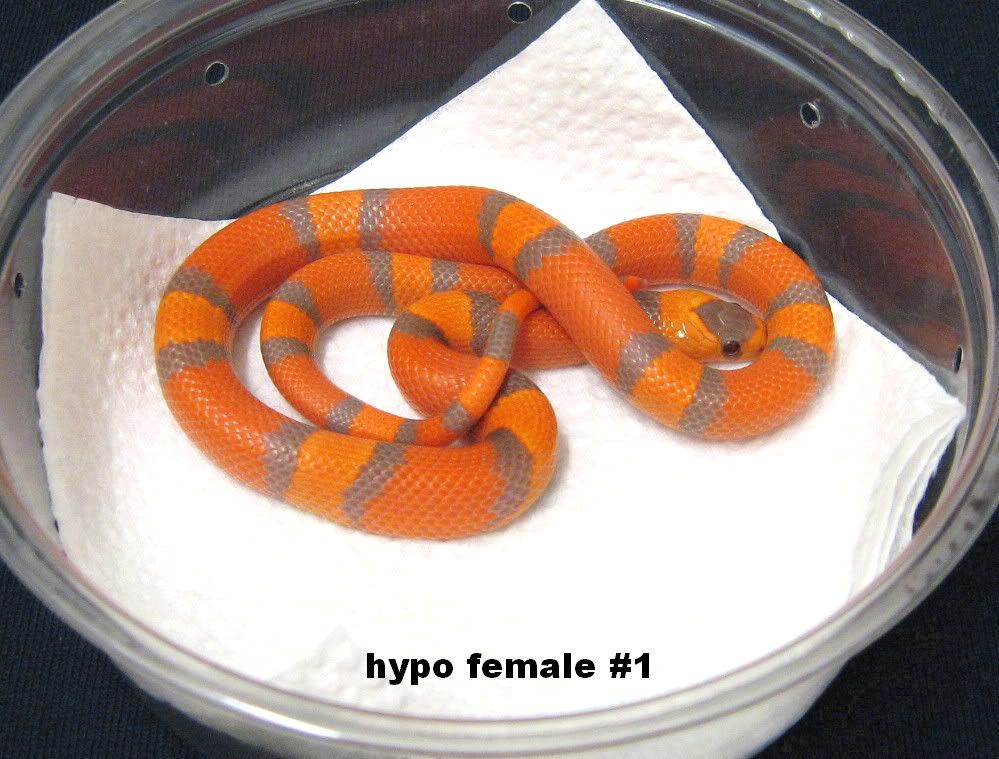
Also, this 5th pic down in my earlier post is NOT of t-positive albinos, not even the lighter one. Those are both hypos from the same "extreme ghost project clutch. I produced those by breeding my best hold-back extreme hypo (het for nothing) to my nicest straight-up ghost (hypo x anery) female that is also het for nothing. And the offspring are both obviously very different variations of hypomelanism. See, if the extreme sire wasn't a hypo, these hatchlings would both be very NORMAL phenotype double hets for hypo and t-plus if this were the case. This is why I KNOW for a fact that "extremes" are hypos and not "tyrosinaise positive" like certain other snakes in the hobby.... I already knew this long before, but this proves it once again that the extremes are indeed hypos,...simple as that.
Image
-----
"a snake in the grass is a GOOD thing"

serpentinespecialties.webs.com


"some are just born to troll and roll"

Rainshadow May 01, 2012 03:16 PM

C'mon Doug,is that as close as I can get to a nanner-nanner-nanner? Hey...maybe I'm wrong? At the very least I've initiated an educational conversation with a guy who already knows everything....I'm always interested in re-evaluating my position. So if it walks like a duck,and quacks like a duck it could just be an extreme duck? I have enjoyed the exchange my friend,no harm no fowl I hope
-----
Captive born excellence through applied genetic theory...and,astute observations based on a keen sense of the sometimes painfully obvious

DMong May 01, 2012 06:01 PM

Let's back up the video a few frames here, shall we?. You are the guy that came here and posted like nobody else knows anything about colubrid genetics and that all animals with deep ruby-red eyes are t-plus albinos, including the extreme hypos. Then when I posted proof that this was not the case, you state that I think that I know everything??..LOL!!....c'mon man..HAHAA!!

Anyway, no harm, no foul. This was very mild in comparison to the kingsnake forum and how a couple can be there...

Here is the ghost that produced those two variable hypo het anery (from extreme clutch) hatchlings. I hope to produce some OUTSTANDING extreme ghosts with that pair when they mature in a couple more years, and possibly some other hypos het anery (from extreme clutch) possibly produced this year too.

shot of him....

shot of her. She is a straight hypo x anery (ghost) with black eyes, nice wide RBR and inner triad rings and thin, slightly vanished black rings.


-----
"a snake in the grass is a GOOD thing"

serpentinespecialties.webs.com


"some are just born to troll and roll"

DMong May 01, 2012 10:49 AM

"Hypomelanism is often mistakenly used to describe this type of mutation,once it becomes entrenched in the hobby,many are reluctant to see them for what they are"

That's very true. I see this all the time as well. But in the case of the "extreme" hypos, I very much disagree.

Now the so-called "hypo" Speckled kings (L.g.holbrooki), hypo temporalis, and many other types in the hobby that are commonly referred to as "hypos", I would consider those tyrosinaise positive mutations due to the deep lavender to chocolate/ purplish hue.

~Doug
-----
"a snake in the grass is a GOOD thing"

serpentinespecialties.webs.com


"some are just born to troll and roll"

Aaron May 02, 2012 03:43 PM

It's been my impression that "hypo" is not really a specific mutation, rather sort of a catch all term to describe any number of genetic conditions that result in reduced melanin. Whereas "T Plus" describes a specific mutation that results from a specific process.

In other words "hypo" describes a result and "T Plus" decribes a cause. All "T Plus Amelanistics" are hypo because they look hypo and hypo is just a look, but not all hypos are T Plus Amels because hypo is just a look that can result from numerous different causes.
-----
www.hcu-tx.org/

DMong May 02, 2012 09:50 PM

"It's been my impression that "hypo" is not really a specific mutation, rather sort of a catch all term to describe any number of genetic conditions that result in reduced melanin. Whereas "T Plus" describes a specific mutation that results from a specific process.

In other words "hypo" describes a result and "T Plus" decribes a cause. All "T Plus Amelanistics" are hypo because they look hypo and hypo is just a look, but not all hypos are T Plus Amels because hypo is just a look that can result from numerous different causes"

Well, I agree with parts of that, and don't with other parts.

Since the term hypomelanism quite literally means....pertaining to reduced melanin (dark pigment), it is basically describing a visual look (phenotype)of reduced melanin, not the actual cause or dynamics of the pigment cell's malfunction as you mentioned.

I will also point out that ALL snakes with any dark pigment are "tyrosinaise positive. This simply means the cells in the animal's melanophores(dark pigment cells) do in fact contain tyrosinaise. By the very same token, the term "tyrosinaise positive"(t-plus)in regards to the albino forms simply means that tyrosinaise (the melainin pre-cursor enzyme) is indeed present within the melanophores, but for many different unknown reasons the cells will not allow it to mix normally with the other proteins needed to produce melanin within the melanocyte itself. This term describes the purplish/lavender color we see in certain "t-plus" animals when it is there all by itself unable to synthesize ANY melanin at all. However, different strains and mutations of this in all sorts of different snakes in the hobby can and do often allow varying amounts of tyrosinaise to be synthesized into varying amounts of melanin, and THIS is where the confusion lies with the terms hypo and T-plus, and what to call these certain phenotypes in the hobby.

Also, many t-plus animals are not "amelanistics" because they casn synthesize some degree of melanin. The term "amelanistic" is more accurately reserved specifically for animals that express a complete and total LACK of melanin, not a reduction (as in hypomelanism) or a form of t-plus where some tyrosines are able to be synthesized into dark pigment. The prefix "a" in front of "melanistic" means pertaining to NO melanin whatsoever.

Anyway, both hypomelanism or tyrosinaise positive can be extremely tough to discern or diferentiate from each other in certain snakes, because BOTH can display substantial variation depending on a great number of things going on within the pigment cells. Also, other underlying colors where the melanin would normally be can be a huge factor in how a certain type of snake will look as well.

I guess what I am getting at here is that almost nothing to do with animals is as cut-and-dry as many hobbyists think..

cheers, ~Doug
-----
"a snake in the grass is a GOOD thing"

serpentinespecialties.webs.com


"some are just born to troll and roll"

Site Tools