Reptile & Amphibian Forums

Welcome to kingsnake.com's message board system. Here you may share and discuss information with others about your favorite reptile and amphibian related topics such as care and feeding, caging requirements, permits and licenses, and more. Launched in 1997, the kingsnake.com message board system is one of the oldest and largest systems on the internet.

Click here to visit Classifieds
Click for ZooMed
Click for 65% off Shipping with Reptiles 2 You

Anery Question

H_nasicus May 24, 2012 09:44 PM

So I just finished reading a thread in which Troy from Rextiles stated that an axanthic lacked yellow pigment, while an anery would be lacking red (or, at least that's how I interpreted it).

So, here's random question.

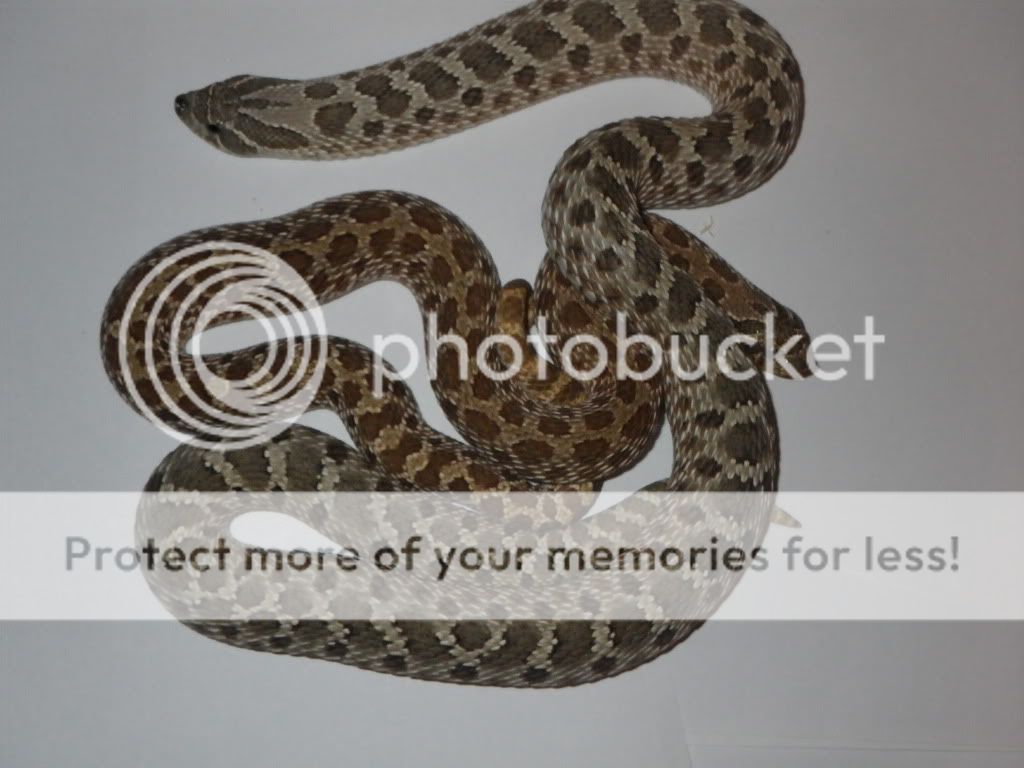
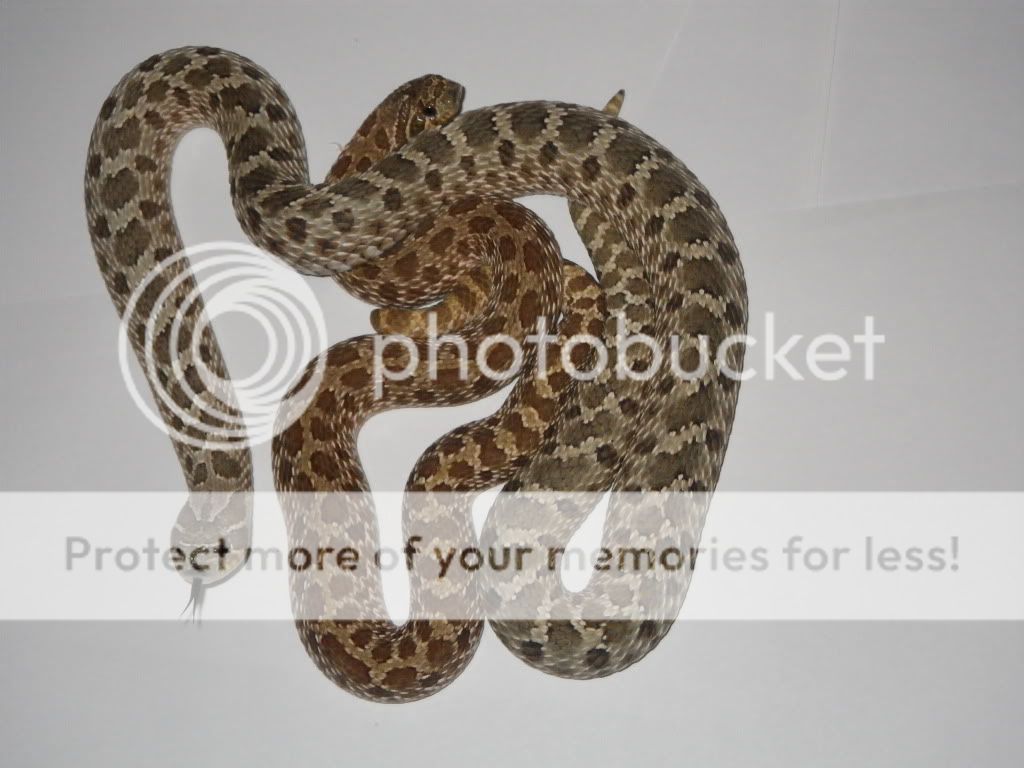
I have a western I bought a few years back as a "normal". She has no orange or red on her anywhere. Just yellow, back and a brownish color, but not the rich brown I see on most normals. She's very washed out looking compared to normal hogs, almost grayed out, but not in an axanthic sense.

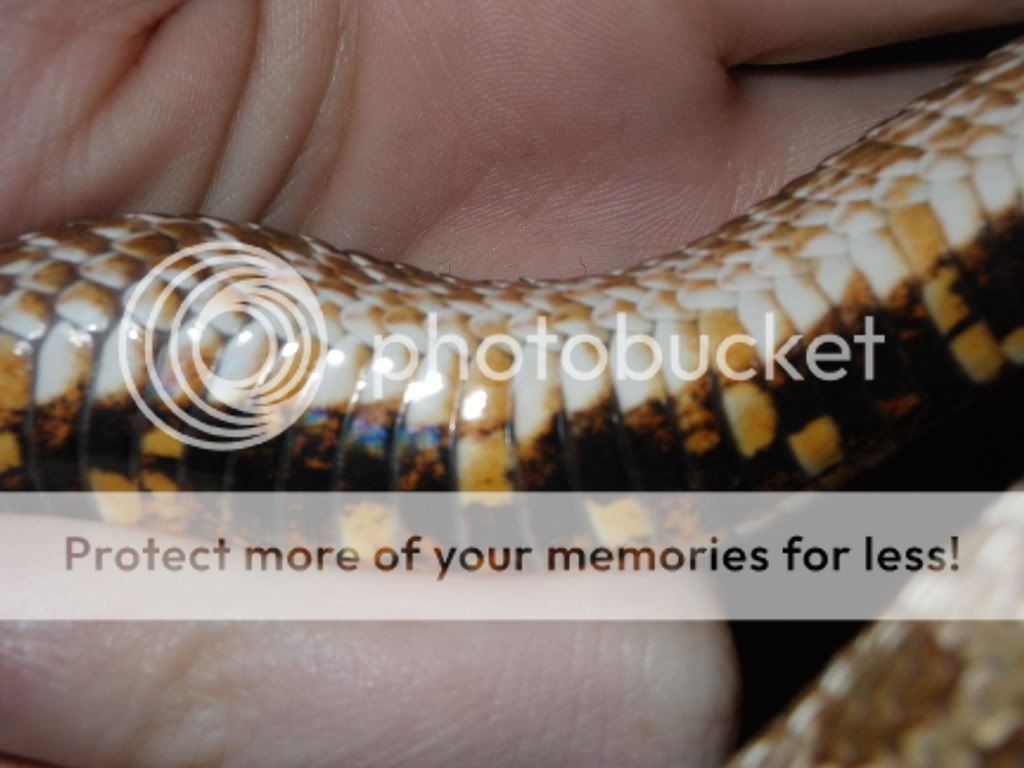
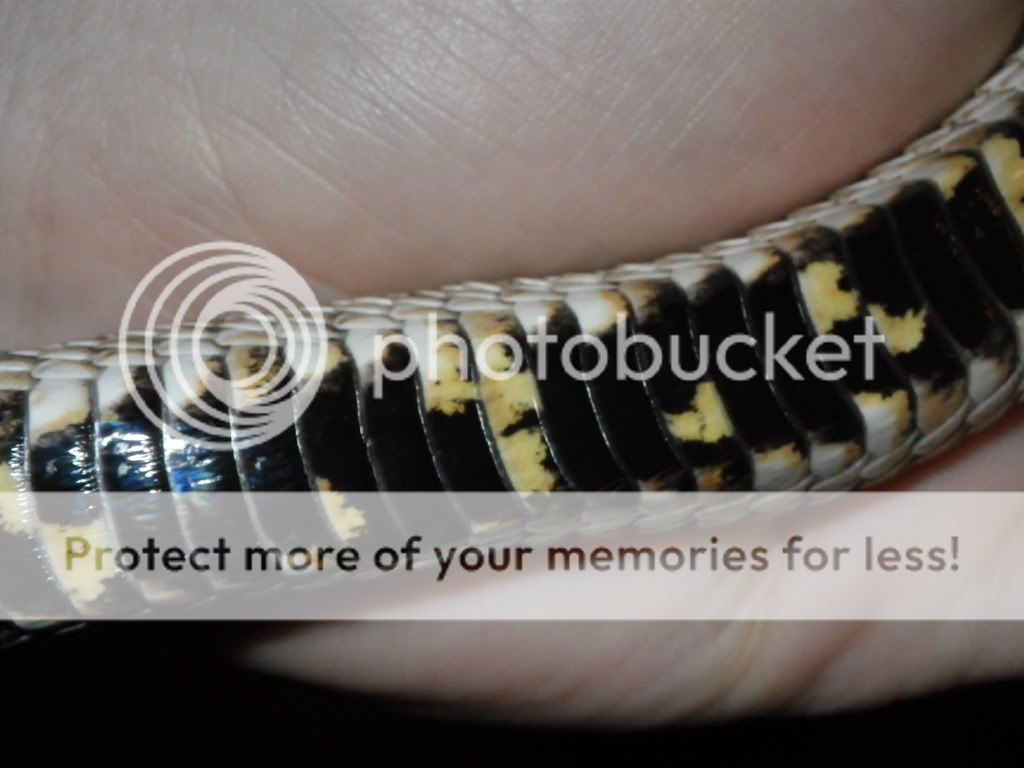
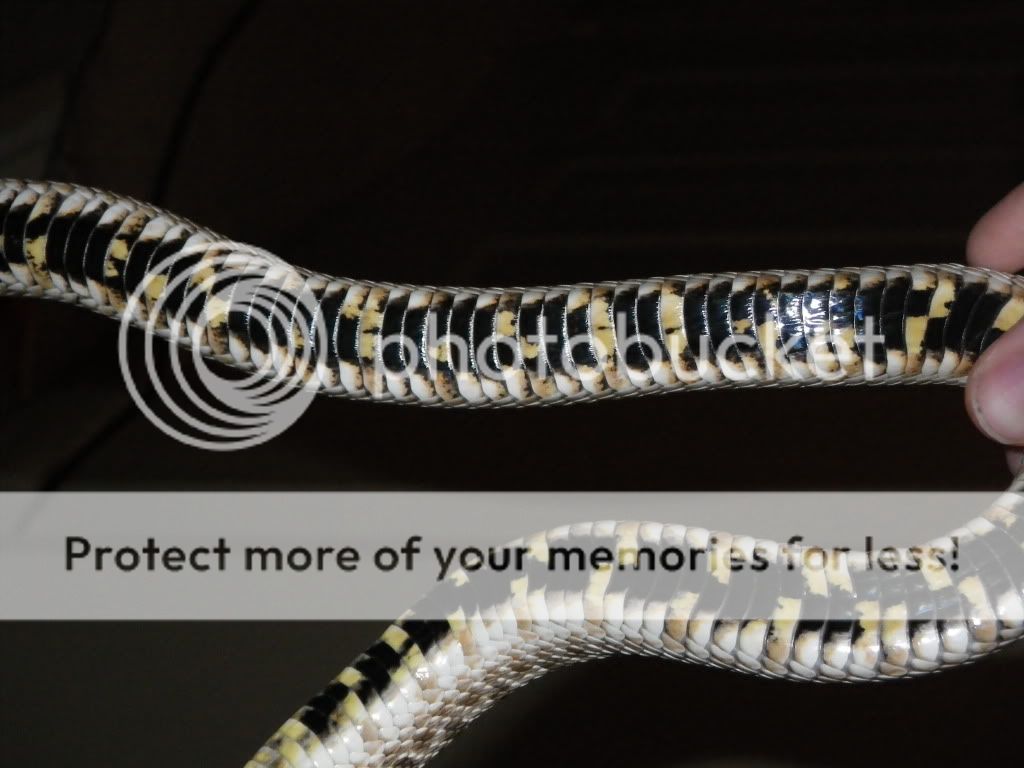
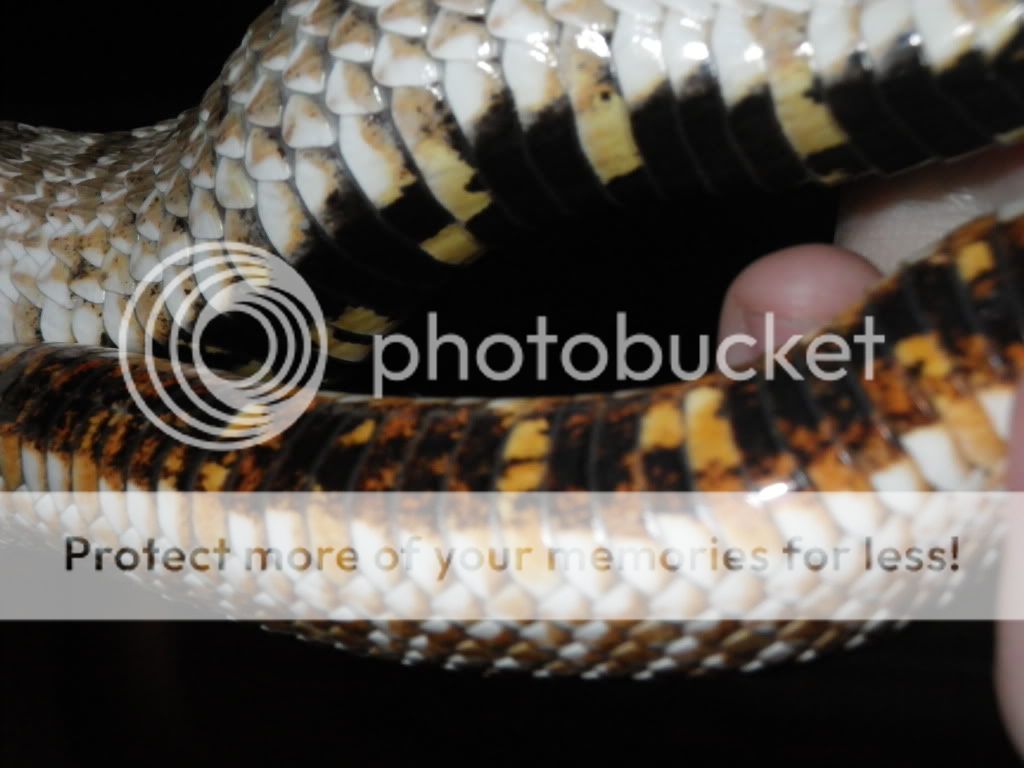
Her belly displays only yellow and black. The spots on her scales where there would be an orange are just a washed out pale brown.

Could she actually be an anery? Or lacking entirely of the red pigmentation? I will post pictures as soon as I can, of her with my other normal snakes.
-----
3.3 Western Hognose
1.1 Ball Pythons

Replies (4)

H_nasicus May 24, 2012 10:13 PM

Normal and female in question

ventral scales of male

Ventral scales of female

Ventral scales of both

-----
3.3 Western Hognose
1.1 Ball Pythons

Rextiles May 24, 2012 11:11 PM

Your female, in my opinion, is a Normal, albeit a very light normal. I could be wrong, but she might be what some would call a green phase (I really have a hard time discerning what some "see" as a green phase ).

In regards to Axanthics, they also can be devoid of red as well as being without yellow. Well known corn snake breeder, dermatologist and author of the fine book "Reptile and Amphibian Variants", Bernard Becthel, refers to Anerythrism as a subcategory of Axanthism, mainly when animals lack only red pigmentation when both yellow and red pigments are common, thus, yellow pigmentation is usually still quite visible. This is why in corn snakes, you see yellow on anerythristics as well as in snows. Ironically, while Becthel does recognize those corn snakes as specifically being anerythristic, in his book, he claims that he still likes to refer to them as axanthic, probably because it's a more generalized term but IMO, also adds unneeded confusion when specificity is needed.

To put it another way, all anerythristics are axanthic, but not all axanthics are anerythristic. It really depends on which pigmentations are commonly found on specific animals and what are absent in the mutation. Bechtel even goes as far as generalizing anerythristic corn snakes as simply axanthics basically for the reason stated in the first sentence of this paragraph. Defining a corn snake as an anerythristic is being even more specific of what type of axanthism it is portraying (from how I interpret his writing).

This is why I don't believe Western Hognose are anerythristic, because the very common yellow pigmentation as found on their ventrals should still be visible if they were true anerythristics and not a single keeper of Axanthics, myself included, has ever reported any hint of yellow pigmentation being found on any individual nor have those with Snow hogs ever seen any yellow pigmentation bleed through like they do on Snow corns.
-----
Troy Rexroth
Rextiles


H_nasicus May 24, 2012 11:36 PM

"I really have a hard time discerning what some "see" as a green phase"

You aren't the only one. Despite getting a pair of green phase 100% het axanthic snakes from Greg Bennett, I still don't -get- the green phase. To me green is, well, green. And hognose snakes aren't green. Not as I define the color anyway.

So you think she's just a normal...normal then? It just really shocks me at how she doesn't have the orange or red that my other normals do. To be honest I don't really care what she is genetically, as I'm fond of the snake for herself. But it would be neat to see if the lower concentration of red could be duplicated. Assuming that she has less red than the others, which I believe she does (but that could probably be argued).
-----
3.3 Western Hognose
1.1 Ball Pythons

Rextiles May 24, 2012 11:47 PM

So you think she's just a normal...normal then? It just really shocks me at how she doesn't have the orange or red that my other normals do.

Well, that's just the beauty and mystery of genetics. It's just like people, there are some caucasians that are your typical "white" and then there are those with red hair that are so fair skinned as to look like an albino type of white. It doesn't mean they are albino nor does it mean that they aren't caucasian, it's just a genetic variation of the same type.

...it would be neat to see if the lower concentration of red could be duplicated. Assuming that she has less red than the others, which I believe she does (but that could probably be argued).

Well, that's what line breeding is all about. If you find that one particular individual that has a certain type of trait that you want to bring out in a specific line, you start to either pair that individual up with others with the same traits or you start inbreeding your F1's to the parent trying to keep that line pure and true. Sometimes you have to continue on for several generations until you've maintained the specified genes right where you want them, but that doesn't mean that once you outcross them with unlike animals that those traits are going to hold true, much like I've always said about the extreme red albinos, it's the same thing in action.
-----
Troy Rexroth
Rextiles
Site Tools