


Here are the results of a 7 years project, I hope you will like it.
In October 2005, at the snake day in Houten (Holland) I was able to buy a very very special female boa because of it’s pattern but mainly because of it’s colors.
It was on the back of a table under several other tubes and not for sale. How did I get it ? Once, I showed a pic and explained it on Jeff’s Ronne forum in october 2005, I would need at least a page to do it, the Dutch guy did not speak English but I can tell you, it has been 4 very long hours, the only thing I was able to understand is that he bought it for months before to a guy in the Houten June reptiles show ! So,, I have never been able to know for sure where this girl was coming from even thought I did a lot of research through different breeders and European importators. Anyway, I have never been able to understand how one could have let her go ? I got a part of the answer in march 2010 and the rest the first of june 2012. You will understand later.
Here she is when I got her, concerning the pattern it was like a mix between an argentine and a motley, more busy than a motley and cleaner than an occidentalis. But I had never seen such a color on a boa, pink without yellow and black even thought she was at least 5 months old !
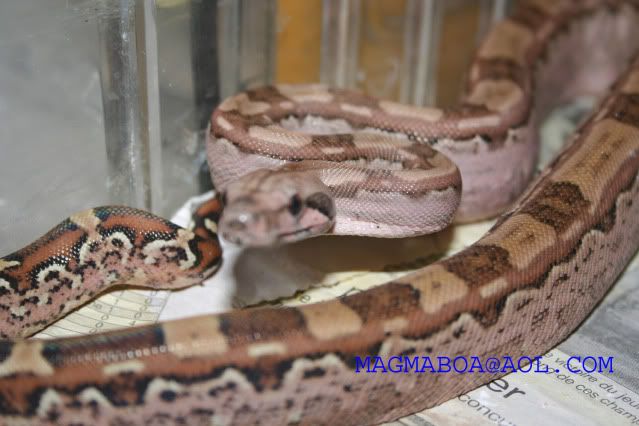
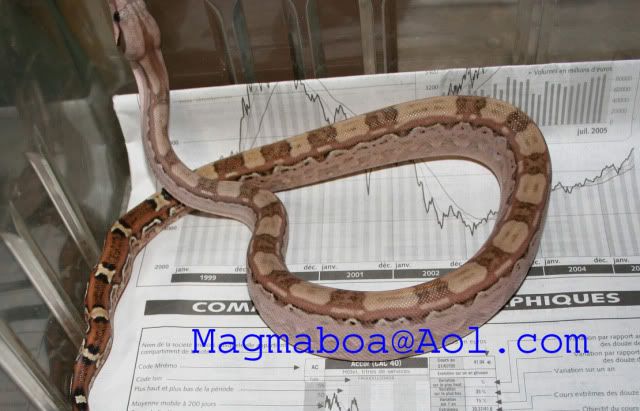
and here she is one month later, very different in a dark phase.
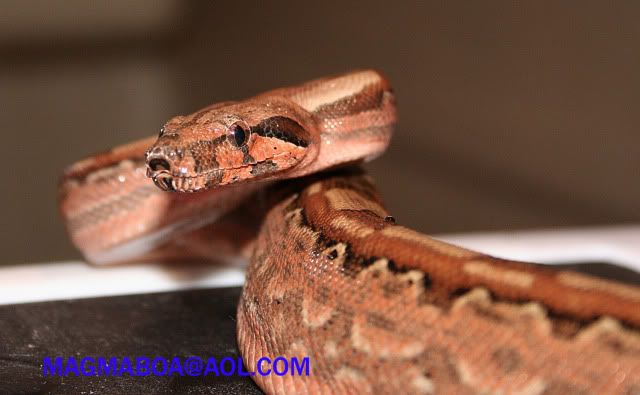
During the first 18 months she was able to have such colors changes but no more since, she is now 7 years old and still the same. She stayed pink, has not darkened and has not developed any black and yellow !
2 years old, pink and light.
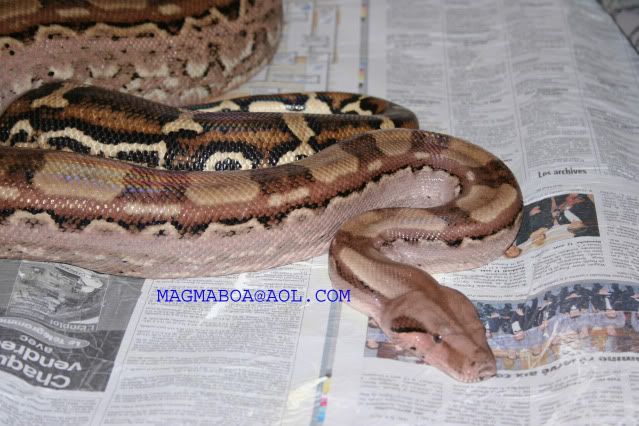
5 years old, still as pink and light, she has not darkened.
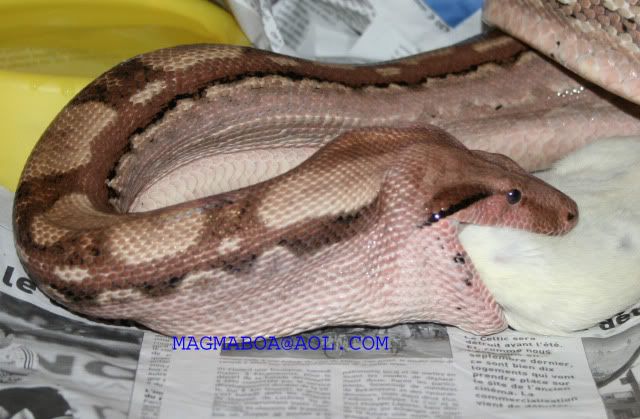
When she was 3,5 years old, in the 2008/2009 season, I tried to breed her but she never ovulated. The. following year, I started the breeding in october with my best T+ blonde, a male I produced in 2007, 1,5 month later she ovulated, the 7 th of december 2009..
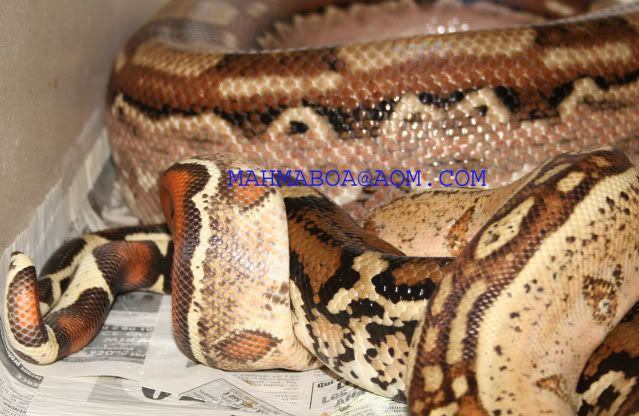
126 days later, the 12 th of april 2010 she gave birth.
From the first day, I havz been wondering what kind of genetic transmission was involved, if I have had to bet, I would have said dominant because of the genetics of the motley, aztecs, incas,... and cblt I am also working on..
Here are the five first ones that came out, normal looking babies !
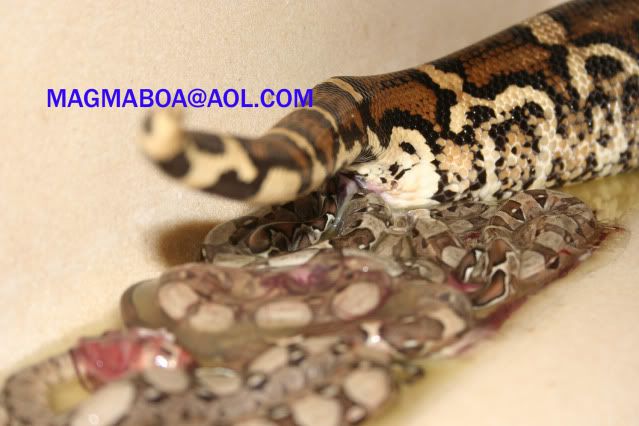
When she was done, no slugs, no still born, just a perfect litter of normal looking babies. It has been a great disappointment,. not only because none had mom’s pattern but mainly because I couldn’t see anything special about their color.
11 days later, they started to shed and I got a very good surprise, they all had more or less red ans pink colors with extreme ones like this one ! (he is now a father)
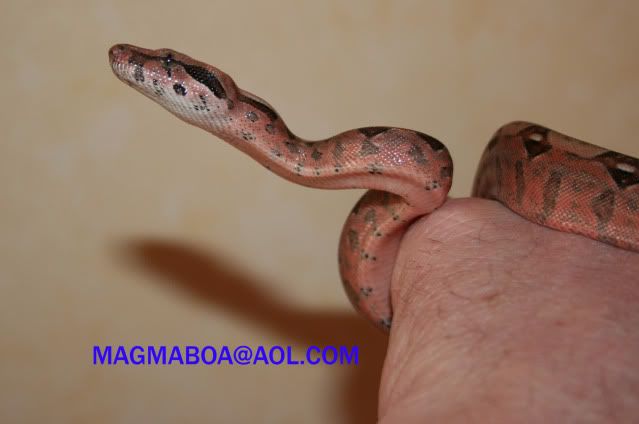
Here are some of the most colorful ones after 2 sheds. Some of you may remember that I posted them 2 years ago as dbl T’ without any other information. (they are het T+ blonde)
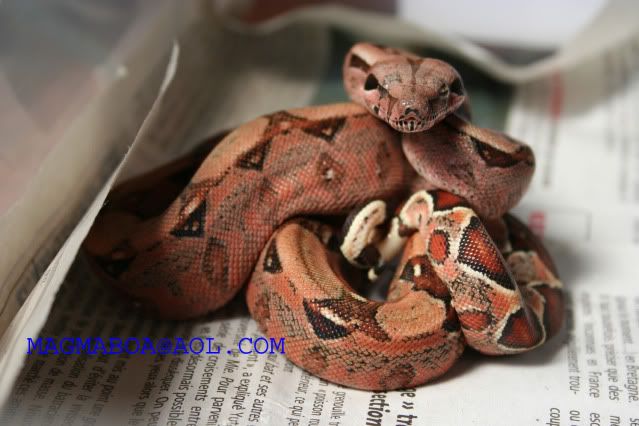
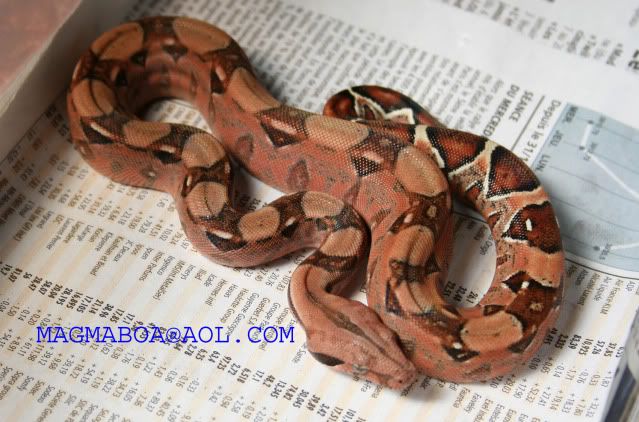
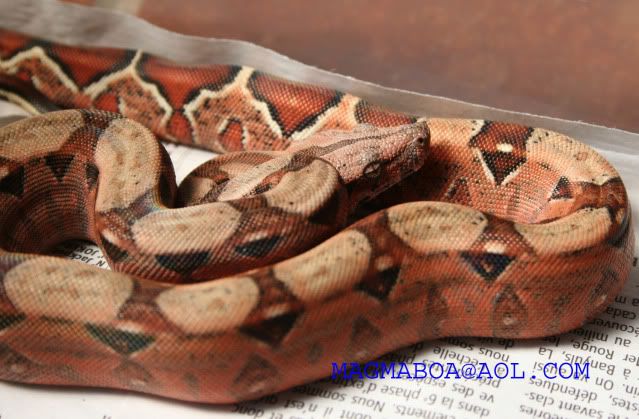
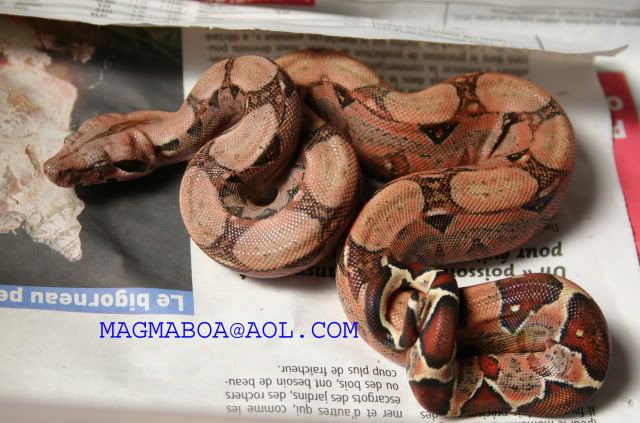
So after looking at them and getting trained eyes I could see that they all share some characteristics of color and pattern. It was obvious and I knew for sure that it was a co-dominant or an incomplete dominant mutation.
So, the next step was to breed a male back to mom to prove it. I raised several males and in october 2011 I introduce and tried one by one different males. After 2 weeks, one finally started courting. In the last days of november, he stopped breeding but the female did not ovulated ....
The picture give yellow apprences that she doen’t have in the reality.
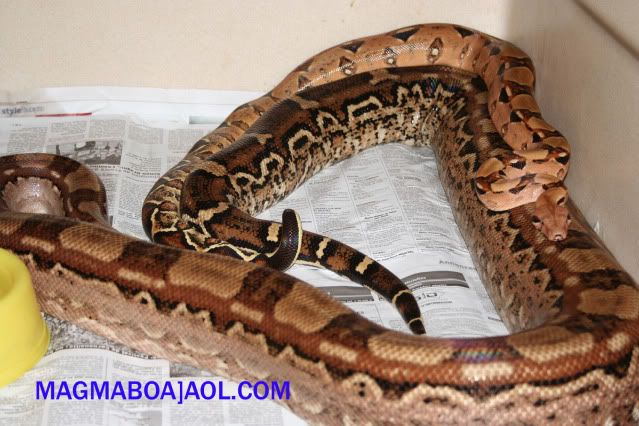
She only did it one month later, so I was not very optimistic about the results. After one month I could see she was getting a little big bigger, there was babies growing but knew that I should get a lot of slugs and as we all know there was a risk to get premature ones and/or still born.
The first of may, 123 days after days post ovulation she delivered them, half slugs, half babies about 4 days premature, yolk sac and big bellies but no still. After one week of cares, only one did not make it because of solidified yolk syndrome, a homozygote one !
I ended up with a small litter not only because of the slugs but also because she curiously did developed less eggs than in 2010 !
So I got 37% homozygotes (super) and 63 % heterozygotes.
Now pictures:
. Here are side by side a het on the left and a homozygote on the right. Nothing spectacular or special about their colors at birth
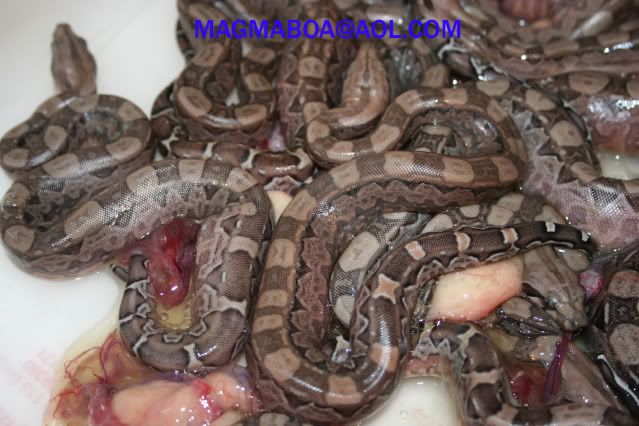
and here is an homozygote. Difficult to guess the orthogenics changes.
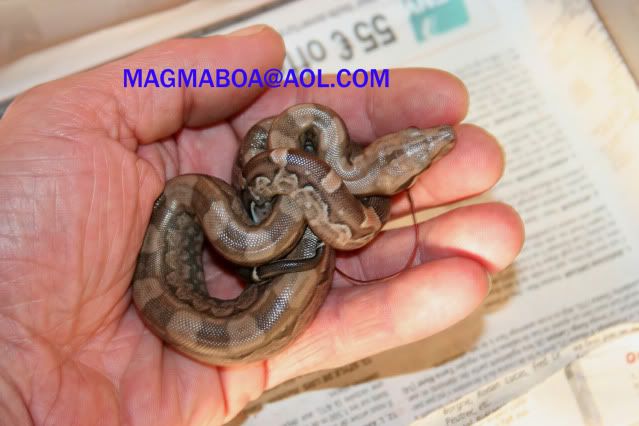
They are now 1,5 months , eating very well but they all have been very long to shed, one super has even not shed yet and will do it in the next days. So it has been long before I could see their colors and the first changes.
One month ago, the first heterozygotes did shed, first colors are there.
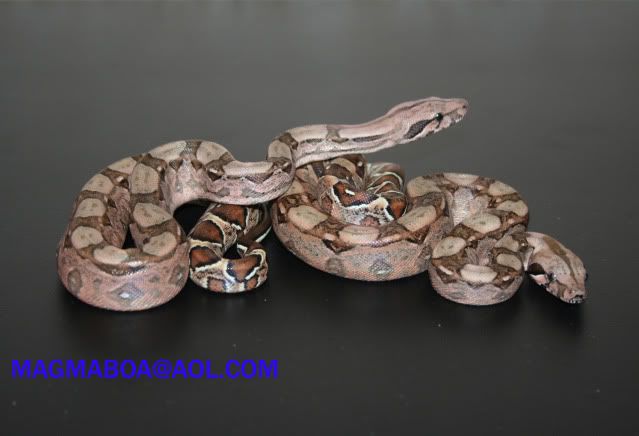
One month later( some days ago), the red is more visible while the grey is less present. They will need 2 more shed to be really colorful.
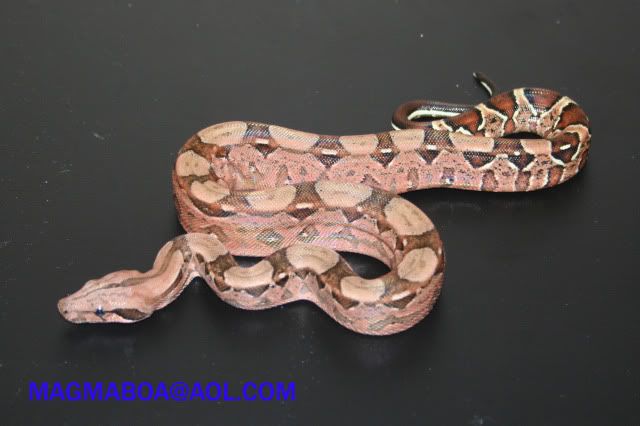
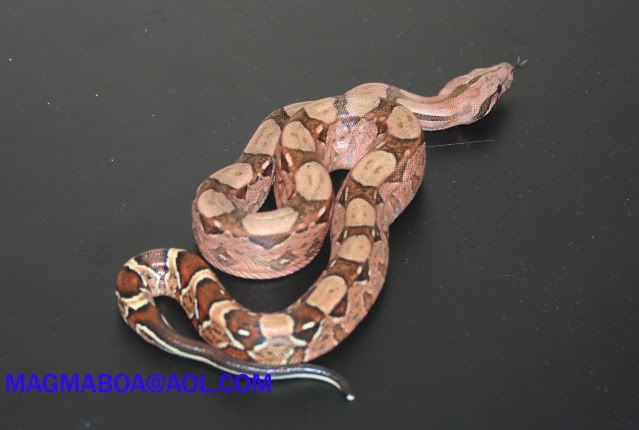
Now here are the homozygotes (super).
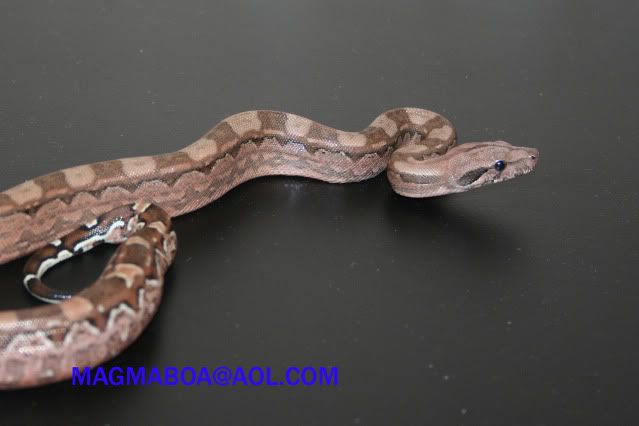
3 weeks ago in light phase.
. 
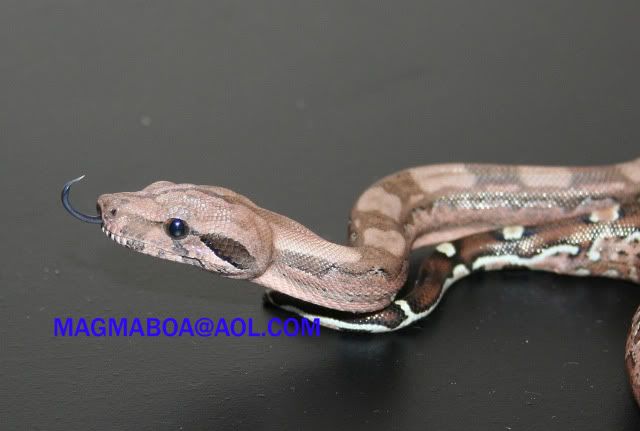
Some days ago, 3 homozygotes, with one in a dark phase and 2 in light phase wich start to get mom’s colors !
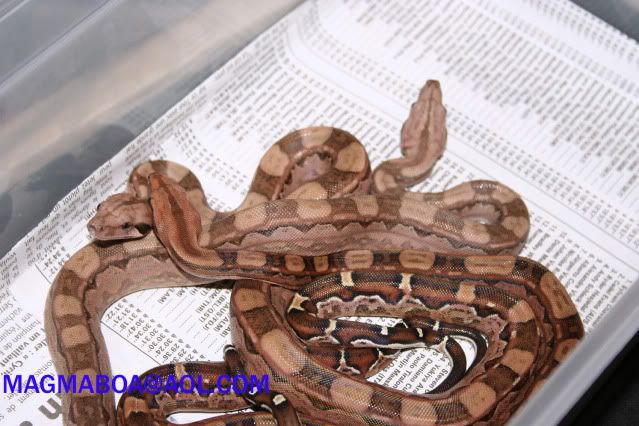
You have noticed that I haven’t named them, I still have to decide if it must be labelled as a co-dominant ( X and super X) or an incomplete dominant mutation ( heterozygote X and X), I hope to be soon able to decide with the results of another litter I got yesterday !. Concerning the mutation, the characteristics are the pattern, a form of axanthisme or hypo xanthic, there is absolutely no yellow on the sides both as baby and as adult. The female is now 7 years old, with the same pink, has not darken at all and developed black. Even the hypo’s (salmon, orange tail,...) get darker with age (browning) because of the Eu-melamine (black/brown pigments) diluted in the other colors (red and yellow, phaenomelanines), in this mutation there is no eu-melamine development making it also a true hypomelanistic mutation.
To resume, the hets are developing yellow and are darkening a little with age while the homozygotes don’t.
I think the possibilities are endless, the first steps will be with the different albinos ( this litter is allready 50% possible het T+ blonde albinos) the khal will be pink, red, white, ‘full coral’ even as adults. It should be able to clean the blood from black and yellow, we could also get surprises with motley, aztec,... cblt. I also think that with a clever selective breeding they could be even redder and more colorful.
I think it’s enough for a first introduction. I have a lot more to say but I think it should answer most part of the questions.
Thanks for reading.
Alain.


