What are you thoughts of this line. Because from what I know of genetics this animal does not fit the definition of hypomelanism. I know that there are other cases in the reptile world of this same kind of mistaken identity as in Honduran milks.
Reptile & Amphibian Forums
Welcome to kingsnake.com's message board system. Here you may share and discuss information with others about your favorite reptile and amphibian related topics such as care and feeding, caging requirements, permits and licenses, and more. Launched in 1997, the kingsnake.com message board system is one of the oldest and largest systems on the internet.



Thanks Jason...more
blackmilkman
Sep 16, 2012 12:20 AM
Replies (4)
lucasjennings
Sep 16, 2012 02:48 PM
hypomelanism= reduced or no black. that animals is a perfect definition of hypo.....no black on it.
Rainshadow
Sep 16, 2012 03:30 PM
A complete lack of,or biochemical inability to produce "black",(and other dark pigments associated with melanin.) is a definition of a condition usually referred to as "amelanism"...just playing devil's advocate here,but what is the difference between this genetic condition,(the one shown in Milkman's first photo.)and the "rusty" Sonoran gopher? I don't think either one is a T positive albino,in the truest sense,but the two seem very different from typical examples of recessive hypomelanism,which reduces visible melanin,but does not usually change it's outward characteristic to the extent that areas that should show at least "some"black,instead display a different color completely.(like the tail bands.) just expressing a few thoughts here,it seems as though the "Trumbower hypo" doesn't start out with this extreme "amelanistic" appearance,but rather changes as it matures.
Jason Nelson
Sep 16, 2012 05:19 PM
Well said and I agree.
Just my opinion, but I think that the Trumbower Hypo Bull is a true Hypo. I get what your saying in the Hypo Honduran case. I have seen the purple/lavender colors in the Trumbower Hypo. I have see and hatched out a lot variances in these hypo. Some are reduce black, some with lavender colors and some with browns. This was a big debate several months ago on this forum. Most of the Trumbower Hypos I have produce and seen are a reduced black or faded black. But once a while I get those pretty lavender colored ones. That's just my opinion, I'm not saying I'm right or wrong.
Here is a couple of Hypos I produced from this year.
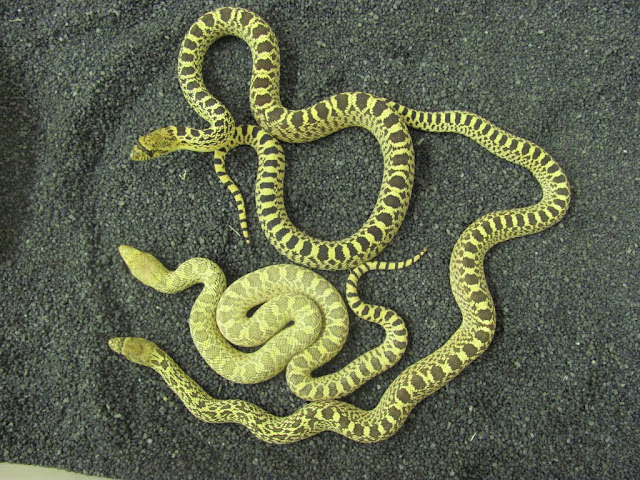

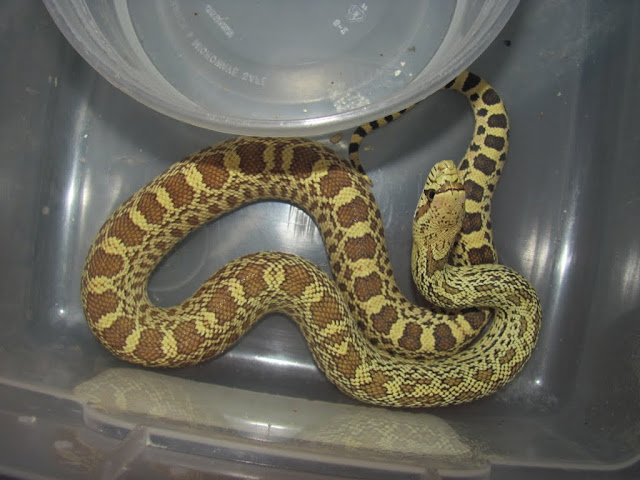
Jason
lucasjennings
Sep 16, 2012 07:56 PM
My reference to no black was not to the extent of a complete lack of black. i mean that animals within this group that show the hypo trait tend to have little to no true black pigment on their bodies. The black still comes through elsewhere, just diluted.
T positive and T negative amelanism are two totally different ball games both in terms of how they relate to hypos and to each other.
