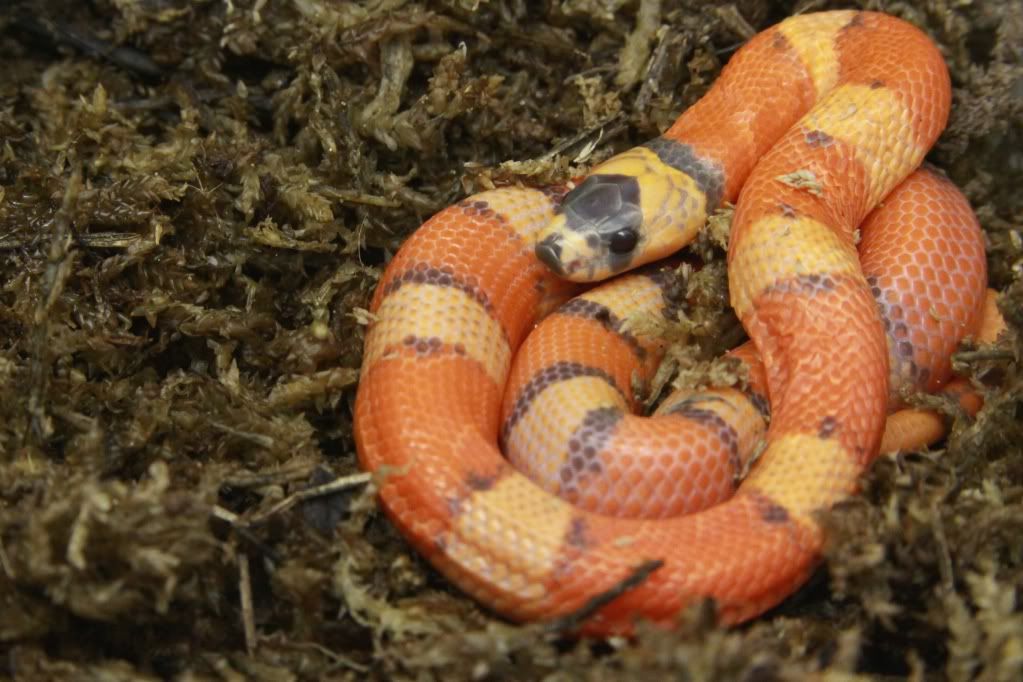
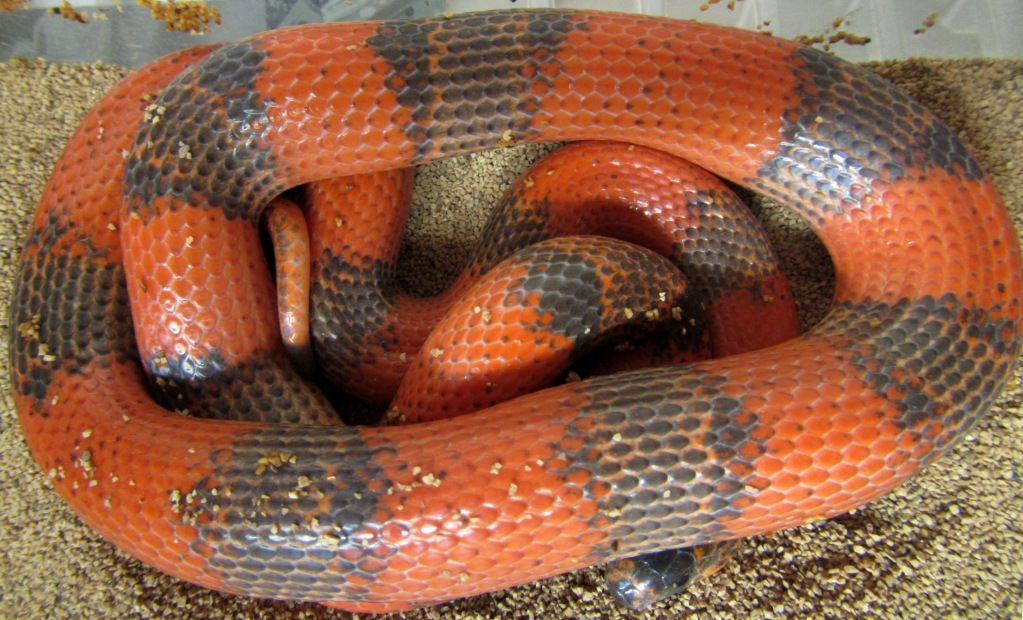
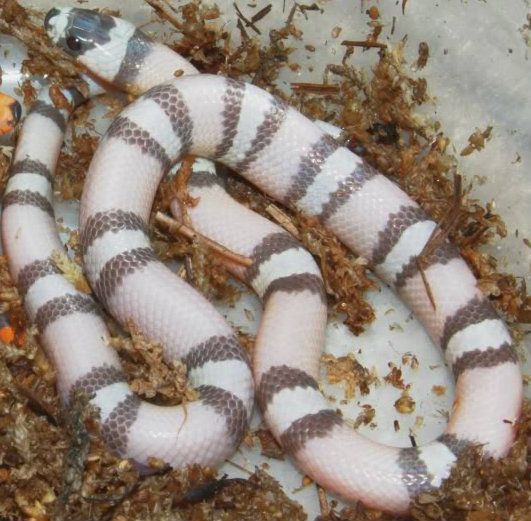
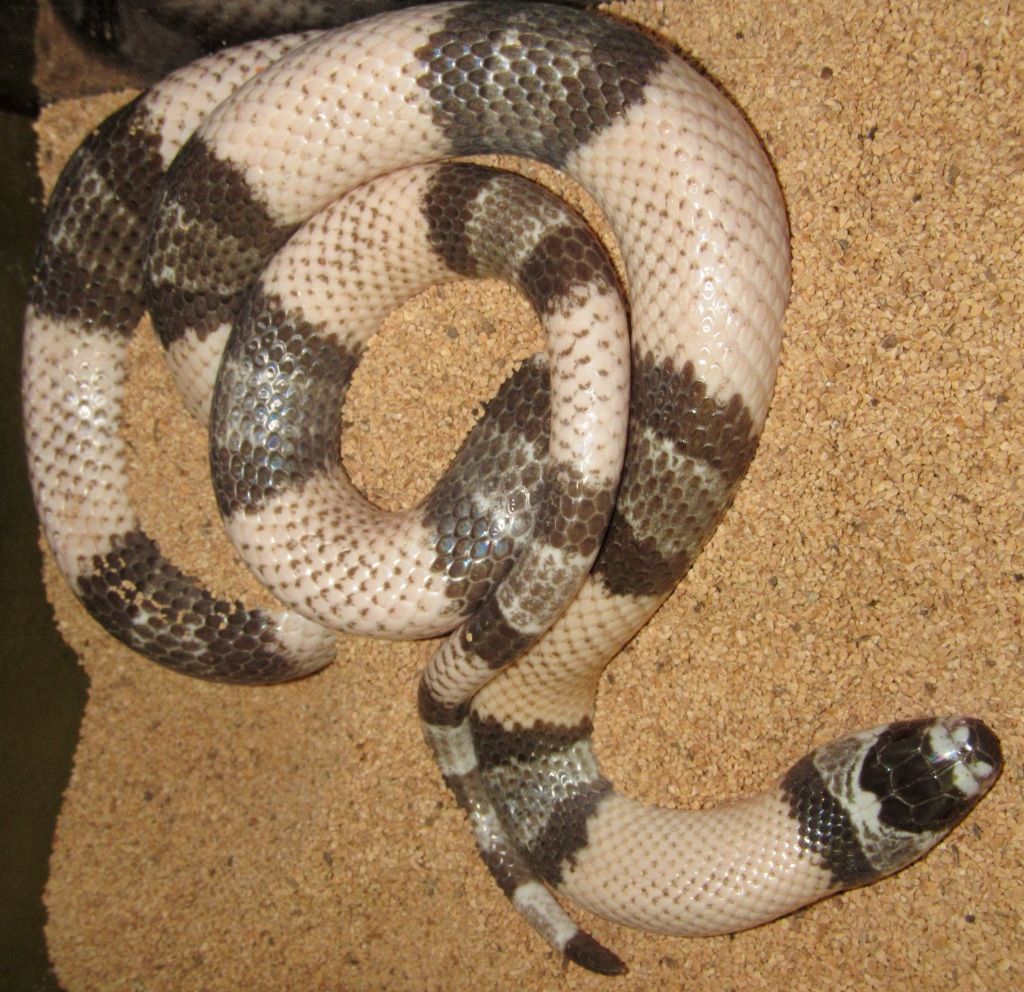
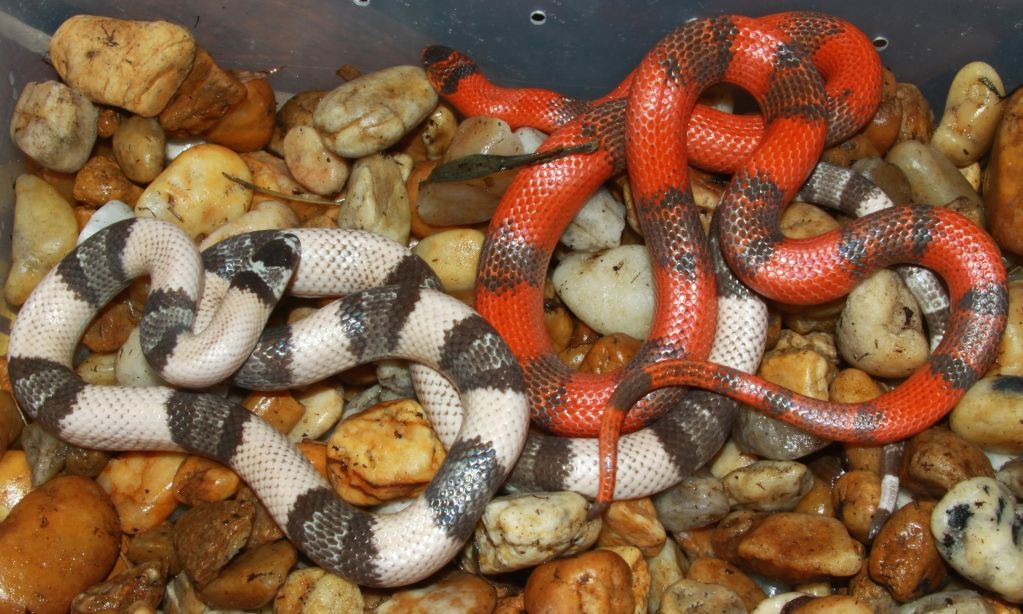
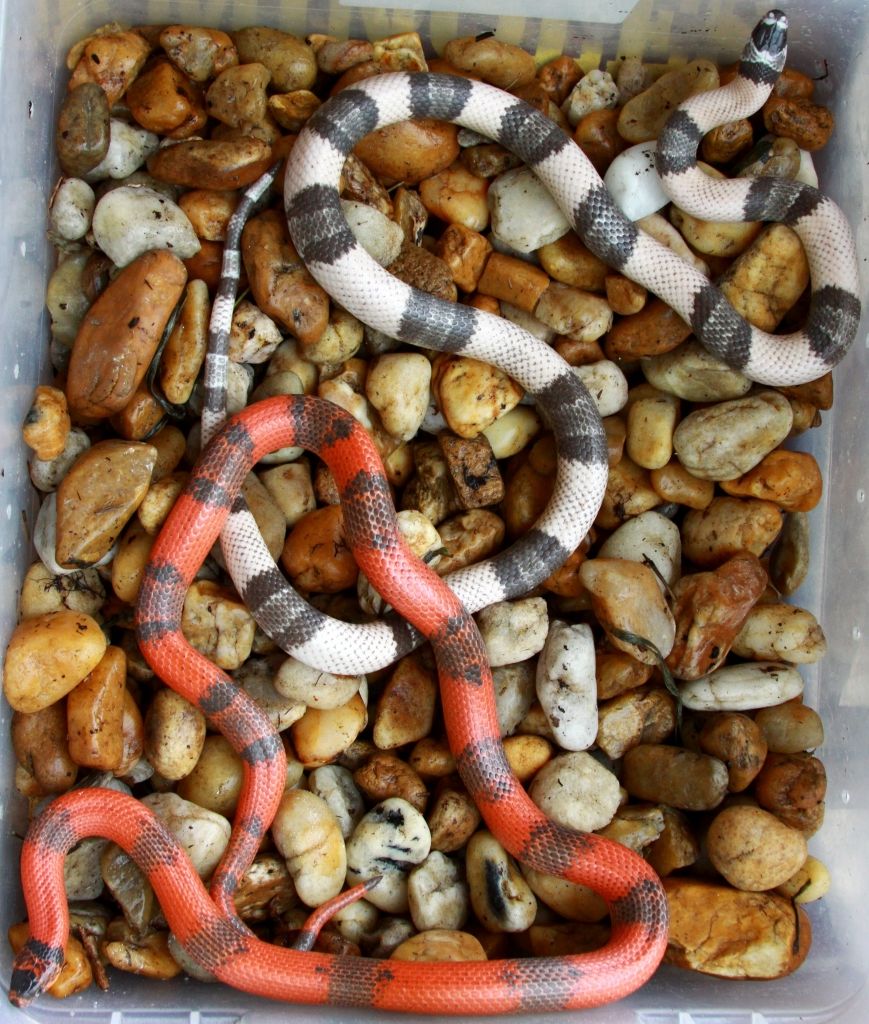
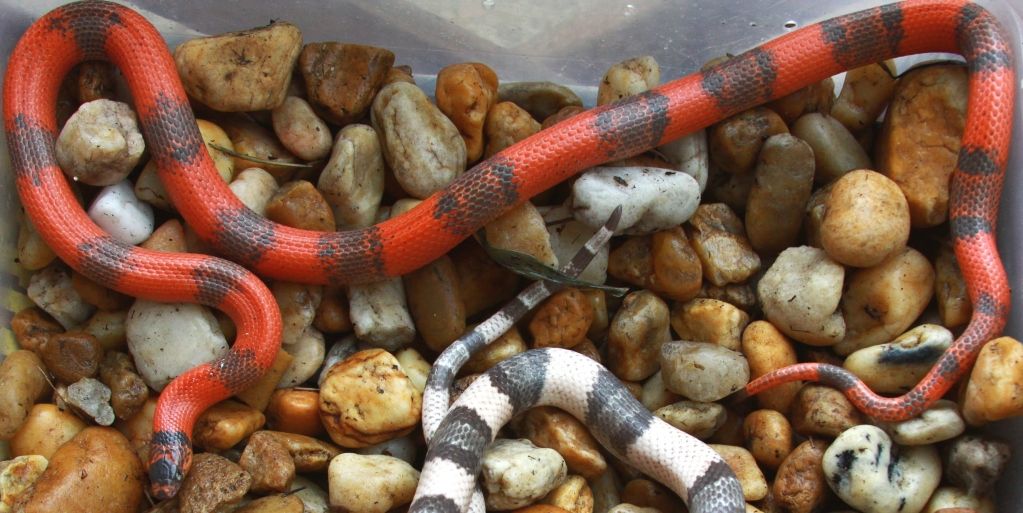
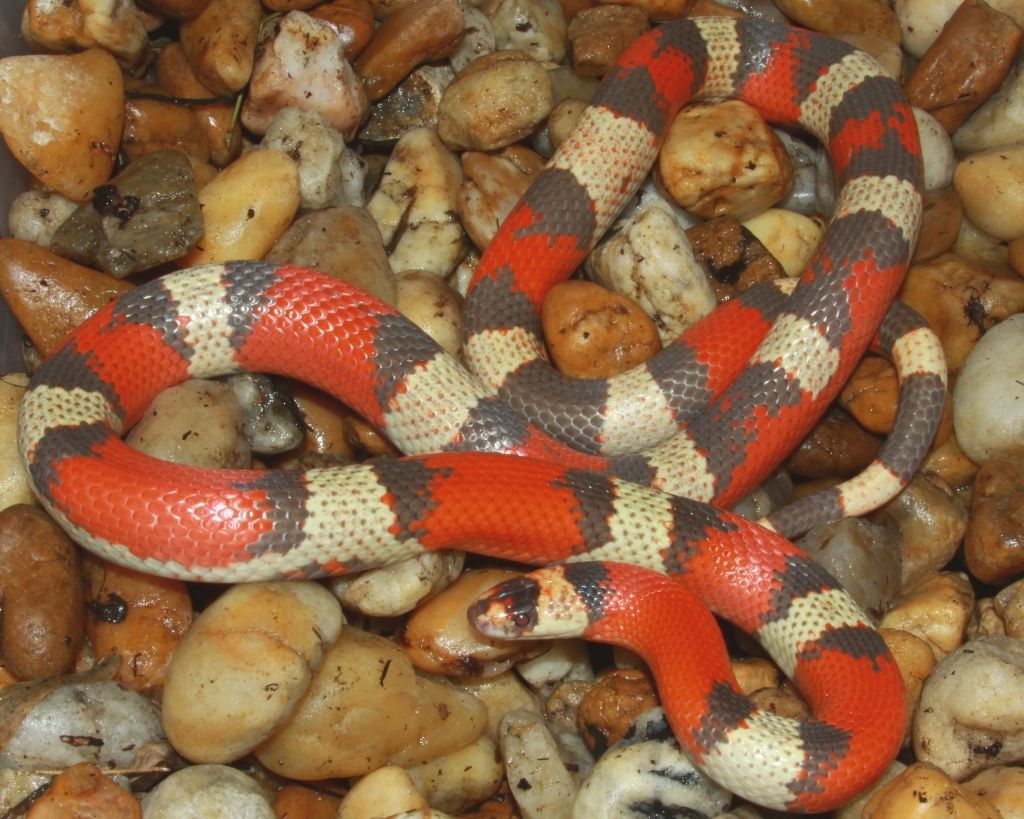
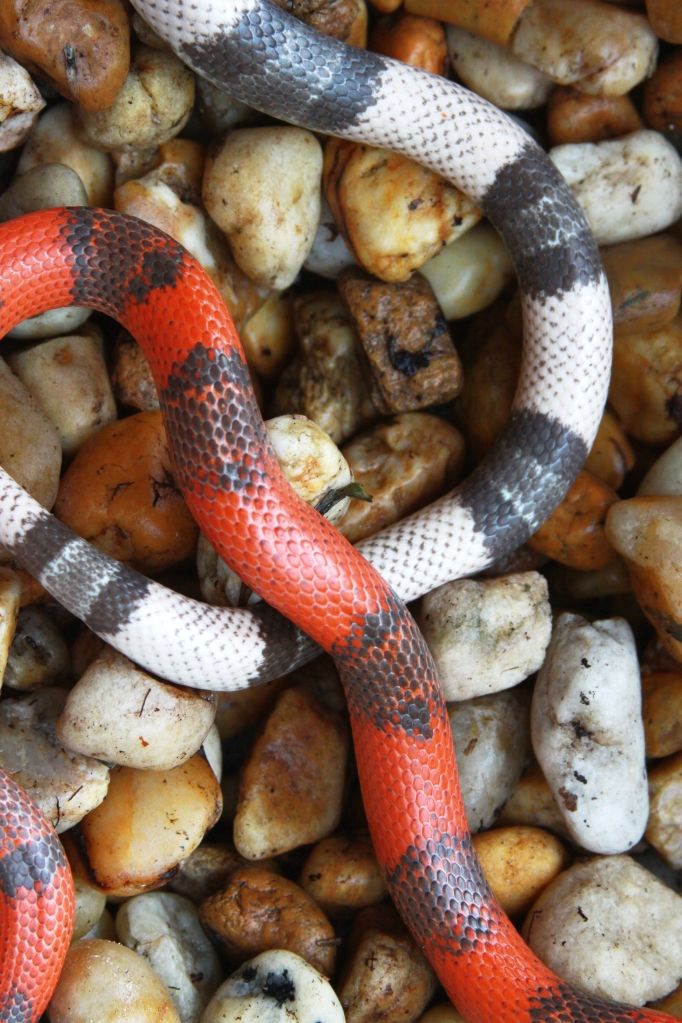
Yes,......I would have to strongly agree with the polyzona influence in the "hobby Hondos" being the likely reason for this highly tipped-up and broken snout band phenotype as well, Rusty. It only makes perfect sense actually. Barczyk's and Porras' original hets and amels from the early-mid 90's were the very same way, only the amels were white-tipped. They were originally authentic L.t.polyzona until they were bred with every other "Hondo" looking type of milksnake under the sun here in the U.S.
After all, L.t polyzona are not "ugly" Honduran milks,.....they are Atlantic Central American Milksnakes (L.t.polyzona)!!!..
This is not to say that the "mega" animals are pure L.t. polyzona, because they certainly are NOT!,.....however, this IS the L.t.polyzona TRAIT being displayed from their past intergradation breedings in the country since they were imported here in the states from Leipzig, Germany from the Hortenbach's.
I have seen a good number of totally un-outcrossed normal phenotype animals from Germany, and they are without question extremely melanized, tipped-up, genuine red and black bi-colored L.t.polyzona.
Nevermind the countless pics I could post of many known 100% authentic L.t.polyzona from different locales......how's this for some compelling additional proof?...
It turns out that even Scott Ballard's bloodline of authentic Flores/de Peten, Guatemalan polyzona were even used by Brian Barczyk when he first acquired the amels and hets from Germany. Fortunately Scott's pure locale poly bloodline is still going strong to this very day despite what some others have done with them over the years.
This is where the pure authentic L.t.polyzona trail pretty much ends abruptly pertaining to BHB's and Porras' amels, because I am sure that Brian bred these snakes with not only a few of these pure L.t.polyzona that were acquired, but also with whatever else he had in his large collection of Hondo-type triangulum to produce more of these very high-dollar amels. From this point forward, these also became varying intergrade percentages of several of the Latin milksnakes people had in the hobby. This would include L.t.abnorma, L.t.hondurensis, L.t.stuarti, and even a few L.t.oligozona, and who knows what else tossed in here and there over the years. I have personally noted tell-tale L.t.stuarti characteristics in the early anerythristics and hets as well.
Also, all of the truly authentic L.t.abnorma that were ever in the hobby back then that originated from Tom Crutchfield's late 1980's Lago de Izabal locale bloodline have completely vanished too since the mid-late 1990's from them being inadvertently bred into the Hobby-Hondo melting pot by all these casual hobbyists that never knew the differences (or cared).
Anyway, here are just two very interesting and very indisputable posts made back in 1999 regarding the polyzona equation...
Posted by John Fraser on May 23, 1999 at 19:11:23:
In Reply to: Polyzona, anyone else have these? posted by Wayne on May 22, 1999 at 11:43:35:
Does anyone else have these Milks? Am i right to assume that they are very similar size and temperment as my Andean Milks? Anything special, or different in their husbandry needs?
Wayne, I have 1.3 breeder L.t. polzona's, I've had my polyzona since 1990 & have produced a number of good clutchs of eggs from them. These milksnakes are very hardy, eat well on mice, & generally very mild in temperament. My adults are 3 to 4 1/2' long & I hibernate them with my US milksnakes each winter for about 100 days at 54-58F . They generally lay from 3-8 huge eggs, the neonates average 10-12" at hatching & always take pinkie or lg pinkie mice. I originally purchased my trio of L.t. polyzona from a good friend in Southern Illinois, Scott Ballard, & these snakes were from locality caught stock that Scott had exact locale data on. In appearance, these are very text-book looking polyzona, some turn to a nice bi-color as adults, some stay tri-colored, with the black tipping nearly obscuring the white/yellow rings. Need more information?, email me & I'll be happy to answer you.....John Fraser
Response from Pete Cragg
John,
I bought the wild caught trio from Scott Ballard in 1992 and later sold them to Brian Barczyk for use in his albino polyzona project. He bought up every L. t. polyzona he could find. These later turned out to be albino Hondurans. I think Brian still has them. Keep them the same as a honduran and you will not go wrong.
They were great feeders and keepers in my care
Good Herping
Pete
original link below:
http://forum.kingsnake.com/milk/messages/102.html
I love the part that states...."these turned out to be albino Hondurans"..HAHA!! 
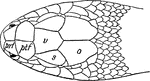
ps....yeah, I have noticed that many do have bifercated (split) frontal scales, and many don't. I have no idea what's going on there though......
........enjoy!
~Doug
-----
"a snake in the grass is a GOOD thing" 

serpentinespecialties.webs.com