Reptile & Amphibian Forums

Welcome to kingsnake.com's message board system. Here you may share and discuss information with others about your favorite reptile and amphibian related topics such as care and feeding, caging requirements, permits and licenses, and more. Launched in 1997, the kingsnake.com message board system is one of the oldest and largest systems on the internet.

Click here for Dragon Serpents
Click for ZooMed
Click here for Dragon Serpents

Behavior since the new nesting technique

Gregg_M_Madden May 05, 2013 06:57 PM

I feel that it is needed to note the difference in behaviors I have noticed since the new nesting was put into use. So far 6 females have laid eggs in the new nesting set ups and their behavior has been identical to eachother but vastly different from previous seasons. These differences have seemed to improve the post lay health as well. So here are some things I have noted. Might even do a real wright up on the subject after another season of using this method.

The first observation was that the time between prelay shed and egg laying has been cut in half from previous years. Only one female went 10 days. The rest have been about 5 days and one female laid 12 hours after prelay shed.

Second observation is there is no frantic pacing back a forth by the female the night before she lays. I noticed with the old method, the females would constantly trace the cage almost looking like they were "trying" to find proper nesting. I was told that this is normal behavior for hogs when I first started breeding them. I could not wrap my head around why they would behave that way in a wild situation. I would think that behavior like that would be a detriment. It would not be very productive to expose yourself to predators while you are full of eggs. Anyway, my thoughts are that this is not normal behavior based on what I have seen from this years nesting compared to previous years. This year all females were calm and placid and never showed signs of them being "ready to lay eggs". They just did it without any hyper activity or restless behavior that they always displayed when I was using the other nesting technique previously.

Believe it or not, I have even seen a difference in post lay condition. Female seem to have visually lost less weight this year and the females ate minutes after completion of their laying and nest buiding. All female who have laid so far have eaten numerous times and the first ones who laid are already back up to pre gravid conditions. They have also all been paired up again...

Just figured I would throw that out there. I have about 7 more females who are going to be laying eggs very soon so I will be taking more notes.
Replies (11)

FR May 05, 2013 07:38 PM

Thanks Gregg, Great report.

Let me add a little more. Normaly colubrids, pair up at the nesting site, well before the female cycles. They normally stay within a few feet of the site. Which means they nest as soon as they are ready. There is no frantic looking around for a place to nest. Of course, non normal can occur, but its rare.

With captives, the second and third nesting in the same box, will improve steadily, as long as the conditions are right. Which indicates they look to nest at or near where they have before.

Also as i mentioned, deeper is better, but I understand your needs.

If your like me, and I think you are, you observing the improvement you have already seen, cause you to look for more improvement.(to test the range) So my job with you is done. hahahahahahahahahahaha

Now you understand why it gives me a stomach acke to see poor nesting. I thank you and Adamo for testing it out. Hogs are a great canidate for easy nesting. Some reptiles are not so easy(varanids)

I have a question for you, what is the normal sequence from pre cycle shed to egg laying, in your experience. Thanks so much

adamo_pietro May 06, 2013 06:28 AM

Thanks Greg and Fr ..
I never raised the issue of the nest. Thanks to you I hope to improve the lives of my hogs .... I have 6 other females who must lay and all second depositions. I will try this system and see the differences. Thank you very much!

FR May 06, 2013 10:37 AM

Looking forward to more reports from your hognose.

I hope you try to use deeper substrate, up to 250mm or better yet 350mm. Then place a glass or clear plastic piece about 100 to 150mm down, make sure the snakes can burrow underneath it.

Often snakes choose to nest underneath the glass, and by moving the substrate, you can watch them lay with very little interruption.

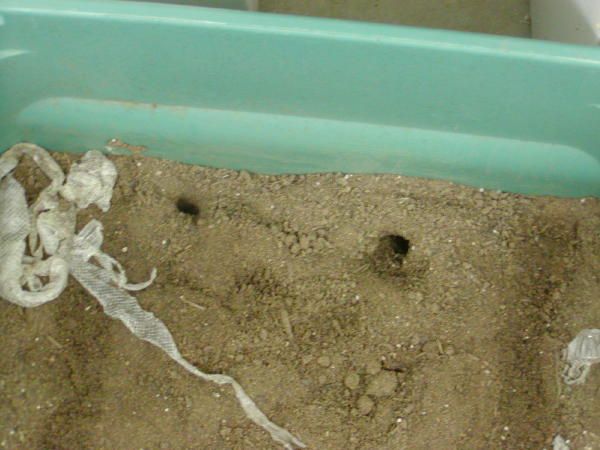
THis is a deeper box, notice the sheds and the burrows.

I did have boards over the substrate, moved them for the pictures.

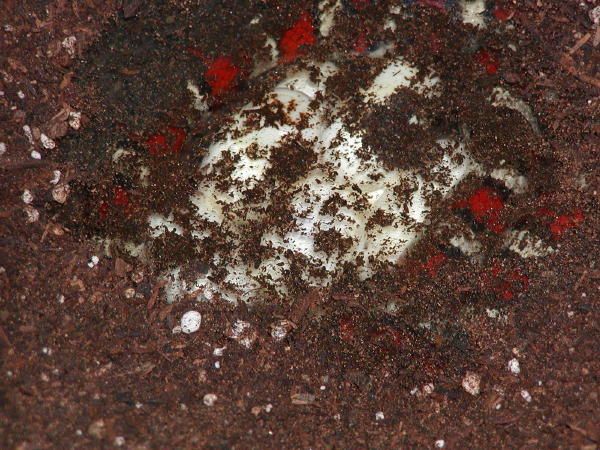
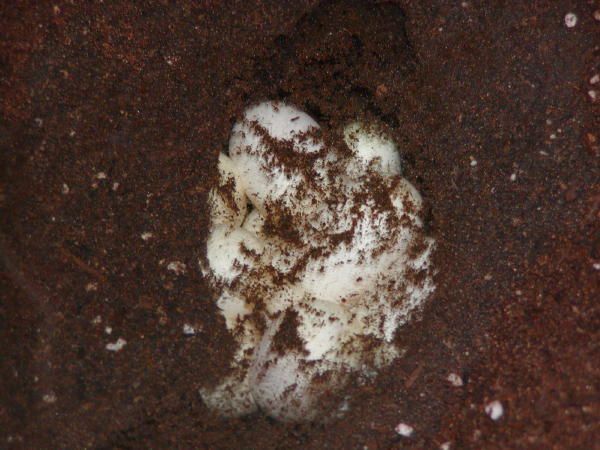
Here I moved the dirt away to see the eggs, which are underglass.

Heres a picture of kingsnake and her eggs under the glass. I have used this method, since the mid seventies with many many species.

You can test different depths and materials to determine what works best for you and your hogs. Thank you for sharing

H_nasicus May 23, 2013 05:01 AM

You know...I may give this a shot.

It certainly seems less risky to the eggs. My last female dropped them into the standard nest box and scattered them with her moving around so much. Luckily she didn't injure them. But it's pretty clear from what I've heard so far that when nesting with this method, eggs are laid in a nest and not scattered.
-----
4.4.4 Western Hognose
1.1 Ball Pythons
1.0 Everglades Rat Snake

snakekeeper77 May 05, 2013 08:53 PM

cool observation greg! nice to see some improvement in hognose keeping and behavior, even from a few years ago...keep us posted. I am also glad you guys are figuring this out before I breed them, thumbs up...your experiences will help us new to hoggies out!

frankdunham May 06, 2013 03:54 PM

What did you end up using for the deeper sustrate. slightly moist coconut fiber?

adamo_pietro May 11, 2013 05:06 AM

Much better reproductions of the past ....
Last years deposition after 8 days of shed and 9-10 hours for lay
This years deposition after 7 days of shed and 5-6 hours for lay
Also covered almost all the eggs....
17 good eggs and 1 slugs
Image

FR May 11, 2013 01:37 PM

Congratulations, with better nesting, you can commonly see them lay the night they shed, or within a few days.

What yours are telling you, is what your now doing, is better, but not there yet.

They NEED to be in complete darkness, no lite what so ever. Which is why we use deep substrate. One foot deep is good. With a piece of glass about 4 inches down. They then lay under the glass and you can watch or take pictures without disturbing them much.

Also, to much plant material. Westerns nest is sandy dirt, with very little plant matter. Plant matter would be avoided in nature. They do not WANT to put their eggs there.

Your task is to offer them something they want to nest in. That is, go out of their way to nest there. And its easy.

Please understand, your doing great and will progress a little at a time. Thank you so much. and congrats

adamo_pietro May 12, 2013 12:29 AM

Can I try out the new year ... I have to change all the racks sy ... I am now 12 cm ... Thanks for the advice, strive to improve the health of animals ...

Gregg_M_Madden May 12, 2013 12:38 PM

Congrats on the awesome clutch and better nesting results. You are off to a good start my friend.

adamo_pietro May 12, 2013 02:52 PM

Thank's my friends......Is an honor for me told by experts in the field....

Site Tools