From another forum post:

Reptile & Amphibian Forums
Welcome to kingsnake.com's message board system. Here you may share and discuss information with others about your favorite reptile and amphibian related topics such as care and feeding, caging requirements, permits and licenses, and more. Launched in 1997, the kingsnake.com message board system is one of the oldest and largest systems on the internet.



A good use for bad eggs...
RG
May 12, 2013 02:38 PM
Replies (14)
FR
May 14, 2013 09:53 AM
I have a question, why do you think those eggs were not fertile? They looked good to me. Some incomplete calcification, but still good. Best wishes
RG
May 15, 2013 09:27 AM
The photograph I posted of the Hondo eating maybe misleading, I rinsed and dried the eggs prior to feeding them to my Hondos. I also took the photo with my phone under florescence lights.
How can you tell eggs are bad?
Small in size.
Yellow shell (not white).
Flaccid and not turgid.
No blood vessels and lack of any visible allantois or yolk sack.
Still not sure?
Then candle the eggs after a week, if it looks like a light bulb (uniformly yellowish inside) with no blood vessels present, it's not fertile.
Don't want to risk it? Wait a few more weeks, the bad eggs will start to change color and eventually start to stink.
A fertile eggs looks like:


OK Frank...here's a test for you, no multiple choice!!!
How many good eggs are in this picture?

Hope this helps you out.
-Rusty

FR
May 15, 2013 09:44 AM
Its all about timing, eggs deposited close to the pre-egg laying shed, do not develop as quickly and will take a little longer to see what you mentioned.
Now the big question, you did not wait to see if they rotted?
You can add a new rule, females do not deposit calicum on ovum that was not fertilized. Of course even fertilized eggs can die before any development takes place.
Also delayed development is common with reptiles, and while rare with colubrids, its does occur.
Also, all i have is that picture and from that picture, I would have incubated them until they went rotten.
I could tell you all kinds of stories of delayed development, but I won't. After all, there your eggs and its your decision. And only your loss if they would have hatched. Best wishes
Gregg_M_Madden
May 15, 2013 08:59 PM
Al I can say is that so far this season since using the new nesting, one of the things I have noticed is that it is taking roughly 24 hours before vascular systems start showing.
I have also hatched neonates from eggs that looked like yellow bags of piss in the start of incubation. I keep eggs in the incubator until they start to rot. Even if they grow a santa beard, I keep them incubationg. I have noticed that mold is not a problem or an egg killer. Eggs or embryos that are weak are subceptible to mold. Healthy and strong eggs can be right next to moldy eggs without ever being affected.
Rusty,
If you think your eggs are bad, feeding them off to other snakes is the perfect thing to do. Snakes get some healthy variety added to the diet, and the energy it took they laying female to lay them is not totally wasted. Get a varanid. They even eat the rotten ones unlike snakes. LOL
Rextiles
May 15, 2013 10:33 PM
I've had fertile developing eggs develop fungus and still hatch out perfectly healthy; I've also had infertile eggs go 10 weeks, yes, you read this right, 10 weeks without any development at all (they candled clear through) and still look perfectly healthy white, plump, showing no mold/fungus, bad smells nor sweating.
The key in determining egg viability is whether or not you see any development within the first week by candling; if not, the chances are probably good that it's infertile. I've had eggs show development within 24 hours, I've had some go as long as a week before any development could be detected, the average has always been between 48-72 hours though. All other indications of egg viability/non-viablility are conditional and not necessarily going to determine whether an egg is going to hatch or not, it's all dependent on healthy embryonic development (or lack thereof).
-----
Troy Rexroth
Rextiles

JoeTaffis
May 18, 2013 07:58 AM
Personally I wouldn't feed the eggs. I would worry about the females eating their own eggs after giving them the taste of doing it....
FR
May 18, 2013 09:02 AM
This is what I find odd, its totally natural for many reptiles to consume reptile eggs and their own bad eggs. Its not natural to consume their own good eggs or eggs of nesting partners.
Your task as a keeper to to support what is natural. Simply put, just to be normal. And normally they do not eat their own viable eggs.
Again simply put, eating their own viable eggs tells you the keeper, your seriously doing something wrong. So wrong, that your causing the snake to act in a totally un-natural way. To act insane.
So instead of taking away or preventing the snake from doing something un-natural or insane. How about fixing the problem. How about giving what is normal to the snake so that it doesn't act in a totally un-natural or insane way. Thanks and best wishes
RG
May 21, 2013 10:00 AM
YEP!
The key in determining egg viability is whether or not you see any development within the first week by candling; if not, the chances are probably good that it's infertile.
Also, I've had eggs that look good that just go bad for some reason...those are the one's that are baffling to me! (not just hogs).
I need to give you a call man...it's been a while!
-Rusty
Rextiles
May 21, 2013 09:26 PM
Also, I've had eggs that look good that just go bad for some reason...those are the one's that are baffling to me! (not just hogs).
If not the most baffling, it is the most disappointing, that's for sure. It's always the hardest to comprehend when you have that one egg that looked as good as it's clutch mates and then all of a sudden go sour. I think in times such as those, it's probably safe to assume that there was something wrong with the animal inside than it was something conditional.
One time I had a whole clutch hatching out and yet this one egg never hatched, so I decided to cut it open. What I found was a full term snake that had actually gotten it's umbilical cord wrapped around it's neck and it must've choked itself accidently. I've also had a couple that had gotten themselves in knots inside the egg and died and another one that had gotten it's umbilical tied into a knot that must've restricted whatever nutrients or bloodflow that caused it's death. And those are just the easy ones, the things we can see. It's hard to say when it's something internal that ultimately causes the animal to die, and those are the most frustrating.
I need to give you a call man...it's been a while!
Yeah, it's been far too long. I've always enjoyed our talks. Feel free to call me any time after 12pm Rusty, It would be great to catch up with you. 
-----
Troy Rexroth
Rextiles
RG
May 22, 2013 08:33 AM
I'll be in touch soon bud!
RG
May 21, 2013 09:58 AM
Thanks Gregg,
The female hondos that ate the eggs went off feed right after that Hog egg meal...perfect timing!
What is really weird is having so many slugs...I just don't have these Hogs figured out yet (as far as breeding goes).
Is it possible my female is too big? She's well over 600 grams.
-Rusty
Gregg_M_Madden
May 21, 2013 06:10 PM
Rusty, none of us have them figured out. LOL... It's one of the things I really like about the species. Not really much known about them. I do not think your female is too big. That should not be an issue. All I can say is keep trying my friend. Vitamin supplements are used in my collection on a monthly basis. Seems to help with recovery and egg viability. Just something to think about being that most of us do not offer uv lighting and such.
Good luck Rusty.
RG
May 22, 2013 08:32 AM
I used to give my snakes supplements (I take them, so why not?) however I stopped years ago because I didn't see any major difference between before supplements.
I try to give my snakes a varied diet, so that might help, chics, rats and mice. Some will eat eggs but I try to avoid food that I cannot obtain easily.
Maybe there is something in lizards or toads/frogs that could make a difference? Something to consider...
-Rusty
FR
May 22, 2013 11:34 AM
Hi Gregg and Rusty,
First let me apologise. I do not mean to be offensive or anything like that.
But these issues are exactly what I am talking about.
When solving problems, even the most difficult, its advisable to use the KISS method and proper troubleshooting proceedures.
In this case, they fit exactly. Kiss= keep it simple(stupid) is self explaining and common troubleshooting is, address the simplest things first. And example is cars, what is the most common reason they stop working? The answer, they run out of gas. Next is a flat tire. Yet mechanics make lots of money doing simple things to get that car running.
Back to snakes. Mice is a known, its proven, mice has raised tens of thousands upon thousands of reptiles, of many many many kinds thru thousands of generations. I would not look there unless the hogs refuse eat them.
Take neonate hogs, again, thousands have been reared to adulthood and long productive lifes on mice. Thousands upon thousands. Mice isn't the problem.
Consider, growth, rapid growth is the defining factor of a diet. To grow quickly and hogs do grow quickly, they must replace their skeleton many times a month, same for organs etc. That takes strong dietary support. Reproduction, not so much. It mostly takes fat(energy) Fat converted to yolk, is the majority of what is required to reproduce. Fat in nature is RARE and what is needed.
As a field herper, what is IN OUR FACE IS, snakes are very very very attune to temps and humidity. Species that allow us to see them such as Crots, spend every minute, and I mean every minute, 24/7/365 maintaining and adjusting temps.
What is interesting is, they are reptiles and not mammals, which means, they utilize a range of temps, a wide wide range of temps.
There are some the take more heat then others, that some is interesting. As its not just about species. Its about mass. The larger the mass, the harder it is for that individual to reduce heat, so neonates take more heat, but because of the high surface ratio to mass, can cool off quicker. Large heavy individuals of the same species cannot raise their body temps as high simply because they cannot cool off as quickly.
Some species like water and gardersnakes, can simply jump into the water and cool down very quickly, so they do.
I can go on and on, but the main difference between current rack system husbandry and nature is, they utilize, that means SEEK AND USE, a wide range of temps and a small range of humidity. With current husbandry, its broken down to exact averages. This is very simple, they use a wide range naturally and you offer a small range. That means your results will be borderline. It also means its not about the snakes, its more about you as the keeper. YOU have to be right and right all the time. The responsibility is on you, as you have taken that ability away from the experts, the animals. And please do not get upset, its simple. and its to help you figure out your problem/s.
Hognose, are thick skinned, heavy skinned, and high massed animals, this indicates they spend more time exposed to air and sun. This is the interesting part, thin skinned snakes such as kings, etc, spend very little time exposed to sun(UVA-B) reptiles that are required to spend time exposed to sun, develop ways to protect themselves from the damaging elements of sun exposure(UVA-B)
Hognose have monster thick skin, which means they use a wide range of heat. In reality, they do, and are out at much hotter temps then every other snake in their habitat, including crots and coachwhips and garders.
I spent many many years taking temps on Crots in nature. There are real measurable patterns with heat. The animals seeking the high end of their temp range, were, gravid, or, large prey bolus, or in shed, or injured/sick. Gravid or cycling females, only used high heat for short periods. Inidividuals with large prey bolus, only used high heat until the prey item broke down.
Growth and normal sized prey bolus, did not require high heat.
The difination of being a reptile should not be termed cold blooded, ectotherm or pokliothermic(sp) etc. It should be labelled animals that do not have a consistant body temp. As at times, they have high body temps and at others, cool. With the important part being, they utilize as important, the whole range, not one part or the other. Averaging the choices is a fine balance of success and failure. One you the keeper are taking.
Sorry to bore you folks, whats next is as important.
hibernation/brumation, this is also an area of concern and both the terms and the applied action is misinterpited. Snakes do not hibernate. They seek safe temps when outside conditions are too harsh to be utilized. If too cold, they seek a safe medium, if to hot or too dry, they seek a safe medium.
That safe medium does not promote or should it detract from the animals health. Too cold does, it causes their gonads to atrophy. This is known in the field. Breeder males, seek heat during winter if available, or before the females emerge to copulate.
again, in nature, the vast majority of species and individuals live in areas where they have "no" need to hibernate based on cold. The vast majority of species, occur in the tropics and without snow pack. The number of species drop as you go both north and south.
Most species go down, thats a better way to say that, because of lack of prey, or water. Its not about cold. This includes all colubrids.
Colubrids use cool temps year a round, not just winter, unless they have a need for heat, to grow, digest food, reproduce etc. Inbetween that, they always seek cool. Or as cool as they can.
Ok ok, enough of that. Its very simple to me. Its not about the snakes, its about the keepers. The method puts the responsibility on you the keeper. If you do not allow them to do what is natural to them, then you have to be right with what you support. The smaller the range you support, the higher the chances of you making errors.
Your seeing intermittened failure, only means your support is marginal. That you see success, means your close.
Some folks like Gregg, put lots of thought and sound judgement into their efforts, so they see more success, yet the method is flawed so they do make some mistakes. If someone like Gregg is happy with 90% success ratio, then great and go with that.
Lastly about what I am offering, I am not here to tell anyone what to do. I can only hope to offer you insight as to, what the snakes are, then you can make your own decisions. What you do is entirely up to you. Keeping is not about FR, its about you and your snakes.
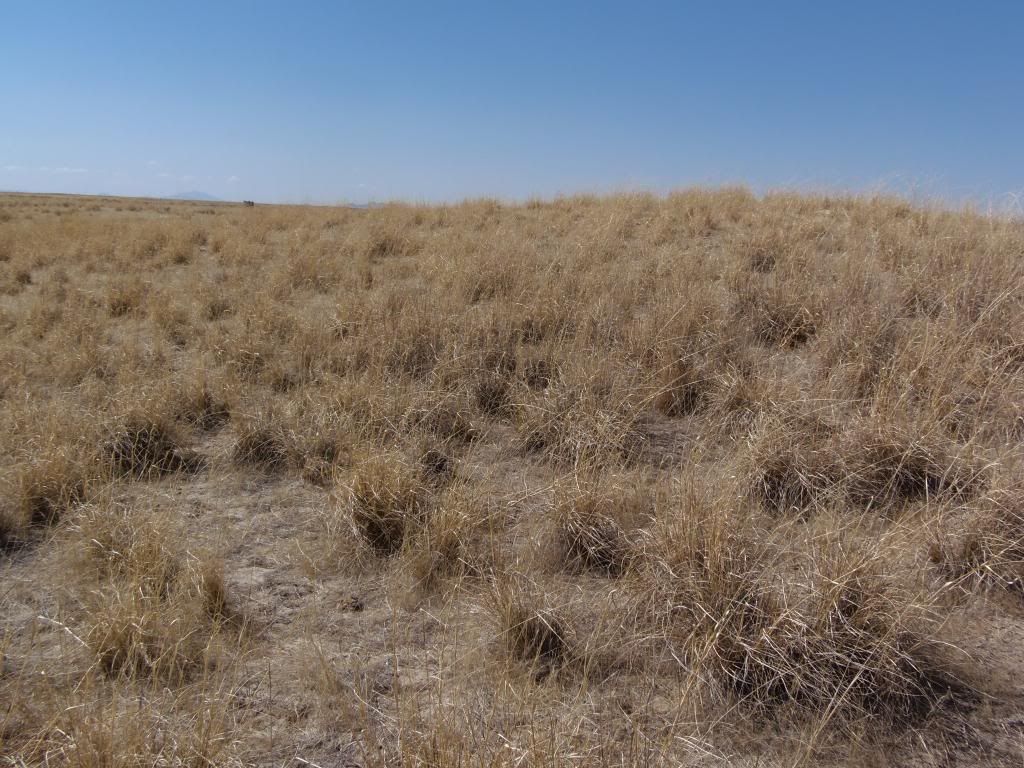
This is what your snake IS evolved to be successful in, Look at your cages and its easy to tell, its not the same. All you have to do is get close enough to allow that success to happen. Not exactly, not even close, just close enough. Its a simple problem to solve, KISS. ITs plain and simple, they did not evolve to live in racks. So its up to you to figure out where the problem is, its in the rack. Simple. Now whats the biggest difference between your rack and that picture? In your rack, they are constrained from getting anything they want or need.
In the habitat above, the temps went from aprox 0 F, to 175F ground temps(they live on or in the ground, that is the important temps) Yet, they succeed in that wide range. But do they only use the range you offer???? That is the point. Have a great day.
