Hello,
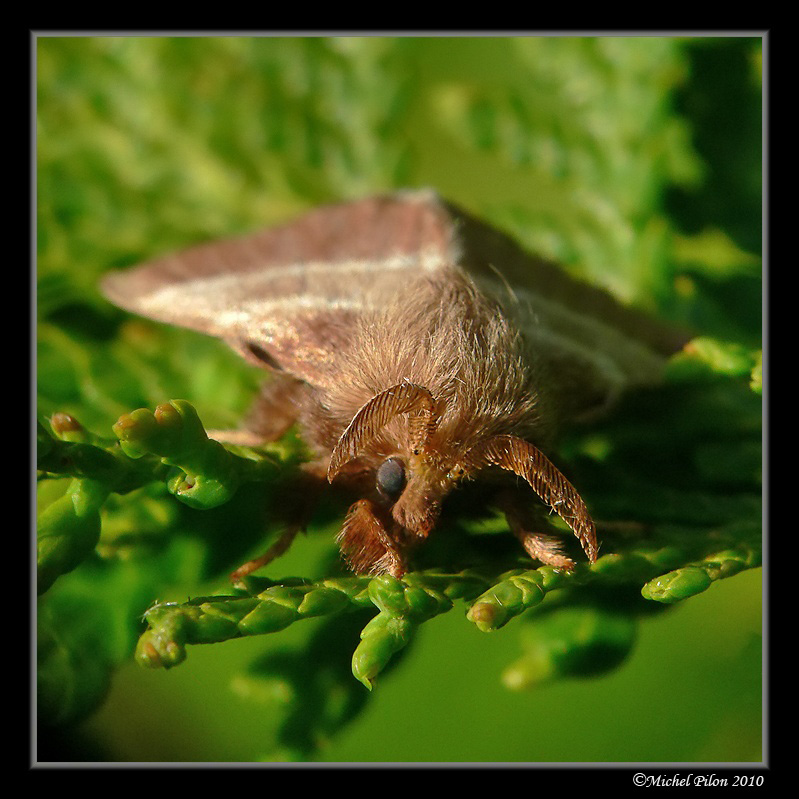
Here is another moth photographied last July at the "Old Man in the Mountain", New Hampshire...
Is it possible to identify the family/genus/species?
Could it be a gemetridae?
Thank you very much for your help...
Michel
Welcome to kingsnake.com's message board system. Here you may share and discuss information with others about your favorite reptile and amphibian related topics such as care and feeding, caging requirements, permits and licenses, and more. Launched in 1997, the kingsnake.com message board system is one of the oldest and largest systems on the internet.



Hello,
Here is another moth photographied last July at the "Old Man in the Mountain", New Hampshire...
Is it possible to identify the family/genus/species?
Could it be a gemetridae?
Thank you very much for your help...
Michel
Hi Michel,
You take such nice photos! Since this is closer to my neck of the woods and even though the Geometridae baffle me -b/c there are SO many - I figured it was time I take a stab at them! I began with Covell's book and flipped thru the plates to find a Woody Angle (Semiothisa aequiferaria) but upon doing a search did not have too much luck. I then went to my trusted bugguide.net and narrowed it down to
FamilyGeometridae
Subfamily Ennominae
Tribe Semiothisini
Genus Macaria
M.aemulataria is a possibility and there is one that has not been id'd down to species that looks quite a bit like yours. You might want to take a look there and maybe upload to see about id'ing to species, it may help to get that other one id'd too as it was taken in Massachusetts.
keep me posted!
lele
here is a link to the M.aemulataria page and you can go from there 
M.aemulataria
Hello Lele,
Thank you very much for your help and appreciation! It is really apprecitated
I think you are right!!!
I was hesitating between M. aemulataris and M. ulsterata
But my specimen is too dark to be M. ulsterata...
One other photographer on BugGuide.net thinks also that it can be M. aemulataris... And this butterfly exists in NH!
So I think I can be enough sure to identify it as is...
Thank you again!
Michel
Hi Michel,
Glad I could help and it was fun to try and identify a geo since they are so daunting! I love bugguide.net. I have watched that site grow from one man's humble beginnings many years ago to the superb site it is now. Such a wealth of knowledge, but keep posting here so I don't miss any of your lovely photos! Most of my Lep photos on bugguide are in the larval stage.
lele
Hello Lele,
Usually I post here and on Bugguide.net (which is of course, a wonderful and so useful site!)...
To thank you for helping me take a look at the following links:
a) Link to my pictures of Virginia ctenucha I photographied last July (click on the thumbnail to see 6 pictures)
parcours.pilonm.org/insectes/arctiidae.htm
b) Link to my pictures of Big Poplar Sphinx I photographied last July also (click on the thumbnail to see 18 pictures)
parcours.pilonm.org/insectes/sphingidae.htm
Cheers
Michel
My what stunning detail! What do you use for equipment?
I love the ctenuchid moth. I remember the first time I saw one and quickly id'd it. They are so unique and lovely.
The sphingids were the family that introduced me to rearing when I happened upon a tobacco hornworm (Manduca sexta) and wondered what it would turn into. Long story but I hand reared a crippled adult and of course lost some caterpillars to parasites and also had some successes. I then got into Saturnids, which I have been rearing for many years. The two are my passions.
Have you ever been to Bill Oehlke's Sphingidae site? It is of the US, but he has links to PEI, his Saturniidae site and more.
Hello Lele,
Thank you very much for the link which I will keep with great interest...
My camera is a Panasonic FZ-20 and I'm using a Macro Lens Raynox DMC-50
www.dpreview.com/reviews/panasonicfz20/
Ciao!
Michel
Help, tips & resources quick links
Manage your user and advertising accounts
Advertising and services purchase quick links
