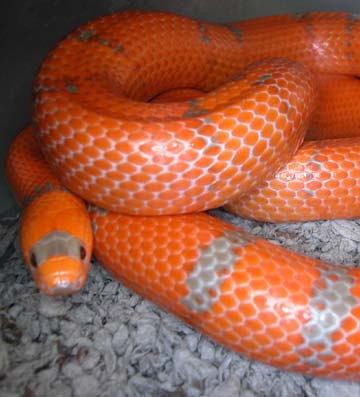
>>Some animals that are called "hypo" still have quite a bit of black in my book
"hypo" means reduced melanin, not absent or eliminated melanin, so yes, some brown/gray/black remains. the distinction is dramatic in hatchlings--hypos are purplish gray, you can literally tell the hypos from the hets before the first 1/4 inch of the head is out of the egg, because normals--or hets--have shiny jet black snouts, and hypos have pale grayish/purplish/brownish snouts. as they mature and the skin thickens, all the colors intensify, and this includes the dark rings getting darker.
>>and some animals labeled as "het hypo" look the same as the "hypos"
on many adult hypos the distinction is not immediately apparent in that the dark rings may look black. Upon closer examination, usually especially on the tail, it can be seen they're gray, not black. But remember that as they age melanin increases over Hondurans' entire bodies-many tricolors turn "bicolors" with age because melanin increases until it completely obscures the white rings in the middle of the triads, leaving extra-wide black rings alternating with red ones. And melanin darkens the red rings, too. In hypos, because melanin is reduced, this darkening effect is minimized, so the red (or more often orange, since most hypos today are tangerines) tends to stay cleaner than on hets.
But when you see similarities in the "look" of hypos and het/hypos, remember you may be noting distinctions unrelated to the hypo trait: For example, because the hypo emerged in a particularly nice tangerine line (bill and kathy love's "tangerine dream" line of hondurans) many hets are very nice tangerines. AND because you may be seeing hypos & hets that are clutchmates, it's only logical they'll show some of the same inherited traits such as high (or low) triad counts, wide or narrow red/orange rings, etc. In reality, you could look at a clutch from a pair of triple hets--such a clutch could include hypos, albinos, anerys, ghosts, snows, etc., as well as "normal" or wild types--and you could still spot some similarities in all those babies.
LASTLY, there appears to be a new strain of hypo (photo) that much more greatly reduces the melanin. First produced by Mike Falcon in Florida, because these extra light hypos are so extreme, their "dark" rings remain light into adulthood, so light they are almost flesh colored, and almost lighter than the surrounding orange rings. Test breedings now underway should establish whether these are a new, different genetic morph (as is believed to be the case) or the same (compatible) gene or allele as the prevalent hypos, just a lighter line of them. In either case, no one will ever confuse one of them for a het! 
terry dunham
albino tricolors
st pete, florida