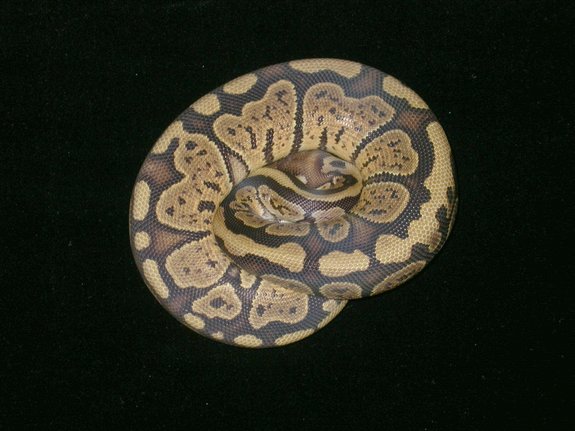
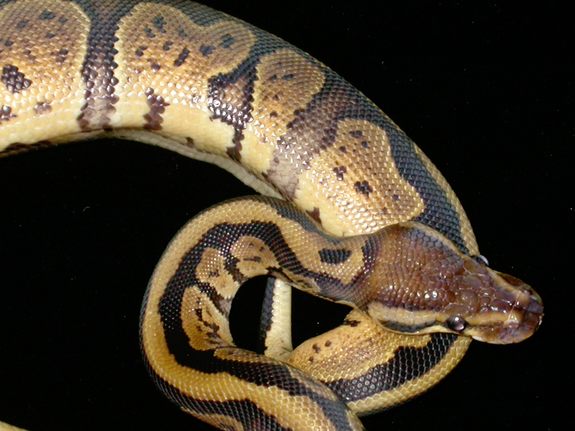
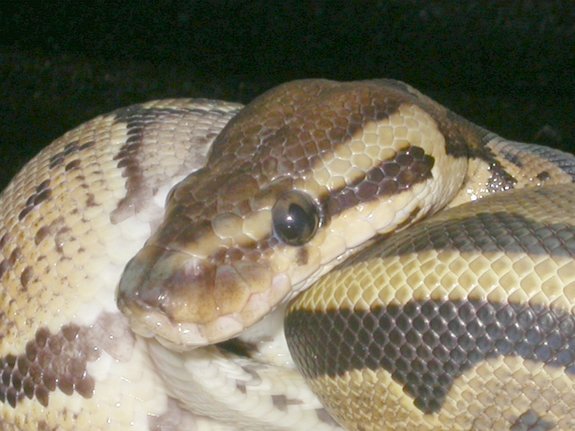
It's kind of like the pewter combination of pastel and cinnamon in the genetic questions it creates. Does this ebony mean that granite and yellow belly are related or is this just how they interact? I guess we'll know better when this (guy?) grows up and breeds. If it doesn't produce any normals bred to a normal but only either granites or yellow bellies then it will appear that granite and yellow belly are either alleles (different mutations of the same gene) or at least mutations of genes that are closely linked by being on the same chromosome and that the ebony doesn't have a normal copy of the yellow belly/granite gene or chromosome respectively to give. If it is linking and not alleles then eventually an ebony should produce a normal or an ebony bred to a normal but it might take a long time depending on how closely they are linked. If the ebony produces 1:4 normals and 1:4 ebonys bred to a normal (along with 1:4 yellow bellies and 1:4 granites) then we'll figure that ebony is the combination of mutations in two separate genes on different chromosomes.
So, what information is available on the genetics of the granite line used to produce the ebony? I guess it looks to be “some sort of dominant” like the yellow belly since there was also a yellowbelly and a granite in this clutch. I heard something like that a pair of these granites was bred together and produced all granites but it could still be co-dominant and if that was a small clutch it just missed out on producing normals or supers (i.e. homozygous granite) or of course granite could be completely dominant. Has the granite male been breed to a normal yet? If he produces any normals then we will know that he isn't homozygous granite either (assuming he is even the same thing as the female who apparently isn't homozygous to produce the non granite yellow belly baby).
Fun project! Congratulations to the owner.