Reptile & Amphibian Forums

Welcome to kingsnake.com's message board system. Here you may share and discuss information with others about your favorite reptile and amphibian related topics such as care and feeding, caging requirements, permits and licenses, and more. Launched in 1997, the kingsnake.com message board system is one of the oldest and largest systems on the internet.

Click for 65% off Shipping with Reptiles 2 You
Click for ZooMed
Click here to visit Classifieds

Opinions on Florida Kingsnake taxonomy????

svreptiles Sep 22, 2004 07:43 AM

I just wanted to hear what others had to say on this issue. I have seen several posts in the last few months that state that the high yellow "brooksi" type kings are the only "true" floidana and all the other, darker specimens are intergrades. I don't believe this to be true. I think that the Florida King can be very variable, ranging from the yellow "brooksi" look to very dark specimens, with the dark specimens still being floridana. You can still find these dark specimens very far south in Florida, well south of where you should see any Eastern/Florida intergradation. I myself have found darker specimens in the Tampa area that appeared to be "pure" floridana. Not far from there, in Pinellas County, the kings have a definite intergrade look. Just wondering what others had to say?

Todd

Replies (10)

Keith Hillson Sep 22, 2004 08:46 AM

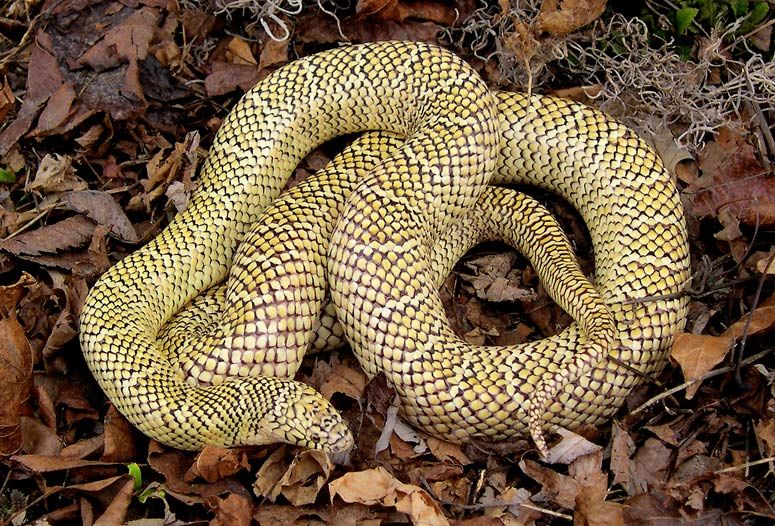
I consider them all Floridana. I once believed Brooksi to be a subspecies but I no longer think that. I do think that at one time "Brooksi looking" Kings were what all Floridana looked like before Eastern Kings started making their way south into Florida. Thats why you see the greatest concertration of light colored animals further south. Yeah yeah yeah there are light colored animals found all over Florida but its more rare than anything from what I understand. I have yet to see any Brooksi looking animals from central Florida being sold or pictured except maybe one or 2 animals one being Len Krysko's Tampa animal (I swear it looks Hypo) and another but it was aberrant. Here is a pic of the father to the baby Brooksi I posted before.

Image
-----

bluerosy Sep 22, 2004 11:40 AM

I have seen it in person but they have never been able to breed it. It really does look hypo its so yellow.

foxturtle Sep 22, 2004 04:43 PM

From Krysko's website...

I thought that they had bred that king. While I don't know the status of Krysko's breeding projects now, I do know that at one point he was selling sulfur-phase Florida kings from animals collected from just south of Tampa. When I visited him last year, he had several juveniles and an adult pair that hadn't yet produced. I thought they were really cool, though he didn't have any for sale at the time.
Image

bluerosy Sep 22, 2004 09:27 PM

I saw Len Kyrscos yellow brooksi at the Tampa show in '96. He said he had it for years and never got it to breed. Now if he did since then I guess the offspring is what you have a pic of. But the original animal I saw was superior to that.
I know of only two such high yellow brooksi being found. One other high yellow orginated, I beleive from Mike Falcon. He bred it and that is what people call the sulfer phase. Thing is both Lens and Mikes animals would be hard pressed to reproduce anything l;ike the originals. So anything you breed it to will darken the high yellow because they are not a recessive trait. Hence the sulfer phase.

Keith Hillson Sep 22, 2004 11:44 PM

From what I understand that animal pictured is dead. Also that snake and Falcons are one in the same as Len got it from Mike. Im not positive on this but its what Ive heard.

Keith
-----

foxturtle Sep 22, 2004 09:37 PM

...that the darker coloration of kings in central Florida has more to do with the kingsnake's habitat than any getula influence. A bright yellow kingsnake on a dark substrate is a very easily spotted target for a hawk, where-as a dark brown kingsnake would fare better. Similarly, many collectors have said that the kings they found in coastal areas tended toward a lighter coloration than those found inland, correlating with the lighter-colored substrate (sand). Natural selection should choose which phenotype is most dominant.

It has often been noted that in the sugarcane fields near Lake Okeechobee, areas with a lot of limestone rock produce a higher percentage of light-phase kings. Contrary to the whole North/South intergrade theory, the kings further north on the east side of have averaged lighter in coloration than those on the south side of the lake, looking similar to what you might call a brooksi. Interestingly, those that I have seen from southwest side of the lake have been jet-black in ground color with no visible speckling, reminiscent of an eastern king with an extremely high bandcount. The kings just north of that population are reportedly pretty normal looking as far as floridana go.

Even in southern Dade County, which is supposed to be the range of the true brooksi, you could find average looking Florida kings, and what we would call a brooksi. I've seen pictures of kings found inside Everglades National Park in southern Dade County that didn't strike me as anything I wouldn't expect to find near Lake Okeechobee. I've seen captive bred "brooksi" that looked like normal FL kings, from decent looking parents wild-caught in the Homestead/Florida City area. I've heard collectors say that the nicest "brooksi" were collected on coral rock substrate at the southern tip of Florida, the color of the substrate probably allowing for the lighter-colored phenotype to thrive.

The nicest looking brooksi we see in captivity now are the result of selective breeding. Breeding the nicest W/C specimens together, breeding their nicest offspring together, etc... Similar to how nature can select for a brown snake or a yellow snake, us hobbyists do a good job of selecting for what we see as desirable. Just look at some of Okeetee corns being produced these days. They're unreal! Much nicer looking than anything you could expect to find in the wild. Anyway, I'm talking about corn snakes now, so I'm done.

rearfang Sep 22, 2004 08:57 AM

The army core of Engineers is the culprit along with the building boom that started in the sixties.

The canal system that was dug sped up the integration process between the Penninsula intergrades and the true "Brooks". Add to that the destruction of habitat by developement and what was left in S. Florida was in poor shape.

Back in the late seventies it was still possible to catch good Brooks in Homestead. Now, good luck finding any near Brooks canal. Probably the only pure wild specimens left are in Everglades Nat. Park.

As to your arguement about breeding...It is irrelevant as Chains will breed readily with Chains from anywhere in the country. For example, I once crossed an Eastern Black king with a Brooks male. So that is not a valid criteria for seperating any "subspecies".

The biggest problem has to do with the fact that most people compare the intergrade with the Brooks and say that genetically they are too similar so they have to be the same thing (just different races). This I feel is not an accurate assessment.

The proper comparison is between a Brooks and an Eastern Chain. I agree with Conant's orrigional assessment that there is a wide zone of integradiation. Small populations of Brooks like snakes have been found in Davie, In spots south of Lake Okeechobee and the Jacksonville area. Both the Outer Banks and the "Goins" king may bear witness to a formerly larger Brooks range.

What is happening in Florida is that a unique subspecies of King has been allowed thru habitat destruction and intergrading to become close to extinct in the wild.

There were (uncomfirmed) reports about 15 years ago, that a local moron took it upon himself to release a large amount of gravid female intergrades into the Brooks Canal, which would have further compromised the form (if true). His motive (it is said) was to destroy the unique color of the Brooks by breeding and thus save S. Florida kings from collectors.

There was an excellent book that was writen by David Wilson and Louis Portas (of the Shed) on this ecological disaster:

THE ECOLOGICAL IMPACT OF MAN ON THE SOUTH FLORIDA HERPETOFAUNA
ISBN 89338-018-0 University of Kansas (1983)

If you can find it it is worth the read.

Frank
-----
"The luxury of not getting involved departed with the last lifeboat Skipper..."

gatork Sep 22, 2004 11:27 AM

It's interesting too, the differences between coloration around Lake Okeechobee--I've observed firsthand that those kings seen on the N banks/areas of the lake are very "brooksi" colored, and those on the south shores very reduced in yellow. I don't know if this is due to releasing, but it is a very consistent observation and inconsistent for expected color ranges.

chrish Sep 22, 2004 11:56 AM

I just wanted to hear what others had to say on this issue. I have seen several posts in the last few months that state that the high yellow "brooksi" type kings are the only "true" floidana and all the other, darker specimens are intergrades. I don't believe this to be true.

Todd,

I agree with some of what you are saying, but the thing you have to understand is that it isn't a matter of opinion, but rather a matter of following the rules of taxonomy.

The first kingsnake from florida officially named was a specimen from south florida which happened to be a pale specimen of the morph that breeders call brooksi. That original snake was described as L.g. floridana (or maybe it was O. floridana, I don't remember the original taxonomy). Therefore, after that point, all yellow S. FL kings are floridana.

Over time, through extrapolation, others began to use the name floridana to refer to other kingsnakes from further north as well. After time, most people associated the name floridana with the more typical peninsula kings.

After this had gone on for a while (I don't have the dates in front of me), someone else decided that the yellow snakes in south FL were different than the peninsular snakes and named them brooksi. They assumed that the name floridana had originally been applied to the peninsular snakes and that the south FL population was the one that needed a new name, when in fact the opposite is true. Therefore, they renamed a color morph/subspecies that had already been named. By the rules of taxonomy, that second name is invalid and the older name sticks.

So they two names began to be used (incorrectly) to refer to the penisular and south FL populations. This is the taxonomy most people have based their current views on.

In 1977, when Blaney was revising the getula group, he looked at the original specimens of each taxon. He found that the original floridana was the south FL form and so he sunk the name brooksi. If he had wanted to retain both subspecies, the only valid thing to do would have been to rename the peninsular snakes something else and keep floridana to yellow S FL snakes. Brooksi is an invalid name and can't be resurrected.

Blaney also dropped a few other subspecies as well (nitida, conjucta, yumensis, sticticeps, goini), so I guess people assumed brooksi was dropped for the same reasons. I doubt many people ever bothered to read why Blaney had sunk brooksi.

So, while breeders bemoan the fact that they "lost" the name brooksi, in fact, they never really had it.

As for your position that the FL kingsnake is a variable taxon that includes the south FL yellow snakes and more northerly snakes as well, I don't disagree, but by the rules, they are all floridana.

There is also the issue of purity. One of the arguements often made against the concept of subspecies is that there will be individuals that aren't one subspecies or another, they are intergrades. I have no problem with the idea that FL kings are only found in isolated relict pockets of S FL and that Eastern Kings have swamped them and almost extirpated them in their "pure" form. The same has happened to Everglades rats. I also have no problem with not being able to call most "florida" kingsnakes one ssp or another.
-----
Chris Harrison


svreptiles Sep 22, 2004 02:40 PM

What a great thing to be able to type a few lines here and receive so much great input. I definitely learned a few things and gained a new perspective on the issue. Always great to see the vast amounts of knowledge the "average" herpers have about the animals they love. Thanks again,

Todd

Site Tools