First off, I am sorry for not including pictures in this post. I figured it would only distract the reader. I know I pay very little attention to the words in posts if there are pictures loading, and by the time the pictures load, I am looking for something else to stare at.Thats having been said...here goes:
Pastel is the term I have used to describe my boas, because it fits. Not only are they soft and subdued like pastel pigments,chalks,easter candy...whatever, but Mr. Ronne himself has called them some of the best pastels he has seen. I figure, if I think they are pastel, and so does the man who coined the term, then thats what I am going with for now.
The animals I am producing also have an above average yellow pigmentation, but not all of them. Half of the litters show NO yellow, giving them a blue tint. Thats all I am going to say about color...excess yellow, or none at all, no happy medium.I think the blues are going to be the key to anerys that dont yellow up.
Half of the litters also show the lateral striping of the patriarch male. Since he has it, and litters from different mothers have it, I am safe going out on a limb and saying that that is somehow being passed genetically.
average 25 % of the litters are blue with lat stripe, 25% blue without,25%yellow with, and 25% yellow without.
The tails are bright red on the bluish babies, and pumpkin orange on the more yellow ones. The sides of the tail where there is usally a black pattern surrounding the side markings is a very faint grey, no black .
The saddles are either brown or red , no black. Some of the blue ones have red, some have brown. Same with the yellows.
well over half of the babies have some form of tail striping, like the father as well.
only one baby that this male has fathered doesn't fit the mold. It is light gray with almost black butterfly saddles. It has a rust colored tail, and is the only baby that was produce that shows orange in the sides of the tail, but not on the body.
Once I know how all of the variants are working with this line, I will come up with a name to seperate them from pastels, Until then , I think Davey Pastel works just fine.
I will come back and write more if I think of anything.
feel free to ask questions, or request pictures of anything I have mentioned here. Thanks for reading.
-----
Davey Giltner
Reptile & Amphibian Forums
Welcome to kingsnake.com's message board system. Here you may share and discuss information with others about your favorite reptile and amphibian related topics such as care and feeding, caging requirements, permits and licenses, and more. Launched in 1997, the kingsnake.com message board system is one of the oldest and largest systems on the internet.



My "Pastels" no pics here
Replies (7)
n/p
a couple blues


a couple yellows
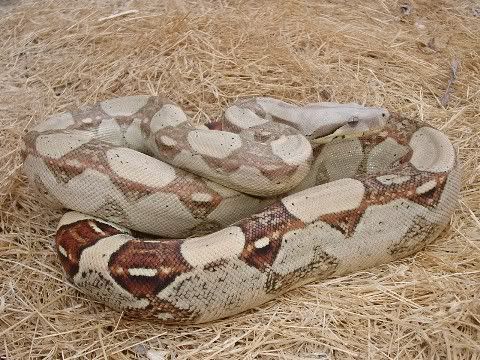

mixed neos

mixed yearlings


this one shows a bit of the faded lat stripe

here is the fathers lat stripe

-----
Davey Giltner
Yellow X Blue lateral stripe!
Thanks for sharing.
I wouldn't hesitate to call them pastels either.
They are very clearly displaying the traits that I understand as pastel-ism. Really nice ones!
Here's a pic of an animal which may be one of the founders of another type of pastel boa.
By comparison, he pales (or doesn't pale, haha) to the pictures of your Pastels, but I think he has potential.

-----
Jeremy J. Anderson
snakepimp.com
gemstatereptiles.com
Of course it's my opinion, I said it, didn't I?
Dave, I love your boas and the work you are doing with your line. I just had a question as I was reading your post and this is something I have wondered about from other posts as well.. The coloration in boas (I am guessing) comes from certain types of pigmentation (melanism which is black, and there are other specific pigments that make up the overall color of the boa).. I believe the basic colors are red, black and yellow?? so I am guessing that a coloration that looks like brown is really a mixture of black and red for instance... I am just wondering if anyone knows if I am even close or if this is not at all correct..
I'm thinking of hypos as being hypomelanistic (no black) therefore the saddles look red rather than brownish red like a normal boa.. the brownish red without the black pigment becomes red?? anerytheristic boas lack the red pigment - so their coloration is black in the saddles.. then there is that name for boas that lack the yellow pigment?? I can't think if the term for that... I really am just thinking out loud (in a sorta way).
does anyone know anything about what I am talking about?? I really haven't grabbed a good book as a reference for the study of boas, so I depend on this forum for the bulk majority of my understanding about the "things of boas"..
tell me what you all know..
thanks,
Patrick
As i understand it:
The only singled out pigmentaions in boas are erysthitin (red), and melanin (black).I dont know how much science would go into proving that xanthum (the yellow pigment in ball pythons) is the same that causes yellow in boas.
the prefix a/or an means not, or none.So amelanistic has no black, anerythristic has no red
the prefix hypo means reduced...so hypo melanistics have little black.
hyper means excess, so I am hoping that what I am working with can someday be called hyperxanthics without getting me funny looks.
the ones without yellow you are talking about are called axanthic.
Hope this helps, typing fast cause I am on my way out the door.
-----
Davey Giltner
..
