heres my notes
Lizards Species Account for Florida Keys NCSU Herpetology Club Trip
December 16-21, 2004
ANOLES
Brown anole, Anolis sagrei
Many individuals observed in a wide variety of habitats. Found under logs, in leaf litter, in bushes and trees, on and around buildings, and elsewhere. Most common anole viewed on the trip. Introduced species.
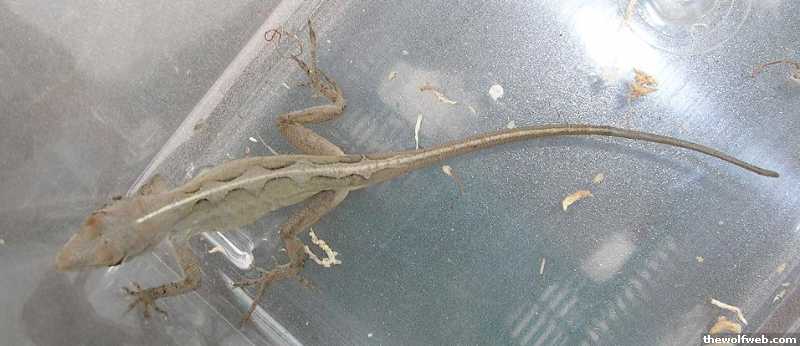
Green anole, Anolis carolinensis
Even though a native of the area, only 3 individuals were personally observed. One small juvenile found at a trash site within 100 yards of shoreline. A large male was found behind an electrical meter box on a utility pole in a front yard on Plantation Key. Even though it was the coldest day, the sluggish anole had a very strong bite, which actually slightly broke the skin. One final sub-adult was viewed in a bush in a neighborhood bordering a park.
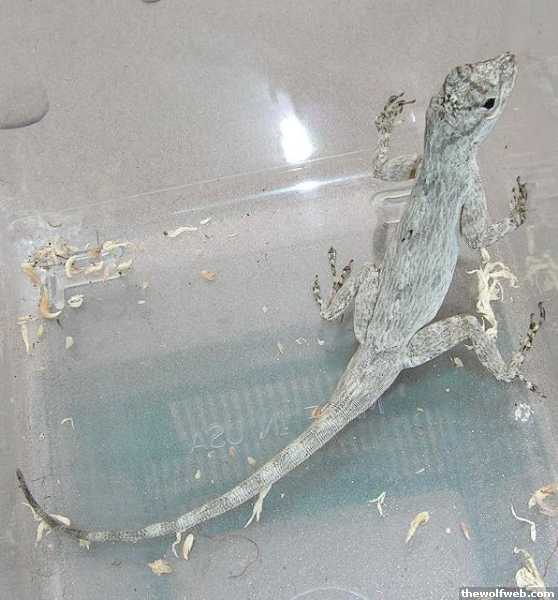
Bark anole, Anolis distichus
The first anole caught on the trip, it was found while setting up camp in the Everglades. Possible others might have been caught, many were released. One peculiar detail was that the dewlap was not a yellow color, suggesting a possible mixing between species. Introduced species.
Largehead anole, Anolis cybotes cybotes
Several of these were found, noticeably in a residential area of Plantation Key. Patterns and variable throat fan colors suggest hybridization. Most were fairly solidly brown colored, possibly confused with the abundant brown anoles. Introduced species.
IGUANAS
Green iguana, Iguana iguana
Seemed to concentrate in particular areas, most often in or near residential areas, with pine being a common perch. Males were often in red-orange mating colors, younger ones a brilliant green. All looked healthy and gave chase when pursued. One old male was found with only 3 legs, but otherwise seemed in good shape. First large male caught had 3 heightened spiked scales on the tip of his snout. Largest male viewed was around 5 feet in length, snout to the tip of the tail. Introduced species.
RACERUNNERS
Six-lined racerunner, Cnemidophorus sexlineatus sexlineatus
Only native racerunner east of the Mississippi. None caught, around 3 to 5 viewed, often darted off after they were disturbed. At least one at the diamondback site. Only personally viewed on warm, sunny days.
GECKOS
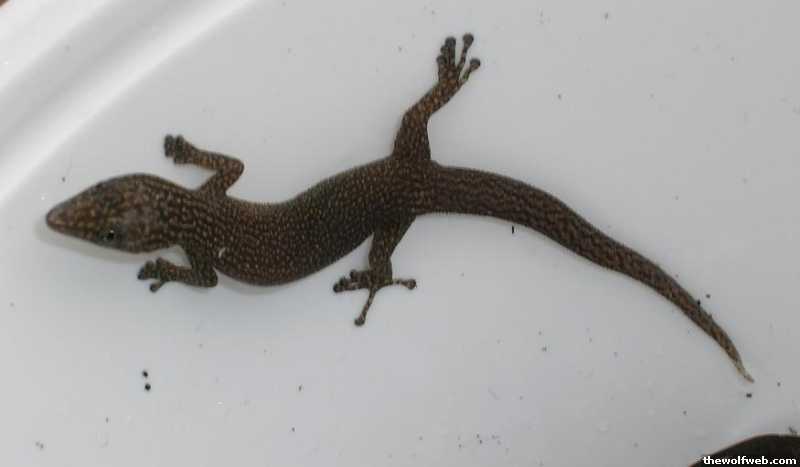
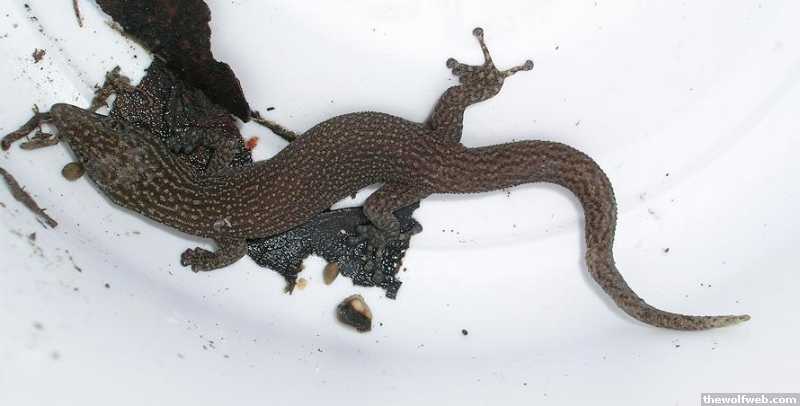
Ashy gecko, Sphaerodactylus elegans elegans
Most found in trash sites, usually under wood boards, often in areas closer to periodic flooding by nearby shorelines. Two juveniles caught, one with some interesting, yet fading color bands. Only around 5 caught/viewed. Introduced species.
Florida reef gecko, Sphaerodactylus notatus notatus
One possibly viewed, quick to get away. Found in the same areas as the ashy gecko, mostly not far from shoreline. Only native geckos species in the area.
Mediterranean gecko, Hemidactylus turcicus turcicus
Only one notably found, although others were likely viewed but not collected. Found in tin and wood trash heap. Introduced species.
Indo-pacific gecko, Hemidactylus garnotii
Only one found in remote area of western Keys, between scrub land and shoreline beneath limestone rock. Very energetic, more so than the other house geckos. Parthenogenic, introduced species.
Tropical house gecko, Hemidactylus mabouia
The most abundant and successful gecko species we encountered in the Keys. Occur everywhere, found beneath trash, on buildings at night, and elsewhere. Small, hard-shelled eggs were found everywhere as well, and when one was inspected the embryo looked to be within weeks of hatching. Most carried heavy mite loads particularly concentrated around the ventral side, around the hind limbs. Introduced species.
House gecko, Hemidactylus frenatus
Very similar and difficult to discern from Hemidactylus mabouia. Very abundant as well, found in a wide variety of places. Introduced species.
Tokay gecko, Gekko gekko
Very few seen on the trip, only location was in a neighborhood on Plantation Key on the coldest day, clinging beneath window shutters on a house and beside a refrigerator on a back porch. Friendly residents suggest the tokay’s don’t move from place to place much, one man had actually named the ones around his house. One behind a window shutter was huge, although a good view was impossible. Around 4 were seen. Residents said they used to be able to imitate their vocalizations and get response from these loud geckos during the summer. Introduced species.
Madagascar Giant Day gecko, Phelsuma madagascariensis grandis
Only found on December 20 and 21. First one found in same vicinity of the tokays on Plantation Key. Two were found behind shutters on the same house as the giant tokay gecko. Most were adults, although one baby was noted on a fence at the Dolphin Research Center on Grassy Key, the same fence as the one that was collected. At least two dropped their tails. Most that were viewed closely had at least partially regenerated tails. Only two were caught, a total of 5 viewed. One caught with a random spotted pattern down the dorsal side, the other with two parallel rows of orange dots, both were males. Very healthy and well-fed. Not too easily disturbed when approached. Residents found to be quite fond of the species, some homeowners allowed capture for inspection and photographs, however wanted the animals returned afterward. Location at Plantation Key where 3 were encountered had many homes with dense vegetation in and around the yards, one found in an elaborate tree. Introduced species.