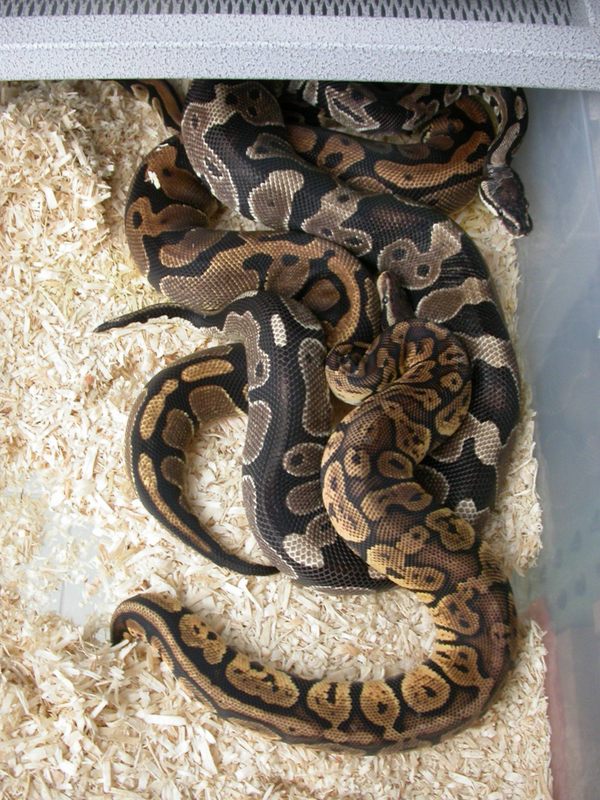
ive been following the axanthic / snow situation for a couple of years with great interest.. just wanted to share a few thoughts / observations with people here.. just my 2 cents worth, id be keen to see other peoples thoughts 
The way i see it bp's have essentially 4 colours (from 3 pigments) - yellow 'xan' (eg Axanthic = no yellow), red (anerythristic = no red scientifically i believe?), black (from melanine) and an absense of pigment giving white.
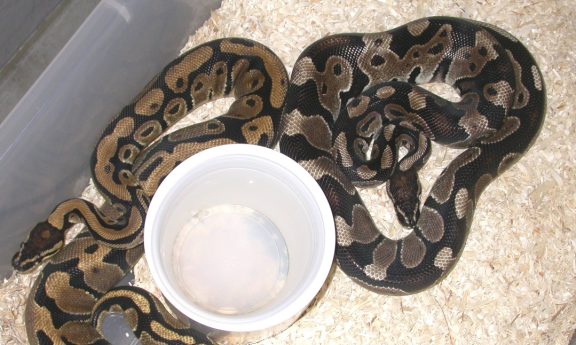
Something a good friend pointed out the other week is that the 'black' isnt actually black at all, its just very very dark brown. A good example would be the fact that if you take loads of random colours, eg different reds yellows whites and browns and mix them (for example in a single snakes scale) you will get what looks like black. Im not too hot on chemistry but im sure melanin ('black pigment') is based around an iodine compound, iodine is brown as a liquid and black when it dries out.. eg painted on paper. Anopther example would be the skin colour of african / caribean / indian people which refer to as black, but i think most would agree is dark brown.. this of course results from more melanin in the skin.
aaanyway I think the above goes some way to explaining how axanthics can have brown - if they still have red, and if melanin can produce a range of browns --> black depending on its concentration... well it kinda makes sense to me.
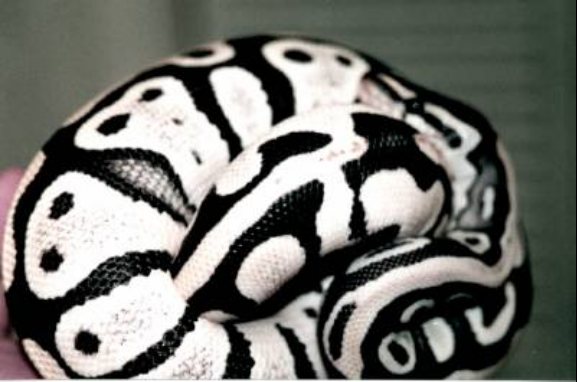
I must say the comments about hypoaxanthic being a better description for most axanthics is really interesting - especially given the fact that as far as i can see from photos, the snows have all retained some yellow.
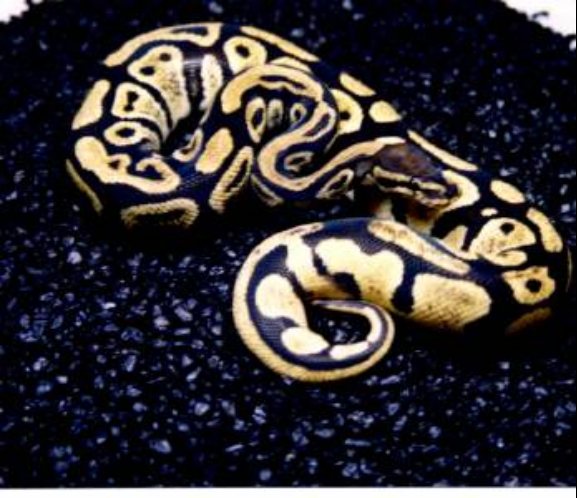
The jolliff line snow is gorgeous still i think - quite like the snow boa colouration i think. Ive noticed NERD have a "faded albino" morph listed.. the colouration of which looks strikingly similar to the Jolliff snow, which is interesting - and was confusing to me!
There are proberbly hundreds of genes which could be altered to result in a lack of yellow pigment in a snake, pigmentation pathways are so complex with so many proteins and enzymes at each stage, plenty of room to mess it up (seeing as one gene effectively codes for one protein or one enzyme the way i understand genetics anyway).. so. I would love to see the result of crossing say the SK and VPI line axanthics to produce double recessive for VPI and for SK animals. I believe theyve been proved incompatible in terms of producing axanthics from a het vpi and a het sk (or sk x vpi) which indicates that different genes are involved.
I think this cross would mess up the pathway for the yellow pigment even more - and likely produce a hard and fast ZERO yellow snake... as oposed to the big question mark at the moment as to whether current axanthic lines are actually hypo-xanthic.
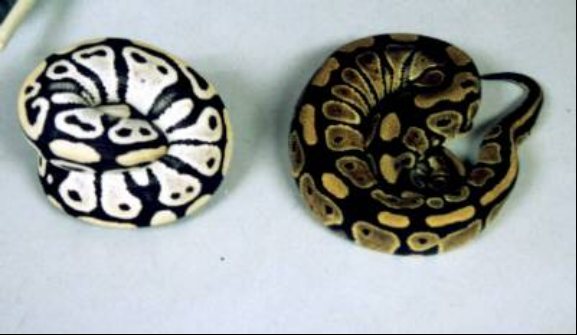
Then theres the fact that there seem to be differnt opinions of which snow line is nicest, which stays white (no yellow) for the longest etc.. ive made a sport of checking out any snow pics i can get my hands on and have seen them all. now from photos i think the sk snows and the VPI snows look very similar. i actually think the SK pics look more white than the VPI ones, eg on ralph's site. i have seen the sk axanthics and vpi axanthics in the flesh at various ages and i really cant see much difference either. I wonder if people get the sk line mixed up with the jolliff line axanthics, which i think do look more yellow, even as hatchlings?
Last thing: on the SK site, Dan and Collete mention that the SK line snows do stay white into adulthood with little yellowing, which i would be inclined to agree with from the pics.
I would love to see a bunch of comparison pictures of similarly ages snakes in similar lighting next to each other - snows and axanthics.
sorry for the long post, ive been wanting to share some of these thoughts for a while!