I must say that herpetoculture started with fieldherpers. I won't digress any more into either field.
I will say though, that I could care less about herpetoculture. So, here are some finds from the field.
Shane
Reptile & Amphibian Forums
Welcome to kingsnake.com's message board system. Here you may share and discuss information with others about your favorite reptile and amphibian related topics such as care and feeding, caging requirements, permits and licenses, and more. Launched in 1997, the kingsnake.com message board system is one of the oldest and largest systems on the internet.



Here are some reports for the fieldherpers....
TxHerper
Sep 08, 2005 09:15 PM
Replies (24)
TxHerper
Sep 08, 2005 09:30 PM
I visited Japan from May 15th thru the 31st. I had a great time, and was able get out and do some herping. I spent most of the time in northern Kyushu, but I also spent a few days on Okinawa, which is a tropical island well to the south of the Japanese mainland.
Here is a pic of the first snake that I found:
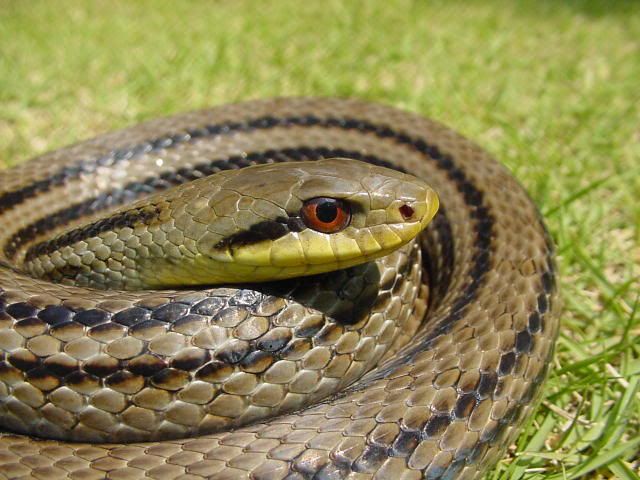
Japanese Four-lined Rat Snake, or Shima Hebi (Elaphe quadrivirgata). Unfortunately, it was a fresh DOR, but I wasn’t going to miss the opportunity for some photos.
Not long after that, I found a live specimen that was cruising the base of a rock wall:

Melanistic E. quadrivirgata.
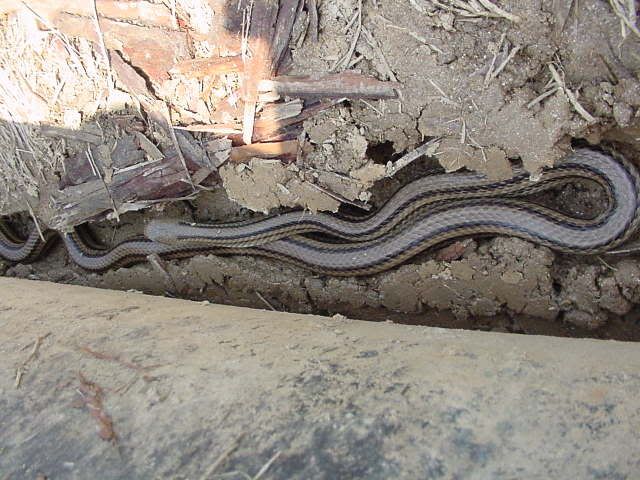
This species was a common sight. Some more pics of E. quadrivirgata, and some very productive habitat:

Wheat field habitat.
I found 6 quadrivirgata under that mat of erosion control, plus a gravid female that was basking.
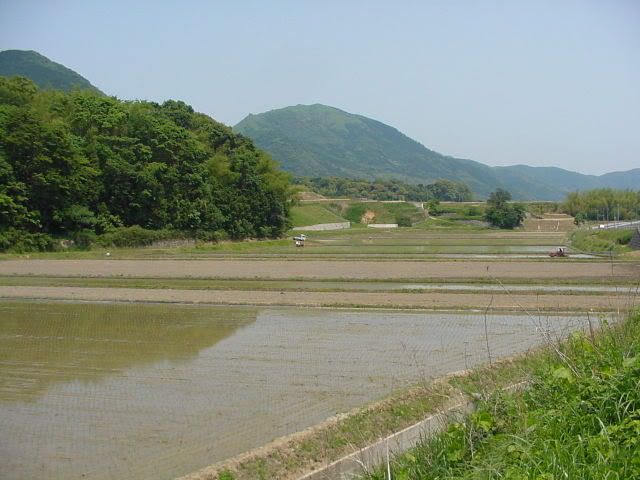
The other side of the road was a terraced rice paddy, and proved to be one of the easiest times I have ever had finding snakes in the field.
I wonder what that could be:
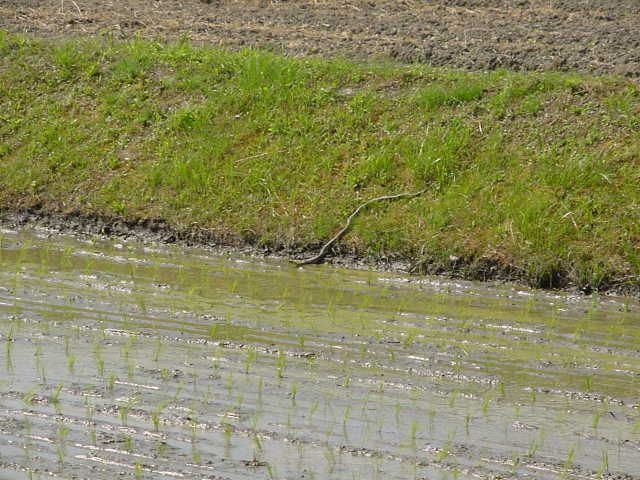
Here is another:
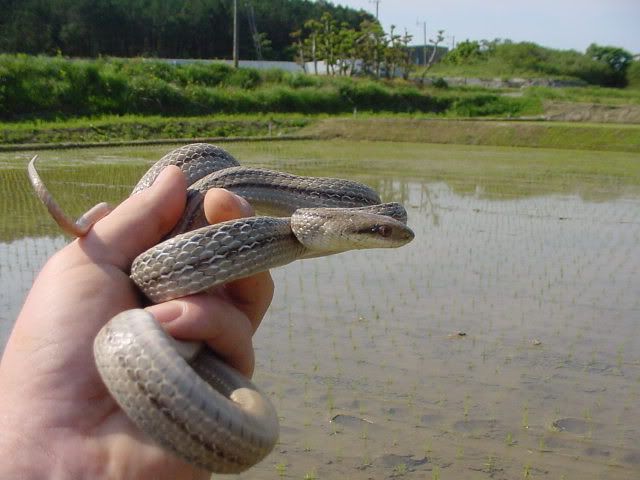
I found 11 quadrivirgata along the rice paddy terraces. 18 rat snakes in less than two hours; definitely a good time!
The purpose of that expedition was to see Mamushi (Gloydius blomhoffi). When I left for Japan I thought that I would have an easy time seeing one, but that wasn’t to be. On a humorous note, while speaking with one of the rice farmers about Mamushi, she told me that they are a common sight. When I mentioned finding a lot of Shima Hebi (Elaphe quadrivirgata), she told me “Shima Hebi inai.” That translates into “There are no Elaphe quadrivirgata here!” It’s not a bad idea to ask questions, but it’s not easy to find good answers when herps are the subject, no matter where you go.
Here is a pic of the snake that was at the top of my wish list:
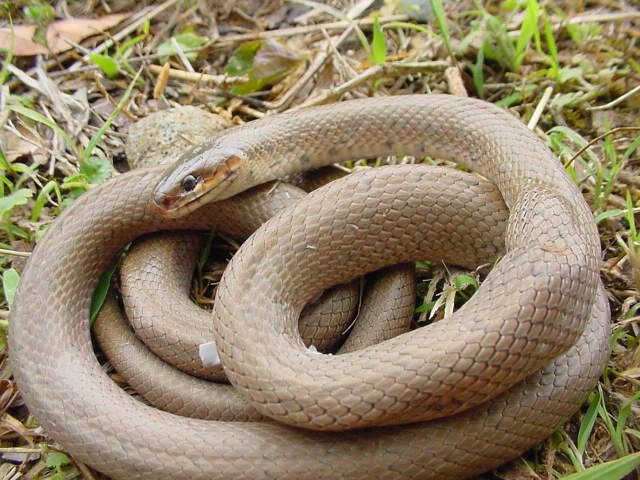
DOR Japanese Forest Rat Snake (Elaphe conspicillata). I was bummed, because it was DOR, but happy with the knowledge that I was searching the right area. I found this snake on a drizzly, overcast morning. The entire day turned out to be the same, so I kept looking. A habitat pic:
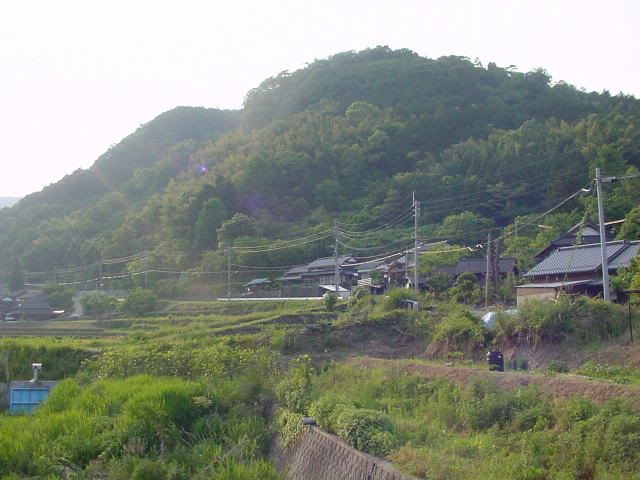
I eventually found a live one:
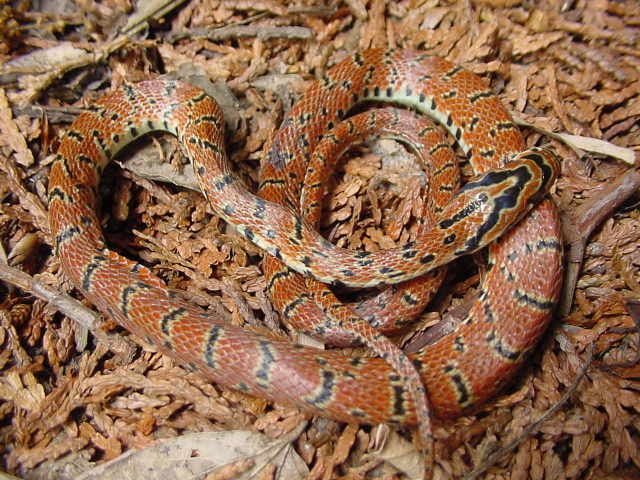
Yearling conspicillata. Unfortunately, that snake perished in a bag. I held onto it for photos at a later time (=after I got back from Okinawa), and learned a hard lesson. Apparently, it tried to escape via the knot in the bag, and its teeth became engaged in the mesh. It couldn’t move forward, and it couldn’t move back. I’ll never keep a small snake in a bag again! Hopefully someone else can learn from my blunder.
This snake was also a common find:

Tiger Keelback (Rhabdophis tigrinus)
This “deadly” snake is not well known, despite its abundance. Apparently, its venom produces effects similar to a Boomslang. They are quick to flee, but if you play with them they don’t hesitate to bite!

Another, less colorful example:
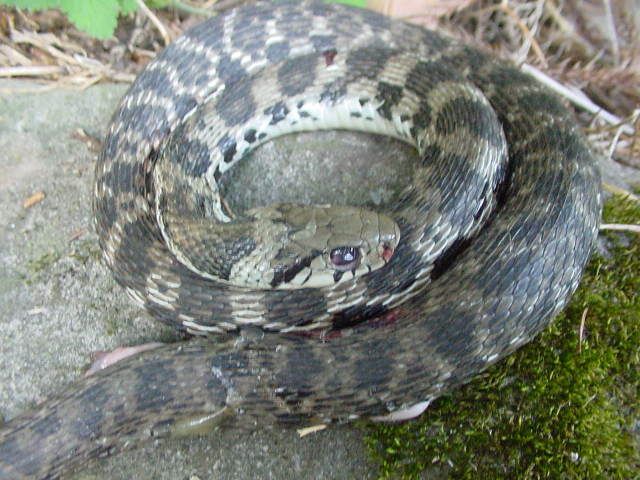
I did find one that was struggling with a Japanese Tree Frog, but it released the frog when I neared for the shot. I observed the frog after release, and it was definitely incapacitated within the minute. At first, it was able to move (without much coordination), but it soon froze into what I will call a fetal position. Bottom line: don’t let them bite you
On Okinawa, I really wanted to spend some time in the field, but due to the fact that I am no longer single, I had to settle for one night of road cruising. The first find was this neat snake:

Okinawa Habu (Trimeresurus flavoviridis).
Luckily, I found a small one. If it had been much larger my tools would have been inadequate. These snakes are heavily hunted, eviscerated, and put into bottles of rice wine (sake). When I lived there three years ago, I ran into a “habu hunter” who was not happy with my presence (to take pictures). I’m pretty sure I saw the same guy on this trip, but didn’t bother talking to him. Here are a couple of more pics of one that avoided being a novelty:
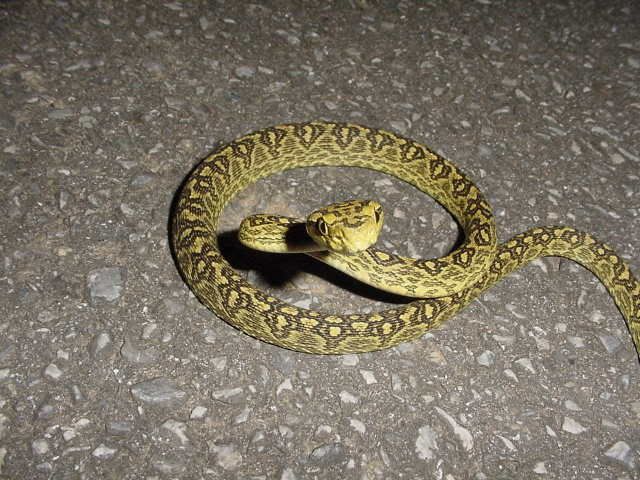
.

This snake is a common find on Okinawa:

A yearling.
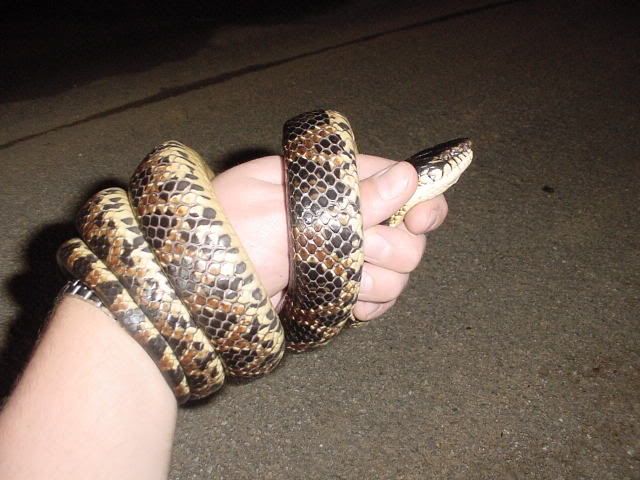
A larger specimen. Akamata (Dinodon semicarinatum)
This one was in the 4’ range, but they get much larger. They don’t hesitate to bite, and when they do, they are very focused.
Here are a couple of habitat pics:

Northern Okinawa has a lot of pristine forest, due to rugged terrain.

Disturbed habitats, such as this, are the easiest places to find herps.
Shane
jfirneno
Sep 09, 2005 10:51 AM
Amazing snakes you found and who wouldn't be envious of a trip to an exotic locale like Japan. I'm a big fan of Elaphe conspicillata so I was sad to see only the dead one (but still quite amazing). The melanistic quadrivirgata was one of my other favorites but the habu and the Dinodon were right up there too. That juvenile Dinodon reminded of a Rhinocheilus (but I'm color blind so that doesn't count for much. Congrats again.
John

TxHerper
Sep 09, 2005 12:32 PM
Unfortunately, it was the dead two. I killed the yearling. Never again. How's the herping there in Massachusetts?
I have good word that the mudpuppy population is decent.
Shane
jfirneno
Sep 09, 2005 01:18 PM
I'm a big fan of cospics and mandarina so any field info on them is hungrily devoured. That's why your post is extraordinary. How many herpers get to go to Japan?
As fo the herping in Massachusetts, for what there is here, I guess it was a good year. Or at least it started out well. In late May I went for a nice hike in prime milk snake territory and saw several nice looking specimens. But the species I brought home was the Lyme Disease bug. Not having seen the tell-tale "bulls-eye" spot anywhere I didn't know I had it and even though I continued feeling progressively lousier I didn't know I was in need of a doctor. So by the time I went looking for help in late July I was well past being interested in herping. Boy, who knew herping was hazardous to your health?
I think the mud-puppies are in the Connecticut River Valley and I thought I once heard that they were an introduced species but that could be misinformation. I've never seen them but maybe one of the other New England herpers here could chime in on that.
Keep up the great posts.
Best regards
John

TxHerper
Sep 09, 2005 02:55 PM
That Lyme bug bites. I know I'm a foolish person, but I would rather not stay inside. Thanks for the comments; I've had my own dealings with ticks. I'm not in the northeast, but I still pack a heavy load of DEET!
Shane
TxHerper
Sep 08, 2005 09:42 PM
These frogs were abundant, and the choruses were music to my ears:

Japanese Tree Frog (Hyla japonicus).
Amplectant pair:

From a distance, the choruses sounded similar to Acris crepitans, but nearby they sounded more like a mix of Hyla cinerea and Acris crepitans.
I only saw one of these guys:
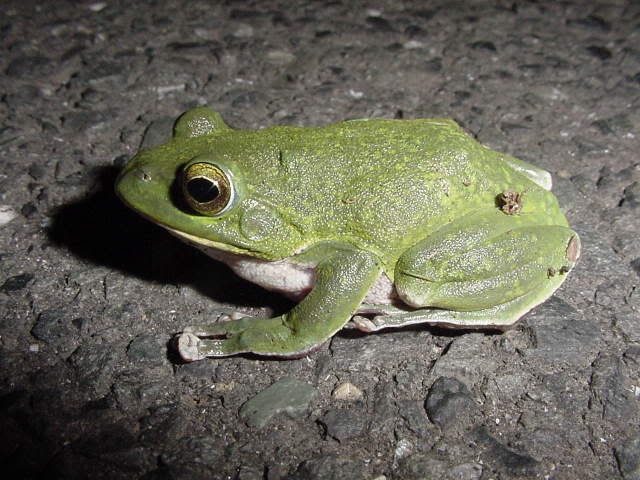
Rhacophorus schlegellii
It plopped from a tree right onto the road. That was at least an 8’ drop; must’ve been uncomfortable for the frog, as it didn’t move for the photo session.
These frogs were also a common sight:
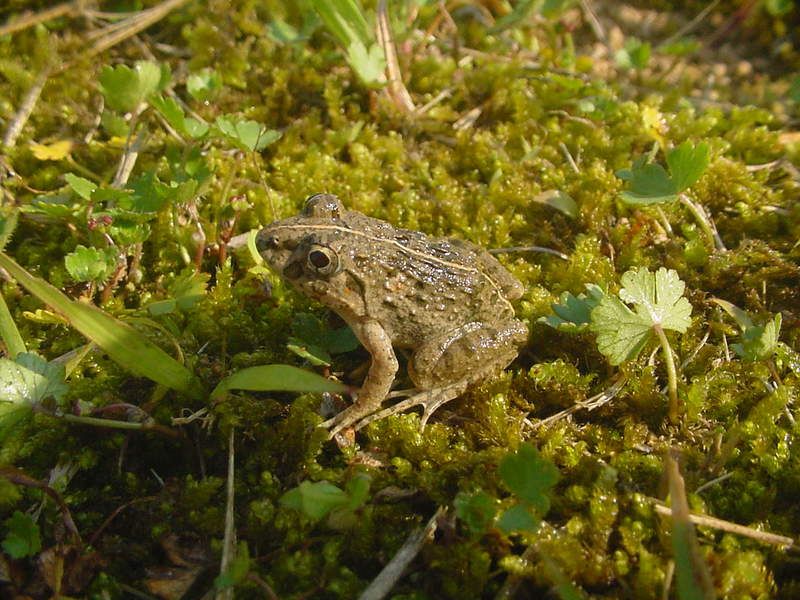
Indian Rice Frog (Rana l. limnocharis)
They are native to Japan, and have a very broad range.
I only saw a couple of these toads:

Japanese Toad (Bufo j. japonicus). Apparently, this species has suffered some considerable, local population declines due to scientific collection (=the frog most students see). They have an interesting defense strategy. Instead of inflating their bodies, they raise up, with legs nearly vertical, and flatten their vertical profile. It was fun to watch, but very frustrating to photograph. This was the best I could do, as their other defensive strategy is movement:

These frogs were a frequent sight while walking through forested areas:

Mountain Brown Frog (Rana ornativentris)
Here’s a habitat pic where they were particularly common:
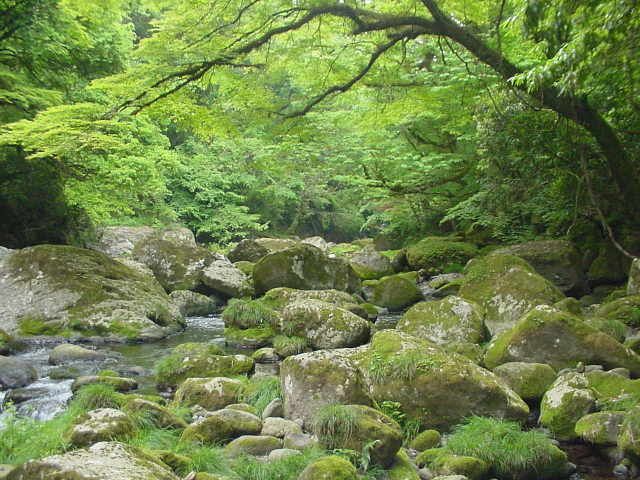
Very green.
This good sized ranid is restricted to Okinawa:
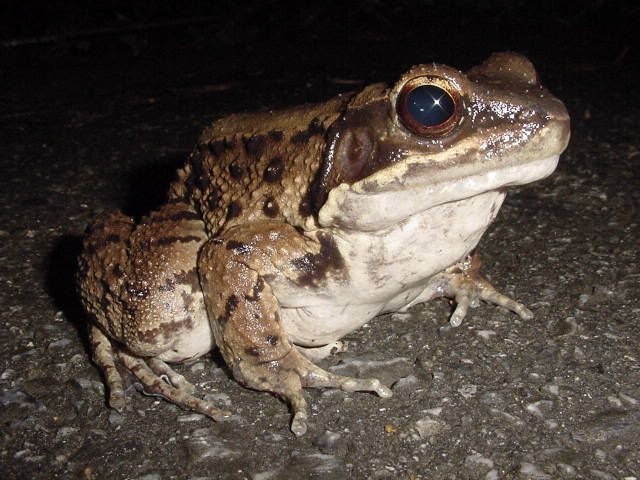
Holst’s Frog (Rana holsti)
Here’s another for size comparison:
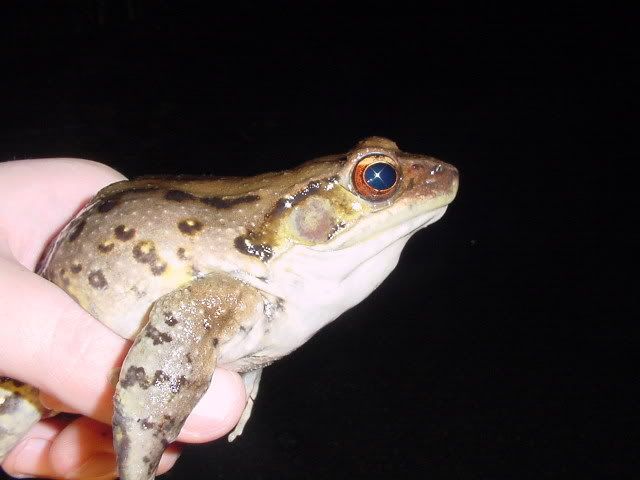
Holst’s Frogs have spurs on their front feet that can produce annoying cuts.
I also saw Rana narina, Buergeria japonica, and Polypedates leocomystax, but I ran out of disk space.
These newts were out in force, and are commonly encountered on Okinawa:

Ryukyu Firebelly Newt (Cynops ensicauda popei)
I was really hoping to find some Hynobiids on the mainland, and Tylototriton on Okinawa, but that didn’t happen.
Not much in the turtle department either, but I was able to capture this pic:

Chinese Softshell Turtle (Pelodiscus sinensis)
A habitat pic:

Not where I would expect to see softshells here in the states.
And a couple of lizards:

Japanese Gecko (Gekko japonicus)

Japanese Grass Lizard (Takydromus tachydromoides).
Shane
TxHerper
Sep 08, 2005 09:57 PM
It was a pretty busy trip this time; I was only able to fit in one evening of road-cruising on Okinawa, and one morning of field herping in northern Kyushuu. I wish I’d have had more time, but considering the circumstances, the herping was pretty good.
The first herp venture was on Okinawa. Okinawa is part of the Japanese archipelago, but a lot of the flora and fauna have Taiwan / eastern China influence.
I met up with Nick Wray for an evening of road-cruising.
We were dealing with the outer bands of a typhoon that passed about 100 miles to the south of the island. The wind was holding steady at ~30 mph (plus some considerable gusts), and I was wondering if we would see any herps. The bands of rain were inconsistent, but where there was rain, there were frogs:
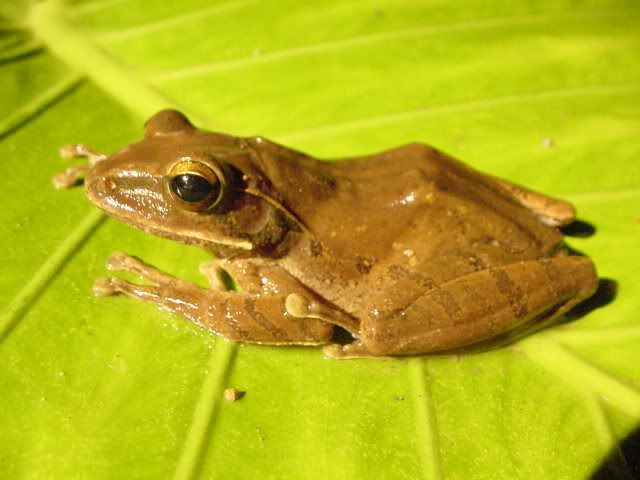
White-lipped Tree Frog (Polypedates l. leucomystax). Polypedates is an introduced species.

Ryukyu Kajika Frog (Buergeria japonica).
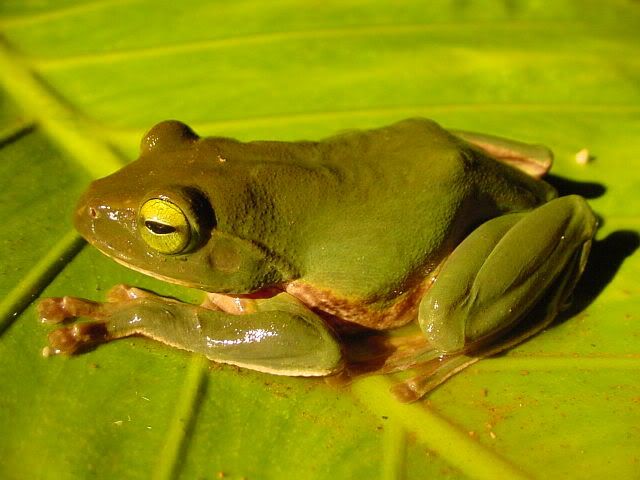
Okinawa Tip-nosed Frog (Rana narina).
And my favorite:
Okinawa Green Tree Frog (Rhacophorus v. viridis).
Here’s a larger one:
We did find some snakes:

Akamata (Dinodon semicarinatum). Akamata are the most commonly encountered snake. We found 3 that night. Here’s a picture of Nick holding the snake:

I was really hoping to see a Okinawa Ground Gecko (Goniurosaurus kuroiwae); and I saw a big one. Unfortunately, my road-cruising eyes were weary due to all the debris on the road, and by the time I ran back to find it, it was gone. Damn!
These were the only Habu I was able to see:
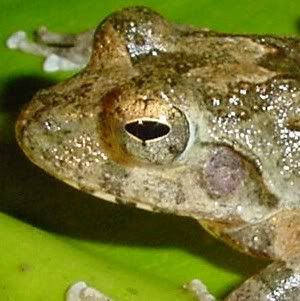
.

Okinawa Habu (Trimeresurus flavoviridis). Habu sake (pronounced sa-kay, not sa-key) is often seen for sale on Okinawa, and it’s not cheap. The larger jar is about two gallons, and the price is $1,275. Sakishima Habu (Trimeresurus elegans) are also used.
[/img]http://img.photobucket.com/albums/v465/Shane_OK/2.jpg[/img]
Smoked sea snakes are used to make soup:

And these toads apparently make good purses:
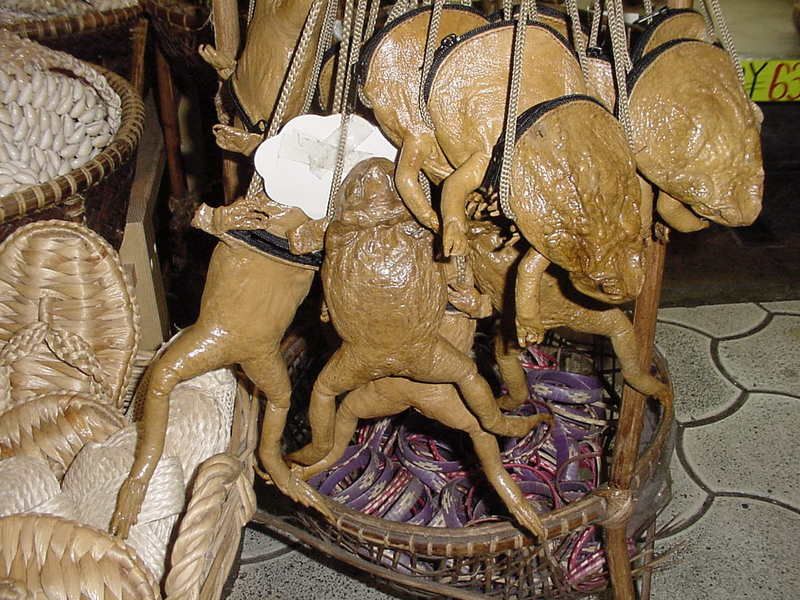
Marine Toad (Bufo marinus)?? B.marinus have been introduced to several of the smaller islands. Hopefully they stay off of Okinawa.
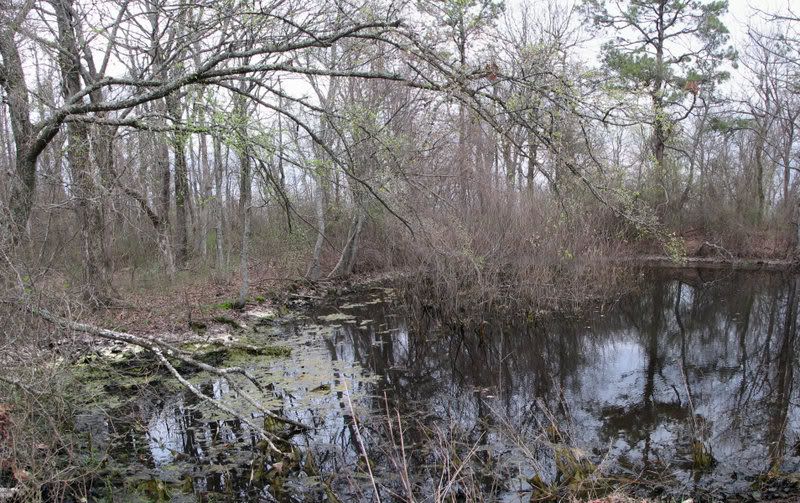
After Okinawa, I returned to Kyushuu. The dog days of summer are just as difficult in Japan as they are here in the states. Luckily, my herping opportunity fell on an overcast morning. I started the morning by walking the rice paddies.
The first find was this:

Melanistic Japanese Four-lined Rat Snake (Elaphe quadrivirgata).
Here’s a normal Japanese Four-lined Rat Snake:
Elaphe quadrivirgata are very Coluber-like.
These guys are well established in much of Japan:

The worldly Bullfrog (Rana catesbeiana).
After the sun burned its way through the clouds, I made my way up into the mountains.
These frogs are a frequent sight in forested areas:

Mountain Brown Frog (Rana ornativentris).
I’m not sure what this little guy is:

It’s either a Hylid or Rhacophorid.
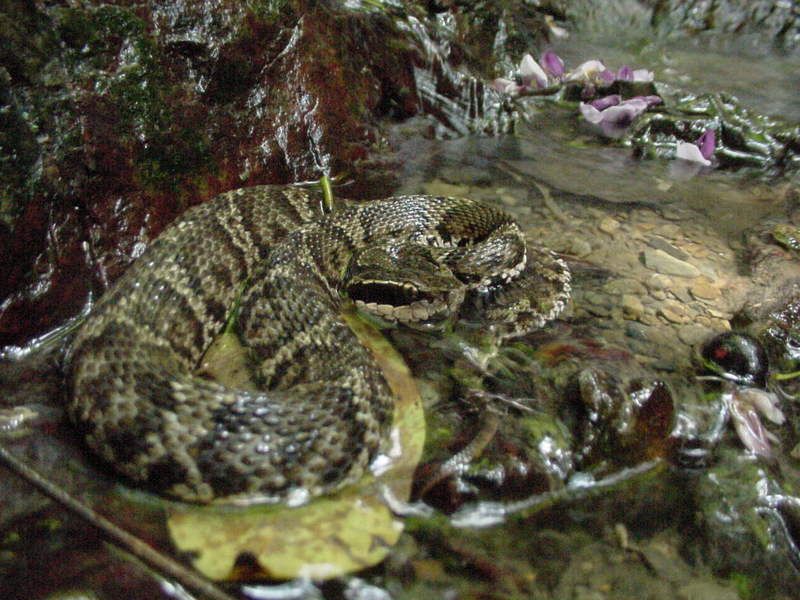
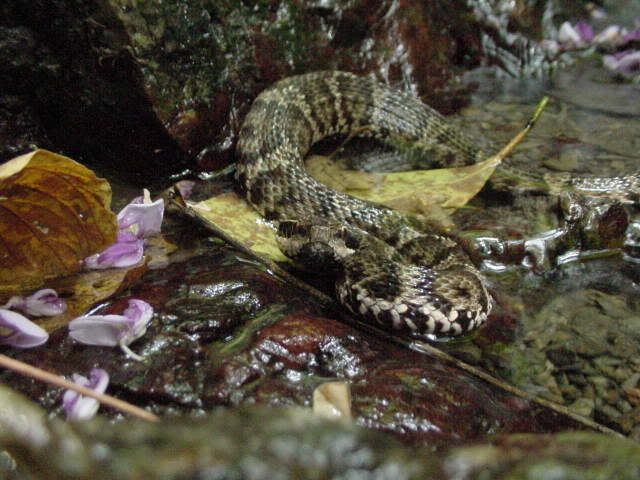
While in the mountains, I was searching for a snake that eluded me on the last trip. After wandering about in the forest, checking various microhabitats, my herping time was just about up. With only about 30 minutes left, I decided I should start flipping some rocks for Hynobid salamanders. I was working my way up a small stream, and after about five minutes of flipping rocks, I looked ahead, and I was greeted by this sight, in situ:

I wish the pic would have turned out better. The patch of sunlight and the snake's coloration just jumped right out at me. Target found.
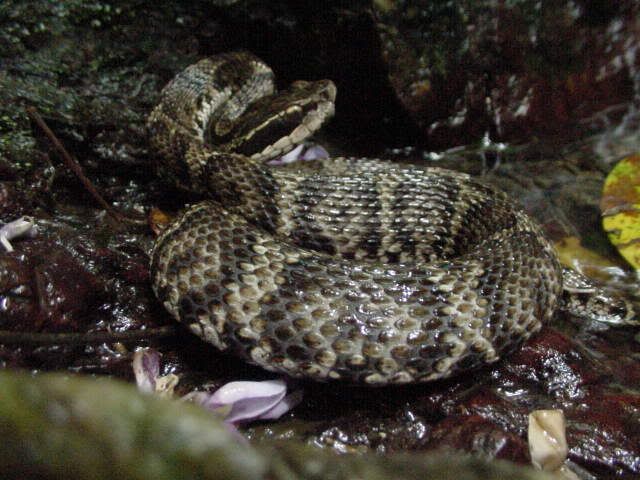
Japanese Mamushi (Gloydius blomhoffii).
.
Here’s a habitat shot:

That was a nice way to finish out my herping time.
Shane
For anyone interested in Japanese herps, here’s a link:
http://homepage3.nifty.com/japrep/englishtop.htm
There’s also a English field guide:
“Guide to the Amphibians and Reptiles of Japan.” Richard C. Goris and Norio Maeda. Kreiger Publishing, 2005.
ratsnakehaven
Sep 09, 2005 05:03 PM
Thanks for the neat pics and natural history lesson, Shane. I've always liked Japan and the whole Far East. I've thought about taking a trip there myself, and may someday. A friend, Rex Knight, is a herper who knows a lot about Japan and some people there.
Also, one of my brothers has been to Japan, while he was in the service. He was stationed in Okinawa for about a year. I remember a photo he sent me of a Dinodon one time. He was also quite interested in the different viperine snakes there. He lives in Idaho now and has a bow business called, "Habu Bows." He makes all his own bows and has named them after snakes from Japan mostly. I'll put his link below.
I'm mostly interested in the ratsnakes, but also have a fondness for pit-vipers, and to some extent the natricines. As a field herper I'll photograph almost anything though, LOL. Hang in there for the ratsnake info. It keeps getting better each year.
Cheers....Terry
TxHerper
Sep 10, 2005 11:31 AM
Terry, it looks like your brother produces some fine bows. I was really into archery when I was in high school. I still take out my recurve for a few target shots now and then, but it seems that I have too many other hobbies.
I've been in touch with Rex and Sacha, and they both helped with much needed natural history info. As a matter of fact, the data I provided on the ratsnake forum came from someone Rex put me in touch with.
If you ever make it to Japan you will love it, though I would definitely recommend spending the time with someone who speaks the language. My wife is Japanese, so when I go there, it's an easy vacation. Hey, if you ever decide to go, let me know.
Shane
ratsnakehaven
Sep 10, 2005 01:39 PM
I figured you might have had a connection through your wife. Bet it was really cool for you in that unique habitat. I got to spend over a year in Thailand, when I was much younger, and that was super great, as far as habitat goes. Hope I can go to Japan or China someday and I'll sure try to let you know
Terry
TxHerper
Sep 08, 2005 10:12 PM
Don't pay any attention to those expo morphs. Try spending some time in the field. You'll eventually appreciate the normal animals!
Shane
Carmichael
Sep 09, 2005 10:13 AM
Although I can appreciate the hard work and dedication of the herpetocultural field, it is indeed too bad that we have lost focus on just working with animals that you would normally find in the field. It is now all about the almighty $$$ and it has really sucked the enjoyment out of the hobby (go to any big show and all you hear about is "what kind of ball python do you have" in which case I answer, a good old fashioned ball python that I have had for over 38 years...how long have you kept a ball python for" in which case the conversation is over). My field work is really what makes my profession so enjoyable. great shots!
Rob Carmichael, Curator
The Wildlife Discovery Center
Lake Forest, IL
>>Don't pay any attention to those expo morphs. Try spending some time in the field. You'll eventually appreciate the normal animals!
>>Shane
-----
Rob Carmichael, Curator
The Wildlife Discovery Center at Elawa Farm
Lake Forest, IL
TxHerper
Sep 09, 2005 11:11 AM
Thanks Rob. It was disheartening to see all of the "Daytona was great" comments. Jeez, how bad can you f**k up a Ball Python
See ya in the field!
Shane
chris_mcmartin
Sep 09, 2005 12:27 PM
it is indeed too bad that we have lost focus on just working with animals that you would normally find in the field.
Although I too prefer "normal" (wild) looking animals, it must be said that in some states the "normals" are illegal to keep since even captive-bred animals are theoretically indistinguishable from wild-caught, and therefore in LE's eyes possibly poached. Morphs like albinos are acceptable (I'm thinking of CA herp laws here).
-----
Chris McMartin
www.mcmartinville.com
I'm Not a Herpetologist, but I Play One on the Internet
freediver
Sep 16, 2005 11:51 AM
I'm with you. I moved to San Diego two years ago and got interested in learning how to find rosy boas. I could have bought rosys from a breeder for MUCH less than the cost of the gas I burned learning where, when and how to find them. What I wanted most was to understand all the subtle interactions between the animal and its environment. What factors influence when a rosy will come out? Humidity? Moon phase? Barometric pressure? Are they found on level areas or inclines? Near rocks, bushes, rodent holes? When I find rosys, what are the other animlas doing? Are food animals out, predators? Now that I've earned the knowledge, a rosy boa is a proud accomplishment and a reflection of my knowledge and skill, and not just a cool think I bought. I too would really encourage people to give themselves a chance to get addicted to the hunt, and the understanding of the whole ecosystem.
Some people like to go fishing, and some people like to keep tropical aquariums. I'm a field herper, but I don't think there's anyting wrong with people who just want to buy and collect albinos. It's a totally different hobby. I don't see the attraction, but maybe to them field herping is all about wasting time, wasting money, and getting stickers in your socks.
Now that I'm good at finding rosys, I think I'll head up into the local mountains next spring and learn how to find California mountain kingsnakes. I'm clueless about those guys.

BPO
Sep 09, 2005 12:43 AM
thanks for sharing some stuff that we don't usually get to see around here.
Brendan
TxHerper
Sep 09, 2005 09:51 AM
Thanks Brendan. I'm just trying to spark some natural history interest into the "internet / expo-herpers."
Shane
dewittg
Sep 09, 2005 10:33 AM
>>Thanks Brendan. I'm just trying to spark some natural history interest into the "internet / expo-herpers."
>>Shane
Very nice pics. Thanks for posting them.
deg
BPO
Sep 09, 2005 05:25 PM
You got me interested. I have been an avid field herper all my life but have really had a chance to experience herps in a natural setting in the last 5 yrs here in AZ plus CA and TX (recently). I have been to about 3 herp shows my whole life and they really don't do much for me. Not into buying and selling snakes at all. Can't imagine why someone would pay 200,000 for a ball python. That's rediculous!!!!
Nothing beats a goods days hike up a nice canyon to observe stuff in a natural setting. And it don't cost a thing.
B
TxHerper
Sep 10, 2005 11:40 AM
Yeah, I've been to a few expos, and they don't get me excited either. I'm certainly not anti-herpetoculture, as I keep a few herps, but I've never been into the recessive morphs.
Some of them are neat looking, but I could never get into the business. Actually, I really like Ball Pythons, Boa constrictor, and Corns, but the normal, wild varieties.
Shane
lateralis
Sep 09, 2005 11:03 PM
Hi Shane, those are some hours well spent, great pics! Keep that stuff coming, its great to see overseas fauna that is in situ.
Cheers
Lat

TxHerper
Sep 10, 2005 11:57 AM
Thanks Lat, it's always a thrill for me to herp new areas. Unfortunately, some of the places I would most like to visit are just too dangerous. I need to hook-up with some of you AZ guys who know the ins and outs of Mexico. I think it's a bonus when a herp trip ends with your head attached to your shoulders
Shane
Mark Banczak
Sep 10, 2005 09:25 AM
Tahnks for a fabulous post. I appreciate the explanations, number of habitat shots and great variety. Looks like you had a tremendously successful trip. Congrats.
Aaron
Sep 15, 2005 11:59 AM
Awesome post and thanks for the link on Japanese Herps. I agree with you about natural vs. morphs, I would rather see a wild Lampropeltis over a cb morph anyday.
