Unfortunately, it seems that most of the knowledge about the species resides in Japan. I'm particularly interested in breeding results.
.

.

.
.
.

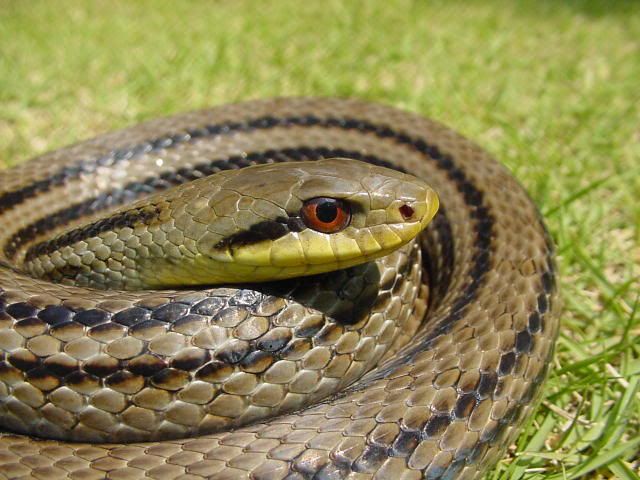
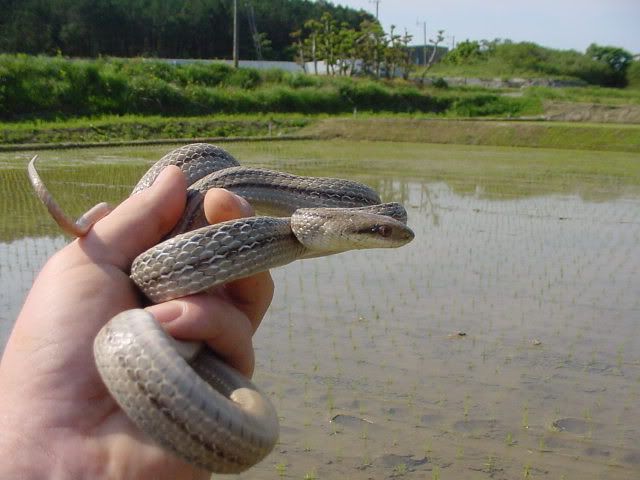
The melanistic specimens are born melanistic, and the striped specimens are born blotched. From all I've learned about the phases, it seems that the melanistic specimens are just as likely to survive as their blotched siblings.
Shane
Reptile & Amphibian Forums
Welcome to kingsnake.com's message board system. Here you may share and discuss information with others about your favorite reptile and amphibian related topics such as care and feeding, caging requirements, permits and licenses, and more. Launched in 1997, the kingsnake.com message board system is one of the oldest and largest systems on the internet.



Is anyone working with E.quadrivirgata?
TxHerper
Sep 09, 2005 09:41 AM
Replies (10)
jfirneno
Sep 09, 2005 11:27 AM
I can't remember the last time I saw them listed in the classified ads. Once again, very nice pics in your Japan posts.
John
TxHerper
Sep 10, 2005 09:36 AM
>>I can't remember the last time I saw them listed in the classified ads. Once again, very nice pics in your Japan posts.
>>John
metalpest
Sep 09, 2005 02:35 PM
Wow, those melanistics are incredible.
-----
1.1 Cal Kings
1.1 Northern Pines
1.1 Honduran Boas
1.1 Tangerine Honduran Milks
1.2 Pueblan Milks
1.2 Blue Beauties
1.1 Irian Jaya Carpet Pythons
TxHerper
Sep 10, 2005 09:37 AM
>>Wow, those melanistics are incredible.
>>-----
>>1.1 Cal Kings
>>1.1 Northern Pines
>>1.1 Honduran Boas
>>1.1 Tangerine Honduran Milks
>>1.2 Pueblan Milks
>>1.2 Blue Beauties
>>1.1 Irian Jaya Carpet Pythons
ratsnakehaven
Sep 09, 2005 04:05 PM
>>Unfortunately, it seems that most of the knowledge about the species resides in Japan. I'm particularly interested in breeding results.
>>
I think there's considerable knowledge of them around. Schulz' monograph of the Elaphe probably has the most info of the literature. I think they may have been bred in the U.S. before too. I know they've been offered for sale before. They haven't been very popular for one reason or another, so most breeders don't keep them. Many of the Eurasian ratsnakes have had popularity problems.
>>The melanistic specimens are born melanistic, and the striped specimens are born blotched. From all I've learned about the phases, it seems that the melanistic specimens are just as likely to survive as their blotched siblings.
>>Shane
I didn't know that. Maybe the melanism is a recessive gene. I know the species is highly variable in color/pattern and size. It's a very interesting species and I would compare it to the King ratsnake, Elaphe carinata. It seems to have a number of characteristics of the ancestral Elaphe. Do you know much about the behavior? I think they are probably quite racer-like, similar to carinata. Anyway, keep us posted if you learn more or get more pics. Thanks for some awesome shots, btw...
Terry
TxHerper
Sep 10, 2005 10:50 AM
>>I think there's considerable knowledge of them around. Schulz' monograph of the Elaphe probably has the most info of the literature. I think they may have been bred in the U.S. before too. I know they've been offered for sale before. They haven't been very popular for one reason or another, so most breeders don't keep them. Many of the Eurasian ratsnakes have had popularity problems.>>
Thanks Terry. I've been putting off buying Schulz' Elaphe book for some time now. Rat snakes are definitely one of my favorite groups. I'll eventually break down and buy it. I wonder if the asian rats are more popular in Europe???
>>I didn't know that. Maybe the melanism is a recessive gene. I know the species is highly variable in color/pattern and size. It's a very interesting species and I would compare it to the King ratsnake, Elaphe carinata. It seems to have a number of characteristics of the ancestral Elaphe. Do you know much about the behavior? I think they are probably quite racer-like, similar to carinata. Anyway, keep us posted if you learn more or get more pics. Thanks for some awesome shots, btw...
>>
>>Terry
The melanism is not a simple recessive trait. Here is some data that I received from a breeder in Japan:
Several (n=??) WC striped females that produced melanistic and blotched from the same clutch.
Two years of captive breeding a pair of melanistic snakes produced:
year 1 >> 18 eggs, 9 blotched, 3 melanistic, 6 duds.
year 2 >> 18 eggs, 10 blotched, 8 melanistic.
It is an interesting, and very widespread species. Some of the small island populations have particularly interesting traits. On Izu(oshima) island, they're generally smaller than 80cm, and completely melanistic; on Tadanae(jima) island, they reach 240cm plus! The Tadanaejima population feeds on sea birds, and they apparently fast for long periods of time. Reminds me of the giant Tiger snakes that feed on mutton birds, and the large cottonmouths of Cedar? key that eat a lot of fallen birds from rookery locations.
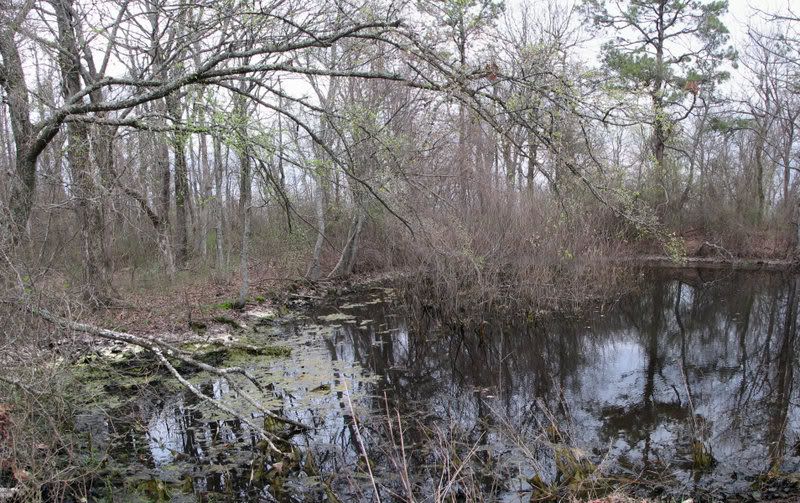
I've seen ~30 in the field, plus a handful of DORs; all from northern Kyushuu. Coloration wise, at least from lower elevations, it seems that about 1 in 4 will be melanistic. I only found one at around 1800m elevation, and it was melanistic (also found a DOR from considerable elevation that was melanistic).
You are correct, they are very racer-like. They're not nearly as flighty as racers, but I did get into a downhill chase with a yearling and it gave me a good run. Once in hand, at least initially, most tend to deal a lot of scratching bites, and they flail about, much like a racer. They are diurnal, and I imagine that they eat a lot of frogs, given their propensity to roam the edges of the rice paddies. I will say though, that I found 3 that were making their way down tunnels (presumably in search of rodents). Size wise, I found two that were about 4', but most adults were in the 3' range. It's amazing how prevelant they are in the right environment.
That's as much as I've been able to gather about their behavior. I'll certainly post if I learn more.
Shane
ratsnakehaven
Sep 11, 2005 08:32 AM
>>Thanks Terry. I've been putting off buying Schulz' Elaphe book for some time now. Rat snakes are definitely one of my favorite groups. I'll eventually break down and buy it. I wonder if the asian rats are more popular in Europe???
>>
Hi again, Shane.
I remember buying that book for $150 yrs. ago. I think I saw it at the IHS for $80 or $100 this summer. Schulz has been the expert on the Elaphe clan for a long time now, since I got interested back in '88. However, slowly, but surely, hobbyists are adding info to his great volume.
>>The melanism is not a simple recessive trait. Here is some data that I received from a breeder in Japan:
>>
>>Several (n=??) WC striped females that produced melanistic and blotched from the same clutch.
>>Two years of captive breeding a pair of melanistic snakes produced:
>>year 1 >> 18 eggs, 9 blotched, 3 melanistic, 6 duds.
>>year 2 >> 18 eggs, 10 blotched, 8 melanistic.
>>
>>It is an interesting, and very widespread species. Some of the small island populations have particularly interesting traits. On Izu(oshima) island, they're generally smaller than 80cm, and completely melanistic; on Tadanae(jima) island, they reach 240cm plus! The Tadanaejima population feeds on sea birds, and they apparently fast for long periods of time. Reminds me of the giant Tiger snakes that feed on mutton birds, and the large cottonmouths of Cedar? key that eat a lot of fallen birds from rookery locations.
>>I've seen ~30 in the field, plus a handful of DORs; all from northern Kyushuu. Coloration wise, at least from lower elevations, it seems that about 1 in 4 will be melanistic. I only found one at around 1800m elevation, and it was melanistic (also found a DOR from considerable elevation that was melanistic).
>>You are correct, they are very racer-like. They're not nearly as flighty as racers, but I did get into a downhill chase with a yearling and it gave me a good run. Once in hand, at least initially, most tend to deal a lot of scratching bites, and they flail about, much like a racer. They are diurnal, and I imagine that they eat a lot of frogs, given their propensity to roam the edges of the rice paddies. I will say though, that I found 3 that were making their way down tunnels (presumably in search of rodents). Size wise, I found two that were about 4', but most adults were in the 3' range. It's amazing how prevelant they are in the right environment.
>>That's as much as I've been able to gather about their behavior. I'll certainly post if I learn more.
>>Shane
Thanks very much for the info. They certainly are interesting, as are the other Japanese ratsnakes, especially climacophora and conspicillata, because they are endemic species and for other reasons. I've worked with climacophora and conspicillata before, but have opted to concentrate on mainland species of China, South Korea, etc, because I believe they are more ancestral and other reasons. But another reason the Japanese endemics are interesting is because the environment resembles that of the U. S. and there is great variation over their ranges. Consider the fact that there are mountains throughout their ranges and that they reach about 45* north on Hokkaido and Kunashiri.
The Japanese endemics are exposed to a variety of climatic and geographical conditions. They have to be adapted to very cool conditions, as well as subtropical. There are dry as well as very moist conditions and the humidity. In some areas they have long active seasons and in other areas they barely have enough time in summer to carry out their reproductive functions. Studying these snakes can tell us a lot about how ratsnakes evolve and how flexible a species can be. Also, I think the Japanese species might tell us something about what kind of snakes may have migrated to North American across the Bering Straits Land Bridge and how they may have evolved.
Schulz gives quite a bit of info about quadrivirgata. As far as prey goes, he mentions fish, frogs, snakes, lizards, rodents, birds, and eggs. He also says they have quite a strong musk which resembles carinata's. The upper ele. he marks as 2,000 m. I imagine examples from high ele. would have more tendency towards melanism than ex. from low ele.
Hope you get into this species and find some snakes to start with. Keep us posted, Shane.
Terry
-----
Ratsnake Haven...researching ratsnakes since 1988 
Ratsnake Haven Group...an information providing list site.
TxHerper
Sep 11, 2005 02:18 PM
>>Thanks very much for the info. They certainly are interesting, as are the other Japanese ratsnakes, especially climacophora and conspicillata, because they are endemic species and for other reasons. I've worked with climacophora and conspicillata before, but have opted to concentrate on mainland species of China, South Korea, etc, because I believe they are more ancestral and other reasons. But another reason the Japanese endemics are interesting is because the environment resembles that of the U. S. and there is great variation over their ranges. Consider the fact that there are mountains throughout their ranges and that they reach about 45* north on Hokkaido and Kunashiri.>>
Hey Terry, I don't know if you could call quadrivirgata, conspicillata, and climacophora Japan endemics, as they all occur on Kunasir, or Kunashiri if you prefer, and politically, the island belongs to Russia

I wouldn't say that the environment resembles that of anywhere in the U.S. It's very different, but in regard to climate, I could make analogies with Appalachia, and some northwestern areas. Japan is very mountainous, so the herp species are well adapted. Mountain ranges aren't much of a limiting factor there.
I've yet to find climacophora. I have spent quite a bit of time in Iwakuni (where the amel population resides), but unfortunately, I was never able to go herping there. It's very interesting that there is a viable, wild population of amelanistic snakes. When you were working with climacophora, did you find them to be nervous captives, or were they more like obsoleta?
>>The Japanese endemics are exposed to a variety of climatic and geographical conditions. They have to be adapted to very cool conditions, as well as subtropical. There are dry as well as very moist conditions and the humidity. In some areas they have long active seasons and in other areas they barely have enough time in summer to carry out their reproductive functions.>>
Some of the mainland species do have a large geographic range, but the southern islands (pretty much all of them south of Kyushuu) have many unique species of flora and fauna. There aren't any dry areas that I know of, and I've seen pretty much all of the islands (I was a navigator on C-130s), though some of the tiny islands aren't able to hold rain water very well. Those islands don't have a lot of herp diversity.
>>Schulz gives quite a bit of info about quadrivirgata. As far as prey goes, he mentions fish, frogs, snakes, lizards, rodents, birds, and eggs. He also says they have quite a strong musk which resembles carinata's. The upper ele. he marks as 2,000 m. I imagine examples from high ele. would have more tendency towards melanism than ex. from low ele.
>>
>>Hope you get into this species and find some snakes to start with. Keep us posted, Shane.
>>
>>Terry
Yeah, I too think that the quad populations from higher elevations probably lean toward melanism. I've emailed someone who lives on Honshuu. He's working with them, and also gets into the field quite a bit. Hell, I should ask him to post on this forum, as he's found all three of the ratsnakes from that area.
I don't know about the musk. It's foul, like most ratsnakes, but it didn't jump out at me as any worse than obsoleta. Of course, after dealing with some large Ramphotyphlops in Australia, my sense of bad musk is decidedly biased.
I brought back one of the snakes this time (the one pictured at the base of a pine tree). It's only about 24" right now. If I enjoy working with it then I'll pair it up in the future. If not, then I'll send it to someone who is working with the species. Quite honestly, I don't like to breed snakes. Many of the species that I am interested in aren't popular, and I don't like to deal with a bunch of juvies that no one wants.
Shane
ratsnakehaven
Sep 11, 2005 09:51 PM
>>I've yet to find climacophora. I have spent quite a bit of time in Iwakuni (where the amel population resides), but unfortunately, I was never able to go herping there. It's very interesting that there is a viable, wild population of amelanistic snakes. When you were working with climacophora, did you find them to be nervous captives, or were they more like obsoleta?
>>
They were more like obsoleta. They weren't very nervous at all.
>>Some of the mainland species do have a large geographic range, but the southern islands (pretty much all of them south of Kyushuu) have many unique species of flora and fauna. There aren't any dry areas that I know of, and I've seen pretty much all of the islands (I was a navigator on C-130s), though some of the tiny islands aren't able to hold rain water very well. Those islands don't have a lot of herp diversity.
>>
I was referring to the three endemic ratsnakes and may not have worded that too well. I guess I thought the lowland areas and all the small islands would be dry. I wasn't considering anything below the island of Kyushu.
>>Yeah, I too think that the quad populations from higher elevations probably lean toward melanism. I've emailed someone who lives on Honshuu. He's working with them, and also gets into the field quite a bit. Hell, I should ask him to post on this forum, as he's found all three of the ratsnakes from that area.
>>I don't know about the musk. It's foul, like most ratsnakes, but it didn't jump out at me as any worse than obsoleta. Of course, after dealing with some large Ramphotyphlops in Australia, my sense of bad musk is decidedly biased.
>>I brought back one of the snakes this time (the one pictured at the base of a pine tree). It's only about 24" right now. If I enjoy working with it then I'll pair it up in the future. If not, then I'll send it to someone who is working with the species. Quite honestly, I don't like to breed snakes. Many of the species that I am interested in aren't popular, and I don't like to deal with a bunch of juvies that no one wants.
>>Shane
>>
I don't know about the musk personally, just going by "Schulz". I do know that the musk of E. bimaculata is pretty powerful, and they're a small snake. They love to stink you up too. Come to think of it, carinata is also called, the Stinking Goddess.
I breed my snakes sometimes, but I don't breed just so I can sell them. I breed to continue the species or accomplish something else of importance. Then I trade or sell any extras I have, if I can.
Keep us posted on how your quad. does
TC
metalpest
Sep 21, 2005 12:21 PM
You say two melanistic parents had twice as many blotched offspring as melanistic offspring? Thats strange.
-----
1.1 Cal Kings
1.1 Northern Pines
1.2 Honduran Boas
0.1 Tangerine Honduran Milks
1.2 Pueblan Milks
1.2 Blue Beauties
1.1 Irian Jaya Carpet Pythons
