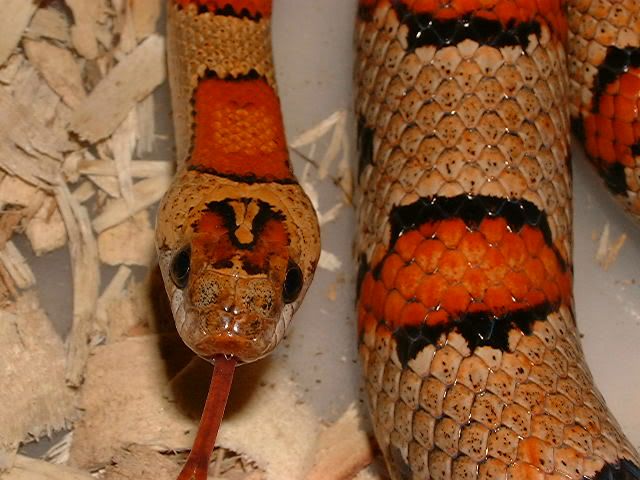
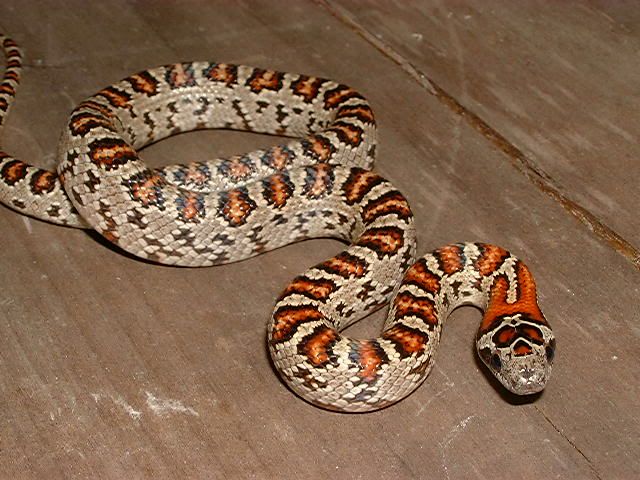
First off I would like to say that you posted this the most tasteful way I have read this touchy topic....Good job.
Here goes my reply......
I did so because I wanted to continue working with my classic line of highly variable animals.
Tony....Do you think that the variability has been lost in thayeri? I line breed thayeri and have for a few generations and the variability gets better in my opinion.....I very seldom breed a milksnake phase thayeri to another...same goes for leonis phase thayeri....I usually breed a MSP to a Leonis for variability. No variability has been lost...
Sadly, I knew there is entirely too much banter about how you can’t trust someone working with hybrids or crosses to also produce something that is “pure”. I think this notion is kind of sad if only from the perspective that some in the hobby are so fixated on the concept of purity that they allow it to override their ability or desire to judge the character of a fellow hobbyist on more sustentative criteria.
This I agree with you 100%.....Some of the most outrageously beautiful snakes are hybrids. The Pastel kings I saw in Daytona at Steve Osborne's table were the nicest snakes at the show in my opinion. Steve still breeds pure snakes too and I would buy them as pure because I have met him and know him. It is too bad that there are some 'bad apples' out there that make breeding hybrids along side breeding 'pure' snakes such a hard thing to do and even worse it is harder to get people to believe you are legit.....I plan on someday breeding some crosses and I would never sell as pure them or attempt to mislabel them as pure species.
Anyway, as for “pure” thayeri, it’s my opinion that they are going to be exceptionally hard to find. Decades ago when all this started the various forms of mexicana were freely interbred. Crossing to alterna was also common. Basically this means that the majority of the captive population is rightfully suspect to not being pure. To the end of selecting the most pure animals however, I think it’s important to know what characteristics constitute “classic” thayeri.
After seeing many wild collected and wild photoed thayeri over the last couple years I think what I breed is 'pure' thayeri. And most of what I see here THIS forum are 'pure' thayeri....to think they are crosses is purely a guess on your part. What we do in captivity is completely different than the wild. When line breeding we select the best looking offspring from one pairing and later pair them up with each other or to the parent animals. This can have one of two effects....One being desirable and the other not. The desired effect is when all the 'good' traits are passed on to the next generation offspring from both parents and the other undesirable effect is when 'bad' traits are grouped from each parent.....Undersirable color, pattern or even health can be unwantingly achieved.
There is an entire suite of characteristics but over the years I’ve looked for one particular trait as a guide, a simple tri-lobed head pattern. I don’t see that and I pass. It isn’t a judgment on the breeder as I have no illusions about any of these animals being completely pure. This is just to me a defining feature of a classic thayeri and one I don’t see very often.
It IS good to set standards, but a tri-lobed head pattern (I call it the tri-dot) is mostly a L. m. mexicana characteristic. Some good characteristics that a "classic" thayeri has are these:
1) The neuchal is more of a spot/dot/or area rather than a stripe as in alterna and Mexmex.
2) All the wild type thayeri I have seen in person or in photos have grey faces......Black faced ones resemble Alterna, Pyro and Ruthveni.
3) A non-line-bred thayeri WILL have speckles (especially down the sides) in its pattern. This is also known as a slight ontogenetic change a Mexicana goes through......But even through line breeding a pure thayeri can be clean and "vivid".
4) The most outstanding characterstic I use is head/neck shape and/or eye shape.....Some people cannot see this, but thayeri have a pronounced jawline (much like alterna) and do not have 'bugged' eyes as alterna do.
Incidentally, the albinos were done by a guy who worked for years backcrossing to classic thayeri. By blood they were >90% true thayeri. He routinely produces albinos of every phase that manifest classic thayeri traits and the pair I got from him had very small and simple tri-lobed head patterns. Somehow I can’t help but respect the work behind years of intelligent husbandry whether it’s Jeff’s albinos or Tim’s Vivid creations.
I agree with you here too.......The work it takes to make such a cross 'appear' to be pure deserves as much congratulations as the work it takes make a pure snake 'appear' not to be......(LINE BREEDING again).
I also hear that if you breed one species to another then breed the offspring of them back to one parent species for 9 generations DNA testing cannot even trace the other species used in the cross.....Is this true? I will never know since that would take the best of 30 years to prove out......LOL
Very well put Tony....and it is too bad that some people have ruined the idea of producing pure snakes alongside hybridized snakes and expecting 'TRUST' with the whole community......I just hope that when and if I decide to produce a "pastel king" that people will still buy my Dan Vermilya, Tim Gebhart, David Weymouth, Evan Stahl, Chris Bodner, Russ Bates, Mike Kochvar, Chris Garcia and John Lassiter Thayeri............
And this is MY "DOS CENTAVOS!!!!!!!!!"
John Lassiter


 To me they are very attractive.