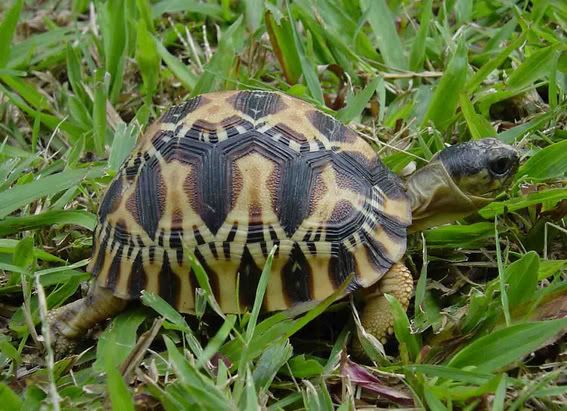
this looks like a farm to me for the radiated tortoise. seemed to be like in madagascar.
saw this pics in a japanese reptile magazine.
anybody knowledgable of such a place?
any inputs if this farming or hoarding these wonderful tortoises? heard that they are also doing this for the yniphora tortoise.
would anybody know where this is? just doing a research or the wild population and behaviours of the madacascar tortoises, specially the radiata and yniphora.
thanks in advance...

Reptile & Amphibian Forums
Welcome to kingsnake.com's message board system. Here you may share and discuss information with others about your favorite reptile and amphibian related topics such as care and feeding, caging requirements, permits and licenses, and more. Launched in 1997, the kingsnake.com message board system is one of the oldest and largest systems on the internet.


radiata farm in madagascar? any idea where?
mikeflores
Nov 12, 2005 12:36 AM
Replies (5)
mrcota
Nov 12, 2005 07:09 AM
There is a captive breeding facility in Madagascar at the Ivoloina Forestry station in Toamasina. This facility was set up by the Malagasy government for the captive breeding of confiscated tortoises of both G. radiata and G. yniphora. These tortoises are often confiscated from the international illegal animal trade. They are not "hoarding" them. Unfortunately, only the G. radiata are reproducing and many of the progeny of the G. radiata from this program are being returned to the pet trade, illegally of course. The beneficiaries of this pet trade are in Asia and many end up in Taiwan and Japan as a final destination.
It must be remembered that the pet trade is not the pressure which diminished the numbers of the G. radiata. It is the liver of this tortoise that the Japanese (or Chinese?) relish which has caused its demise. As this turtle is left to rot, their livers are easily smuggled out of the country. Who is going to recognize a G. radiata liver from any other liver? Definitely not the Malagasy government! CITES is a bit misguided; they strangle the pet trade that could reproduce the rare animals and give almost free reign to those who would destroy them for their skins and does nothing to propagate the species (crocodile farming being one of the few exceptions).
G. radiata is available, but as everyone knows it is very hard to come by. Unfortunately, I do not think that G. yniphora is going to be available to the average person during anyone’s lifetime that reads this forum.
It is a shame that the G. radiata is so hard to obtain. If it was not for their status, they would be the most popular of tortoises. Beautiful, personable, and hardy, they are the ideal tortoise, not to offend anyone else’s species of tortoise.
I can not give you any information on behaviors of wild populations but could give you information on behaviors of captive G. radiata (I have a pair). If no one gives you information on G. yniphora, I know of people that keep them.
Michael
cwilder
Nov 12, 2005 09:03 PM
I enjoyed your post. I was curious as to how many people you know that have yniphora? I'm only aware of one person who has yniphora in the US. I do agree with you though, I doubt we'll ever see yniphora avaiable. In fact, when I was in Hawaii I made a trip to the zoo just to see their lone female. I have several radiata and they are great tortoises.
CW

mikeflores
Nov 13, 2005 01:55 AM
first time i have heard of tortoise liver used for med. heard of plastrons grounded and mixed with herbs, carapaces as decors, meat as food. but just the first on the liver. good addition to my notes 
one thing i can not understand with people using animals parts as medicine, am not familiar with the science of medicine, but can't laboratories make substitutes? and wouldn't that be cheaper and LEGAL? just a thought.
so this image is from a reserve? are they breeding them in this area? just wanted to know before the looooong trip. and how are they ending up in the trade? you mean, the offsprings are sold to traders? heard from some people that radiateds torts are abundant in their native country that they just sometimes end up as road kills.
thanks for the inputs, but more info are appreciated.
wild and captive rads. why are captives more prone to have a pyramid? even with the proper diet, they would still end up with a little point on the carapace. unlike those in the pics, they look really round.
mrcota
Nov 13, 2005 03:43 AM
If you contact me directly, I can give you the references to which my post was referring.
As far as many Asian medicinal practices go, yes, most things can be synthesized; I just do not have a clue as to the importance of G. radiata and Pyxis livers. The post did not refer to Pyxis sp., so I did not include that in the last post. I have spent a third of my adult life in the Asia-Pacific regions, but things such as killing endangered species for food or medicine still baffles me.
I believe that the pictures are from the reserve, since that should be the only captive concentration of those tortoises in Madagascar. Some sensitive breeding programs do not allow visitors, so I would make sure to make liaison with them before wasting a lot of time and money.
From reports, the breeding of the G. radiata is successful. The G. yniphora breeding, at the time the report on G. yniphora was made, had not been successful. I do not have proof that the G. radiata offspring from this breeding program are being sold to traders, but if it is not true, where in the world are all the hatchling G. radiata coming from!? If someone outside of Madagascar is producing all these offspring, they have an endangered species breeding program that would make the San Diego Zoo envious. Yes, there is a certain amount of mortality from road kill, but most are ending up as food, not only for the Japanese, but also for the native Malagasy population.
Many Asian populations, especially the poor, eat turtle and tortoise meat without any regard to its endangered status. It is just another meal and they either eat what they find or go hungry. I am constantly trying to tell people in Thailand that Clouded Monitors are highly endangered and killing them is not only a violation of Thai law, it is also a violation of CITES (international law), but all they can tell me is how good it tastes.
There is slight pyramiding in many G. radiata that I have seen here, but I have also seen many with no pyramiding. G. radiata might be prone to more pyramiding than other tortoises because of their fast growth rate. My young G. radiata are showing no sign of pyramiding- I am keeping my fingers crossed. The worst case that I have seen was caused by feeding it whatever was at that person’s home at the time, in another words, it was fed a diet in which no thought was made to what the tortoise should eat. It is a wonder that it survived, but G. radiata is very difficult to kill. Someone like that should never have such a wonderful creature, but it all comes down to who has the money, not who can take the best care of it. I am not sure why many tortoises do not pyramid as bad here as they do in Europe or the US. Maybe it is the high temperatures and high humidity? I think that diet has to enter the equation somewhere also. THESE ARE ONLY MY GUESSES AS TO WHY. If you can give the true answer about pyramiding, you will be the hero of many tortoise keepers!
Michael
mrcota
Nov 13, 2005 03:49 AM
Beautiful Radiated Tortoises! That is not the typical pattern that I have seen from the US, much more beautiful.
Michael
