Pretty cool shots of a hawk dining on a snake and it's last meal. Might be kinda gory for some folks though....
Red Tail Hawk vs. Juvi Snake.
Reptile & Amphibian Forums
Welcome to kingsnake.com's message board system. Here you may share and discuss information with others about your favorite reptile and amphibian related topics such as care and feeding, caging requirements, permits and licenses, and more. Launched in 1997, the kingsnake.com message board system is one of the oldest and largest systems on the internet.



Check out this thread on FMiranda
jpenney
Nov 18, 2005 01:07 PM
Replies (7)
RichardFHoyer
Nov 19, 2005 12:28 AM
JP,
No red tail but a brown tail--- but is was a Red-tail. In falconry they call such first year birds a passagers or passage hawks and they will not obtain the red tail feathers until after their first molt next summer.
Very nice shots I might add.
Richard F. Hoyer
jpenney
Nov 19, 2005 01:16 PM
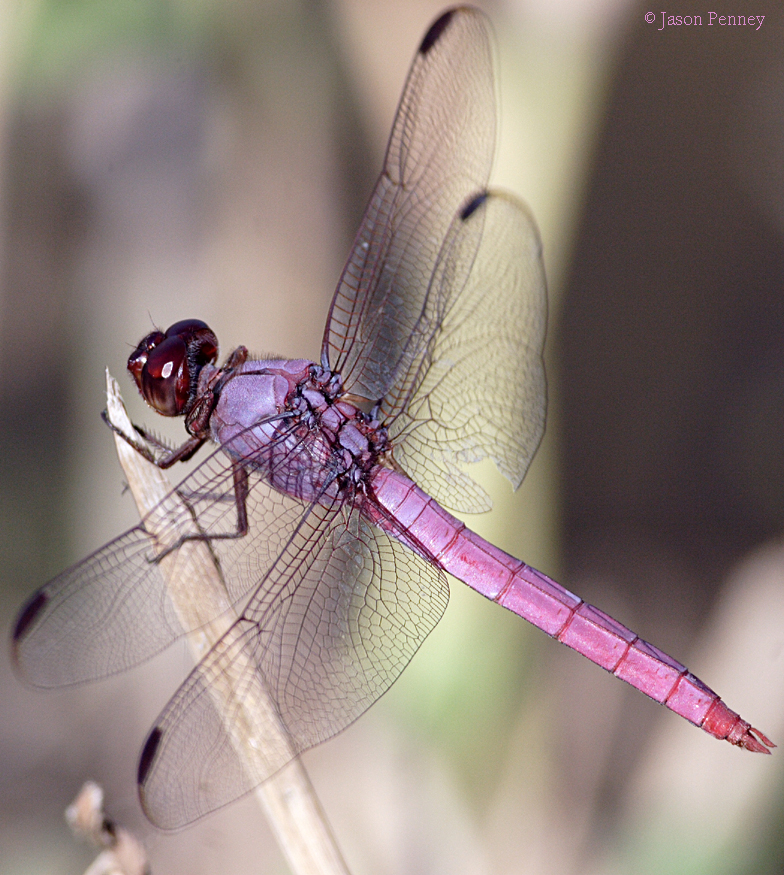
Interesting info Senor Hoyer, thanks. Aren't you and/or your son part of a bird touring org. out of AZ? I seem to remember seeing his (or your name) on a list of guides. I've recently picked up a Canon 400mm lens and am working on shooting more birds as well. I went out the other day to shoot birds and nothing was moving so I slapped on some extension tubes and turned the 400mm into a macro and shot some dragonfly's. Make a pretty decent macro lens.
Jason
-----
Snakes of Hudspeth County, Texas
RichardFHoyer
Nov 22, 2005 09:31 PM
Jason,
Great photo of the dragonfly!
I have three sons, one in Florida that excels as salt water fishing. He use to be good at steelhead fishing here in Oregon before he moved.
Son #2 lives in Tucson and is a birding tour guide for Wings Corp. of Tucson. In recent years he as become reasonably proficient at identifying butterflies, dragonflies, and damselflies as well. One of the Wings tours in called 'Birds and Butterflies' for individuals with dual interests. Son Rich Jr. does the bird bit and another gentleman by the name of John Block I believe, does the butterflies for tour participants.
Youngest son #3 lives in Clearfield, Utah and is head of the Utah Herp. Assn. Ryan is also is a falconer and got me out of the inactive category in 1988 - 1989 when he first entered the sport. With a growing family, etc. he is now inactive but I am still active flying one of the species native to your area -- a female Harris' Hawk I named Conchita. Hunt her every other day weather permitting and tomorrow is our hunting day.
And to stay on subject, went herping today. How may professional herpetologists would you find going out at this time of year in Oregon trying to find snakes? Today there was a heavy frost on the ground which remained all day in areas that did not receive any sunshine. The high was projected to be 52. But the sun burned off the morning fog early today coming out about 9:30 AM. So I went out to see if I could find any Sharp-tailed Snakes. Ended up with three juveniles from two different areas and observed three juvenile NW Garter Snakes under a tin at another one of my sits.
Still working to finalize the manuscript formally describing the new species of Sharp-tailed Snake. When coauthor Chris Feldman had the draft reviewed by several of his professors at Utah St., they suggest he run more samples from Sharp-tailed Snakes in Oregon, Washington, and possibly B.C. I sent him the three samples I had from Washington specimens but only had one from Oregon and hence the trip today. Normally I wait until it the temperature gets to 55 degrees or greater before I venture out.
Richard F. Hoyer
phiber_optikx
Dec 31, 2005 03:54 AM
I first wanted to get into falconry. I read books and posted on forums for a long time gathering information. I was in the process of turning our shed into a mew when a sparrow hawk got trapped in our garage. I managed to put him into a 55 gallon aquarium for the night while I worked double time on the mew. I had placed a sheet over the enclosure to not stress him out but when I checked in the morning he had died. It was heartbreaking and an amateur mistake. But I still have an ongoing fascination with redtails. I wish I could care for a redtail without having to go through all of the falconry.
-----
0.1 Snow Corn "Hope"
1.0 Ball Python "Wilson" (Castaway)
1. Orange Albino Black Ratsnake "Chunk" (Goonies)
.1 Orange Albino Black Ratsnake "Peaches"
0.0.1 Mexican Black Kingsnake "Onyx"
regalringneck
Nov 21, 2005 05:46 AM
Hiya Richard...thought you'd be interested in this xchange...mebbe add some thoughts of your own...hope all goes well...
.....thnx for the link, there was a similar one recently on Natl Geo website showing a redtail killing a small to medium sized rattlesnake (theres a search feature there to find the video)...
I have never seen a redtail w/ a crotalid, but have many times seen them w/ colubrids..I am beginning to suspect w/ the additional info below...theres some prey discrimination going on & despite the ease w/ which some raptors seem to dispatch serpents...clearly there are occasional costs:
Ive seen a few posts where ratsnakes & even black racers managed to strangle their captors. There was a pub recently of a Fl redtail being killed by a Micrurus.
What appear to be our most efficient hawks; the accipiters & Harris hawks while ever ready to snatch a lizard, invariably give snakes a pass. Even the great horned owl rarely attempts to eat serpents.
I believe it was the great H. Fitch who published many years ago on the San Joaquin range in Cal., that while viridis was encounterd at a ~ 10:1 ratio to Pituophis, at golden eagle eyries gopher snakes were present in an inverse ratio of frequency.
I'm thinking their must be a continual balancing act that changes during the life cycle of each snake regarding the potential cost to the snake in moving...to be more likely seen & to lay down a scent trail that ophiophagous serpents might follow...against the possibility of encountering prey or an enhanced liklihood for the opportunity to reproduce.
In light of this...Im tempted to conclude...its no wonder we see so comparatively few of them!
In Reply to: ...avian predation.... posted by J-Gunn on November 20, 2005 at 08:19:27:
I remeber seeing Mutual of Omaha (I think) when I was a little kid. In one of the shows, it showed a hawk swooping down to chow down on a yellow rat snake down in FL. As the hawk landed, and grabbed the snake, the snake bagan coiling around the hawk and eventually killing it. It was one of the coolest things I've seen on TV. When I was working in W. Texas, it was VERY common to see hawks and Eagles soaring through the mountains with (what looked to me) various Coachwhips and Racers in hand. I think, like you said, maybe their preferred snakes are the non-constrictive colubrids, smaller constrictors and smaller Crotes. I wonder how many hawks have learned the hard way not to mess with the other parties. Interesting stuff..JP
Posted by johngunn on November 20, 2005 at 20:13:03:
In Reply to: Re: ...avian predation.... posted by Jasonp on November 20, 2005 at 19:36:00:
...i forgot to add typical obvious additional motivators for movement...to thermo-regulate & re-hydrate!...
It is interesting you mention that (I grew up on M o Omaha...)that they documented what they did...way back then...tho I always suspect staged encounters w/ commercial video...but way back when ...Disney did the Living Desert ca 1965-ish...& in the book version; they have a gr8t horn owl battling w/ a coachwhip at night (?) & the owl as I recall gets beaten up if not killed. That same piece had a segment where a bobcat is run up a freeking saguaro by a grp of peccaries....for 25 years we az biologists have wondered how they rigged that...we'd never seen any cat or mammalian carnivore like a grey fox run up those spiney saguaros...last year... I rc'd a jpg of a bobcat way up on high....treed by a desert mule deer doe!
What luck they had to witness these rare events....so long ago...
Guess Im gonna have to read the photo loading link....dangyou once again....Ken, O'Connor et al....
Beers / RxR

RichardFHoyer
Nov 22, 2005 10:48 PM
John,
As mentioned in my reply to Jason, I still herp now and then during the fall and winter provided conditions are reasonably suitable. They really weren't that good today but we needed some additional tissue samples from Sharptails for mtDNA testing so I went out just in case -- and was successful.
As for raptors taking reptiles, somewhere I read, and you seem to confirm, that Harris' Hawks avoid taking snakes. Yet one of my Harris' Hawks killed an ate a small Red-spotted (Common) Garter Snake and another HH female took a larger Red-spotted Garter but I was able to get it away from her before she did some damage to the snake.
The Red-tailed Hawks myself and other falconers have hunted readily took any snake they found. On a few occasions, I have seen tails carrying dead snakes. A good number of years ago I watch an adult Red-tail grapple with a large adult gopher snake in the grass between the highway and fence. About two years ago I was traveling up to my boa site in SW Oregon east of Ashland when the resident male Golden Eagle took a large snake on the slope above the highway I was driving -- probably another Gopher Snake from its size. About 6 years ago I saw a Kestrel eating a Northern Alligator Lizard while sitting on a power pole wire. And about two years ago, there was an article in Herp. Review in which an observer watched a juv. Red-tail eating a still moving Rubber Boa. Although the hawk had eaten the head of the snake,
the snake had wrapped its coils around the hawks neck and suddenly, the hawk drooped dead to the ground or the shallows of a lake having been killed by the boa it had killed.
When I worked a few months as a commercial helicopter pilot in E. Pakistan in the late 50's, there were many times I saw raptors with snakes in their talons. One day I flew one down getting above it an making it drop its quarry. Landed and found that the snake was a cobra.
Richard F. Hoyer
regalringneck
Nov 23, 2005 06:27 AM
...Interesting...a headless (of course thats still leaves 1 xtra) rubber boa strangling a hawk as large as a redtail...wow.
Interesting too that your H-hawks did attack garters...the wild ones dont take them, nor have any of the desert falconers Ive discussed this w/ had them do it either...but the captive birds do get bored!
One of the directions I was hoping this thread might go is a discussion about how do these elaborate defense displays evolve such as Pituophis if the generalist predators ignore them & just wade in and dispatch them w/ ease...I watched a coyote whack an adult gopher snake w/o the slightest concern about its rattling/hissing & striking...if that pit had been a 4' crotalid...that coyote would have been history, so it appears they arent faking anybody????
Typn about helicopters.... (1 of my great thrills...) I managed to snag a freeking B407 for a resource reconnaisance flight last week...talk about wwhhooeee 
Saludos RxR
Posted by: Richard F. Hoyer at Tue Nov 22 22:48:18 2005 [ Report Abuse ] [ Email Message ]
John,
As mentioned in my reply to Jason, I still herp now and then during the fall and winter provided conditions are reasonably suitable. They really weren't that good today but we needed some additional tissue samples from Sharptails for mtDNA testing so I went out just in case -- and was successful.
As for raptors taking reptiles, somewhere I read, and you seem to confirm, that Harris' Hawks avoid taking snakes. Yet one of my Harris' Hawks killed an ate a small Red-spotted (Common) Garter Snake and another HH female took a larger Red-spotted Garter but I was able to get it away from her before she did some damage to the snake.
The Red-tailed Hawks myself and other falconers have hunted readily took any snake they found. On a few occasions, I have seen tails carrying dead snakes. A good number of years ago I watch an adult Red-tail grapple with a large adult gopher snake in the grass between the highway and fence. About two years ago I was traveling up to my boa site in SW Oregon east of Ashland when the resident male Golden Eagle took a large snake on the slope above the highway I was driving -- probably another Gopher Snake from its size. About 6 years ago I saw a Kestrel eating a Northern Alligator Lizard while sitting on a power pole wire. And about two years ago, there was an article in Herp. Review in which an observer watched a juv. Red-tail eating a still moving Rubber Boa. Although the hawk had eaten the head of the snake,
the snake had wrapped its coils around the hawks neck and suddenly, the hawk drooped dead to the ground or the shallows of a lake having been killed by the boa it had killed.
When I worked a few months as a commercial helicopter pilot in E. Pakistan in the late 50's, there were many times I saw raptors with snakes in their talons. One day I flew one down getting above it an making it drop its quarry. Landed and found that the snake was a cobra.
Richard F. Hoyer

