

Reptile & Amphibian Forums

Welcome to kingsnake.com's message board system. Here you may share and discuss information with others about your favorite reptile and amphibian related topics such as care and feeding, caging requirements, permits and licenses, and more. Launched in 1997, the kingsnake.com message board system is one of the oldest and largest systems on the internet.

Click here for Dragon Serpents
https://www.crepnw.com/
Click for 65% off Shipping with Reptiles 2 You

collecting in central america

jawn Nov 29, 2005 02:41 PM

First of all, about all the disscussion on subspecies/locality .... great topic! I like many other people really do feel that it is important to keep track of where exactly our stock is coming from. I also think it is fine to mix and match different stocks within subspecies (and their offsping) with morphs or pattern quality as a goal. However I really do feel that this has its limitations and it is important to have new wild stock to work with - for the beauty of its own natural form as well as the new genetic variety it can bring to the existing pool (even if it is not hypo, albino, anery ....) Not only is the "new" stock important but the documentation of its geographical regions and the visible variety in different areas. There really is no point in importing wild stock from the same place year after year is there.

For these reasons I would love to travel to Guatemala/Honduras and other nearby countries, hoping to at least find some milks! Then if successful at this keep some records of where certain varieties can be found - Ideally sending some back home (if possible). Lately I have been very enthused about obtaining new varieties of hondurans but I think an even greater pleasure would be to find one in the wild, then find a second FAR from the first and compare the two. Personally I don't know how much this has been done but could anybody please comment on what they know about the legal side of importing wild caught animals from these countries and also anything else about current importers? Thanks for your time - hope to see some responses here even if short.

Replies (8)

wpglaeser Nov 29, 2005 10:57 PM

Nice idea, but really pretty improbable.

First, the jungles of Guatemala and Honduras are pretty dangerous places. There are a lot of other creatures in there besides milk snakes. Also, you might expect to find hidden drug plants/traffickers, poachers, native hostiles, or other human dangers. Moreover, I'm sure there are strict laws in those countries about removing (or even catching) native creatures. You're not in the good ole USA and there are no laws to protect you. You also have no rights there. You could be imprisoned, even unjustly. Lastly, there are also probably strict laws about IMPORTING native animals from those countries to the U.S. There are disease issues, dangerous animal laws, quarantines, etc.

You get the idea...

Walt

jawn Nov 29, 2005 11:39 PM

Thanks for the response Walt. I understand it is not easy in countries like this to travel freely let alone try to import snakes ... I think the "dangers" would be expected and could also be more extreme than expected even if you were prepared; that would be the risk anybody would take doing anything in these coutries.

Basically I am wondering how these snakes get here legally. Obviously all lineage cannot come from the US .. I am really wondering if anybody knows the export laws for countries such as these or even the laws here for importing. I guess a similar scenario would be catching a snake in the US and bringing it to Canada - is this possible? I would imagine no, without special permits. What is really necessary for it to be done? I would be suprised to hear that all of our milks have derived from illegal imports.

One last note. I personally do not believe that it is good to remove animals from their habitats, especially for commercial sale. However I feel that it CAN be done responsibly and in some cases can be for the better if it brings new light to overlooked wonders of nature. I am not saying that it is good to capture the rarest things you can find in the wild and bring them all home .. but wouldn't it at least be nice to know where they can be found and understand a little more about them? (Very personal maybe controversial opinion but is a snake found on the road not about to be ran over anyways? = one less in the wild population - surely this cannot be stopped and for the population to exist near roads casualties must be present).

It is basically the talk of recent localities which people collect and breed captively that sparks this interest of mine. I believe there are many varieties let alone species to be found in the harder to reach areas of the world. I also believe it takes an educated enthusiast to even notice most of the time.

tspuckler Nov 30, 2005 07:44 AM

Snakes, especially milksnakes, can be very difficult to find in the wild. Especially when visiting an area (or country) that you are unfamiliar with. It would be an expensive trip without a very good chance of success.

There is not much incentive to import milksnakes from Central America, because people captive breed them; the natural forms are available from a variety of breeders for a nominal price.

With some snakes, such as Pueblan milksnakes, there was no need to take much more than the dozen or so that were initially collected in the early 80s, to start the lineage for what has become on of the most commonly seen miksnakes at reptile shows.

Not to mention the apricot, hypo, oreo and halloween Pueblan color and pattern variations that have come from selectively breeding the few snakes that were initially imported.

Tim
Third Eye
Third Eye

Jeff Hardwick Nov 30, 2005 02:58 PM

Well, it's not impossible but damn near. To bring animals in, start with an import/export license issued by your local US Fish and Wildlife office.
Select the country you wish to collect and export from and request an application form or permission to collect and export from their version of Fish and Wildlife.
You'll likely need a vet cert from the exporting country which will accompany your animals in transit. Most airlines will allow properly crated small animals on your flight if the arrangements are made before hand, then you're off to US customs. Ideally, you bring animals in at the port of entry you're living closest to but arrangements can be made with customs in Miami to inspect your non-assigned port of entry shipment.
The logistics are horrendous if you don't have a contact helping out (and translating) in the exporting country but don't give up-it's worth a shot.
If you find an exporter in Guatemala, let me know pls. Jeff

MarcB Nov 30, 2005 09:29 PM

Hey Jon, I've researched in doing a trip like that myself. The red tape alone was just too much. The guerilla warfare and kidnappings associated with these groups was all I needed to discourage me in attempting such a trip.

Hey, we can still dream right...
-----
Marc Bouchard
Selectively Bred Serpents
www.selectively-bred-serpents.ca

jawn Dec 02, 2005 12:01 PM

Thanks for the feedback guys,

I know it does sound like a longshot but it sure would make an interesting trip! I think the best approach would be to go for the other attractions like Myan ruins and rainforest stuff, eventually talking with some locals and seeing if they recognize pics of the snake ... It would be nice to have paperwork ready just incase you found something worth bringing home but it seems likey that on your first visit just getting to know how the country works would be accomplishing a lot.

Rtdunham Dec 04, 2005 10:01 PM

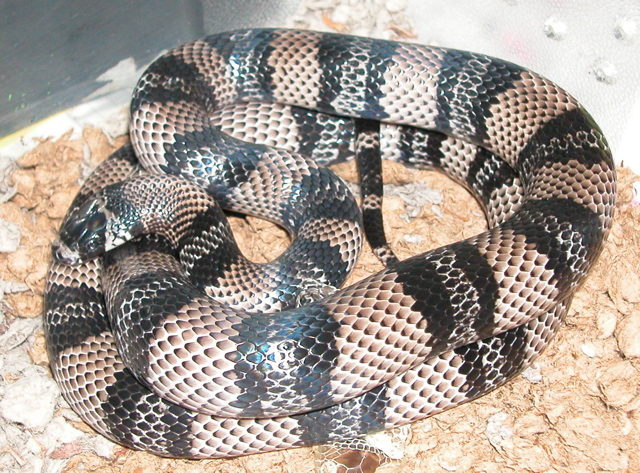
i'm under the impression hondurans are being imported fairly regularly. I imported a wild-caught anerythristic this year (only the third into the U.S., by my reckoning, and one of the previoius two died before breeding). The exporter piggy-backed it with a larger group of hondos and other animals being sent to a u.s. wholesaler/importer. There are some costs involved but I didn't get the impression the paperwork was anything extraordinary. The hard part is finding a source for the animal(s), given the danger/difficulty of going there personally to collect. So finding a source that can be trusted is both difficult and very helpful.

Unfortunately, locale info was not available, the snake was brought in by one of the many collectors who sell to the exporter. By the time its difference was noted, and i obtained it and asked for details, the origins could not be traced.

terry
albino tricolors

btw, since i imagine someone will ask, it was a female, marginally an adult, will certainly be big enough to breed in 06 and will be bred x my hybino male, which will produce triple hets, which will then be used to introduce new blood into both the ghost project and the snow project.

also btw, because someone will probably ask, yes she is noticeably darker than the selectively bred anerythristics generally found in the U.S. today (see photo of her).
Image

jawn Dec 05, 2005 12:30 PM

Thanks for posting the pic Terry. I was talking to Matt L. not too long ago and he had mentioned that you were bringing some new anery blood into the country... Nice to see what it looks like finally! It is definitely an asset to everybody's collections to have the option of breeding their ghosts and snows with a new bloodline. Also if you have any contact info for that importer you were mentioning it could you send me a message?

Site Tools
