


OK it may be Mid-Winter, but in the Philippines it’s SUMMER all Year long!! Christmas for me and my wife was none-existent this year, because we spent the entire month of December exploring the Philippines, visiting places like Minila, Bohol, Baguio, Boracay, Mindoro, Bicol, and more. I spent much of my time seeking out the Yellow-bellied Sea Snake (Pelamis platurus), but came up empty. Perhaps Costa Rica next year will be better place to search for that Sea Snake. Philippine jungles are interesting and filled with many exotic creatures. Because I had no Philippine field guide or way to precisely identify the creatures I was finding, I treated all snakes as if they were venomous. That was probably a good thing, because after capture I would check their mouth for fangs and it seemed they all possessed some type of injection device. As for the Banded Sea Krait, it was unnecessary to check them because I think everyone is well aware sea snakes can be deadly. Unfortunately, I wasn’t able to spend as much time in the jungle as I would have liked, but nonetheless some interesting animals were found. This is part one of a series of future posts. I hope this post will help explain my delayed response to returning peoples emails. I’m not sure of the Scientific or Common names for many of these creatures, so any help is appreciated. For some people this post will be a fun game of identifying foreign species.

Coco Beach Resort, Puerto Galera
It’s kind of a shame this picture didn’t turn out better, but the digital camera I took with me couldn’t manage the contrasting bright scenery outside and dark interior of the loft. Good-thing I also used an old 35 mm film camera which handles contrasting conditions much better, but those pictures haven’t been developed yet. This place had an awesome view and was surrounding by jungle. The one night spent there, it poured rain, and with that rain can came frogs and snakes.


Some type of Narrow-mouthed Frog, anyone have the common and scientific name for this guy?

Treefrog???

Another Treefrog, possibly same species as above???

This snake (???) was spotted creeping up a bamboo pole, presumably to reach the abundant geckos catching insects about the light at the top of the poll.
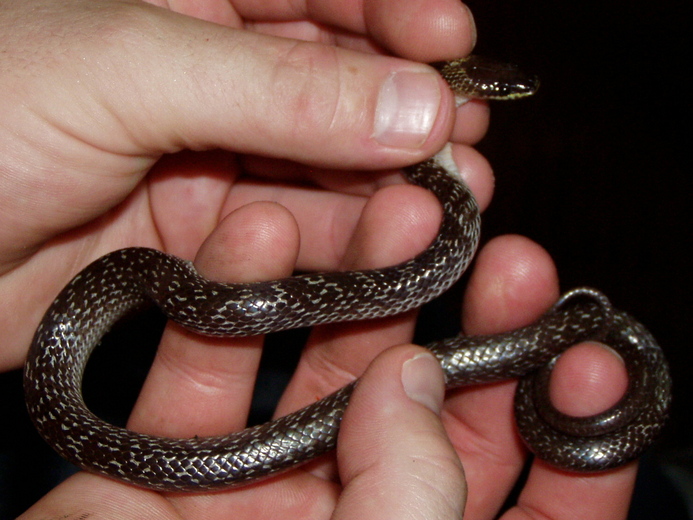
I have no idea what type it is, but when I checked its mouth it appeared to have small fangs in its upper mouth. When I asked the locals about this snake, they called it a “sleeper snake” because if it bites you a person will go to sleep.
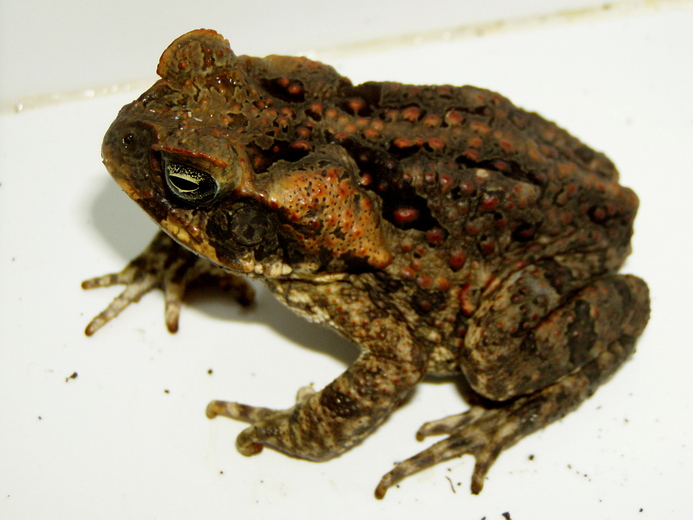
Bufo Marinus (Cane Toads) were common here and the most prevalent amphibians detected during my stay in the Philippines. These introduced species were spotted nearly everywhere I explored.

These geckos are common and found nearly everywhere I went. I think they are Indo-Pacific Geckos (Hemidactylus garnotii). Let me know if this is wrong?

The tail and body of this gecko differs from the above gecko. They are equally common and could be found everywhere. I think it is a Common House Gecko. (??)

The coolest find of the night, was this Banded Sea Krait (Laticauda colubrine). It was discovered creeping about seashore rocks at night. Below is a daylight habitat picture taken the following day.


Sea Snake habitat
