Reptile & Amphibian Forums

Welcome to kingsnake.com's message board system. Here you may share and discuss information with others about your favorite reptile and amphibian related topics such as care and feeding, caging requirements, permits and licenses, and more. Launched in 1997, the kingsnake.com message board system is one of the oldest and largest systems on the internet.

Click for 65% off Shipping with Reptiles 2 You
Click for ZooMed
Click here for Dragon Serpents

The calcium conection.

Sighthunter Jan 13, 2006 09:34 AM

I have been studying the connection between the calcium in the egg and the acidity or lack there of in the substrate since they would have to react. Milk snakes have been known to lay eggs under cow pies which would have acidity that would be off the chart. In addition to this I have always felt that the mucous coating on the egg acts as a catalyst for viability or interaction with the substrate. I was just sent a copy of this which is now supporting my theory.
Message: 1

Date: Wed, 11 Jan 2006 22:46:31 0100

From: "Henk Zwartepoorte"

Subject: Re: chelodina incubation

Dear Bill and Laura,

Some thoughts.

Of course I do not have all the answers to a lot of questions. Why many people do not completely cover up the eggs is I think purely because of curiosity. At the Rotterdam Zoo we also do so as we have to deal with the public; people do not like to see a number of incubators with boxes filled with vermiculite. Vermiculite indeed has the ability of containing the humidity from the bottom of the plastic container to the top, so the humidity around the eggs is equal.

Behind the scenes and at home I completely cover up the eggs and I touch them as little as possible. If they are fertile they will hatch. Freshwater turtles luckily have the white spot and band when they are fertile and fertile tortoise eggs are white.

But in some cases it is good to know whether the ambryo is still alive making it possible to open eggs or not on the right moment.

For some species we often use a mixture of vermiculite and damp peat raising the PH value. What I think is also important is not to wash the eggs before putting them into vermiculite. At Rotterdam Zoo we once washed and desinfected all reptile eggs during one season in the early eighties and we hardly had any hatchling then. Since then we just whipe off the worst dirt and incubate them as they are laid by the female. I think allthough I of course cannot prove that the mucus on the eggs is a somewhat protecting layer against infections.

we still have a lot to learn.

My best. Henk.

----- Original Message -----

From: WILLIAM MULLEN

To: Turtle_Survival_Alliance@yahoogroups.com

Sent: Sunday, January 08, 2006 1:25 AM

Subject: Re: [Turtle_Survival_Alliance] chelodina incubation
-----
"Life without risk is to merely exist."

Replies (9)

Carmichael Jan 13, 2006 12:56 PM

Very interesting stuff. The only thing I would caution on is "wiping off dirt" from the eggs; that could lead to some serious damage to the egg and developing embryo. I personally never mess with the eggs and most hatch out just fine...viable eggs even have abilities to ward off fungal infections. You run the risk of forgetting the proper placement of the egg back into the incubator. Otherwise, very interesting.

Rob Carmichael, Curator
The Wildlife Discovery Center
Lake Forest, IL

>>I have been studying the connection between the calcium in the egg and the acidity or lack there of in the substrate since they would have to react. Milk snakes have been known to lay eggs under cow pies which would have acidity that would be off the chart. In addition to this I have always felt that the mucous coating on the egg acts as a catalyst for viability or interaction with the substrate. I was just sent a copy of this which is now supporting my theory.
>>Message: 1
>>
>> Date: Wed, 11 Jan 2006 22:46:31 0100
>>
>> From: "Henk Zwartepoorte"
>>
>>Subject: Re: chelodina incubation
>>
>>
>>
>>Dear Bill and Laura,
>>
>>Some thoughts.
>>
>>Of course I do not have all the answers to a lot of questions. Why many people do not completely cover up the eggs is I think purely because of curiosity. At the Rotterdam Zoo we also do so as we have to deal with the public; people do not like to see a number of incubators with boxes filled with vermiculite. Vermiculite indeed has the ability of containing the humidity from the bottom of the plastic container to the top, so the humidity around the eggs is equal.
>>
>>Behind the scenes and at home I completely cover up the eggs and I touch them as little as possible. If they are fertile they will hatch. Freshwater turtles luckily have the white spot and band when they are fertile and fertile tortoise eggs are white.
>>
>>But in some cases it is good to know whether the ambryo is still alive making it possible to open eggs or not on the right moment.
>>
>>For some species we often use a mixture of vermiculite and damp peat raising the PH value. What I think is also important is not to wash the eggs before putting them into vermiculite. At Rotterdam Zoo we once washed and desinfected all reptile eggs during one season in the early eighties and we hardly had any hatchling then. Since then we just whipe off the worst dirt and incubate them as they are laid by the female. I think allthough I of course cannot prove that the mucus on the eggs is a somewhat protecting layer against infections.
>>
>>we still have a lot to learn.
>>
>>My best. Henk.
>>
>> ----- Original Message -----
>>
>> From: WILLIAM MULLEN
>>
>> To: Turtle_Survival_Alliance@yahoogroups.com
>>
>> Sent: Sunday, January 08, 2006 1:25 AM
>>
>> Subject: Re: [Turtle_Survival_Alliance] chelodina incubation
>>-----
>>"Life without risk is to merely exist."
-----
Rob Carmichael, Curator
The Wildlife Discovery Center at Elawa Farm
Lake Forest, IL

mrand Jan 13, 2006 02:51 PM

i don't mess with snake or lizard eggs, but with my russian tortoises, which lay in outdoor enclosures, i have been washing the eggs since 1998 and i get great hatch rates.

a study out of the former soviet union (from the 1970s) showed that the albumen of this species has antimicrobial activity.

one of the turtle farms in LA, which ships red-ear eggs all over also washes their turtle eggs. i don't know whether they do this because of better hatch rates, nor do i know what type of substrate the females lay in (probably sand and not soil).

matt

reptileranch Jan 13, 2006 04:19 PM

totally awesome information. thanks for sharing.

Sighthunter Jan 13, 2006 05:51 PM

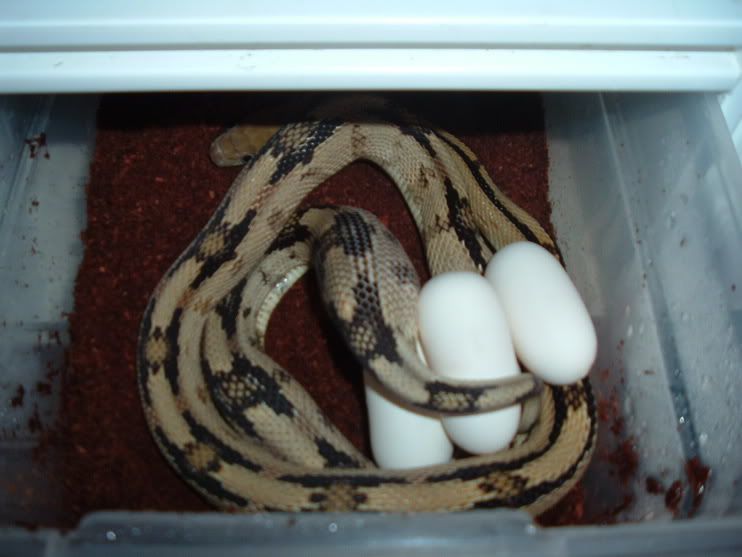
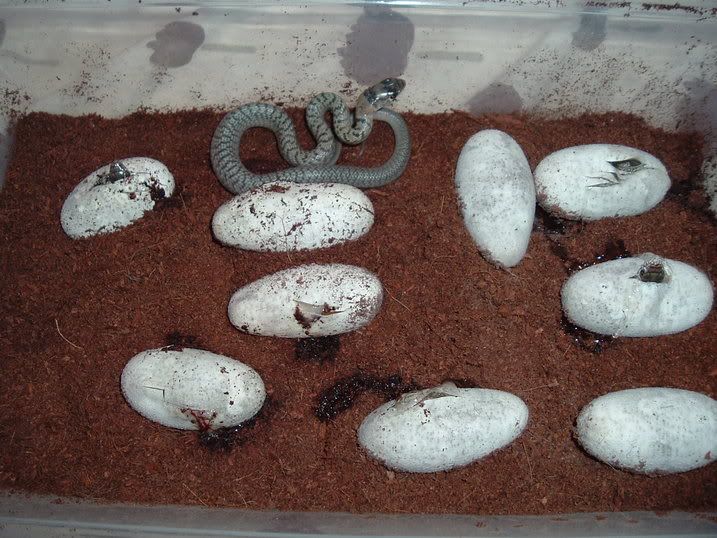
Thank you for the compliment. Year before last I hatched Coachwhip,Carper Python,Grey Banded Kingsnake, Trans Pecos Ratsnake, Spilotes, Parrot Snakes, Box and Pond Turtles in coconut husk with perfect results. Three times unfertilized eggs went full term without puckering.
-----
"Life without risk is to merely exist."

copperhead13 Jan 13, 2006 04:47 PM

Although I've never taken the pH of bovine fecal matter, I do believe it would be closer to a pH of 7, not acidic. Highly acidic feces would damage the skin and membrane of the colon and rectum.

Sighthunter Jan 13, 2006 05:36 PM

Organic matter is acid, think of it like this whin a kid pees in the pool the acid goes up. Mineral is Alkaline so you put baking soda in the pool to ballance the PH. Calcium is mineral, Manure is acid. I have been hatching eggs in coconut husk with awsome results.


-----
"Life without risk is to merely exist."

Sighthunter Jan 13, 2006 05:39 PM

Coachwhip eggs in vermiculite will usualy have mold all over them no matter how dry the mix.


-----
"Life without risk is to merely exist."

mrand Jan 13, 2006 06:45 PM

bill, your coconut coir results are very interesting. have you measured the pH of this particular substrate?

matt

Sighthunter Jan 13, 2006 07:06 PM

History: I will test a batch and post pH. I had been hatching coachwhip eggs which are granular like dry eggs and was fighting mold no matter how dry three years running. One year the female had layed eggs in her box which had peat moss which is high acid. I was lazy and left them in there for a week and to my suprise no mold! Coachwhip eggs usualy grow mold within a day or two they are weird that way. I swiched to coconut husk about six years ago and never looked back. I am wondering if hard to hatch eggs like Gila and Beaded need Acid substrate? I would imagine the underground burrows have lots of organic matter in them where they lay their eggs. I should have Beaded eggs next year I will RISK a few.
-----
"Life without risk is to merely exist."