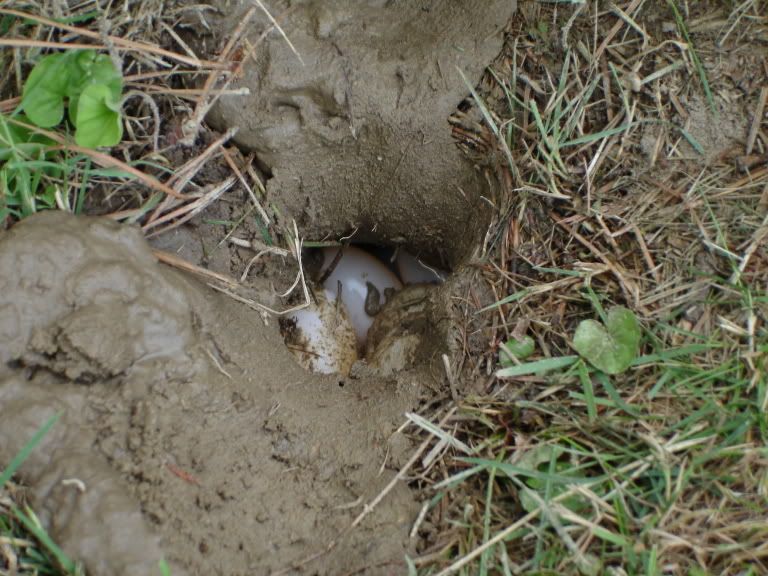
Here is a photo of her uncovered nest... Any advice on why she didn't cover her nest and her type would be appreciated.
thanks.
Gertchwood
Welcome to kingsnake.com's message board system. Here you may share and discuss information with others about your favorite reptile and amphibian related topics such as care and feeding, caging requirements, permits and licenses, and more. Launched in 1997, the kingsnake.com message board system is one of the oldest and largest systems on the internet.


Here is a photo of her uncovered nest... Any advice on why she didn't cover her nest and her type would be appreciated.
thanks.
Gertchwood
My guess is the soil became to muddy. What kind of turtle laid these eggs? Did it start to rain during the egg laying process? I would cover that spot with some netting to make sure a predator doesn't get it.
Often times nesting turtles will abandon a nest site if they get uncomfortable for whatever reason. This usually occurs during the nest digging process but in occasional cases will happen even during the egg laying process. Turtles will most often continue the laying and covering process even if they are uncomfortable or disturbed during actual laying. The Red-Bellied Cooter will usually lay between 8-20 eggs, so she will probably re-nest again soon. If you already filled the nest with dirt and smoothed it out on top, you can place a wire mesh "cage" on top to protect it from predators. Keep an eye on the nest and should they hatch (in anywhere from 2 months until possibly next spring) you can release the hatchlings into the body of water the mother came from.
To comment on the previous post. The reason the soil is extra muddy, almost soupy looking, is due to the fact that these turtles will empty their bladders to aid in the digging process by softening the soil. In this case, the soil-clay mix, being from Virginia.
Hope this helps
-JG
Help, tips & resources quick links
Manage your user and advertising accounts
Advertising and services purchase quick links
