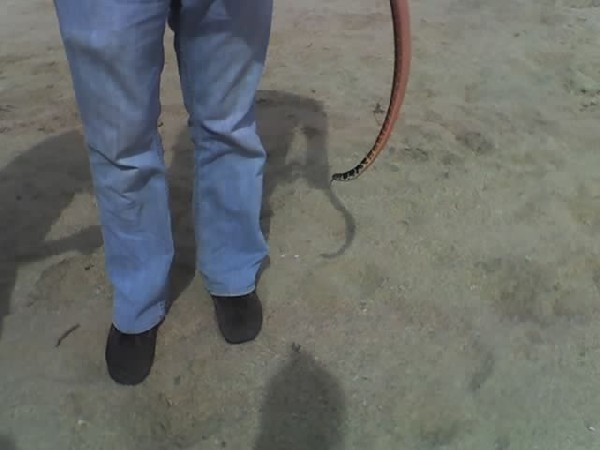
Found one at work and the larger one while looking for gopher snakes and kingsnakes. I've found about 20 this year so far but these are the only pictures I've taken of them.


Welcome to kingsnake.com's message board system. Here you may share and discuss information with others about your favorite reptile and amphibian related topics such as care and feeding, caging requirements, permits and licenses, and more. Launched in 1997, the kingsnake.com message board system is one of the oldest and largest systems on the internet.


Found one at work and the larger one while looking for gopher snakes and kingsnakes. I've found about 20 this year so far but these are the only pictures I've taken of them.
Nice!
Were they easy to find and catch? Where in Riverside did you find most of yours (street).
I live in Orange and have one. It looks exactly like the one in the picture. I am looking to catch only 1 more so they can be a pair and mate.
Can you help?
Thank you
-----
I will be back!
I live near Winchester Rd in Temecula. They're most easily found in open fields in the dry creekbeds and washes around town. I see them mostly under debris while poking around for snakes but every now and then bump into one or two out and about in the wide open.
The largest one I've found was nearly 18inches including the tail and had a head larger than a quarter.
Thanks for the tip but you would save me lots of time if you can give me an exact location such as an address to a nearby McDonald or something and direct me from there to the open field that you are talking about. When you find them, do they run or can you bend over and pick one up?
Also, I know female usually have a head that is narrow and parallel to the body. Is that true because that is what I have right now. Which means I need to look for a male. The one that I have right now eats 30 large crickets a week.
-----
I will be back!
Males have much wider heads.
It sounds like you might be new to the hobby. A mentor in your area would be a good thing.
http://www.fieldherpforum.com/forum/index.php
and for SoCal -
http://www.fieldherpforum.com/forum/viewforum.php?f=5
Try to find someone willing on taking you out - or go to a meeting (they don't charge AFAIK) - and your experiences will be better.
-----
3.6 L. getula californiae
1.1 L. getula nigrita
1.0 Pantherophis guttatus guttatus
1.0 Thamnophis sirtalis fitchi
1.0 Boa constrictor constrictor (suriname, fostering/rescue)
3.3 Elgaria multicarinata multicarinata
The place I go herping close to home is a community called meadowview which is near the mall. It's a large open field divided in two by North General Kearny. I go to the east-most side because that's where the most snakes are. The lizards are common in the debris piles that people throw in the ravines and also in the creekbed. For the most part you really can just pick them up. Very few run off; most just stand their ground like a badass.
Another place I go is just outside of town (in the wine country) is an offroad haven called sticks. Good herping out there all the way out to lake skinner. Check it out, you won't be dissappointed.
Thank You
That really helps. What is the name of the mall?
-----
I will be back!
The promenade of Temecula.
An important thing to remember - when you overturn logs, boards, trash, whatever - make sure to put it back exactly in the same position it was originally on.
If you don't, other herpers will hate you.
The cover makes a moisture seal with the ground keeping humidity in - and if you don't put it back exactly as it was, you have destroyed the seal - it will dry out and very few herps will use that cover until the it has restored itself to ideal conditions, which takes months.
Often when you find boards or tin, those boards or tin have been carefully placed there by another field herper to create ideal conditions - which takes months - and it really pisses them off to come back and find it destroyed.
I'm mentioning this because a lot of people do not replace the cover just because they are ignorant to the impact that it has.
-----
3.6 L. getula californiae
1.1 L. getula nigrita
1.0 Pantherophis guttatus guttatus
1.0 Thamnophis sirtalis fitchi
1.0 Boa constrictor constrictor (suriname, fostering/rescue)
3.3 Elgaria multicarinata multicarinata
I teach in Corona, near Riverside. Allies are everywhere. I've had a 15 incher walk right by my classroom door. You shouldn[t have to look hard to find one.
I agree... their behavior is a lot of fun. Always putting on a show before trying to run.
-----
1 Eastern Blue Tongue Skink
2 Tarahumara Mountain Kingsnakes - Knoblochi
1 Thayer's Kingsnake - Thayeri
2 Golden Greek Tortoises
1 Pyxie Frog - 14 years old
Another thing, if you come across one of these guys you know you're in the right spot. Lizards are all they eat and alligator lizards are probably the biggest and most ideal prey. These coachwhips are pretty common but if you find a spot with a high population there are bound to be lizards about.

Also, I don't want to run into gopher or king snakes if they are poisonous. Are there poisonous snakes out there such as rattles?
-----
I will be back!
Gopher and kingsnakes are not poisonous - and you likely will run into them, they are often in alligator lizard habitat.
You may also run into rattlesnakes. You probably won't get bitten unless you pick them up. Lift boards and logs when possible towards you (so that the board/log is between you and what is under it), use a hoe or snake stick to lift board, watch where you step.
Bites from rattlers are really rare and usually only occur as a handling accident. They usually would rather slither away and typically only strike when grabbed or cornered.
-----
3.6 L. getula californiae
1.1 L. getula nigrita
1.0 Pantherophis guttatus guttatus
1.0 Thamnophis sirtalis fitchi
1.0 Boa constrictor constrictor (suriname, fostering/rescue)
3.3 Elgaria multicarinata multicarinata
Gopher snakes and kingsnakes are harmless. As for rattlers, meadowview is rattler free. Most of the residents have killed them off. As for sticks, if you're out there long enough you'll come across them but they're timid and try to stay out of the normal path.
Best time to look is after a rain.
In warmer weather, they often go underground during day but can be found hanging out on pavement at night soaking up the warmth.
-----
3.6 L. getula californiae
1.1 L. getula nigrita
1.0 Pantherophis guttatus guttatus
1.0 Thamnophis sirtalis fitchi
1.0 Boa constrictor constrictor (suriname, fostering/rescue)
3.3 Elgaria multicarinata multicarinata
Thank You FunkyRes and to all of the other posts that you answered for me. I meant to write back and thank you since no one seem to visit this forum that often.
-----
I will be back!
Help, tips & resources quick links
Manage your user and advertising accounts
Advertising and services purchase quick links
